Average Foundation Repair Costs in Greensboro, NC: Pricing & Estimates
Foundation repair cost in Greensboro refers to the total expense a homeowner can expect to stabilize, restore, or replace parts of a residential foundation in the Greensboro, NC area. Typical local project totals vary widely because costs depend on method, soil conditions, and the scope of structural repair; as of April 2024, homeowners commonly see quotes that range from small crack repairs to multi-thousand-dollar piering projects. This guide explains what drives foundation repair cost in Greensboro, breaks down average prices for common repair types, and shows how to interpret estimates so you can compare bids with confidence. Readers will learn how to spot early signs of foundation issues, which repair methods are commonly used for slab, crawl space, and basement problems, and what financing options may help spread the cost. The article maps the key H2 topics in order: major cost factors, per-method cost ranges, symptom identification, contractor selection, financing paths, and how repairs affect home value and safety. Throughout, terms like slab foundation repair cost Greensboro, crawl space repair cost Greensboro, and piering cost Greensboro are used to keep this practical and locally focused.
What Are the Key Factors Affecting Foundation Repair Costs in Greensboro?
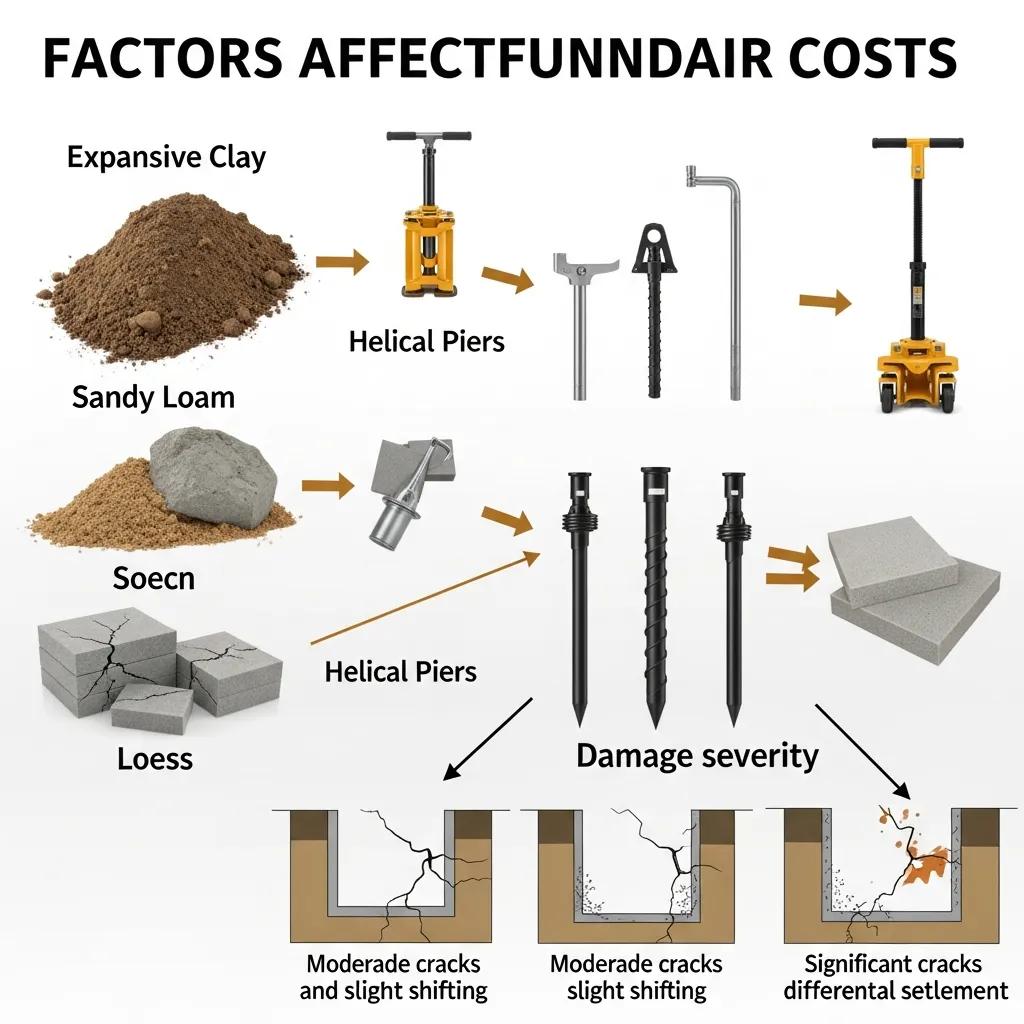
Foundation repair cost drivers are the specific site and structural conditions that determine which repair method is required and how much labor and materials will cost. In Greensboro, major drivers include damage severity, foundation type (slab, crawl space, basement), local soil behavior, site accessibility, property size, and local permits and labor rates. These factors interact: expansive clay soils increase the need for deep, reinforced solutions while limited access raises mobilization charges for heavy equipment. Understanding these drivers helps homeowners evaluate whether a quoted repair is proportionate and whether preventive measures such as improved drainage can reduce future costs. Below is a concise table that summarizes each primary factor and how it tends to change price direction in this market.
The table below summarizes how key factors affect cost and why each matters.
This summary shows that soil and severity are often the two strongest drivers, which leads naturally to the next topic: how the severity of damage maps to likely repair choices and cost ranges.
How Does Damage Severity Influence Repair Pricing?
Damage severity defines the scope of work and therefore has a primary influence on foundation repair cost in Greensboro. Minor damage—such as hairline cracks or small settling—often requires localized crack repair, epoxy injection, or minor slab leveling and can be resolved with relatively low material and labor cost. Moderate damage typically shows wider cracks, uneven floors, and minor door/window misalignment and usually leads to mid-range solutions like mudjacking or limited piering, which carries higher per-unit labor and materials. Severe damage—significant settlement, large structural cracks, or rotating wall sections—generally requires engineered piering systems (helical or push piers), larger-scale waterproofing, or partial foundation replacement; these are the most expensive options. Assessing severity early reduces the chance of escalation from minor, inexpensive fixes to expensive structural solutions and informs whether a structural engineer’s assessment is needed before quoting.
What Impact Do Greensboro’s Soil and Climate Conditions Have on Costs?
Greensboro’s regional soil, often characterized by expansive clay, reacts to seasonal moisture cycles by shrinking and swelling, which applies cyclic stresses to foundations and increases long-term movement. This soil behavior tends to push contractors toward deeper piering solutions or methods that disconnect the structure from the active soil layer, and it increases the need for drainage improvements and waterproofing to control moisture variation. Because these soil-driven measures require more materials, specialized equipment, and sometimes geotechnical guidance, they raise both initial repair costs and the value of longer warranties. Recognizing the local climate influence helps homeowners prioritize solutions—such as perimeter drainage or encapsulation—that reduce recurrence and may improve long-term cost-effectiveness.
What Are the Average Costs for Common Foundation Repair Types in Greensboro?
Common foundation repair methods in Greensboro include crack repair, mudjacking/slab leveling, helix or push piering, crawl space encapsulation, and basement waterproofing; each has a distinct cost profile and unit basis. Homeowners should evaluate both per-unit pricing (for example, cost per pier) and whole-project estimates that bundle labor, materials, mobilization, and permitting. Typical local ranges reflect the interaction of method, soil conditions, and access: small crack repairs are at the low end, while full piering with drainage and warranty coverage is at the high end. The table below gives realistic ranges and the usual unit basis to aid quick comparisons when you review contractor estimates.
Below is a quick comparison table of typical repair methods and their local cost ranges.
This table helps compare options quickly and shows why multiple methods are sometimes combined—next we examine slab-specific costs and drivers in more detail.
How Much Does Slab Foundation Repair Cost in Greensboro?
Slab foundation repair cost Greensboro depends on whether the problem is superficial cracking, slab heave or settlement, or full slab failure. Minor crack sealing or epoxy injections represent the low-cost end and typically address leaking or cosmetic cracks with minimal disruption. Mudjacking or slab leveling is a mid-range option where void filling restores slab elevation and can be a cost-effective alternative to piering when soil conditions permit. For significant settlement or recurring movement—especially over expansive clay—piering the slab with helical or push piers is a long-term solution and pushes costs into higher ranges due to deeper installation and more materials. Access constraints, number of piers needed, and whether accompanying drainage work is required will push final bids up, so homeowners should compare per-pier costs and overall stabilization packages when evaluating proposals.
What Are the Typical Prices for Crawl Space Repair and Basement Waterproofing?
Crawl space repair and basement waterproofing costs are driven by the chosen scope: basic ventilation fixes, encapsulation, or full perimeter drainage and sump installation. Crawl space encapsulation typically bundles durable vapor barrier installation, insulation, and sometimes a dehumidifier; component costs add up but provide humidity control and reduced risk of structural decay. Basement waterproofing ranges from interior channel systems and sump pumps to exterior excavation and membrane installation; interior solutions are generally less disruptive and less expensive, while exterior drainage is more costly but can address the root cause. When foundation stabilization is needed alongside moisture control, combined projects (piers + drainage + encapsulation) increase both complexity and cost but deliver more permanent results, and contractors will often price combined packages rather than separate line items.
What Are the Signs That Indicate You Need Foundation Repair in Greensboro?
Recognizing early warning signs can save significant repair dollars by catching issues before they require major structural intervention. Common signs include visible cracks in walls or floors, doors and windows that stick or no longer latch properly, sloping or uneven floors, bowing or leaning basement walls, and persistent water intrusion or musty odors indicating moisture issues. Each sign carries its own urgency: horizontal cracks or large stair-step brick cracks often indicate more serious movement than hairline vertical cracks, and visible water-related damage can accelerate structural decline if not addressed quickly.
Key warning signs to watch for and what they commonly indicate:
- Wide or stair-step cracks in exterior brickwork: Suggests significant foundation movement and warrants prompt evaluation.
- Doors or windows that suddenly stick or gaps appear: Indicates shifting that affects frame alignment and often precedes larger settlement.
- Noticeable floor slope or unevenness: Reflects differential settlement and may signal the need for leveling or piering.
How to Identify Cracks, Uneven Floors, and Sticking Doors?
Homeowners can perform simple, repeatable checks to document symptoms before a professional visit, which helps contractors and engineers diagnose root causes. Photograph cracks with a ruler for scale and note whether they are vertical, horizontal, or stair-step; measure door gaps and track changes over several weeks to reveal active movement. For floors, use a small level or a ball test to detect slope and mark locations where the ball stops; this provides quantifiable evidence of unevenness. Collecting this information and sharing it during an inspection accelerates diagnosis and helps distinguish cosmetic issues from structural problems, enabling more accurate quotes and targeted repairs.
Why Early Detection of Foundation Problems Saves Money?
Early detection reduces the probability that a minor repair will evolve into expensive structural stabilization by limiting the progression of movement and moisture-related damage. For example, addressing a small crack and correcting drainage now can prevent the need for multiple piers and extensive waterproofing later, saving thousands in labor and materials. Early repairs also mitigate secondary costs such as mold remediation, interior finish replacement, and decreased resale value tied to documented structural issues. By documenting repairs and inspections early, homeowners retain clearer records that can preserve home value and reduce buyer negotiation adjustments, which underscores the financial benefits of prompt action.
How to Choose a Reliable Foundation Repair Contractor in Greensboro?
Choosing a reliable contractor requires evaluating estimates, warranties, licensing, local experience, and references to ensure the proposed method matches the problem and offers lasting performance. A trustworthy estimate should itemize labor, materials, number of piers (if applicable), mobilization fees, permit costs, and any recommended drainage or waterproofing work. Warranty terms are critical—life-of-structure or long transferable warranties provide stronger protection than short-term guarantees. Local expertise with Greensboro soil behavior and permit processes reduces surprises and often results in more appropriate method selection, which can lower lifecycle costs. The table below offers an estimate-comparison checklist to use when reviewing multiple bids.
Intro to the estimate comparison table: use this checklist to compare bids line-by-line and identify red flags in scope, pricing, and warranty.
What Should You Look for in Estimates, Warranties, and Licensing?
When evaluating estimates, ask for a written scope that details the repair method, quantity of materials, and timeline; request the pier count and per-pier pricing if piering is proposed. Verify licensing and insurance by asking contractors to reference their registration and insurance carrier (do not accept vague claims), and request structural engineer involvement for major stabilization work. Inquire about warranty length, whether it is transferable, and what conditions void coverage; life-of-structure or long-term warranties are preferable when available. Red flags include lowball bids with vague scopes, pressure to sign quickly, or reluctance to provide references—these signs suggest potential quality or follow-up issues.
How Does Local Expertise Affect Repair Quality and Cost?
Contractors experienced with Greensboro clay and seasonal moisture cycles are more likely to recommend solutions that address root causes, such as deeper piers, perimeter drainage, or targeted waterproofing, which improves long-term performance and can reduce repeat costs. Local knowledge also speeds permitting and inspection timelines and can prevent unnecessary excavation or method mismatches that raise both cost and risk. While local expertise may increase initial bid compared to generalists, it often yields better lifecycle value through fewer callbacks and stronger warranties. Asking potential contractors about past local projects and soil-specific approaches helps identify teams that can deliver durable solutions.
What Financing Options Are Available for Foundation Repair in Greensboro?

Financing options for foundation repair in Greensboro include contractor payment plans, personal loans, credit cards, home equity loans or HELOCs, and occasionally local assistance programs; each option has trade-offs in cost, term, and risk. Short-term financing or 0% introductory offers can minimize upfront expense but may carry high rates later; personal loans provide predictable monthly payments but might have higher APRs than secured loans. Home equity options typically offer lower interest rates due to being secured by the property but place the home at risk if payments are not maintained. Evaluate monthly payment scenarios, APR, fees, and whether the contractor offers in-house financing to determine which path aligns with your cash flow and risk tolerance.
- Contractor payment plans: Often flexible, may include deferred payments or installment schedules to spread cost.
- Personal loans or unsecured financing: Fixed payments without using home equity but typically at higher interest rates.
- Home equity loan / HELOC: Lower interest rates because the loan is secured by your home; increases risk if you default.
Which Payment Plans and Loan Options Can Help Homeowners?
Payment plans vary by contractor; some offer short-term zero-interest promotions or staggered payment schedules tied to project milestones, which can ease cash-flow pressure. Personal installment loans or installment credit lines provide predictable payments and may be faster to obtain but often come with higher APRs than secured options. Home equity products—home equity loans or HELOCs—offer longer terms and typically lower interest but use the home as collateral, which increases risk. Documenting quotes and comparing APR, fees, and repayment term impacts on monthly cash flow helps homeowners choose the option that balances affordability and safety.
How to Use Home Equity for Foundation Repair Financing?
Using home equity involves borrowing against the value of your property through a HELOC or a fixed-rate home equity loan; this often provides lower interest rates and larger loan amounts suitable for major stabilization projects. A worked example: financing a $10,000 repair with 80% combined LTV may result in a manageable monthly payment if spread over 10 years at a competitive rate, but it also increases the outstanding mortgage balance and places the residence at risk if payments lapse. Homeowners should compare total interest paid, closing costs, and the effect on home equity before choosing this path and consider speaking with a financial advisor to confirm affordability and risk tolerance.
How Does Foundation Repair Affect Your Home’s Value and Safety in Greensboro?
Proper foundation repair improves structural safety and can protect or restore resale value by eliminating issues buyers and inspectors flag as major concerns. Documented repairs and transferable warranties often reassure buyers and reduce price reductions that usually follow homes with unresolved foundation problems. From a safety perspective, stabilization, drainage, and waterproofing address load distribution and moisture control, which prevents progressive structural degradation, mold growth, and interior damage. The next section examines the typical return on investment homeowners can reasonably expect and how repairs stop further structural damage.
What Is the Return on Investment After Repair?
Return on investment depends on repair quality, documentation, and local market conditions; well-documented, permanent repairs that include warranties and engineer reports tend to recover a significant portion of cost by preventing price reductions during sale negotiations. Conservative estimates suggest that documented structural repairs avoid steep buyer discounts and can convert an otherwise unsellable or heavily discounted property into a marketable one, though full cost recovery is not guaranteed. Presenting repair records, warranties, and inspection reports at listing time helps buyers feel confident and can shorten time on market, which improves net proceeds relative to selling an unrepaired home.
How Does Repair Prevent Further Structural Damage?
Repairs halt progression through two primary mechanisms: structural stabilization and moisture control. Stabilization through piering or wall anchors redistributes loads to competent soil layers or engineered supports, stopping additional settlement, while drainage and waterproofing remove the moisture cycles that cause soil expansion and contraction. Together these measures reduce the likelihood of new cracks, mold issues, and interior finish damage. Recommended follow-ups include scheduled inspections after seasonal moisture extremes and routine maintenance of drainage systems to ensure longevity of the repair.
- Prioritize early inspection: Early detection reduces escalation to costly structural solutions.
- Compare detailed estimates: Use itemized bids and warranty terms to evaluate long-term value.
- Address moisture and soil issues: Combine stabilization with drainage or encapsulation to prevent recurrence.

0 Comments