Trusted Greensboro Concrete Repair Services for Lasting Solutions
Concrete repair services in Greensboro serve homeowners and businesses with repairs for driveways, foundations, patios, and sunken slabs to restore safety and function. These local concrete services focus on diagnosing causes, selecting appropriate repair methods, and using durable materials to extend service life and prevent recurrence.
This article explains common concrete repair services in Greensboro, why hiring a licensed professional matters, how specific problems are diagnosed and solved, local cost factors and estimate options, differences between residential and commercial repairs, and the latest techniques and materials used today. Readers will gain actionable guidance on when to seal, resurface, level, or fully repair concrete, and how to evaluate repair proposals for long-term value. Throughout, the content emphasizes practical solutions, diagnostic signs, and maintenance steps that deliver lasting solutions for Greensboro properties.
What Are the Common Concrete Repair Services in Greensboro?
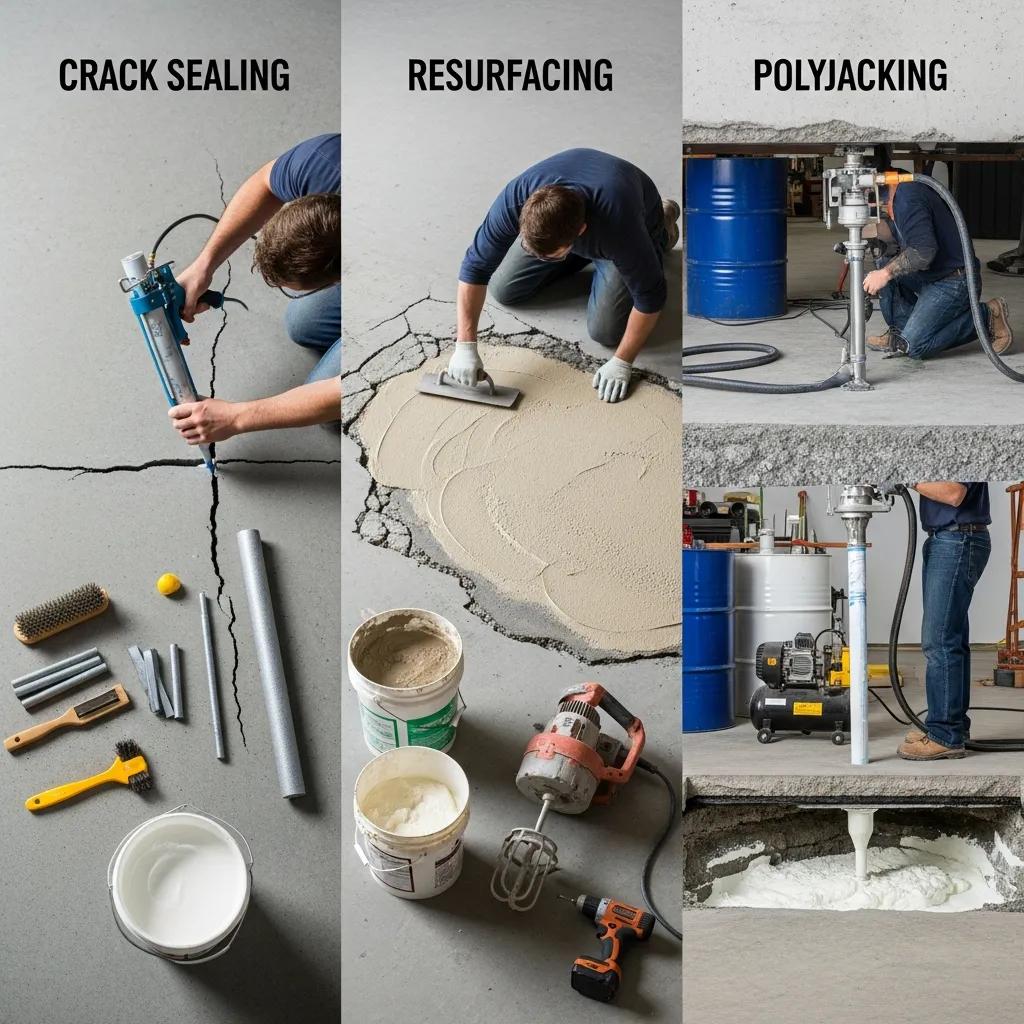
Common concrete repair services in Greensboro address visible damage and underlying structural issues by matching the right technique to the problem and site conditions. Typical services include crack sealing and injection to stop water intrusion, resurfacing to refresh worn surfaces, slab jacking (mudjacking) or polyjacking to lift sunken slabs, foundation piering for significant settlement, and targeted patching for spalling or localized deterioration. Choosing the correct method depends on the failure mode—surface wear requires different materials and prep than settlement or sinkage—which preserves property value and safety. Below is a concise list that defines core services and their primary application to help property owners quickly identify likely options.
- Crack sealing and injection: Stops moisture intrusion and stabilizes hairline to moderate cracks.
- Resurfacing and overlays: Restores appearance and surface wear without full slab replacement.
- Polyjacking (polyurethane foam): Lifts sunken slabs with minimal excavation and fast curing.
- Mudjacking (slurry lift): Uses grout slurry to raise settled concrete where large void filling is effective.
- Foundation piering and underpinning: Stabilizes and transfers loads to competent soil for structural issues.
- Patching and repair mortar: Repairs spalling, edge breaks, and localized surface failures.
These services often combine inspection, moisture and soil assessment, and tailored material selection to deliver durable outcomes. Understanding these options helps owners decide whether a cosmetic fix or a structural intervention is appropriate, and how repairs will affect use and maintenance going forward.
This comparison table summarizes when each repair method is typically used and the primary benefit property owners can expect.
This table clarifies how selecting the correct approach yields specific performance benefits and informs the inspection steps that follow. A clear match between symptom and repair method reduces risk of repeat failures and supports longer service life.
How Do We Repair Cracked Driveways Effectively?
Repairing cracked driveways begins with a diagnostic inspection to determine crack type, depth, and cause, which guides material and method selection for a durable repair. Hairline and non-structural cracks often respond well to flexible sealants or epoxy injection that bond and keep out moisture, whereas larger cracks and edge failures usually require removal of deteriorated concrete, application of repair mortar, and surface finishing to restore structural integrity. Proper substrate preparation—cleaning, drying, and sometimes routing or saw-cutting—ensures adhesion of repair compounds and prevents premature delamination. After repair, recommended maintenance includes sealing vulnerable areas, controlling drainage, and monitoring for new movement to catch progressive issues early and extend the repaired surface life.
What Techniques Are Used for Concrete Foundation Repair?
Foundation repairs start by identifying settlement patterns, crack orientation, and interior symptoms like sticking doors or uneven floors to select a structural remedy that restores load-bearing capacity. For many settled slabs, slab jacking or polyjacking can lift and re-level slabs by filling voids, while foundation piering or underpinning is used when soils have lost bearing capacity and permanent support is required. Crack injection with epoxy or polyurethane restores continuity where cracks cross structural elements, and selective excavation plus underpinning corrects severe settlement by installing piers to competent strata. A typical repair timeline ranges from same-day leveling for polyjacking to multi-day pier installations, with the choice balancing speed, cost, and long-term performance.
Why Choose Professional Concrete Repair Services in Greensboro?
Choosing a professional concrete repair contractor reduces risk by ensuring licensed, insured, and code-compliant work that uses proven materials and methods to deliver lasting repairs. Professional contractors bring diagnostic experience to identify root causes—settlement, freeze-thaw cycles, poor original installation—so fixes address the problem rather than just the symptom. Licensing and insurance provide liability protection and accountability, while workmanship standards and material selection directly affect how long repairs will last under local climate and load conditions. Below are core reasons to opt for a licensed professional when planning concrete repair projects in Greensboro.
- Liability protection and compliance: A licensed contractor follows local codes and carries insurance to protect property owners.
- Durable workmanship: Professionals perform necessary prep, material selection, and curing to extend repair life.
- Accurate diagnosis: Experienced crews identify root causes and match repair technique to the failure mode.
- Transparent communication: Clear scopes, timelines, and material explanations help owners compare proposals.
Hiring a professional also reduces the likelihood of recurring problems and unplanned costs because scope and long-term performance are considered up front. Understanding these benefits leads to one critical next step: verifying contractor credentials and warranty or workmanship commitments before authorizing work.
What Are the Benefits of Licensed and Insured Concrete Contractors?
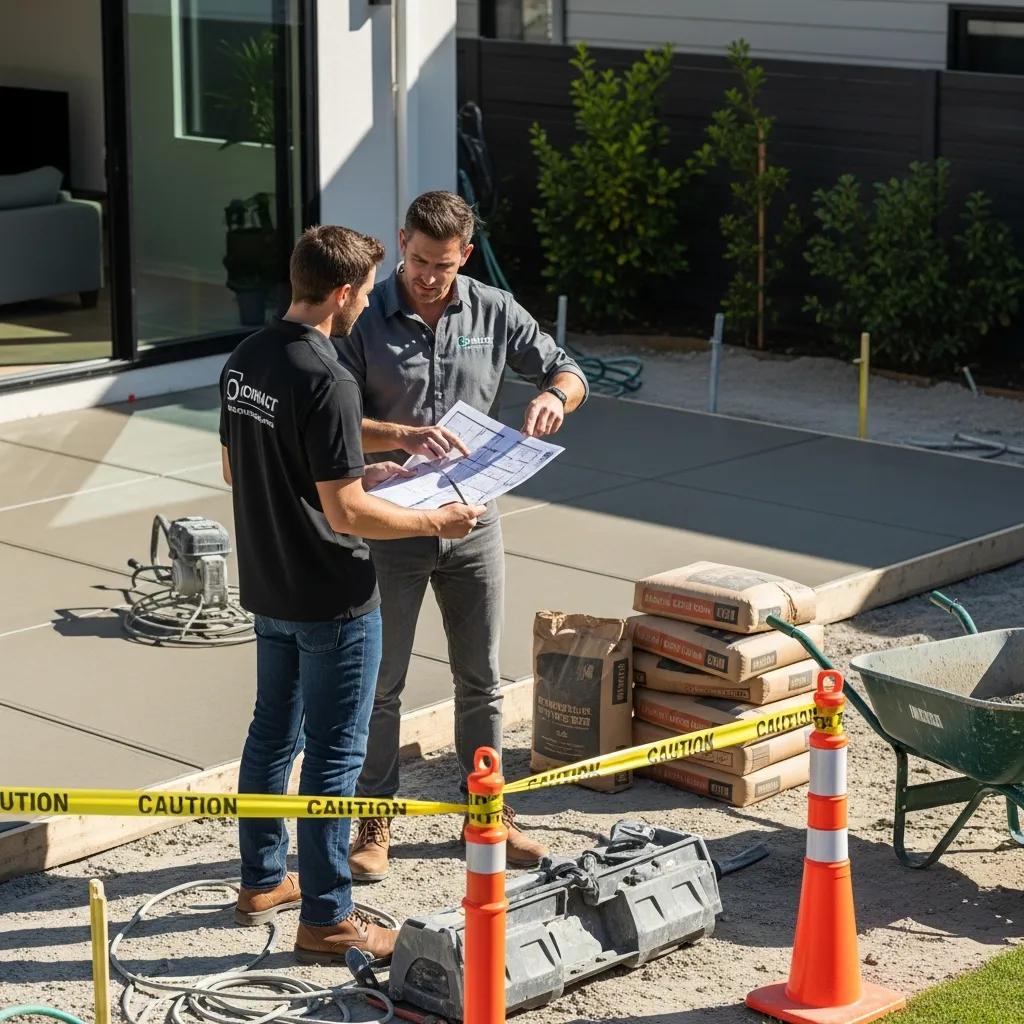
Licensed and insured contractors provide legal protections and procedural standards that reduce homeowner exposure to financial and safety risks during repair projects. Licensing indicates the contractor meets North Carolina regulatory requirements and understands building codes and permit processes, while insurance covers accidental damage or injuries that could otherwise become the owner’s responsibility. These credentials also commonly accompany documented workmanship procedures and warranty options, giving owners recourse if repairs fail prematurely. Verifying license status, insurance limits, and asking for examples of past similar repairs gives property owners confidence in the contractor’s ability to deliver a quality, code-compliant outcome.
How Does Quality Workmanship Ensure Long-Lasting Repairs?
Quality workmanship matters because correct substrate preparation, appropriate material selection, and proper curing determine whether a repair bonds and resists future deterioration. For example, failing to remove contaminated material or to match repair mortar properties to the surrounding concrete can cause differential movement and early failure. Skilled crews follow manufacturer directions, control moisture and temperature during curing, and incorporate reinforcement where needed to restore structural capacity. This attention to detail minimizes callbacks, improves durability, and keeps maintenance needs predictable over the life of the repaired surface.
How Do We Address Specific Concrete Problems in Greensboro?
Addressing concrete problems in Greensboro starts with identifying visible symptoms and tracing them to site-specific causes such as soil conditions, drainage, freeze-thaw exposure, or heavy loads. Problem-driven solutions map directly to causes: settlement often requires slab jacking or piering, while spalling and surface deterioration need patching and protective overlays. A tailored repair plan evaluates immediate safety needs, long-term stability, and aesthetic expectations to prioritize interventions that deliver measurable performance improvements. Below is a short list mapping common problems to targeted remedial approaches to help owners quickly understand likely solutions.
- Settlement and sinking: Use polyjacking or mudjacking to lift slabs and fill voids beneath.
- Cracking: Apply crack injection, routing and sealing, or patching depending on width and structural involvement.
- Spalling and surface wear: Repair with polymer-modified mortars and consider overlays for broader areas.
- Drainage-related deterioration: Regrade, add channels, and repair to prevent ongoing undermining.
Understanding the primary cause leads naturally to selecting corrective methods that address both symptom and source, reducing the chance of repeat failures and protecting property value over time.
What Causes Driveway Cracks and How Are They Fixed?
Driveway cracks have several root causes including settlement, freeze-thaw cycles, heavy or concentrated loads, and poor original mix or subbase preparation, and each cause points to different fixes. Hairline cracks from shrinkage or thermal movement typically benefit from sealants or epoxy injection to prevent moisture penetration, whereas settlement-related cracks often require re-leveling or targeted slab lifting to correct grade and load transfer. Heavy-load damage or edge failures may need full-depth patching with reinforcement or saw-cut and replace sections to restore structural capacity. Preventive measures—such as proper drainage, controlled loads, and periodic sealing—help delay recurrence and reduce long-term maintenance costs.
How Is Sunken Concrete Leveled Using Advanced Methods?
Sunken concrete is commonly leveled using mudjacking or polyjacking, both of which fill voids beneath slabs and restore original elevation, with critical differences in materials and performance. Mudjacking pumps a cementitious slurry under the slab to raise it and is typically cost-effective for larger voids, though it can add weight and requires longer curing; polyjacking uses high-density polyurethane foam that expands to lift the slab, cures quickly, and resists washout, making it suitable for fast repairs with minimal downtime. Installation involves localized drilling, injection, and grading, with polyjacking often completed in hours and mudjacking taking longer; choice depends on void size, access, and desired longevity.
Greensboro Concrete Repair Costs: A Guide to Key Factors & Estimates
Concrete repair costs in Greensboro vary with material choices, labor intensity, site access, permitting, and local weather-related scheduling impacts, all of which influence final estimates. Material costs differ between polymer-modified repair mortars, epoxy injections, and polyurethane foam used in polyjacking, and labor for excavation, formwork, or pier installation significantly affects price. Site access—driveway width, landscaping, and required traffic control—adds time and cost, while local permit requirements or restricted hours for commercial sites can further increase project time. Below is a concise list of primary cost drivers property owners should expect when obtaining estimates.
- Materials: Type of repair material and availability in local market.
- Labor: Skill level, crew size, and time on site.
- Access and logistics: Landscaping protection, traffic control, and staging.
- Permits and inspections: Local code requirements and permit fees.
- Weather and seasonality: Scheduling constraints and curing conditions.
These factors combine to create low-, mid-, and high-range scenarios; simple crack sealing can be a modest expense, while piering or full-depth replacement represents the higher end. For accurate pricing, on-site inspection is essential to assess hidden conditions that influence cost.
This table shows how local cost components typically affect estimates in Greensboro.
Reviewing these cost components helps owners interpret estimates and compare proposals based on long-term value rather than lowest initial price. After considering local drivers, the next practical step is to obtain detailed, no-obligation estimates that document scope and material choices.
How Are Concrete Repair Costs Determined Locally?
Local cost estimates begin with a site assessment that documents damage extent, underlying soil and drainage conditions, and access constraints, which together define labor needs and material volumes. A small driveway crack repair generally falls in the low-cost category because it uses minimal materials and crew time, whereas full-slab leveling, foundation piering, or commercial pavement repairs require specialized equipment and more labor, pushing costs higher. Contractors typically factor in mobilization, traffic control, and cleanup when preparing quotes, and they may provide scenario pricing—repair only versus repair plus preventive upgrades. For precise pricing, owners should request line-item quotes that specify materials, labor rates, and warranty terms.
What Free Estimate Options Does Greensboro Concrete Services Offer?
Greensboro Concrete Services offers free estimate options to help homeowners and businesses evaluate repair needs and compare repair approaches before committing to work. During a free estimate, a qualified technician performs an initial visual inspection, discusses observed symptoms and likely causes, outlines recommended repair options, and provides a scoped cost estimate with timing considerations. The estimate helps owners weigh trade-offs between quick cosmetic fixes and more robust structural solutions, and it clarifies next steps such as permitting or further geotechnical evaluation. To request a free estimate, contact Greensboro Concrete Services by phone at 336-967-1569 or visit their local office at 3800 Oak Grove Ave, Greensboro, NC 27405 for scheduling.
How Do Residential and Commercial Concrete Repair Services Differ in Greensboro?
Residential and commercial concrete repairs differ primarily in scale, load requirements, scheduling constraints, and regulatory considerations, which affect material selection and execution strategy. Residential projects—driveways, patios, walkways—prioritize aesthetics, minimal disruption, and drainage, often using decorative overlays or stamped resurfacing as part of repairs. Commercial projects—parking lots, warehouse floors, curb ramps—demand heavy-duty materials, phased work to maintain business operations, traffic management plans, and compliance with accessibility and safety standards. The table below outlines typical requirements and examples to help owners understand how solutions diverge between sectors.
Recognizing these differences helps owners specify performance requirements in estimates and ensures contractors propose solutions that meet operational needs and regulatory obligations. For properties with business operations, coordinating phased repairs reduces downtime and maintains customer access.
What Repair Solutions Are Available for Residential Patios and Driveways?
Residential repairs balance functional restoration with curb appeal, using patching, resurfacing, stamped overlays, or decorative sealers to match existing aesthetics while correcting drainage and trip hazards. Patch repairs use polymer-modified mortars for bonding and durability, while overlays can refresh color and texture across large areas without full replacement. Drainage corrections may involve regrading or adding channels to prevent future undermining, and small-scale leveling using polyjacking can restore walkability with minimal disturbance. Homeowners should expect clear timelines, and contractors should outline protective measures for landscaping and how aesthetic matching will be achieved.
How Are Commercial Concrete Repairs Tailored for Business Needs?
Commercial concrete repairs are tailored around minimal disruption, compliance, and durability, often implemented in phases to maintain operations while addressing structural and surface needs. Strategies include scheduling work outside peak business hours, isolating lanes or sections for phased repair, using rapid-curing materials to shorten closures, and specifying reinforcement and surface treatments to accommodate heavy traffic. Coordination with property managers on traffic control, signage, and permit compliance ensures safety and legal adherence. These tailored approaches preserve business continuity while delivering repairs designed for high-load and high-use environments.
What Are the Latest Concrete Repair Techniques and Materials Used in Greensboro?
Modern concrete repair practice in Greensboro leverages advanced materials and methods—polyurethane polyjacking, polymer-modified mortars, epoxy and polyurethane injection, and carbon-fiber reinforcement—to deliver faster, stronger, and longer-lasting results. Polyjacking offers quick cure and minimal excavation for slab lifting, while polymer-modified mortars provide adhesion and flexibility for surface repairs and overlays. Crack injection with epoxy restores structural continuity, and flexible polyurethane injections seal active leaks. Reinforcement options such as carbon-fiber strips or mesh add tensile strength in targeted areas without heavy weight or bulk. These techniques reduce lifecycle costs by improving durability and lowering maintenance frequency.
How Does Polyjacking and Mudjacking Improve Concrete Leveling?
Polyjacking and mudjacking both restore level surfaces by filling voids beneath slabs and raising them to grade, but they differ in materials, cure time, and longevity, which guides selection based on project constraints. Mudjacking uses a cementitious slurry that fills large voids and is cost-effective, but it can be heavier and requires more cure time; polyjacking uses expanding polyurethane foam that is lighter, resists water, and cures quickly, minimizing downtime. Installation steps include drilling small ports, injecting material, and fine-grading to final elevation, with inspection to confirm load transfer. For many residential and commercial scenarios, polyjacking offers superior longevity and faster return-to-service.
What Advanced Materials Ensure Durable Concrete Restoration?
Advanced repair materials—polymer-modified mortars, high-strength repair compounds, epoxy and polyurethane injection resins, and fiber or carbon reinforcements—improve bond strength, flexibility, and long-term durability compared with traditional mixes. Polymer-modified products enhance adhesion and reduce shrinkage, making them suitable for overlays and patching, while epoxy injections restore tensile capacity in structural cracks. Carbon fiber provides high-strength reinforcement for thin retrofits without adding bulk, and additives such as shrinkage reducers and curing agents optimize long-term performance under Greensboro’s seasonal conditions. Matching the material to the failure mode and environmental exposure is essential for durable restoration.
- Polymer-modified mortars improve adhesion and durability in patching and overlays.
- Epoxy and polyurethane injections restore structural continuity and seal active leaks.
- Carbon-fiber reinforcement strengthens thin sections without heavy construction.
- Curing agents and shrinkage-reducing additives reduce long-term cracking risk.
These advanced materials, when applied with correct preparation and workmanship, significantly extend service life and reduce the need for frequent maintenance.
This article has outlined the common repair services, diagnostic approaches, reasons to hire licensed professionals, problem-to-solution mappings, cost drivers and estimate options, sector-specific differences, and modern techniques and materials relevant to Greensboro concrete repair. For property owners seeking a local evaluation, Greensboro Concrete Services provides free estimates and on-site inspections to outline tailored repair options and expected outcomes; contact them at 336-967-1569 or visit their office at 3800 Oak Grove Ave, Greensboro, NC 27405 to schedule an assessment.
Frequently Asked Questions
What are the signs that my concrete needs repair?
Signs that your concrete may need repair include visible cracks, uneven surfaces, spalling, or pooling water. Cracks can vary in size and may indicate underlying issues such as settlement or poor drainage. Uneven surfaces can create trip hazards and affect the functionality of driveways or walkways. Spalling, which is the flaking or chipping of the surface, often results from freeze-thaw cycles or moisture intrusion. If you notice any of these symptoms, it’s advisable to consult a professional for a thorough inspection and assessment.
How long do concrete repairs typically last?
The longevity of concrete repairs depends on several factors, including the type of repair method used, the quality of materials, and environmental conditions. Generally, well-executed repairs can last anywhere from 5 to 20 years. For instance, crack sealing may last 5 to 10 years, while methods like polyjacking or foundation piering can provide longer-lasting solutions. Regular maintenance, such as sealing and monitoring for new cracks, can also extend the life of your repairs. Consulting with a professional can help you understand the expected lifespan of specific repair methods.
Can I perform concrete repairs myself, or should I hire a professional?
While some minor concrete repairs, like sealing small cracks, can be done by homeowners, hiring a professional is often recommended for more significant issues. Professionals have the expertise to diagnose underlying problems accurately and select the appropriate repair methods. They also ensure compliance with local codes and use high-quality materials that can enhance durability. DIY repairs may save money initially, but improper techniques can lead to recurring issues and higher costs in the long run. For complex repairs, it’s best to consult a licensed contractor.
What is the best time of year to schedule concrete repairs in Greensboro?
The best time for concrete repairs in Greensboro is typically during the spring and fall when temperatures are moderate. Extreme heat or cold can affect the curing process of concrete and the effectiveness of repair materials. Spring offers a good opportunity to address any damage that may have occurred during winter, while fall allows for repairs before winter weather sets in. Scheduling repairs during these seasons can help ensure optimal conditions for curing and longevity of the repairs.
How can I maintain my concrete surfaces after repairs?
Maintaining your concrete surfaces after repairs involves regular cleaning, sealing, and monitoring for new damage. It’s essential to keep the surface free of debris and stains, which can lead to deterioration. Applying a high-quality sealant every few years can protect against moisture intrusion and freeze-thaw cycles. Additionally, ensure proper drainage around your concrete to prevent water pooling, which can cause further damage. Regular inspections can help catch any new cracks or issues early, allowing for timely repairs and extending the life of your concrete.
What should I look for in a concrete repair contractor?
When selecting a concrete repair contractor, consider their licensing, insurance, and experience in the specific type of repair you need. Look for contractors with positive reviews and a portfolio of completed projects. Transparency in communication is crucial; they should provide clear estimates, timelines, and explanations of the repair process. Additionally, inquire about warranties on their work and materials used. A reputable contractor will be willing to answer your questions and provide references from previous clients to ensure you feel confident in your choice.
Conclusion
Investing in professional concrete repair services in Greensboro ensures durable solutions that enhance safety and property value. By understanding the various repair methods and their benefits, property owners can make informed decisions that address both cosmetic and structural issues. For tailored assessments and free estimates, reach out to Greensboro Concrete Services today. Take the first step towards restoring your concrete surfaces and ensuring their longevity.

0 Comments