Why Concrete Driveways Beat Asphalt in Greensboro: Cost & Durability
Choosing the right driveway material affects curb appeal, long-term costs, and maintenance demands for Greensboro homeowners and businesses. This article explains why concrete driveways often outperform asphalt in durability, lifecycle value, maintenance predictability, aesthetic flexibility, and environmental impact within the Greensboro NC climate. Readers will learn cost differences, expected lifespans, maintenance schedules, decorative options like stamped concrete, and practical environmental tradeoffs to help decide which paving solution fits their priorities. Along the way we provide local context for concrete driveway installation in Greensboro NC and practical checklists for upkeep and design decisions. For homeowners seeking professional help, Greensboro Concrete Services is a local, licensed, bonded, and insured contractor that specializes in concrete driveway installation, concrete driveway replacement, repairs, maintenance, and decorative finishes, and offers free estimates to guide project budgeting. The sections that follow cover cost comparisons, durability and weather resistance, maintenance practices, customization possibilities, environmental considerations, and why homeowners might choose Greensboro Concrete Services for a concrete driveway project.
What Are the Cost Differences Between Concrete and Asphalt Driveways in Greensboro NC?
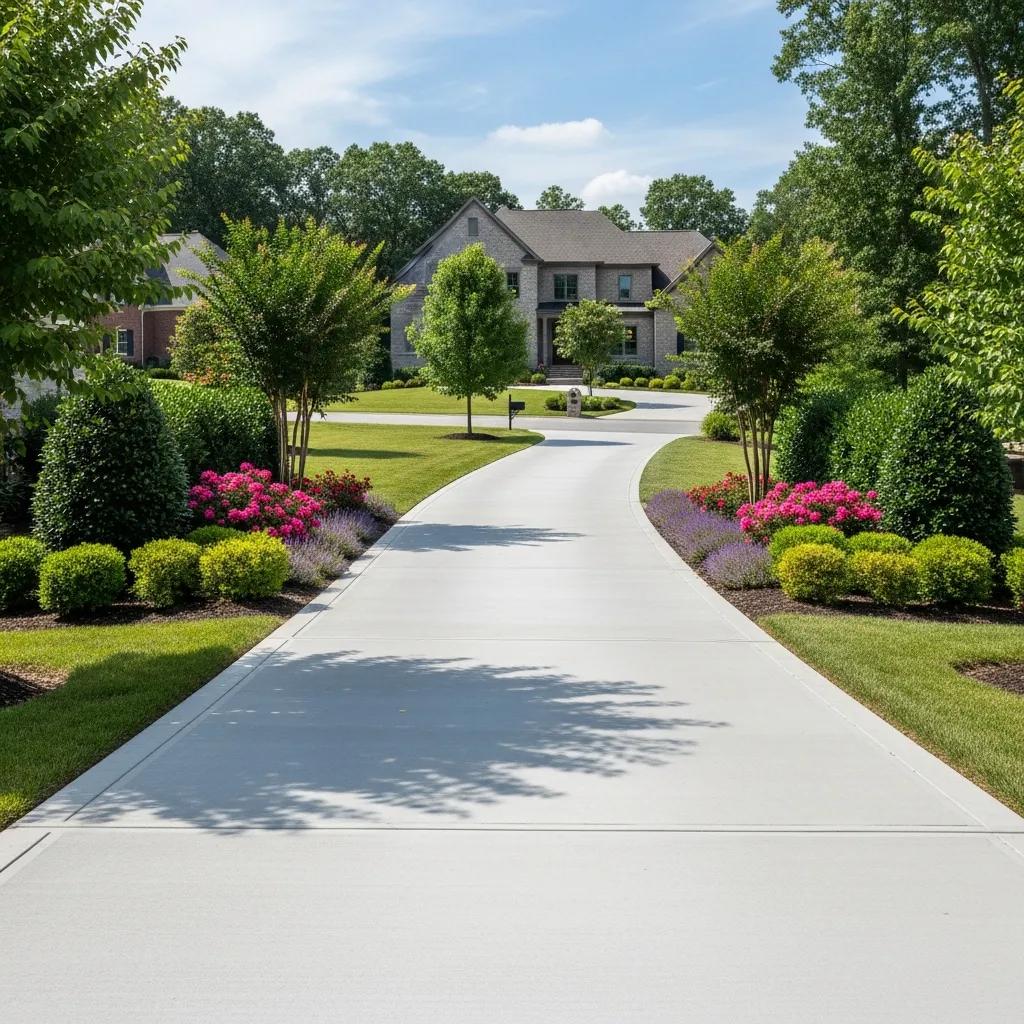
Concrete typically has a higher upfront material-and-installation cost but delivers lower cumulative maintenance and replacement expenses over its lifespan. In Greensboro NC, concrete driveway installation commonly falls within a local upfront range of $5–$15 per square foot, reflecting material, labor, base preparation, reinforcement, and finish choices. Asphalt generally costs less initially, yet requires more frequent sealcoating and resurfacing that add recurring costs over decades; this tradeoff drives concrete’s stronger lifetime value proposition. Homeowners evaluating concrete driveway cost should weigh per-square-foot installation alongside expected maintenance cycles and resale value impact to estimate lifecycle cost. The following table summarizes typical upfront ranges and lifecycle notes to make the comparison easier to scan.
Different installation and lifecycle costs influence budget planning and long-term value for Greensboro property owners.
This table highlights that concrete’s higher upfront investment often translates into fewer major maintenance events and stronger long-term value for homeowners in Greensboro.
How Does Initial Installation Cost Compare for Concrete vs. Asphalt Driveways?
Initial installation cost reflects materials, labor, base/subgrade work, reinforcement, and finishing choices for both materials, with concrete generally carrying the higher line items. Concrete installation often includes a more substantial subbase, control joints, and optional reinforcement (rebar or wire mesh), plus finishing and curing time that influence labor costs; these factors drive the $5–$15 per square foot range seen locally. Asphalt installation typically has lower material and labor inputs up front but may require more aggressive grading and compaction to perform well in wet seasons. When planning a project, request a professional estimate that lists site preparation, base materials, reinforcement, and finish options so you can compare apples-to-apples. Understanding these line items clarifies why concrete’s initial price is higher but can yield lower net cost over time through reduced resurfacing and stronger durability.
Concrete’s more robust installation approach increases initial cost but also underpins longer service life, which connects directly to lifecycle maintenance costs discussed next.
What Are the Long-Term Maintenance Costs and Value of Concrete Driveways?
Concrete requires less frequent major maintenance than asphalt, so cumulative long-term costs tend to be lower despite higher upfront investment. Routine tasks for concrete include cleaning, targeted crack repair, joint maintenance, and optional sealing, whereas asphalt needs sealcoating every few years and periodic resurfacing—activities that add up over a 20–30 year span. Over a 30–50 year analysis, concrete’s infrequent major repairs and longer replacement interval often offset its initial premium and deliver stronger resale value and lower total ownership cost. For homeowners focused on long-term value, prioritizing proper installation and base preparation reduces the probability of early repairs and maximizes return on the initial concrete driveway installation investment. Evaluating lifecycle cost rather than only the initial bid produces a clearer picture of real long-term expense.
These lifecycle savings tie directly to durability expectations and weather resistance, which determine how often repairs and resurfacing occur.
How Do Durability and Lifespan of Concrete Driveways Outperform Asphalt in Greensboro?
Concrete driveways typically outlast asphalt because concrete resists rutting, softening, and frequent resurfacing needs, delivering decades of service when properly installed. The fundamental reasons are material composition and rigidity: cured concrete forms a hard slab that distributes loads broadly and resists heat softening, while asphalt’s binder-based mix is more susceptible to oxidation and deformation in warm months. Proper base preparation, control joints, and reinforcement significantly influence concrete lifespan by limiting settlement and crack propagation. Below is a concise comparison of expected lifespans and related durability factors to help homeowners assess long-term performance.
This comparison shows that concrete’s extended lifespan reduces the frequency of costly replacements and major repairs, particularly when installation follows best practices.
What Is the Expected Lifespan of Concrete vs. Asphalt Driveways?
Concrete driveways commonly last 30–50 years in favorable conditions, while asphalt usually reaches 15–25 years before major rehabilitation is needed. Lifespan for either material depends heavily on installation quality—especially subbase compaction—and maintenance adherence such as timely crack repair and appropriate sealing practices. Environmental stresses, load patterns, and drainage determine whether a driveway will reach the upper bound of its lifespan estimates; for example, poor drainage accelerates deterioration for both materials. Prioritizing professional installation and routine inspections can meaningfully extend service life and prevent premature slab or surface failure.
Understanding lifespan differences emphasizes why many Greensboro property owners choose concrete for long-term performance and reduced lifecycle disturbance.
How Does Weather Resistance Affect Driveway Durability in Greensboro’s Climate?
Greensboro experiences warm periods that can accentuate asphalt softening and oxidation, while precipitation cycles challenge drainage and subbase integrity for any driveway material. Asphalt’s binder can soften in sustained heat, increasing susceptibility to rutting and surface wear; it also oxidizes over time, requiring periodic sealcoating to slow degradation. Concrete resists heat softening and performs well under variable precipitation when properly finished and sealed, but it remains vulnerable to freeze-thaw cycles if water penetrates a poor subbase or joints. Effective site drainage, a compacted gravel subbase, and professional finishing practices minimize water intrusion and preserve structural integrity for both materials.
Acknowledging these climate effects informs both material choice and installation priorities to maximize longevity in Greensboro.
What Are the Maintenance Requirements for Concrete Compared to Asphalt Driveways?
Concrete maintenance tends to be lower-frequency and more focused on targeted repairs, while asphalt requires regular sealcoating and cyclical resurfacing to preserve appearance and function. Concrete maintenance typically involves cleaning, spot crack repair, joint maintenance, and optional sealing to reduce staining and surface wear; these tasks are often intermittent and less intensive. Asphalt maintenance centers on sealcoating every 2–3 years and resurfacing every 3–5 years as wear accumulates, which adds recurring cost and scheduling demands. Below are practical maintenance tasks with recommended intervals to help homeowners plan for upkeep and extend service life.
- Concrete: Clean and remove stains as needed, inspect and repair cracks promptly, maintain control joints, consider sealing every 3–5 years depending on exposure.
- Asphalt: Sealcoat every 2–3 years, repair cracks and potholes immediately, plan resurfacing or overlay every 3–5 years as wear appears.
- General tips: Ensure good drainage, avoid chemical deicers that can damage surfaces, and schedule professional inspections after major weather events.
Consistent maintenance reduces the frequency and cost of major repairs, and homeowners who follow these schedules typically see measurable improvements in driveway longevity.
How Often Do Asphalt Driveways Need Sealing and Repairs in Greensboro?
Asphalt driveways generally benefit from sealcoating every 2–3 years to renew the surface binder and protect against oxidation and water infiltration, while larger resurfacing events or overlays commonly occur every 3–5 years depending on traffic and wear. Signs that immediate repair is needed include cracking that propagates, surface raveling where aggregate loosens, and potholes that form from moisture infiltration and freeze-thaw stress. Prompt attention to these warning signs prevents water from reaching the subbase and accelerating failure. Homeowners should also consider traffic loads and exposure; driveways with heavy vehicles or poor drainage will require more frequent intervention.
Routine inspection and timely maintenance help asphalt remain serviceable, but these recurring actions represent a steady cost stream compared with concrete’s lower schedule.
What Are the Recommended Maintenance Practices for Concrete Driveways?
Recommended concrete maintenance focuses on cleanliness, prompt small-crack repairs, joint care, and optional sealing for stain protection and surface longevity. Regular sweeping and pressure washing remove debris and contaminants that can hold moisture against the surface, while targeted crack repair with concrete-compatible fillers prevents water ingress and freeze-related expansion. Maintaining control joints and ensuring they remain flexible reduces random cracking; sealing can be applied for enhanced stain resistance and modest surface protection, typically every few years depending on exposure. For deep structural issues or large-area cracking, consult a professional to assess replacement versus repair options.
Proactive small repairs and attention to drainage preserve concrete’s long-term performance and limit the need for full replacement.
How Do Aesthetic and Customization Options Differ Between Concrete and Asphalt Driveways?
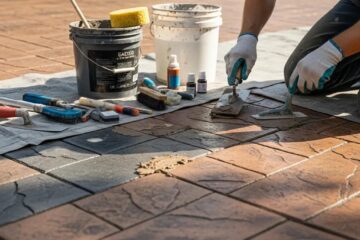
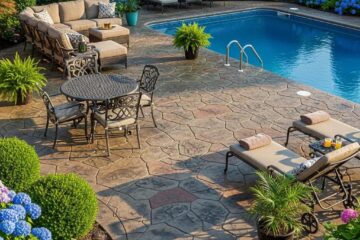
Concrete provides a wide range of decorative and customization choices—stamping, coloring, staining, polished or exposed aggregate—that allow homeowners to match architectural styles and increase curb appeal. These decorative concrete finishes can mimic stone, brick, or tile patterns and are available in numerous color palettes and textures, offering design flexibility that asphalt cannot match. Asphalt is functionally limited to a smooth black surface and patched repairs can be visually obvious; design upgrades for asphalt usually require replacing the surface with a different material or adding edging details. The ability to combine durability with aesthetic customization is a strong selling point for concrete in Greensboro neighborhoods where curb appeal and property value are priorities.
- Stamped concrete: Patterns that emulate pavers or natural stone for visual richness.
- Colored stains and dyes: Permanent color options that can complement home exteriors.
- Exposed aggregate: Texture and slip resistance that add character and longevity.
These decorative strategies demonstrate how concrete can be tailored to design goals while maintaining structural benefits, and they provide a clear alternative for homeowners seeking more than just a utilitarian surface.
What Decorative Concrete Options Enhance Driveway Appearance in Greensboro?
Decorative concrete options include stamped patterns, integral coloring, acid stains, and exposed aggregate finishes that deliver distinct looks and textures tailored to local architectural styles. Stamped concrete replicates the appearance of bricks or pavers at a lower long-term maintenance cost, while integral coloring and stains create uniform or variegated hues that resist washing away. Exposed aggregate reveals natural stone textures for slip resistance and rustic appeal, and overlays or control joint designs add visual rhythm to large slabs. Greensboro homeowners often prefer finishes that harmonize with regional colonial, craftsman, or contemporary exteriors, and decorative concrete allows that design flexibility while preserving structural durability.
Selecting a decorative finish requires balancing desired appearance, maintenance expectations, and budget considerations to ensure the driveway meets both aesthetic and performance goals.
Why Are Asphalt Driveways Limited in Design and Visual Appeal?
Asphalt’s composition and finishing process limit it to a dark, uniform surface that cannot be stamped or intricately colored like concrete, which constrains design options for homeowners seeking custom curb appeal. Attempts to add design elements to asphalt—such as painted borders or overlays—tend to have shorter lifespans and may require more maintenance, while patches from repairs often remain visually conspicuous. For homeowners prioritizing long-term aesthetic value, replacing an asphalt surface with decorative concrete or installing pavers provides a more durable design solution. When curb appeal and architectural harmony are central goals, material choice should factor visual flexibility alongside performance.
Understanding these design limits helps homeowners select the surface that aligns with both their visual goals and maintenance tolerance.
What Environmental Benefits Do Concrete Driveways Offer Over Asphalt in Greensboro NC?
Concrete offers environmental advantages in recyclability and material sourcing compared with asphalt’s petroleum-based composition, and its longer lifespan reduces frequency of material replacement. Crushed concrete can be repurposed as base material for new projects, and concrete relies on abundant mineral aggregates rather than refined petroleum binders. The extended service life of concrete decreases total material throughput and the emissions associated with repeated resurfacing events typical of asphalt. However, environmental tradeoffs depend on local production practices, transport distances, and end-of-life recycling availability, so homeowners should balance material sources and lifecycle impacts when choosing a driveway surface. The table below summarizes recyclability and lifecycle considerations for quick comparison.
This table highlights that concrete’s recyclability and longer life can reduce overall material consumption, though local factors determine the true environmental footprint.
How Is Concrete an Eco-Friendly and Recyclable Driveway Material?
Concrete can be crushed and reused as aggregate for bases and subgrades, which reduces landfill use and the demand for virgin materials, and its longer replacement interval lowers cumulative material consumption. Using locally sourced aggregates further reduces transportation emissions and supports lower embodied energy compared with repeatedly resurfacing asphalt. Additionally, longer service life means fewer rehabilitation cycles over decades, diminishing overall emissions tied to production and installation. Homeowners interested in greener choices can inquire about recycled aggregate options or permeable concrete alternatives to improve stormwater management and reduce runoff.
Recognizing these recyclable qualities helps environmentally minded property owners choose materials that lower long-term resource use and waste.
What Are the Environmental Drawbacks of Asphalt Driveways?
Asphalt’s petroleum-derived binder and the need for regular sealcoating and resurfacing contribute to higher recurring material use and associated emissions over the driveway’s lifecycle. Sealcoating materials and repeated overlays introduce additional production and disposal demands, and oil-based runoff is a potential environmental concern when not properly managed. Mitigation practices include responsible sealant selection, proper runoff controls, and maximizing pavement life through good base preparation and regular maintenance to reduce the frequency of resurfacing events. For environmentally cautious homeowners, these tradeoffs make concrete’s recyclability and longer lifespan more attractive despite higher initial energy inputs.
Understanding these drawbacks supports a holistic lifecycle comparison when selecting driveway materials.
Why Choose Greensboro Concrete Services for Your Concrete Driveway Installation?
Greensboro Concrete Services provides local, licensed, bonded, and insured concrete contracting tailored to residential and commercial driveway projects in Greensboro and surrounding areas. The company specializes in concrete driveway installation and replacement, repairs, maintenance, stamped and decorative concrete, foundations, patios, and flatwork—services that address both structural longevity and aesthetic customization. Greensboro Concrete Services emphasizes durability, aesthetic appeal, and long-term value, and the business offers free estimates to help homeowners compare concrete driveway cost and options with transparent local guidance. When evaluating contractors, look for clear descriptions of scope, base preparation, reinforcement, finish options, and warranties or workmanship assurances that align with project goals.
Beyond driveways, Greensboro Concrete Services also offers comprehensive concrete flatwork solutions, including sidewalks, patios, and other paved surfaces, ensuring consistent quality across all your property’s concrete needs.
This company-focused overview provides a local resource for property owners seeking professional installation and a trustworthy partner for concrete driveway projects.
What Expertise and Quality Assurance Does Greensboro Concrete Services Provide?
The company’s verified attributes include licensed, bonded, and insured status and a service scope that covers installations, replacements, repairs, and stamped/decorative concrete—indicators of professional capability and risk management. Greensboro Concrete Services highlights workmanship practices that prioritize correct base prep, proper reinforcement, and finish methods that support long-term performance and aesthetic outcomes. Their residential and commercial experience means crews are familiar with both curb-appeal-driven decorative techniques and heavy-duty slab requirements. These attributes collectively support a quality-driven approach to concrete driveway installation without overstating specific certifications or timelines beyond the provided company claims.
Focusing on these explicit capabilities helps homeowners align contractor selection with performance and aesthetic expectations.
How Can Homeowners and Business Owners Get a Free Estimate for Concrete Driveways?
To request a free estimate, homeowners should contact Greensboro Concrete Services through the company’s published website or Google Business profile link, prepare basic project details such as driveway dimensions or photos, desired finish (plain, stamped, colored, exposed aggregate), and any site notes, and expect a follow-up that may include a site visit and formal written estimate. Providing photos and a description of existing conditions speeds the estimating process and helps the contractor identify site-prep needs and potential drainage issues. After the initial request, a professional assessment typically identifies necessary subbase work, reinforcement options, finish choices, and a transparent cost breakdown so property owners can make informed decisions. Requesting a free estimate is a practical next step for anyone considering concrete driveway installation in Greensboro.
Preparing project details in advance ensures a smoother estimate process and clearer comparison of installation options and lifecycle costs.
Frequently Asked Questions
What are the advantages of choosing concrete over asphalt for driveways in Greensboro?
Concrete driveways offer several advantages over asphalt, particularly in terms of durability and maintenance. Concrete is less prone to softening in high temperatures and can withstand heavy loads without deforming. Additionally, concrete requires less frequent maintenance, which translates to lower long-term costs. Its aesthetic versatility allows for various decorative options, enhancing curb appeal. In Greensboro’s climate, concrete’s resistance to weather-related wear makes it a more reliable choice for homeowners looking for longevity and value.
How does the installation process differ between concrete and asphalt driveways?
The installation process for concrete driveways typically involves more extensive preparation than asphalt. Concrete requires a solid subbase, control joints, and often reinforcement with rebar or wire mesh to ensure durability. The curing process for concrete also takes longer, which can delay the time before the driveway is usable. In contrast, asphalt can be installed more quickly, but it may require more frequent maintenance and resurfacing over time. Understanding these differences can help homeowners plan their projects effectively.
What should homeowners consider when choosing decorative options for concrete driveways?
When selecting decorative options for concrete driveways, homeowners should consider their overall aesthetic goals, maintenance requirements, and budget. Options like stamped patterns, colored stains, and exposed aggregate can enhance visual appeal but may come with varying maintenance needs. It’s essential to choose finishes that complement the home’s architecture and landscape while also considering how they will hold up against Greensboro’s climate. Consulting with a professional can help ensure that the chosen decorative elements align with both design and durability expectations.
Are there any specific environmental considerations for concrete driveways?
Yes, concrete driveways have several environmental benefits, including recyclability and lower overall material consumption over their lifespan. Concrete can be crushed and reused, reducing landfill waste, while its longer lifespan means fewer replacements are needed compared to asphalt. However, local production practices and transportation emissions can impact the overall environmental footprint. Homeowners should consider these factors when selecting materials, as well as explore options like permeable concrete to improve stormwater management.
What are the common signs that a concrete driveway needs repair?
Common signs that a concrete driveway may need repair include visible cracks, spalling (surface flaking), and uneven surfaces. Cracks can allow water to penetrate, leading to further damage, especially during freeze-thaw cycles. Spalling often indicates that the surface is deteriorating due to moisture or poor installation practices. Homeowners should also watch for drainage issues, as standing water can compromise the driveway’s integrity. Prompt attention to these signs can help prevent more extensive repairs and extend the driveway’s lifespan.
How can homeowners ensure the longevity of their concrete driveways?
To ensure the longevity of concrete driveways, homeowners should prioritize proper installation, regular maintenance, and timely repairs. This includes maintaining good drainage to prevent water accumulation, cleaning the surface to remove debris, and addressing cracks promptly with appropriate fillers. Sealing the driveway every few years can also protect against stains and surface wear. Additionally, avoiding the use of harsh chemicals or deicers can help preserve the concrete’s integrity. Following these practices can significantly extend the lifespan of a concrete driveway.
Conclusion
Opting for a concrete driveway in Greensboro offers homeowners unmatched durability, lower long-term maintenance costs, and a variety of aesthetic options that enhance curb appeal. This comprehensive guide highlights the significant advantages of concrete over asphalt, reinforcing its value as a long-term investment. For those ready to elevate their property with a reliable and visually appealing driveway, consider reaching out to Greensboro Concrete Services for a free estimate. Explore the possibilities today and make a choice that benefits your home for years to come.

0 Comments