Elevate Your Greensboro Yard with Stamped and Stained Concrete
Decorative concrete combines structural performance with aesthetic flexibility to turn ordinary yards into durable, attractive outdoor living areas, and for Greensboro homeowners it offers both visual appeal and climate-ready performance. This article explains what decorative concrete is, why stamped and stained concrete are excellent choices in Greensboro, and how these finishes deliver long-lasting curb appeal and practical benefits like low maintenance and improved drainage. Homeowners will learn which decorative concrete options suit patios, driveways, and walkways, how to maintain finishes in local conditions, current 2024 design trends, and when to hire a professional contractor. The guide covers material types—stamped, stained, polished, overlays, and exposed aggregate—practical installation considerations, maintenance timetables tailored for Greensboro’s humid summers and occasional freezes, and the local expertise to expect from qualified contractors. Throughout, targeted terms such as greensboro nc decorative concrete options, stamped concrete patterns Greensboro, and stained concrete colors Greensboro are used to help you evaluate choices and plan a yard transformation that balances beauty, durability, and cost.
Why Choose Decorative Concrete for Your Greensboro Yard?
Decorative concrete is a finishing approach that transforms plain concrete into patterned, colored, or textured surfaces that perform structurally while enhancing aesthetics; it works by combining surface treatments, pigments, molds, and sealers to create custom looks that resist wear. In Greensboro’s climate, decorative concrete’s weather resistance and low maintenance matter because materials must handle humid summers, UV exposure, and occasional freeze–thaw cycles without frequent replacement. Homeowners gain increased curb appeal and property value from cohesive outdoor designs that tie driveways, patios, and walkways together visually while providing a durable surface for everyday use. For homeowners seeking local reassurance, Greensboro Concrete Services offers free estimates, transparent pricing, and experienced staff who understand regional topography and drainage—helping translate design ideas into practical, long-lasting installations. The next sections break down homeowner benefits and how decorative concrete choices deliver measurable outcomes for outdoor living spaces.
Decorative concrete delivers several core homeowner benefits in Greensboro:
- Curb Appeal and Value: Enhances first impressions and perceived property value through coordinated finishes.
- Durability: Resists cracking and wear with proper base preparation and sealing.
- Low Maintenance: Simple cleaning and periodic resealing keep surfaces attractive for years.
- Design Flexibility: Wide palette of stamped patterns and stained colors to match architectural styles.
These benefits create concrete outcomes such as fewer repairs, extended service life, and improved outdoor livability; understanding specific homeowner advantages clarifies which systems to choose next.
What Are the Benefits of Decorative Concrete for Homeowners?
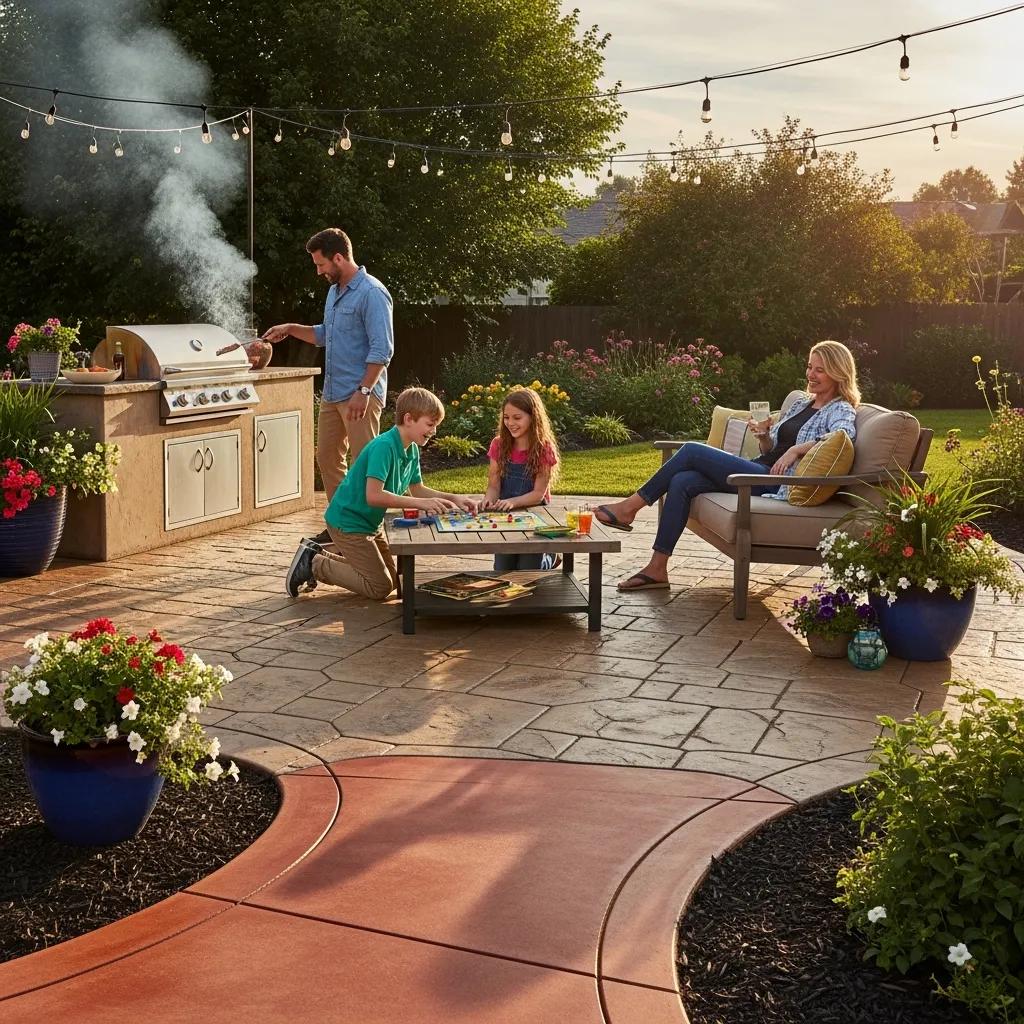
Decorative concrete benefits homeowners by combining long-term performance with tailored aesthetics, making it ideal for yards that need to look good and stand up to use. The mechanism is straightforward: durable cementitious bases are enhanced with surface treatments—stamps, stains, overlays, and sealants—that add texture, color, and protection while preserving structural strength. For everyday life this means lower lifetime maintenance costs compared with replacing natural stone or wood, and predictable performance when installed with proper sub-base and jointing. For example, a stamped patio that mimics slate or wood provides the visual warmth of natural materials without the ongoing sealing, staining, or repairs those materials require; this balance of appearance and practicality makes decorative concrete a smart investment. Understanding these trade-offs helps homeowners choose finishes that fit their lifestyle and maintenance tolerance.
This comparison highlights why many Greensboro homeowners prefer decorative concrete when seeking both performance and tailored design; next we examine how decorative concrete translates into property value and visual impact.
How Does Decorative Concrete Increase Property Value and Curb Appeal?
Decorative concrete increases property value by delivering a cohesive, professionally finished exterior that signals quality and attention to detail; buyers often equate thoughtfully designed hardscapes with overall home care. The mechanism is visual continuity—matching driveway patterns to entry walkways and patios creates a unified aesthetic that elevates curb appeal and supports resale arguments. Practical examples include a colored, stamped driveway paired with a stained patio and complementary walkway borders, which can frame landscaping and set off facade materials for maximum effect. From an ROI perspective, durable decorative surfaces reduce immediate post-sale maintenance concerns, helping sellers justify higher asking prices relative to homes with worn, patched, or plain concrete. To maximize appeal, choose finishes and colors that complement the home’s architectural era—traditional patterns for classic homes and geometric, modern finishes for contemporary properties—which leads directly into the next section on available decorative options.
What Decorative Concrete Options Are Available in Greensboro?
Decorative concrete encompasses several hyponymous systems—stamped, stained, polished, overlays, and exposed aggregate—each suited to different uses like patios, driveways, and pool decks. The defining attributes are texture, color, and finish technique: stamping adds texture and pattern, staining introduces color depth, polishing refines surface sheen, overlays renew existing slabs, and exposed aggregate reveals decorative stone for traction and visual interest. Choosing among these options depends on desired look, budget, and functional demands such as load-bearing for driveways or slip resistance near pools. Greensboro Concrete Services provides installations for many of these systems, offering homeowners options to match style and performance goals while ensuring proper local preparation and sealing.
Different decorative concrete systems fit distinct uses and budgets:
This table helps homeowners quickly compare systems to match site needs and budgets; next we explore how stamped and stained concrete achieve their characteristic looks.
How Does Stamped Concrete Mimic Natural Materials Like Stone and Wood?
Stamped concrete replicates natural materials by pressing flexible molds into fresh concrete at the surface layer, capturing textures such as flagstone, wood plank, or cobblestone while pigments and antiquing agents add visual depth. The process begins with color-hardening or integral pigments mixed into the concrete, followed by timed stamping when the slab reaches the right set; release agents and companion grouting techniques create realistic jointing. For homeowners, stamping is attractive because it provides the look of stone or timber without the variable maintenance and higher cost of quarry or hardwood materials, and it can cover large areas seamlessly. When choosing a pattern, consider scale and grout layout—large patterns suit expansive patios, while plank stamps work well for narrow terraces—so design intent aligns with functional needs and landscape features.
What Color and Pattern Choices Does Stained Concrete Offer for Outdoor Designs?
Stained concrete introduces color by applying acid- or water-based stains that chemically or physically react with the concrete surface to produce translucent, variegated color effects that are difficult to replicate with paint. Acid stains penetrate and react with concrete minerals to produce mottled, earthy tones ideal for traditional palettes, whereas water-based stains offer a broader, more consistent color range including modern grays and bold accent hues. For outdoor designs, combining stains with sealing strategies yields durable results that resist fading and stand up to Greensboro’s sun and humidity; stains also pair well with stamping or overlays to create layered, high-end appearances. Selecting a palette that complements local landscaping and facade colors keeps the outdoor design integrated and visually balanced.
How Can Decorative Concrete Be Applied to Patios, Driveways, and Walkways?
Decorative concrete adapts to each application by matching structural requirements with surface treatments: patios prioritize comfort and aesthetics, driveways require load-bearing preparation and jointing, and walkways need slip resistance and continuity with landscaping. The technique varies—driveways often need thicker sections, reinforcement, and contraction joints; patios emphasize surface texture and seamless transitions for outdoor living areas; walkways focus on gradients and drainage to prevent water pooling. Design continuity across surfaces—using the same color family or a repeated motif—creates visual flow between elements while functional tweaks (e.g., broom-finished borders or exposed aggregate strips) add texture and safety. Understanding these distinctions helps homeowners select the right mix of form and function for each yard area, which leads to specific design examples in the subsections below.
Below are practical steps and considerations for applying decorative concrete to different outdoor surfaces:
- Assess site conditions: Check slope, drainage, and soil to design a stable base.
- Choose a system: Match stamped, stained, polished, overlay, or exposed aggregate to the use-case.
- Plan joints and reinforcement: Specify control joints and reinforcement for driveways and heavy-load areas.
- Finish and seal: Select sealers for UV protection, stain resistance, and skid control.
These steps outline the installation flow and prepare homeowners to evaluate contractor proposals and workmanship expectations.
What Are Popular Decorative Concrete Patio Designs in Greensboro?
Popular patio designs in Greensboro blend comfort and visual interest, often combining stamped flagstone patterns, stained earth-tone palettes, and mixed textures like polished seating areas with exposed aggregate borders to define zones. Trends include integrated outdoor kitchens, firepit platforms, and level changes that use concrete steps and planters to create rooms outdoors; these functional elements rely on careful slope and drainage planning to protect foundations and landscape beds. Paired furniture choices and plant palettes enhance the concrete’s color story, while durable sealers and UV-stable pigments maintain appearance under prolonged sun exposure. Successful patio designs balance durable surfacing with thoughtful micro-drainage so the space remains both beautiful and functional year-round.
How Do Decorative Concrete Driveways Enhance Durability and Style?
Decorative concrete driveways enhance durability by combining proper base compaction, reinforcement (when needed), and control joints with decorative surface techniques like stamping, exposing aggregate, or applying stains; this integrated approach ensures the surface supports vehicle loads while remaining attractive. Sealing and choosing skid-resistant finishes protect against oil staining and weathering, and patterned expansions can break up large areas visually while reducing random cracking. Design choices such as perimeter banding, contrasting borders, or stamped center panels elevate curb appeal and integrate the driveway with walkway and patio motifs. When driveway design aligns with structural best practices, the result is a long-lasting, stylish entry that complements the home’s facade.
What Are the Maintenance and Durability Features of Decorative Concrete?
Decorative concrete requires a straightforward maintenance regimen—regular cleaning, stain spot treatment, and resealing at recommended intervals—to preserve appearance and performance in Greensboro’s climate. The materials and finishes chosen determine the schedule: some systems need resealing more frequently in high-traffic or high-UV environments, while overlays may need periodic touch-ups to maintain texture and color. With proper initial installation, many decorative systems last decades; however, factors such as substrate quality, drainage, freeze–thaw exposure, and maintenance adherence influence longevity. The table below gives a practical maintenance timetable homeowners can follow to protect their investment and plan refurbishment when necessary.
Follow these tasks to extend service life and avoid premature resurfacing; next we look at stamped concrete-specific upkeep.
Is Stamped Concrete Easy to Maintain in Greensboro’s Climate?
Stamped concrete is relatively easy to maintain when homeowners follow a regular cleaning and resealing schedule tailored to local weather patterns; the mechanism of protection is a quality sealer that shields pigments and surface texture from UV, moisture, and wear. Recommended practice includes gentle washing to remove grit and organic deposits, prompt removal of oil or chemical stains, and resealing every two to three years depending on exposure and traffic. Preventative measures—such as protecting surfaces from heavy planters that trap moisture and avoiding de-icing salts on decorative finishes—reduce freeze–thaw damage during occasional cold snaps. With these practices in place, stamped surfaces retain their visual depth and structural integrity for many seasons.
How Long Does Decorative Concrete Typically Last Outdoors?
Decorative concrete lifespan varies by system—properly installed stamped or stained concrete can last 25–30+ years, polished surfaces often exceed 20 years, overlays may need refreshes every 10–15 years, and exposed aggregate typically endures multiple decades when maintained. Key influencing factors include installation quality (base compaction, reinforcement), finish type, local climate impacts (freeze–thaw cycles), and maintenance adherence (resealing intervals and cleaning). When deterioration appears—fading, surface flaking, or cracking—refinishing with overlays or targeted repairs can restore function and appearance without full replacement. Understanding these lifespan ranges helps homeowners plan budgets and maintenance cycles accordingly.
What Are the Latest Decorative Concrete Trends for Greensboro Yards in 2024?
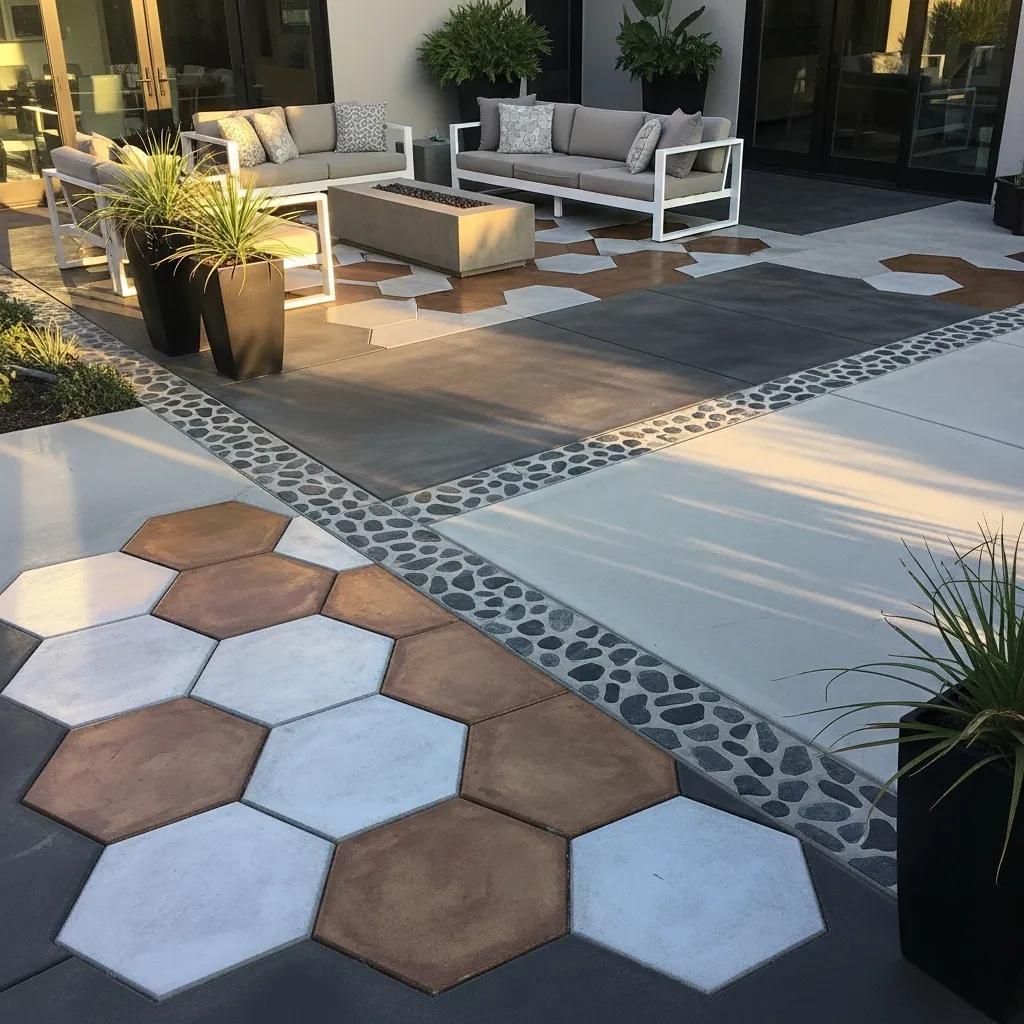
In 2024, decorative concrete trends emphasize geometric patterns, hybrid finishes like metallic epoxy overlays for high-end modern looks, and sustainable options such as permeable concrete mixes and recycled aggregates that address drainage and environmental impact. Designers increasingly use inlaid geometric insets and linear banding to create contemporary visual rhythms, while metallic and translucent coatings provide depth for statement garden paths and feature areas. Sustainability trends focus on lower-carbon cement alternatives, permeable pavements to reduce runoff, and eco-friendly sealers that minimize VOCs—practical choices for homeowners managing stormwater and lifecycle costs. These trends blend aesthetics, performance, and environmental responsibility, moving decorative concrete beyond pure ornamentation to integrated landscape solutions.
Recent trends in decorative concrete design include:
- Geometric inlays and custom patterns that create bold, modern focal points.
- Metallic and hybrid finishes used selectively for feature areas and patios.
- Permeable and recycled-aggregate mixes that improve drainage and sustainability.
These trends reflect both stylistic shifts and practical responses to environmental concerns; the next subsection explains materials and limitations for metallic and geometric applications.
How Are Geometric Patterns and Metallic Epoxy Used in Outdoor Concrete?
Geometric patterns and metallic epoxy are used to create contemporary outdoor statements by combining precise saw-cut inlays, overlays, and transparent metallic topcoats over stable substrates; the mechanism involves layering a durable base with carefully measured insets and a weather-rated metallic epoxy or polymer topcoat. Suitable uses include accent patios, entry platforms, and covered outdoor rooms where UV-stable formulations and slip-resistant additives are specified; metallic finishes require high-quality sealing and sometimes shade coverage to minimize glare and weathering. For practical installations, contractors recommend testing samples on-site to verify color shift in sunlight and pairing metallic areas with textured borders for traction and transition. Proper detailing ensures these high-impact finishes perform well outdoors.
What Sustainable and Eco-Friendly Decorative Concrete Options Exist?
Sustainable decorative concrete options include low-carbon cement blends, recycled aggregate mixes, permeable concrete for stormwater infiltration, and bio-based or low-VOC sealers that lower environmental impact while maintaining performance. Permeable concrete helps manage runoff and recharge local soils, which is especially useful on properties with drainage constraints or strict runoff regulations. Recycled aggregates reduce demand for virgin materials and can add visual interest when exposed at the surface. Choosing eco-friendly sealers and specifying optimized mix designs can reduce lifecycle emissions and align yard upgrades with broader sustainability goals, making decorative concrete a responsible choice for environmentally conscious homeowners.
Why Hire Greensboro Decorative Concrete Contractors for Your Yard Transformation?
Hiring professional decorative concrete contractors ensures installations meet structural and aesthetic expectations because qualified teams combine proper site preparation, material selection, and finishing expertise to deliver durable results. Local contractors bring knowledge of regional soil conditions, drainage requirements, and material performance in Greensboro’s climate, reducing the risk of premature failure. Greensboro Concrete Services, as a locally owned and operated, fully licensed, bonded, and insured contractor, emphasizes free estimates and upfront pricing, experienced and professional staff, customization options, and durable results—features that help homeowners make confident decisions and plan realistic budgets.
Beyond residential projects, Greensboro Concrete Services also provides comprehensive commercial concrete solutions, ensuring businesses in the region have access to durable and aesthetically pleasing concrete installations tailored to their specific needs.
Below are practical reasons to hire a professional that summarize key contractor responsibilities and homeowner benefits.
Professional contractors provide several specific advantages:
- Site assessment and structural prep: Ensures proper base and drainage for long-term performance.
- Material and finish expertise: Matches systems (stamped, stained, overlays) to use cases.
- Warranty and compliance: Work performed by licensed, bonded, and insured teams reduces homeowner risk.
- Project management: Coordinates timing, subcontractors, and inspections for efficient delivery.
These responsibilities ensure the finished yard looks great and endures, and they lead into a closer look at the company’s claims of trust and service.
What Makes Greensboro Concrete Services the Trusted Local Expert?
Greensboro Concrete Services distinguishes itself through locally focused expertise and clear customer protections: the company is fully licensed, bonded, and insured, and it offers free estimates and upfront pricing to reduce surprises during project planning. Experienced staff provide customization and versatile solutions—stamped and stained systems, overlays, and maintenance work—designed for the region’s topography and climate, which improves long-term performance and homeowner satisfaction. Their approach emphasizes durable materials, proper substrate preparation, and transparent communication during each project phase, helping homeowners understand trade-offs between aesthetic choices and lifecycle maintenance. Choosing a contractor with these attributes reduces execution risk and supports predictable, long-lasting yard transformations.
How Can You Get a Free Estimate for Your Decorative Concrete Project?
To request a free estimate, prepare the basic project details so a contractor can provide an accurate initial assessment: approximate project area (square footage), desired finish (stamped pattern or stained colors), existing conditions (new build or overlay), and photos of the site to illustrate slopes and drainage. Greensboro Concrete Services offers free estimates and upfront pricing; prospective clients can mention these details when contacting the company through its listed business channels to schedule an on-site visit and receive a transparent project proposal. During the estimate visit, expect a site evaluation, discussion of finish samples and sealing options, and an explanation of timeline and maintenance expectations—steps that clarify cost and performance before work begins.
This final section connects planning to action and prepares homeowners to gather the information contractors need to deliver accurate, competitive proposals.
Frequently Asked Questions
What is the difference between stamped and stained concrete?
Stamped concrete involves pressing molds into freshly poured concrete to create patterns and textures that mimic natural materials like stone or wood. In contrast, stained concrete uses colorants to enhance the surface, providing a rich, translucent finish. While stamped concrete is primarily about texture and design, stained concrete focuses on color depth and vibrancy. Both options can be used together to achieve a unique look, but they serve different aesthetic purposes in outdoor spaces.
How can I choose the right decorative concrete option for my yard?
Choosing the right decorative concrete option depends on several factors, including the intended use of the space, your budget, and your desired aesthetic. Consider the functionality required—driveways need durability, while patios may prioritize comfort and style. Evaluate the maintenance level you are willing to commit to, as some finishes require more upkeep than others. Consulting with a local contractor can provide insights tailored to your specific needs and the Greensboro climate.
Are there eco-friendly options for decorative concrete?
Yes, there are several eco-friendly options for decorative concrete. Homeowners can choose low-carbon cement blends, recycled aggregates, and permeable concrete that allows for stormwater infiltration. Additionally, using bio-based or low-VOC sealers can minimize environmental impact while maintaining performance. These sustainable choices not only help reduce the carbon footprint but also contribute to better drainage and soil health, making them ideal for environmentally conscious homeowners.
What maintenance is required for decorative concrete in Greensboro?
Maintaining decorative concrete in Greensboro involves regular cleaning, stain treatment, and resealing to protect against the elements. Homeowners should sweep and wash surfaces monthly, inspect for cracks annually, and reseal every 2-3 years to preserve appearance and durability. The specific maintenance schedule may vary based on the type of finish and exposure to weather conditions. Following these guidelines helps extend the lifespan of decorative concrete installations.
How does weather affect the installation of decorative concrete?
Weather plays a significant role in the installation of decorative concrete. High humidity and temperature can affect curing times, while freezing temperatures can lead to improper setting and cracking. It’s essential to schedule installations during favorable weather conditions, typically in spring or fall in Greensboro. Additionally, contractors may use specific techniques and materials to mitigate weather-related issues, ensuring a successful installation that withstands local climate challenges.
Can decorative concrete be repaired if damaged?
Yes, decorative concrete can be repaired if damaged. Common issues like cracks, chips, or surface wear can often be addressed through various methods, including patching, resurfacing, or applying overlays. For minor cracks, filling and sealing may suffice, while more extensive damage might require a complete resurfacing to restore the appearance and functionality. Consulting with a professional contractor can help determine the best repair approach based on the specific damage and type of decorative finish.
What are the costs associated with decorative concrete projects?
The costs of decorative concrete projects can vary widely based on factors such as the type of finish, project size, and complexity of the design. Generally, stamped concrete tends to be more expensive than stained concrete due to the labor-intensive process involved. Homeowners should also consider additional costs for site preparation, sealing, and maintenance. Obtaining multiple quotes from local contractors can provide a clearer picture of the expected investment for your specific project.
Conclusion
Transforming your Greensboro yard with decorative concrete offers a blend of durability, aesthetic appeal, and low maintenance, making it an ideal choice for homeowners. By selecting the right finishes, such as stamped or stained concrete, you can enhance your outdoor spaces while increasing property value. Understanding the benefits and options available empowers you to make informed decisions for your home. Contact Greensboro Concrete Services today to explore your decorative concrete possibilities and receive a free estimate!

0 Comments