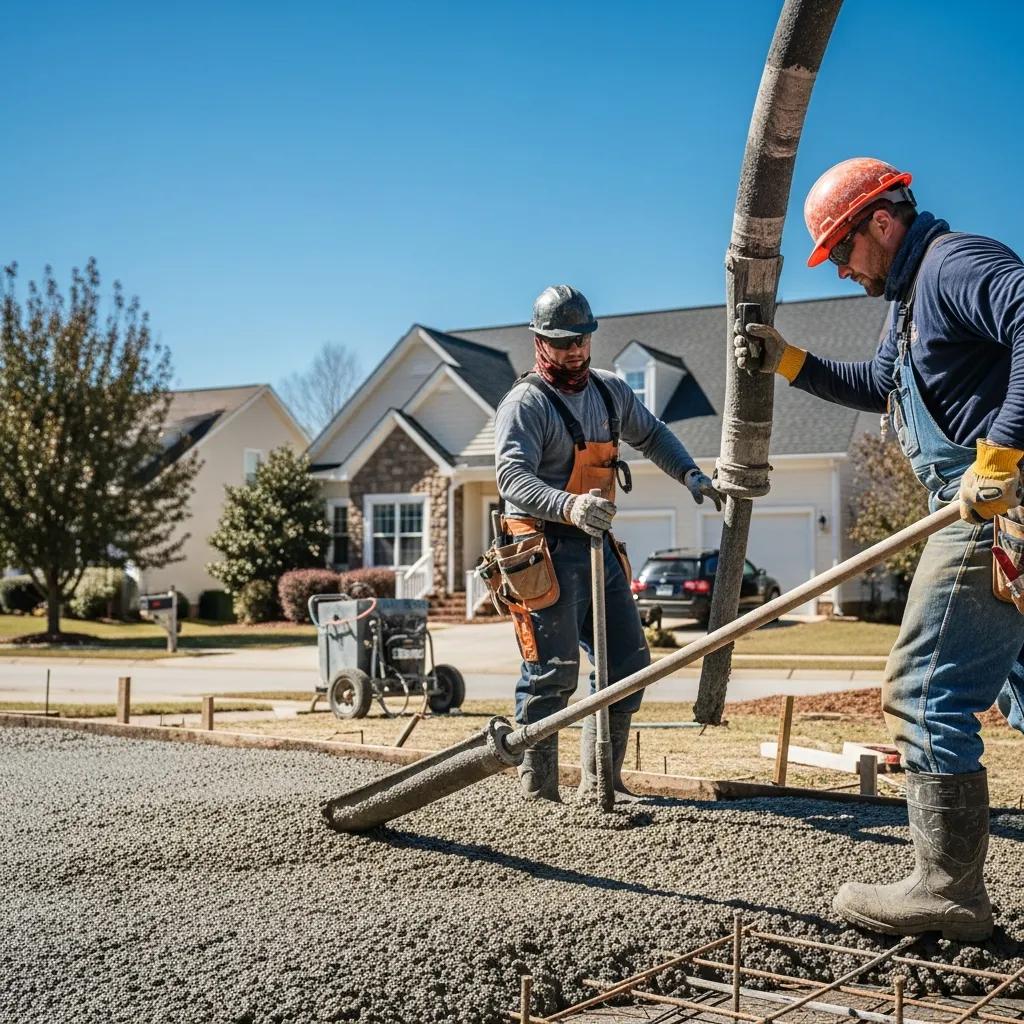
Top Concrete Contractors in Greensboro, NC: Free Estimates for Quality Concrete Services
Finding dependable concrete contractors in Greensboro, NC starts with clear expectations: professional contractors deliver installation, repair, and decorative concrete solutions while offering free estimates that clarify scope and cost. This guide explains what to expect from top Greensboro concrete contractors, how local expertise affects outcomes, current 2024–2025 cost ranges for common projects, and practical steps to obtain accurate free estimates. Homeowners and commercial clients will learn when repair makes sense versus replacement, the major cost drivers for driveways and stamped concrete, and how to compare written bids to protect their budget. The article covers service types—driveways, patios, foundations, stamped and exposed aggregate finishes—and provides tables and checklists that break down price drivers, recommended applications, and decision thresholds. Read on to learn actionable criteria for choosing a contractor in Greensboro, questions to ask during a free estimate, and the realistic 2024–2025 price benchmarks that inform smart project planning.
What Are the Benefits of Hiring Top Concrete Contractors in Greensboro?
Hiring a top concrete contractor in Greensboro ensures projects finish with durable workmanship, correct reinforcement, and mixes tailored to local conditions, which reduces long-term maintenance and extends lifespan. Professional contractors manage site prep, subgrade compaction, correct PSI selection, and proper curing methods so the finished slab performs under Greensboro’s climate and soil conditions. Working with a qualified local crew also reduces permit and inspection delays, while free estimates give homeowners transparent cost expectations and minimize hidden charges. The next paragraph examines how specific local knowledge—soil behavior, drainage, and code requirements—translates into better outcomes on site.
Top contractors provide these practical advantages:
- Improved durability through correct mix design, reinforcement, and curing practices that extend service life.
- Local knowledge of Greensboro soil and drainage that prevents common failures like heaving or settling.
- Time and cost savings via efficient scheduling, accurate material orders, and permit handling.
- Reduced financial risk through free estimates that clarify scope, exclusions, and warranties.
These benefits make professional hiring a cost-effective choice for long-term value and project predictability, which leads naturally into how local expertise influences every phase of a concrete project.
How Does Local Expertise Enhance Concrete Project Quality?
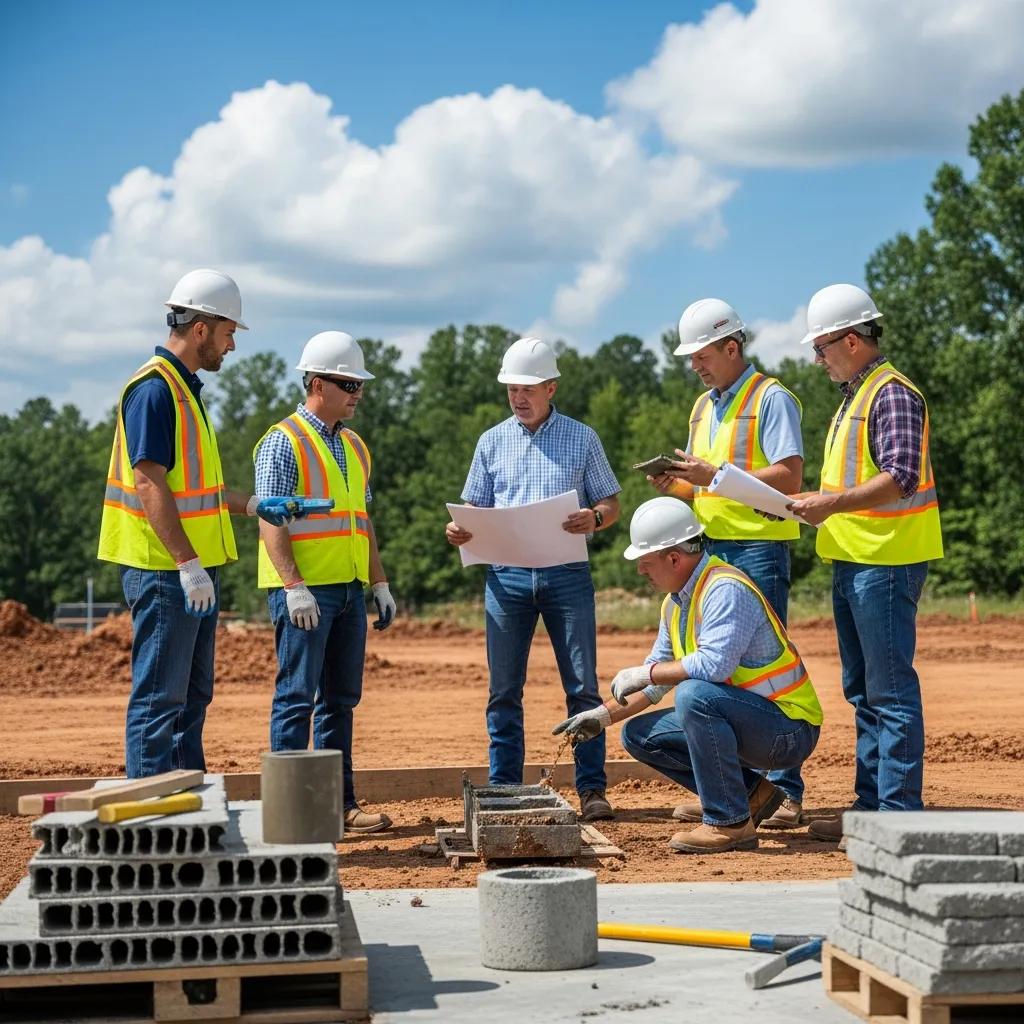
Local expertise means contractors design concrete mixes and site preparations that account for Greensboro’s soil types, freeze/thaw cycles, and seasonal rainfall patterns, producing slabs that resist cracking and settlement. Experienced crews select appropriate reinforcement—rebar or wire mesh—specify curing times, and implement drainage solutions to protect edges and foundation areas, reducing the risk of premature failure. A contractor familiar with local permitting and inspection timelines will sequence work to avoid delays and ensure code compliance, which also protects property value. Understanding these regional factors directly improves durability and lowers lifecycle costs, and this practical advantage frames why free, clear estimates matter for budgeting.
Why Is Free Concrete Estimate Important for Greensboro Clients?
A free concrete estimate gives homeowners a written scope, line-item cost expectations, projected timeline, and clarifies exclusions—information that reduces surprises during construction and supports apples-to-apples comparisons. Estimates typically include measurements, suggested materials (PSI, reinforcement), labor hours, and allowances for site prep or disposal; having this documented protects both parties and enables negotiation on finishes or value-engineering options. Preparing photos, approximate dimensions, and questions in advance helps homeowners get better, faster estimates and ensures contractors price consistently. Knowing what a free estimate should contain guides the comparison process discussed later in the article.
How Much Does Concrete Work Cost in Greensboro, NC?
Concrete costs in Greensboro (2024–2025) center on material rates, delivery fees, labor, and the complexity of finishes; current data place concrete at approximately $125–$150 per cubic yard and typical project averages near $2,000–$2,100. Major cost drivers include concrete strength (PSI), reinforcement, site preparation (grading, subbase), complexity of finish (plain vs stamped), and delivery distance which affects truck fees. The following table breaks down typical project types, their unit measures, and expected price ranges so you can compare projects by scale and finish.
This table highlights that project scope and finish are primary cost levers; the next section breaks down driveway averages and the variables that commonly increase or decrease final pricing.
What Is the Average Greensboro Concrete Driveway Cost in 2025?
Average driveway costs in Greensboro in 2024–2025 fall in a broad band because size, thickness, and finish vary; typical projects run from roughly $2,000 for a basic single-car driveway to $5,000 or more for wider drives with decorative finishes. Price increases come from thicker slabs (e.g., moving from 4″ to 6″), extensive subgrade stabilization, required rebar or mesh reinforcement, and additional excavation or grading work. Decorative stamping, coloring, or exposed aggregate finishes also add labor and material costs, often moving a driveway into the higher end of the range. Knowing these levers helps homeowners prioritize upgrades and negotiate options in a written estimate.
What Are Stamped Concrete Greensboro Prices and Cost Factors?
Stamped concrete pricing in Greensboro depends on pattern complexity, color integration, border/detail work, and finish sealing, with per-square-foot rates significantly higher than plain concrete due to specialized labor and molds. Common factors that drive stamped concrete cost include the number and complexity of patterns, the need for multiple color layers, the difficulty of access for equipment, and extra finishing time for texture and coloration. Stamped concrete often offers cost-effective aesthetics compared with natural stone, but it requires routine sealing and occasional maintenance to preserve color and surface integrity. When considering stamped options, compare per-square-foot pricing and long-term maintenance needs as part of the estimate evaluation.
Which Concrete Services Do Greensboro Contractors Offer?
Greensboro contractors typically provide a full range of concrete services for residential and commercial clients, including driveway and patio installation, foundation pouring, concrete repair and resurfacing, stamped and exposed aggregate finishes, and commercial slab work. These service categories cover both new construction and remediation—repair methods that extend slab life and replacement services for structurally compromised areas. The table below compares common service types by appearance, maintenance, and cost implications to help property owners choose the right approach.
What Are the Features of Concrete Patio Installation in Greensboro?
Concrete patio installations in Greensboro offer options from plain broom-finish slabs to stamped or colored designs, with typical residential patio sizes ranging from about 144 to 400 square feet depending on use. The installation process includes site layout, excavation and compaction of the subbase, forming, reinforcement placement, concrete pouring, finishing, and curing; weather-aware scheduling in Greensboro minimizes cold-weather issues and ensures proper curing. Homeowners should plan for sealing within a few months after installation for decorative finishes, and periodic resealing every 2–5 years to protect color and surface integrity. A concise homeowner checklist—size, finish selection, edge details, and drainage—prepares an effective estimate conversation.
How Do Greensboro Concrete Repair Services Address Common Issues?
Concrete repair services in Greensboro tackle cracks, spalling, settling, and surface wear using techniques such as crack injection, slab lifting/leveling, resurfacing overlays, and localized patching to restore function and extend service life. Small cracks and surface scaling can often be repaired with injection or resurfacing for a fraction of full replacement cost, while larger structural issues may require underpinning or removal and replacement of the affected slab. Repair timelines vary—simple crack repairs can be completed in a day, while leveling or large patches may take several days including curing—and contractors will typically recommend a maintenance plan to maximize longevity. Choosing repair over replacement depends on severity indicators and long-term performance expectations.
When Should You Choose Concrete Repair Versus Replacement in Greensboro?
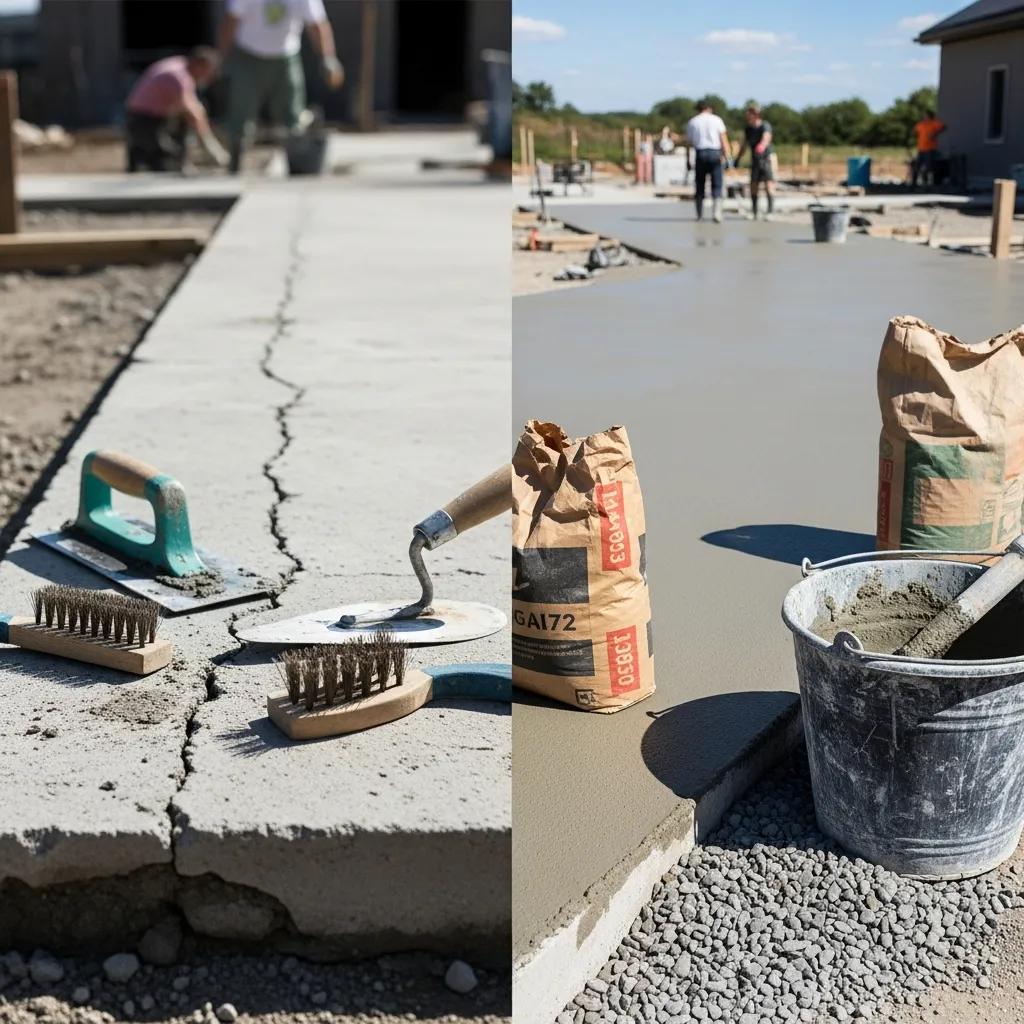
Choose repair when defects are limited, cosmetic, or confined to surface issues; choose replacement when cracks exceed accepted thresholds, there are persistent drainage problems, or widespread settlement affects structural performance.
Clear thresholds include cracks wider than 1/4 inch, recurring potholes or spalling after repair, and drainage patterns that undermine the subbase—conditions that commonly indicate replacement is the more cost-effective long-term choice.
The decision matrix table below summarizes symptoms, severity markers, and the recommended action to simplify homeowner decision-making.
Applying these indicators to an on-site assessment yields a clearer path forward; the next subsections describe common foundation problems in Greensboro and how contractors make assessments that lead to repair or replacement recommendations.
What Are Common Concrete Foundation Problems in Greensboro, NC?
Common foundation problems in Greensboro stem from soil movement, poor surface drainage, and tree root intrusion that cause settling, diagonal or stair-step cracks in masonry, and misaligned doors or windows. Symptoms owners should watch for include uneven or sloping floors, visible foundation cracks wider than 1/4 inch, and doors that stick or fail to latch properly—each indicating possible structural movement. Early detection and a structural inspection can determine whether localized underpinning, drainage correction, or a full foundation repair is necessary. Recognizing these signs early reduces repair costs and prevents more extensive structural damage.
How Do Contractors Assess Concrete Damage and Recommend Solutions?
Contractors assess concrete damage through a systematic process: visual mapping of cracks, measuring widths and offsets, checking slab elevation for settling, and evaluating drainage or moisture conditions around the slab and foundation. This assessment often includes mapping reinforcement exposure, testing moisture content, and documenting subgrade conditions to determine whether leveling, localized repair, underpinning, or replacement is appropriate. Recommendations are documented in a written estimate that outlines scope, materials, expected lifespan of the repair, and alternative options—helping homeowners weigh short-term fixes against long-term solutions.
How to Get Accurate Free Estimates from Greensboro Concrete Contractors?
An accurate free estimate starts with a site visit, precise measurements, scope definition, recommended materials (PSI, reinforcement), a written cost breakdown, and projected timeline; following this process ensures bids are comparable and reduce surprises. During the site visit contractors evaluate access, subgrade conditions, grading, and drainage, then discuss finish options and warranty or maintenance expectations before issuing a written estimate. The numbered steps below provide a repeatable process homeowners can expect and request to ensure transparency and comparability across multiple bids.
Follow these steps during the free estimate process:
- Schedule an on-site visit so the contractor can measure, inspect the subgrade, and assess access and drainage.
- Request a written scope that defines materials, slab thickness, reinforcement, and finish, with exclusions listed.
- Ask for line-item pricing (materials, labor, disposal, permits) and delivery cost estimates tied to per-yard rates.
- Confirm timeline, cure periods, payment schedule, and any warranty or maintenance recommendations.
Using this structured approach yields estimates that are easier to compare and reduces the risk of lowball bids that omit essential work. The following H3s explain what to expect in a free estimate and how to compare multiple bids.
What Is Included in a Free Concrete Estimate Process?
A standard free estimate typically includes an on-site measurement, a defined scope of work (including slab thickness, PSI, reinforcement, and finish), material and labor line items, estimated delivery needs, a projected timeline, and noted exclusions such as landscaping or unseen subgrade remediation. Contractors should state whether permits are included and provide warranty or maintenance guidance; anything omitted should be flagged as an exclusion to prevent scope creep. Requesting photos or sketches as part of the written estimate helps document expectations and supports clearer comparison across bids. This clarity in the estimate protects homeowner interests and sets the stage for an enforceable contract.
How to Compare Estimates for Concrete Driveways, Patios, and Foundations?
Comparing estimates effectively means evaluating scope clarity, unit pricing versus lump sums, allowances for unknowns, timeline realism, and warranty or maintenance terms rather than picking the lowest bid. Use a simple checklist to compare:
- Scope: Are slab thickness, PSI, reinforcement, and finish all specified?
- Pricing: Is pricing shown per unit (per sq ft or per yard) and are delivery fees listed?
- Timeline: Is the start and cure schedule realistic for local weather?
- Exclusions/Warranty: Are permit, cleanup, and warranty terms written down?
Watch for red flags like vague scopes, missing delivery or permit costs, or unusually low bids without documented exclusions. Comparing on these objective criteria makes it easier to select the best value contractor rather than simply the cheapest one. Many Greensboro contractors advertise free estimates and local expertise—use the structured comparison above to select a firm that offers transparent pricing and workmanship expectations.
This final checklist equips homeowners to request and analyze free estimates confidently and to choose contractors who combine local expertise, quality workmanship, and transparent pricing.


0 Comments