Concrete Demolition in Greensboro, NC: Safe and Efficient Removal Services for Residential and Commercial Needs
Concrete demolition is the controlled removal or modification of concrete structures to make way for repair, replacement, or site redevelopment, and in Greensboro it prioritizes safety, efficiency, and regulatory compliance. This article explains the main types of concrete demolition, the step-by-step process used to protect workers and property, local permitting considerations, cost drivers and typical price ranges, recycling and disposal practices, and reasons to hire professional contractors. Readers will learn practical preparation steps, how demolition teams select techniques like concrete breaking or selective cutting, what permits to expect, and how recycling reduces disposal fees and environmental impact. Recent industry guidance through 2025 emphasizes risk management, utility verification, and aggregate reuse, and this guide integrates those best practices with local operational considerations for homeowners and commercial property managers. We begin by defining the key service types offered in Greensboro and then progress through process, permits, costs, recycling logistics, and contractor selection to give a complete operational picture.
What Are the Key Types of Concrete Demolition Services in Greensboro?
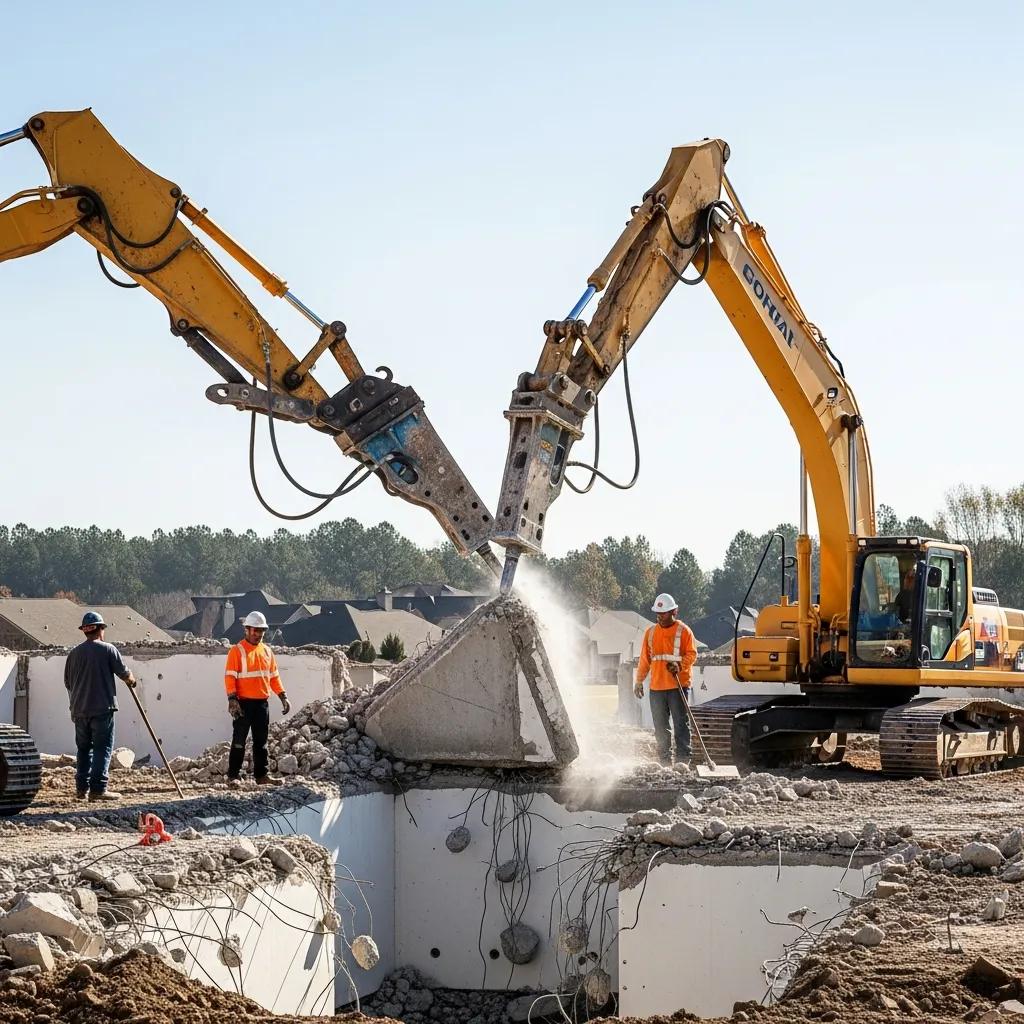
Concrete demolition in Greensboro covers a spectrum of services that respond to different structures and project goals, from full slab removal to targeted, selective cutting. These services work because crews match demolition techniques—hydraulic breaking, sawing, or coring—to the structure’s size and reinforcement, which reduces collateral damage and speeds cleanup. Knowing the service types helps property owners choose the right scope and prepare for permits, traffic control, and recycling options. The following bulleted list gives a concise, snippet-friendly overview of the main service categories and their one-line definitions to help readers quickly identify the right approach.
Concrete demolition services in Greensboro include:
- Driveway demolition: Removal of residential driveway slabs for replacement or redesign.
- Patio removal: Demolition of exterior flatwork to prepare for landscaping or hardscape upgrades.
- Foundation demolition: Complete or partial removal of building foundations for rebuilds or deep repairs.
- Slab and parking-lot removal: Large-area removal that requires staged phasing and heavy equipment.
- Selective concrete cutting: Precision cutting to remove only targeted sections without full demolition.
These categories clarify common project goals and feed directly into planning decisions, including equipment selection and permit needs for the next phase.
Residential Concrete Demolition: Driveways, Patios, and Foundations
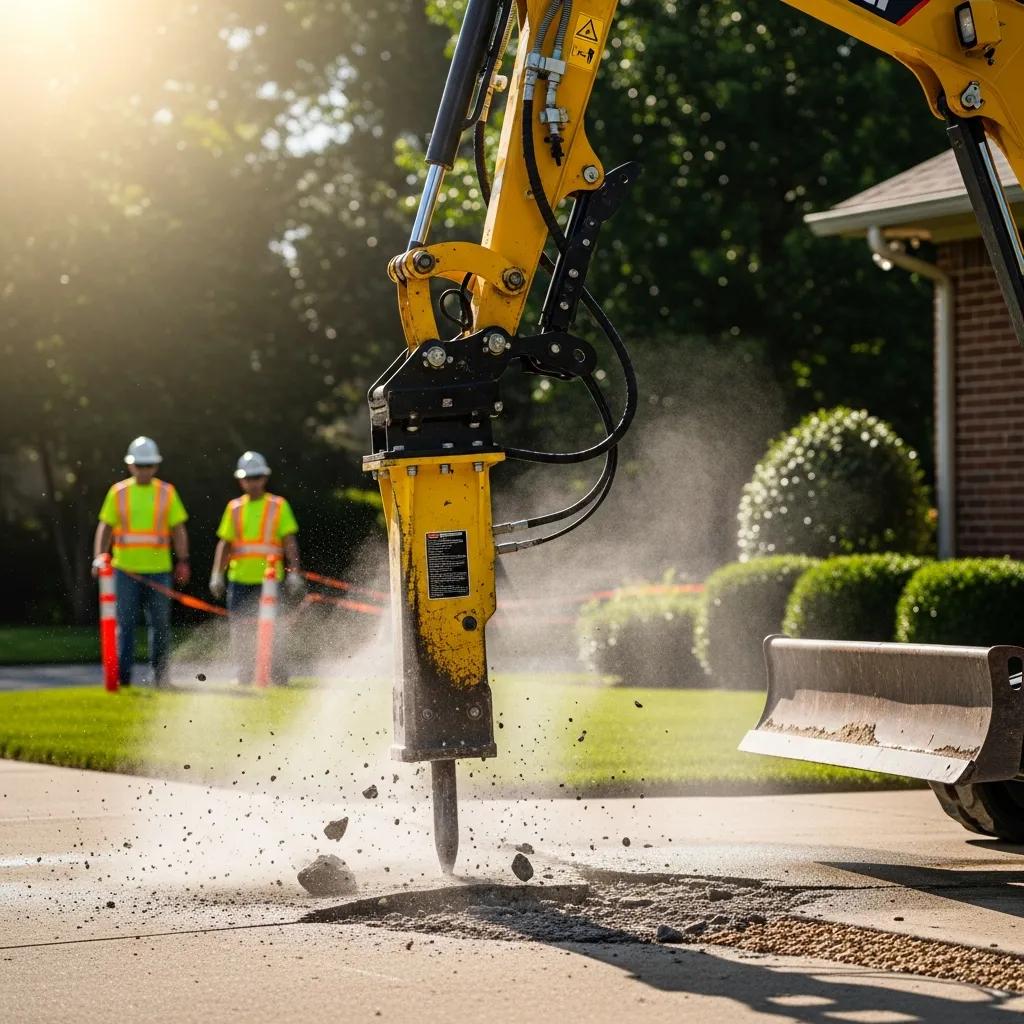
Residential projects like driveway or patio removal typically involve smaller slabs and tighter access constraints that influence equipment choice and labor planning. Crews usually assess slab thickness, reinforcement rebar, and site access before selecting between handheld breakers, mini-excavators with hydraulic hammers, or concrete saws, which reduces property disturbance and cost. Homeowners should expect staging that protects landscaping, temporary traffic management for shared driveways, and debris hauling or recycling options that may affect final pricing. Understanding these factors helps homeowners prepare for the timeline and determine whether a demolition permit or utility locate is required before work begins.
Commercial Concrete Demolition: Slabs, Parking Lots, and Building Foundations
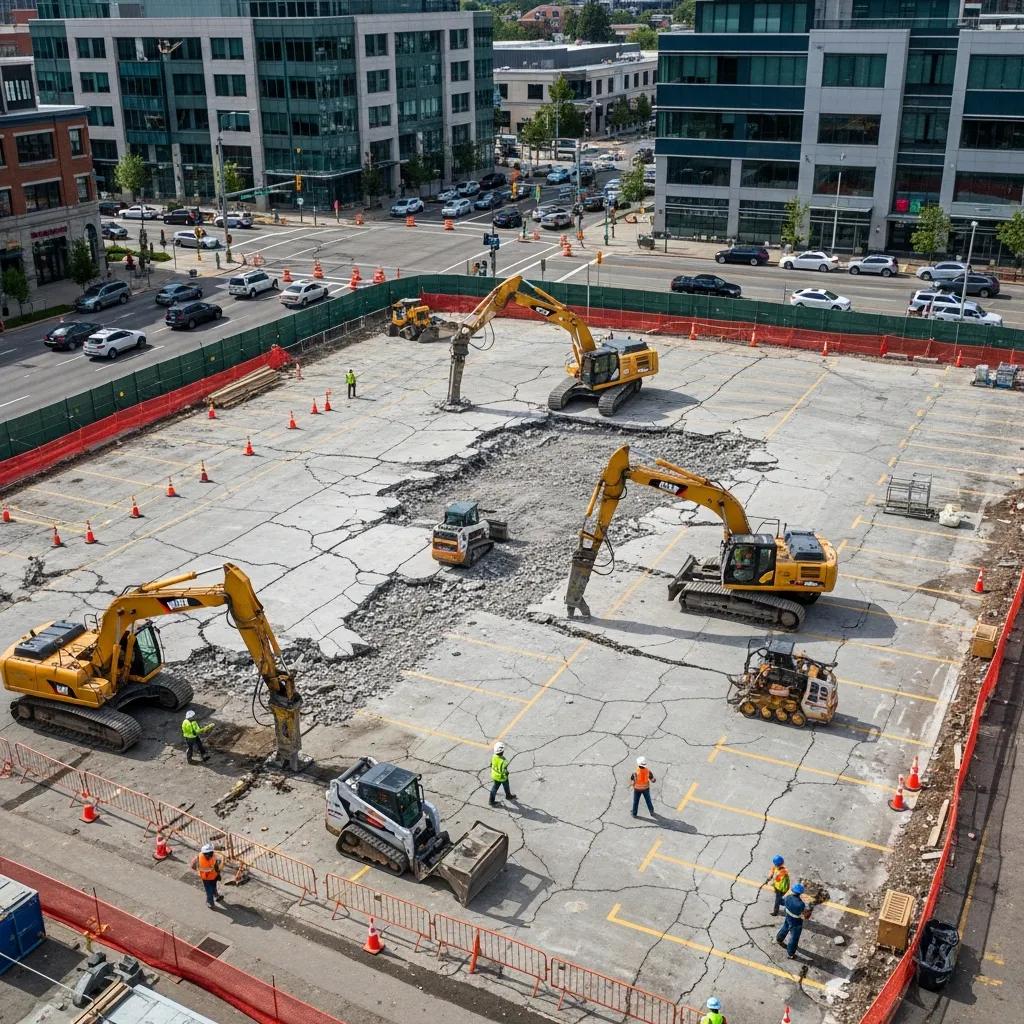
Commercial demolition projects are larger in scale and often require phased execution, traffic control, and coordination with operations to limit business disruption and safety risks. These jobs typically use heavy excavators, skid steers with breaking attachments, and large saws for controlled cutting; phasing plans allow continued site use while sections are removed and replaced. Permitting and regulatory complexity increase with commercial work because of stormwater, accessibility, and public-right-of-way impacts, so contractors plan mobilization, signage, and site security up front. Accurate scheduling and traffic/operational planning reduce downtime and help project managers keep costs predictable while meeting safety and environmental requirements.
Greensboro, NC Concrete Demolition: Safe and Efficient Services
The demolition process ensures safety and efficiency by following a structured sequence: assessment, preparation, execution, debris handling, and verification, with each step using specific controls and equipment to reduce risk. This workflow reduces accidental utility strikes, minimizes airborne dust, and allows for efficient recycling or disposal of debris, producing time and cost savings. The numbered steps below provide a clear “how-to” process summary so readers can see the essential sequence and the safety benefit delivered at each stage. After the stepwise overview, a detailed table clarifies required equipment and safety measures for each process step.
Follow these numbered steps to ensure safe, efficient concrete demolition:
- Conduct a site assessment and utility locate to identify hazards and confirm access routes.
- Prepare the site with containment, traffic control, and protective measures to reduce public exposure.
- Execute demolition with the appropriate technique—breaking, cutting, or coring—to control force and vibrations.
- Sort, haul, and recycle debris using proper disposal channels to reduce landfill volume and reclaim aggregate.
Each step reduces risk and increases efficiency by matching controls to hazards and ensuring debris is managed for reuse or legal disposal, which leads into the detailed equipment and safety mapping below.
This mapping helps project managers and owners understand which controls are non-negotiable and how equipment choices tie directly to safety outcomes and schedule reliability.
Initial Assessment, Planning, and Site Preparation Steps
Initial assessment combines a physical inspection with utility verification and project scoping to establish safe demolition parameters and an efficient work plan. Crews survey reinforcement patterns, slab thickness, drainage, and adjacent structures, then confirm underground utilities to eliminate strike risk and schedule locates if needed. Planning also includes erosion and sediment controls, dust suppression strategies, and traffic or pedestrian management to protect the public and nearby operations. Preparing the site in this way reduces surprises during execution and sets the stage for selecting the most appropriate demolition technique.
Execution Techniques: Breaking, Cutting, and Debris Removal
Execution techniques are chosen based on structure type, reinforcement, access, and noise or vibration limits; options include hydraulic breakers for heavy slabs, concrete saws for precision cuts, and coring for utility penetrations. Equipment selection balances speed and control—large breakers speed removal but increase vibration, while saw cutting or wire sawing provides controlled separation for selective demolition. Debris handling begins on-site with sorting for rebar removal and crushing or hauling to recycling facilities, which lowers disposal costs and supports aggregate reuse. Proper execution and debris workflow preserve site integrity and create predictable project close-out.
What Are the Permit Requirements for Concrete Demolition Projects in Greensboro, NC?
Permits for concrete demolition in Greensboro depend on project scope, location, and whether the work affects structures, foundations, or public rights-of-way, so most larger or structural demolitions require formal approval. The permitting process ensures compliance with building codes, stormwater management, and safety standards, and often requires plans, site maps, and a description of debris disposal methods. Below is a step-by-step guide-style list to help owners navigate the typical permit application process and prepare the documentation that speeds review. After the guide, common pitfalls are summarized to help avoid delays.
Follow these ordered steps to obtain demolition permits in Greensboro:
- Verify whether your project requires a demolition permit based on scope and whether it impacts foundations or public infrastructure.
- Prepare documentation that includes site plans, structural details, and proposed traffic or erosion controls.
- Submit the application to the local permitting office and respond promptly to any requests for additional information.
- Schedule required inspections and complete utility disconnect or locate verifications before work begins.
This sequence clarifies the typical administrative path and emphasizes the importance of documentation and early coordination with local officials to avoid costly delays.
Step-by-Step Guide to Obtaining Greensboro Demolition Permits
A step-by-step permit approach starts by checking project thresholds that trigger a permit requirement and then assembling site plans, contractor licensing info, and disposal/recycling plans for submittal. Applicants should include erosion control measures and traffic management plans where public sidewalks or streets are affected, and they must provide documentation of utility locates and any required asbestos or hazardous material surveys. Typical review times vary with complexity, so early submission and proactive follow-up shorten the schedule and reduce the chance of work stoppage. Preparing complete documentation up front leads into the next section on common permit mistakes to avoid.
Common Permit Pitfalls and Compliance Tips
Common permit pitfalls include missing utility locates, incomplete site plans, and failure to disclose disposal or recycling routes, which can halt work until corrected. To avoid these issues, gather all structural details, submit accurate site maps, schedule utility verification before demolition, and confirm disposal or recycling arrangements with local facilities. Contractors and owners should also plan for required inspections and keep records of correspondence and approvals to demonstrate compliance during review. Addressing these items proactively reduces risk of fines, project delays, and noncompliance remediation.
How Much Does Concrete Demolition Cost in Greensboro, NC?
Concrete demolition cost in Greensboro varies based on slab size, thickness, reinforcement, site access, and disposal or recycling choices; typical per-square-foot baselines help form initial budgets. Cost drivers include thickness and rebar content, need for traffic control or phasing, equipment mobilization, and disposal fees; each factor can materially change a bid. The table below compares common project types with their primary cost factors and typical value ranges to help owners estimate budgets and prepare for contractor bids. After the table, a short list outlines the main cost factors so readers can quickly scan what will most influence price.
This comparison highlights how access and reinforcement often move a price from the low end to the high end, and that commercial projects require custom bids due to operational impacts.
Key cost drivers include the following factors:
- Site access and mobilization: Limited access raises labor and equipment time.
- Slab thickness and reinforcement: Thicker slabs and heavy rebar increase breaking time and disposal weight.
- Disposal and recycling choices: Recycling can lower landfill fees but may add sorting or hauling costs.
Understanding these drivers helps owners prepare accurate scopes and trust bids that explain how each factor influences the final price.
Cost Factors: Project Type, Size, Thickness, and Disposal Fees
Cost factors combine geometrical elements like area and thickness with logistical realities such as access, presence of rebar, and haul distances to disposal or recycling facilities. Thicker slabs typically require larger breakers and more labor, while heavy rebar increases separation time and recycling prep. Site access that restricts truck or equipment movement often forces manual labor or smaller machines, which increases hourly charges. Anticipating disposal fees and choosing recycling when practical can offset hauling costs and provide a lower-net environmental impact.
Average Price Ranges for Residential and Commercial Demolition
Average ranges depend on assumptions—residential driveway or patio removals commonly fall in lower per-square-foot bands, while commercial slabs or foundation removals involve project-based pricing with staging and phasing premiums. For planning, homeowners can use the per-square-foot baseline ranges above as a starting point, and commercial managers should expect formal on-site estimates that account for operational impacts and traffic control. Requesting detailed line-item proposals that specify mobilization, labor, equipment, and disposal helps compare bids accurately. A formal site inspection remains the best way to get a reliable final quote.
Why Is Concrete Recycling Important and How Is It Handled in Greensboro?
Concrete recycling reduces landfill burden, conserves aggregate resources, and can lower disposal costs by reclaiming crushed concrete as road base or fill, making recycling a smart environmental and economic practice. Recycling chains typically involve on-site sorting, crushing, and transport to local aggregate processors who accept mixed concrete and rebar for separation; reclaimed aggregate can re-enter construction workflows. The table below lists representative facility types and common acceptance rules to guide contractors and homeowners on logistics and likely fees. After the table, a summary explains how recycling choices affect project economics and sustainability.
This facility overview helps owners and contractors plan whether to haul directly, arrange roll-off services, or schedule processing, and it highlights that separation of rebar often reduces processing fees.
Environmental Benefits of Concrete Recycling
Recycling concrete conserves natural aggregate, reduces the volume sent to landfills, and lowers the carbon footprint associated with extracting and transporting virgin materials. Reclaimed concrete used as road base or fill offsets demand for new aggregate and can reduce embodied emissions in follow-on projects, providing a measurable sustainability benefit. Additionally, local recycling reduces haul distances and associated fuel consumption, making recycling economically attractive when facilities are nearby. These benefits make recycling a preferred disposal route when contamination and separation requirements are manageable.
Local Recycling Facilities and Disposal Practices in Greensboro
Local disposal practices typically require contractors to separate rebar and other contaminants to meet facility acceptance criteria, and arrangements are commonly made in advance to reserve capacity and confirm fees. Contractors often choose between hauling directly to a recycling processor, using a roll-off service for staged removal, or coordinating on-site crushing for large commercial projects to minimize truck movements. Understanding facility rules—what is accepted and how material must be presented—avoids rejection and extra handling fees. Advance planning with disposal facilities improves schedule reliability and cost predictability for the project.
Why Choose Professional Concrete Demolition Contractors in Greensboro?
Hiring professional contractors ensures the correct equipment, trained operators, and regulatory compliance are applied to the project, which reduces risk to people and property and typically results in more accurate estimates and predictable timelines. Professionals bring operator training, safety protocols, and insurance coverage that protect owners and workers while ensuring the demolition technique fits site constraints and reuse goals. The checklist below outlines the qualifications and protections property owners should verify when selecting a contractor, and the following paragraphs describe how expertise and compliance translate into better project outcomes.
Consider this checklist of contractor qualifications and protections before hiring:
- Verify operator training and demonstrated experience with similar demolition types.
- Confirm insurance coverage including liability and workers’ compensation.
- Review equipment list and waste handling plans to ensure appropriate machinery and recycling arrangements.
This checklist helps owners ask targeted questions that reveal which contractors will manage safety, logistics, and environmental obligations effectively.
Expertise, Safety Protocols, and Proper Equipment Use
Expert contractors deploy trained operators and use appropriate equipment such as hydraulic breakers, concrete saws, and loaders to match the demolition technique to the structure and site limitations. They implement safety protocols like exclusion zones, PPE enforcement, vibration monitoring, and dust suppression to protect workers and neighbors while meeting regulatory requirements. Experienced teams optimize sequence and phasing to reduce noise, control traffic impacts, and speed debris handling, which often lowers overall cost and schedule risk. Choosing contractors with demonstrable expertise ensures the demolition approach is both safe and efficient.
Insurance, Compliance, and Customer Satisfaction
Insurance and compliance are critical: contractors should carry liability and workers’ compensation coverage and follow local permitting and inspection processes to avoid liability for owners. Clear contracts that spell out scope, disposal plans, timelines, and change-order procedures protect both parties and provide measurable expectations for communication and follow-up. Post-demolition services—final grading, compaction, and verification that debris was properly recycled or disposed—contribute to customer satisfaction and minimize future site liabilities. Ensuring these elements are in place protects property owners and supports a smooth transition to subsequent construction or restoration work.



0 Comments