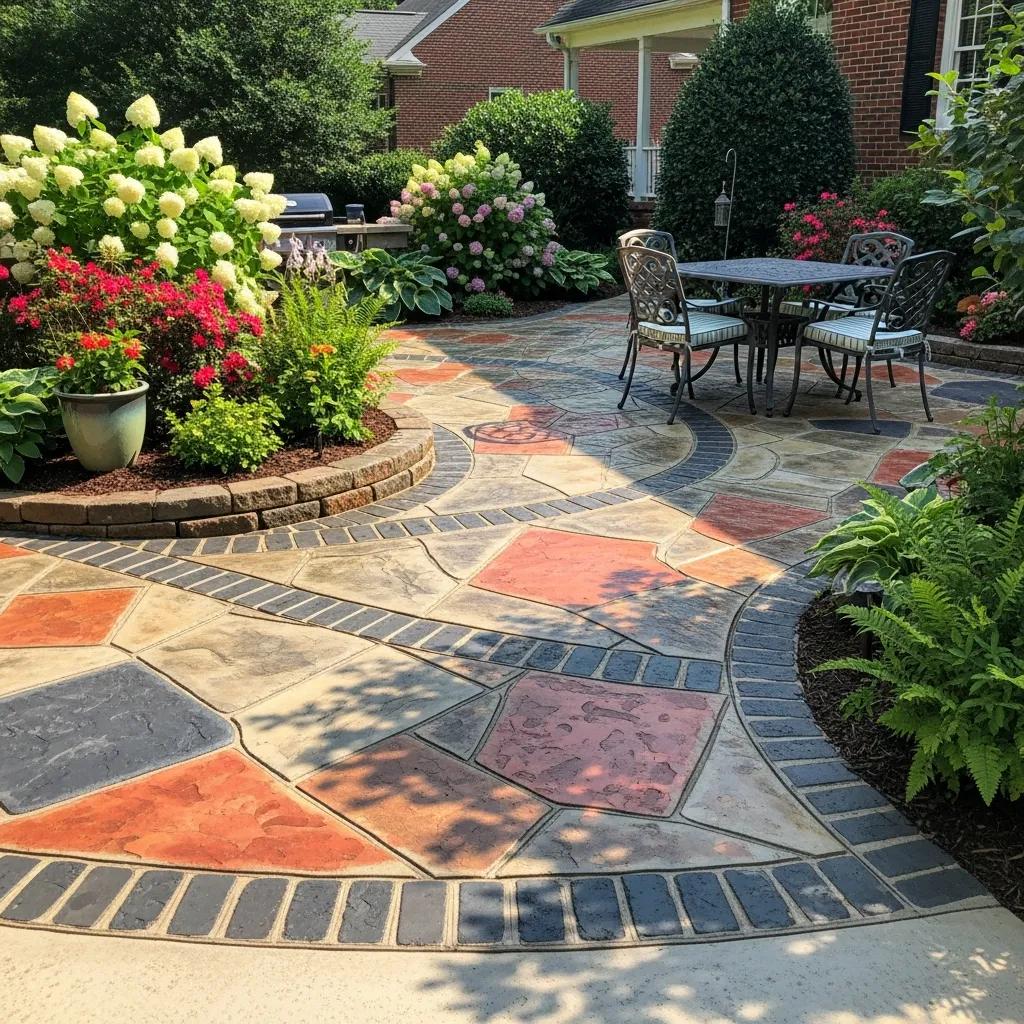
Stamped Concrete Repair Greensboro, NC: Restore Decorative Surfaces with Expert Solutions
Stamped concrete combines textured stamp patterns, integral color, and surface treatments to replicate stone, brick, or tile while providing a durable slab for patios, driveways, and pool decks. This article explains how stamped concrete repair in Greensboro, NC restores both structural integrity and decorative appearance, addressing common damage types and the full suite of restoration services. Homeowners will learn to identify cracks, spalling, fading, and uneven slabs, understand when to choose crack injection versus resurfacing or color restoration, and see step-by-step repair workflows that suit local freeze-thaw and humidity conditions. The guide maps available repair services, outlines color-matching and sealing methods, presents cost drivers and estimating approaches, and explains why local expertise matters for material selection and scheduling. Throughout, actionable lists, comparison tables, and clear repair steps make it simple to assess stamped patio repair Greensboro projects and prepare for reliable long-term results.
What Are the Common Damage Types in Stamped Concrete in Greensboro?
Stamped concrete surfaces in Greensboro commonly show four damage patterns that affect performance and appearance; each has distinct causes and impacts on service life. Understanding these damage types helps homeowners prioritize stamped concrete crack repair Greensboro or choose resurfacing and color restoration when needed. The list below defines the principal failures, their cause, and short-term risk to safety or aesthetics.
Stamped concrete commonly suffers these damage types:
- Cracks: Linear separations ranging from hairline to structural gaps that allow water and salts to penetrate.
- Spalling: Surface flaking or delamination that exposes aggregate and weakens texture.
- Fading: Loss of color from UV exposure, oxidation, or surface wear that diminishes stamped pattern contrast.
- Uneven surfaces: Settlement or heave creating trip hazards and poor drainage.
These types differ in urgency: cracks and severe spalling pose immediate water-intrusion and freeze-thaw risks, while fading mainly impacts curb appeal. Recognizing these conditions leads directly into a focused examination of cracks—how they progress and when stamped patio repair Greensboro must address them.
How Do Cracks Affect Stamped Concrete Patios and Driveways?
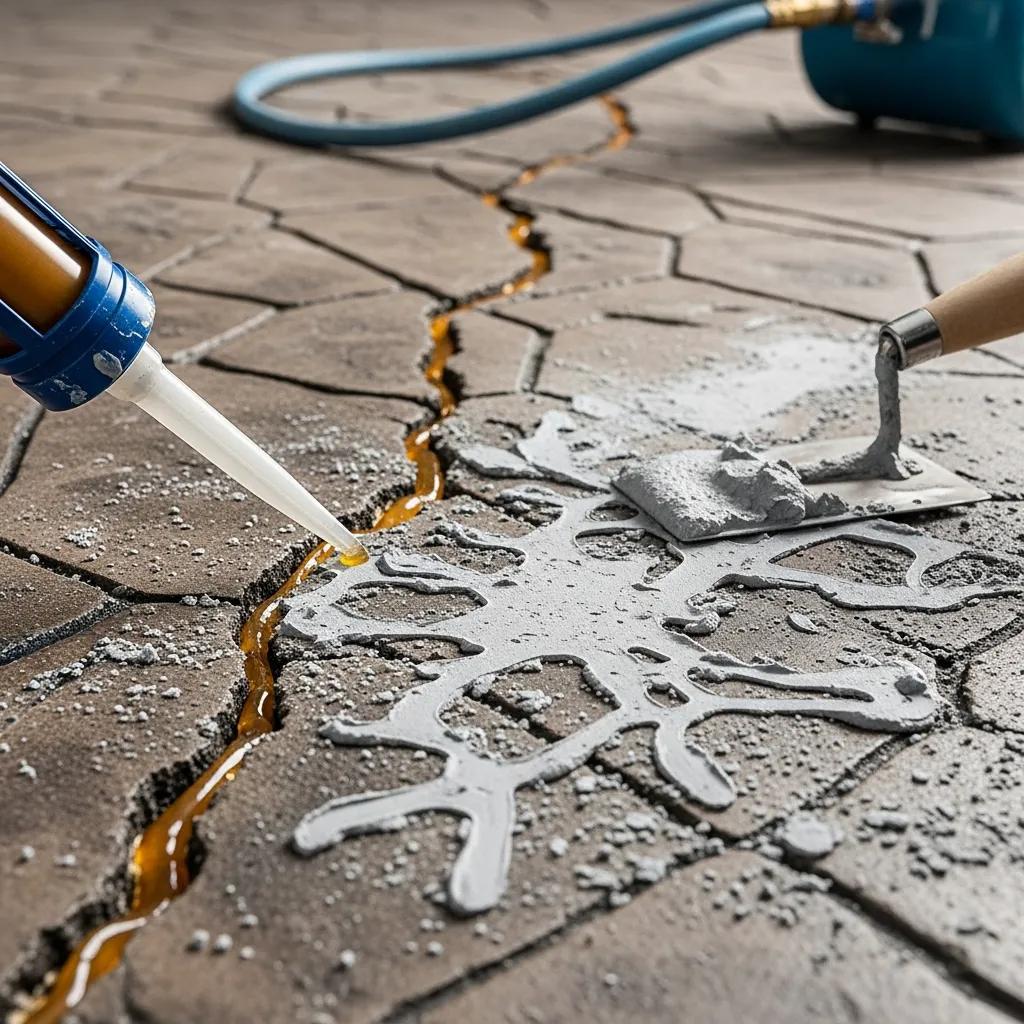
Cracks in stamped concrete range from hairline shrinkage fissures to structural separations caused by substrate movement; each type affects function differently. Hairline and shrinkage cracks are often cosmetic and measure under 1/16 inch, while structural cracks exceed 1/8 inch and may indicate slab settlement or subgrade failure that threatens load-bearing capacity. Left unchecked, cracks let water and deicing salts enter, accelerating freeze-thaw spalling and undermining adjacent areas; this progression increases repair scope from simple sealing to full crack injection or partial replacement. Homeowners can distinguish types by measuring width, checking for lateral movement, and noting whether cracks reappear after repairs; these diagnostics inform whether stamped concrete crack repair Greensboro should use epoxy injection for bonding or polyurethane for active, leaking cracks. Understanding crack classification sets the stage for selecting appropriate repair services and avoids ineffective cosmetic fixes that fail under local climate stress.
What Causes Spalling, Fading, and Uneven Surfaces in Decorative Concrete?
Spalling results when the concrete surface loses cohesion due to poor consolidation, freeze-thaw cycles, or repeated deicing chemical exposure that pry off surface paste and expose aggregate. Fading of stamped concrete color stems from UV degradation of pigments, abrasion from foot and vehicle traffic, and oxidation of surface release agents, which reduces pattern contrast and perceived quality. Uneven surfaces usually trace to subgrade settlement, erosion under the slab, poor initial finishing, or improper jointing that allows slabs to lift or sink; these create drainage issues and safety hazards. Local Greensboro factors—seasonal freezes, humid summers, and occasional road salts—intensify these mechanisms, accelerating spalling and color loss compared with milder climates. Identifying the root cause (material, environment, or installation) guides whether resurfacing, patching, or leveling is the right restoration approach, which we explore in the next section on available services.
Which Stamped Concrete Repair Services Are Available in Greensboro?
Stamped concrete repair Greensboro options include targeted crack injection, patching and texture matching, resurfacing with overlays and micro-toppings, color restoration through stains and dyes, and protective sealing to extend service life. Each service targets specific failures: crack injection restores bond, overlays renew texture and pattern, color work revives aesthetics, and sealing protects finished surfaces from UV and moisture. Below is a concise list of common services and the primary benefit each delivers to guide decision-making.
Common stamped concrete repair services and benefits:
- Crack injection: Restores structural strength and prevents water intrusion in linear failures.
- Patching and texture matching: Repairs localized spalling while preserving stamp patterns and surface continuity.
- Resurfacing/overlay: Renewed texture and uniform appearance over larger degraded areas without full replacement.
- Color restoration and staining: Revives integral or stamped color tones to match existing surfaces.
- Sealing and topcoating: Protects against wear, UV fading, and staining while enhancing sheen.
To compare services at a glance, the table below summarizes typical use cases and expected cost/timeframe for each restorative approach so homeowners can match problems with solutions.
Introductory table: quick comparison of stamped concrete repair services, when to pick them, and typical timeframes or cost signals.
This comparison clarifies which service typically addresses each problem and the relative cost/time commitment, allowing homeowners to weigh options. The next subsections explain technical choices—how injection restores integrity and why overlays are chosen over replacement.
How Does Crack Repair and Injection Restore Structural Integrity?
Crack injection repairs involve filling a crack with bonding or flexible resins that reconnect concrete faces and block moisture pathways, restoring load transfer and slowing deterioration. Epoxy injection is a low-viscosity, high-strength form of structural concrete repair used when cracks are stable and bonding is required; it penetrates narrow fissures and cures to a high compressive strength. Polyurethane injection is a flexible, hydrophobic alternative for active or water-bearing cracks because it expands to fill voids and repel moisture while accommodating minor movement. Selection depends on crack width, activity, and moisture: stable cracks under 0.02 inch often suit epoxy, while active or leaking cracks call for polyurethane; both methods commonly extend service life by years when combined with surface sealing and proper drainage corrections. Knowing these distinctions helps homeowners request the appropriate stamped driveway repair Greensboro technique instead of ineffective surface-only fixes.
What Are the Benefits of Resurfacing and Overlay Solutions?
Resurfacing and overlay solutions, such as cementitious micro-toppings or polymer-modified overlays, renew texture, restore stamped patterns, and correct superficial defects without full slab replacement. Overlays can replicate existing stamp patterns and offer a uniform substrate for new integral or topical coloration; they are forms of decorative concrete restoration that provide both aesthetic and functional improvements. Benefits include cost savings versus demolition, the ability to match textures and stamps, and the addition of improved surface properties like abrasion resistance or reduced permeability. Limitations include the need for careful surface profiling and bond promotion—poor prep leads to delamination—and overlays add a thin layer that doesn’t correct deep structural or subgrade failures. When the substrate is sound, resurfacing achieves a refreshed appearance and extends usable life, leading naturally into color restoration and sealing strategies that finalize the aesthetic outcome.
How Is Color Restoration and Sealing Performed on Stamped Concrete?
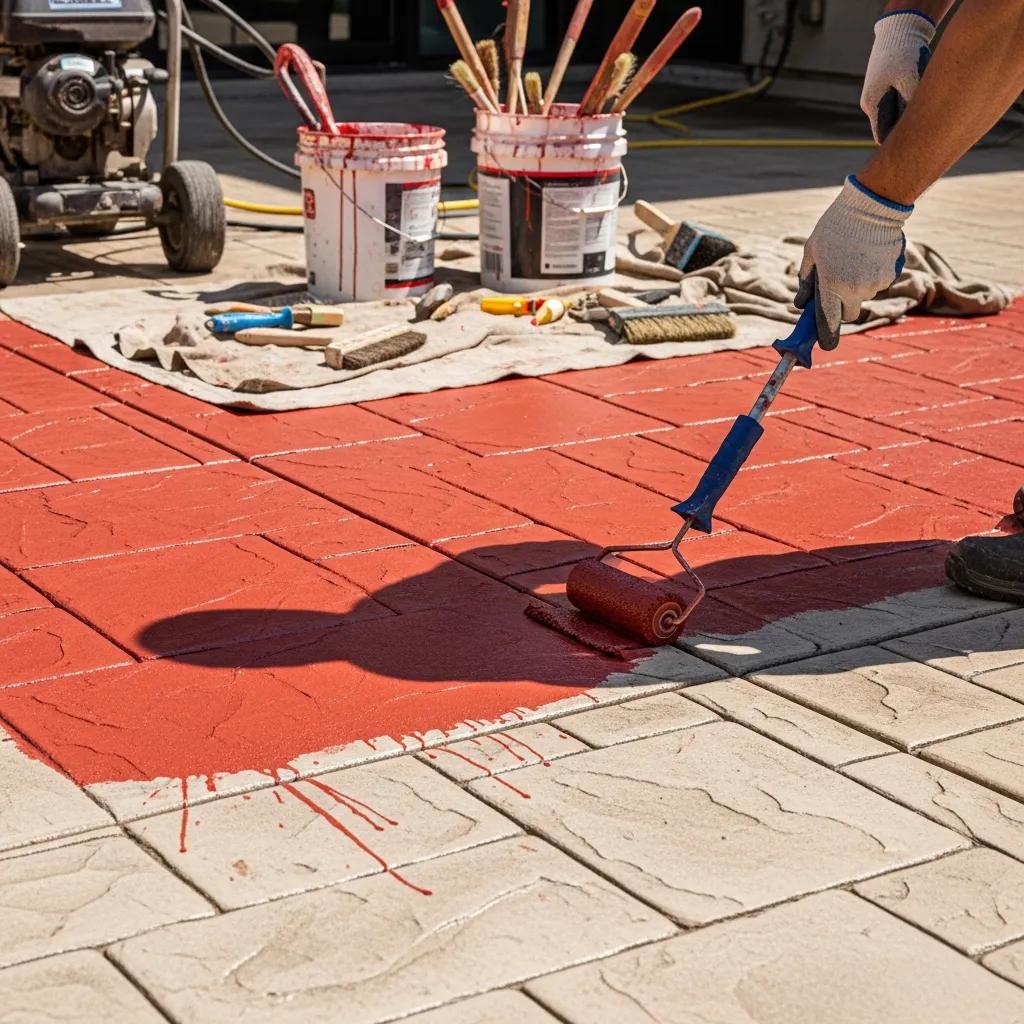
Color restoration and sealing combine dyeing, staining, tinted overlays, and protective coatings to recover original tones and preserve decorative texture. Color methods range from penetrating acid or water-based stains and reactive dyes to tinted polymer overlays and dry-shake color hardeners; each technique offers a trade-off between depth of color, UV stability, and repairability. After color work, sealers provide either penetrating protection or film-forming sheen that both locks in pigment and repels contaminants; the right sealer balances appearance (matte to high gloss) and durability against Greensboro’s sun and moisture cycles. Below, techniques for color matching and staining are detailed, followed by why sealing is essential to maintain restored aesthetics and limit long-term maintenance.
What Techniques Are Used for Color Matching and Staining?
Color matching for stamped concrete typically relies on test patches, layered staining, and the use of tinted overlays to blend new work with the existing palette; this process treats color as both surface and substrate property. Common approaches include reactive acid stains that create variegated, mineral-driven tones, water-based dyes for brighter and more controlled hues, and tinted polymer overlays or micro-toppings when integral color must be rebuilt across worn areas. Test patches in direct sunlight and under shade are essential because pigments can shift with UV exposure and moisture; blending techniques—feathering edges and using multiple application passes—help avoid visible transitions. For complex stamp patterns, technicians may combine staining with dry-shake hardeners or topical color release replicas to recreate the original depth and highlights, setting up sealing to lock the matched tones into long-term service.
Why Is Sealing Essential for Longevity and Aesthetics?
Sealing stamped concrete prevents accelerated wear and color loss by limiting moisture ingress, resisting stains, and reducing UV-driven pigment fading; sealers perform both protective and cosmetic roles. Penetrating sealers absorb into the concrete to protect against salts and freeze-thaw cycles while maintaining a natural matte appearance; film-forming sealers (acrylics, polyurethanes) create a surface barrier that enhances sheen and color vibrancy but can require periodic reapplication. In Greensboro’s climate, re-seal intervals typically range from 1–3 years for film-forming sealers and longer for penetrating systems, depending on traffic and exposure; choosing the right sealer ties directly to maintenance frequency and desired finish. Implementing a sealing strategy after color restoration preserves the matched tones and reduces the need for frequent touch-ups, which leads into the practical step-by-step repair process described next.
Greensboro Stamped Concrete Repair: Decorative Surface Restoration
A methodical repair workflow—inspection, prep, repair application, finishing, and sealing—ensures durable stamped concrete restoration and predictable aesthetic results. The process begins with a diagnostic inspection to map cracks, test moisture, and assess substrate stability, then moves to cleaning and profiling for reliable adhesion. Repair choice (injection, patching, overlay) follows, with texture replication, color matching, and sealing as final steps that restore both function and appearance. The numbered list below offers concise actionable steps with typical timeframes and outcomes to guide homeowner expectations and to target HowTo-rich snippet responses.
Stamped concrete repair step-by-step:
- Inspect and document: Map cracks, measure widths, and check drainage; initial diagnostic typically 30–60 minutes.
- Prepare surface: Clean, remove loose material, and profile for bond; prep can take 1–3 hours depending on area.
- Apply repairs: Inject cracks, patch spalls, or install overlay; application time varies from hours to a full day.
- Texture & color match: Stamp or texture patches and apply stains or tint; allow test patches and adjustments.
- Seal & cure: Apply chosen sealer and allow full cure before traffic—typically 24–72 hours.
To help visualize the sequence and required tools, the table below summarizes each step, actions, typical materials, and time estimates for a typical Greensboro project.
Process EAV table: concise repair workflow with tools and time.
How Is Initial Inspection and Damage Diagnosis Conducted?
Initial inspection for stamped concrete repair in Greensboro involves a systematic checklist: record crack locations and widths, perform moisture and delamination tests, evaluate slope and drainage, and assess joint condition and adjacent landscape impacts. Simple diagnostics include using a straightedge to reveal unevenness, tapping to detect hollow areas, and measuring crack recurrence over a short observation period to detect active movement. Red flags that require professional assessment include wide or widening cracks, large spalling patches that expose aggregate, ponding near the slab edge, or active water infiltration visible during rain or after irrigation. A thorough diagnosis links observed symptoms to likely causes—settlement, freeze-thaw damage, or poor original prep—and directly informs whether stamped driveway repair Greensboro requires structural injection, leveling, or resurfacing.
What Are the Key Steps in Preparation, Repair Application, and Finishing?
Successful repairs demand rigorous surface preparation: cleaning oil, efflorescence, and dirt, profiling surfaces to an open texture, and priming joints or repair zones to promote bond; poor prep consistently leads to failure. Repair application follows the selected method—epoxy injection for bonding narrow cracks, polyurethane for active leaks, cementitious patching with texture additives for spalls, or thin polymer overlays for large-area renewal—with each method requiring specific tooling and cure controls. Finishing includes texture matching with stamps or hand-tooling, layered color application with test patches to ensure visual blending, and final sealer selection based on desired sheen and durability. Quality control checks—adhesion tests, dry time verification, and a final walkover inspection—complete the process and prepare the slab for sealing and service, emphasizing that durable outcomes rest on disciplined prep and finishing.
How Much Does Stamped Concrete Repair Cost in Greensboro, NC?
Cost for stamped concrete repair in Greensboro varies by repair type, surface area, complexity of color matching, and site accessibility; understanding these drivers lets homeowners form realistic budgets and prioritize interventions. Major cost influences include the amount of excavation or leveling needed, whether injection or overlay is selected, the intricacy of texture and color replication, and cure times that affect labor. The table below breaks out repair types, key cost drivers, and typical price ranges for Greensboro-area projects to help estimate likely expenditures.
Cost EAV table: drivers and typical price ranges relevant to Greensboro repairs.
What Factors Influence the Pricing of Decorative Concrete Restoration?
Pricing depends on surface area, severity of damage, access constraints, material selection (e.g., premium UV-stable dyes or polymer overlays), and labor intensity for texture and color matching. Complex stamp patterns and exact color replication increase labor and testing time, while projects requiring subgrade correction or extensive leveling multiply costs through excavation and additional materials. Environmental factors such as scheduling around freeze-thaw windows or high-humidity cure periods can extend timelines and affect labor costs; similarly, small, scattered repairs often have higher per-unit costs than large contiguous overlays. Balancing upfront cost against long-term value—choosing overlays and proper sealing to avoid repeated repairs—often proves more economical when lifecycle costs are considered.
How Can Homeowners Estimate Repair Costs for Patios and Driveways?
Homeowners can estimate costs using a simple worksheet: measure area (sq ft) or linear feet for cracks, select expected repair method and per-unit rate from the table above, then add fixed charges for mobilization and color tests. For example, a 300 sq ft patio overlay at $6 per sq ft equals $1,800 before seals and testing; adding test patching and a sealer might add several hundred dollars. Obtain at least three detailed quotes that break out prep, materials, color work, and warranty terms, and document visible issues with photos to ensure apples-to-apples comparisons. This estimating approach leads naturally to choosing local contractors who understand Greensboro conditions, which is the subject of the final section.
Why Choose Local Greensboro Experts for Stamped Concrete Repair?
Local Greensboro experts bring knowledge of seasonal freeze-thaw cycles, humidity impacts, and regional material availability that influence repair choices and scheduling for best results. Local contractors can recommend timing windows that avoid freezing temperatures for overlays and sealer cure, select UV-stable pigments suited to local sun exposure, and source materials that perform under regional moisture conditions. They also provide more responsive service, easier verification of past work through local references, and familiarity with area permitting or HOA patterns where applicable. These advantages translate into repairs that last longer and better match original aesthetics, which leads into the specific practical advantages offered by local providers.
What Advantages Do Local Contractors Offer for Decorative Concrete Restoration?
Local contractors offer supplier relationships that speed access to specialty pigments, overlays, and sealers optimized for Greensboro conditions, plus the convenience of nearby crews for follow-up and warranty service. They can present local portfolios that show how certain stains and sealer products weather over multiple seasons in the same climate, enabling more predictable outcomes than national averages suggest. Local teams also navigate permit or HOA requirements and coordinate with landscape contractors when grading or drainage corrections are needed, reducing project friction. These practical benefits—faster scheduling, proven local materials performance, and better post-job support—encourage choosing a nearby specialist when planning stamped concrete repair Greensboro.
How Does Local Climate Impact Repair Techniques and Material Selection?
Greensboro’s seasonal freezes, humid summers, and notable UV exposure require materials and timing that resist freeze-thaw damage, moisture-driven delamination, and pigment fade. For example, technicians often favor flexible polyurethane injections for active water-bearing cracks that expand with freeze cycles and choose penetrating silane or siloxane-based sealers that inhibit salt ingress near winter months. Scheduling overlays and staining work for late spring through early fall avoids low-temperature cure issues, while selecting UV-stable dyes and high-quality film-forming sealers slows color loss under summer sun. Understanding these climate-driven choices ensures repairs withstand local conditions and reduces the need for premature rework, completing the practical guidance homeowners need to restore stamped concrete surfaces in Greensboro, NC.


0 Comments