Residential Concrete Services in Old Irving Park, Greensboro, NC: Comprehensive Solutions for Your Home
Residential concrete services in Old Irving Park cover a wide range of exterior and structural work that improves durability, curb appeal, and long-term property value. This article explains what local homeowners can expect when planning concrete driveways, patios, garage slabs, foundations, stamped decorative finishes, and repair or maintenance projects. Many Old Irving Park homeowners face cracked driveways, uneven slabs, or outdated patios that reduce safety and curb appeal; professional concrete solutions address these problems by combining proper subbase preparation, reinforcement, and finishes tailored to neighborhood character. You will learn which services are available, how professional repair preserves structure and value, why local contractors matter for garage slabs and foundations, the benefits of stamped and decorative concrete, realistic cost drivers, and the typical project process from consultation to completion. Throughout the guide we use Old Irving Park residential concrete as a practical focus, include featured lists and comparison tables, and offer clear next steps for requesting estimates from local contractors while emphasizing homeowner decision points and technical considerations.
What Residential Concrete Services Are Available in Old Irving Park?
Residential concrete services in Old Irving Park encompass installation, replacement, restoration, and decorative applications designed for single-family properties. These services work by combining a compacted aggregate subbase, controlled concrete mix, proper reinforcement, and finishing techniques to deliver long-lasting slabs and surfaces that resist freeze-thaw cycles and everyday loads. Homeowners benefit from improved drainage, reduced settlement risk, and upgraded aesthetics when selecting the right service for a specific site condition. Below is a concise inventory of the typical services available locally, each matched to common household needs and neighborhood styles.
The following list outlines core residential concrete services homeowners can hire in Old Irving Park:
- Driveway installation and replacement: New pours or full replacements to handle vehicle loads and improve curb appeal.
- Patio installation and decorative finishes: Outdoor living surfaces including stamped, colored, and exposed aggregate finishes.
- Garage slab pouring and repair: Thicker slabs with moisture control to support vehicle loads and storage use.
- Foundations (slab-on-grade, crawlspace, basement repairs): Structural pours and remediation for settlement or cracking.
- Concrete repair and resurfacing: Crack injection, spalling repair, mudjacking/leveling, and resurfacing to extend slab life.
These services can be illustrated with a project gallery to show finishes and details; selecting the right service begins with a site assessment that evaluates subbase, drainage, and adjacent landscaping.
Concrete Driveway Installation and Replacement Options
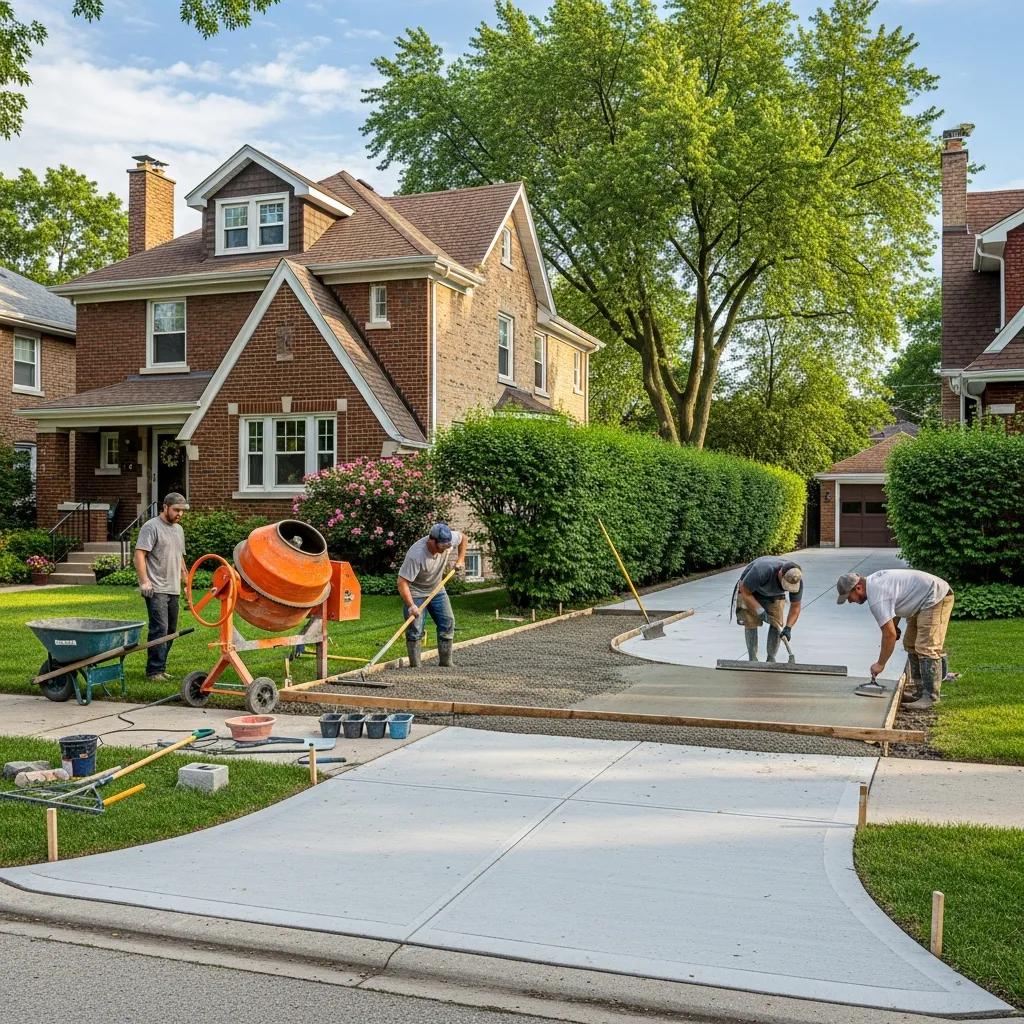
Concrete driveway installation in Old Irving Park typically starts with evaluation of the subbase and drainage, then progresses to excavation, compacted aggregate, reinforcement (rebar or welded wire mesh), and a 4–6 inch concrete slab depending on load requirements. Proper specification—slab thickness, reinforcement type, and control joints—reduces cracking and extends service life, while finish choices like broom, exposed aggregate, or stamped concrete affect aesthetics and slip resistance. Replacement is recommended when extensive cracking, significant settlement, or repeated patching indicate the subbase or slab geometry is compromised; repair is suitable for isolated cracks or minor surface deterioration. Homeowners should also consider drainage adjustments and driveway slope to prevent water pooling and freeze-thaw damage, which directly connect to long-term performance and maintenance needs.
Patio Concrete Installation and Decorative Finishes
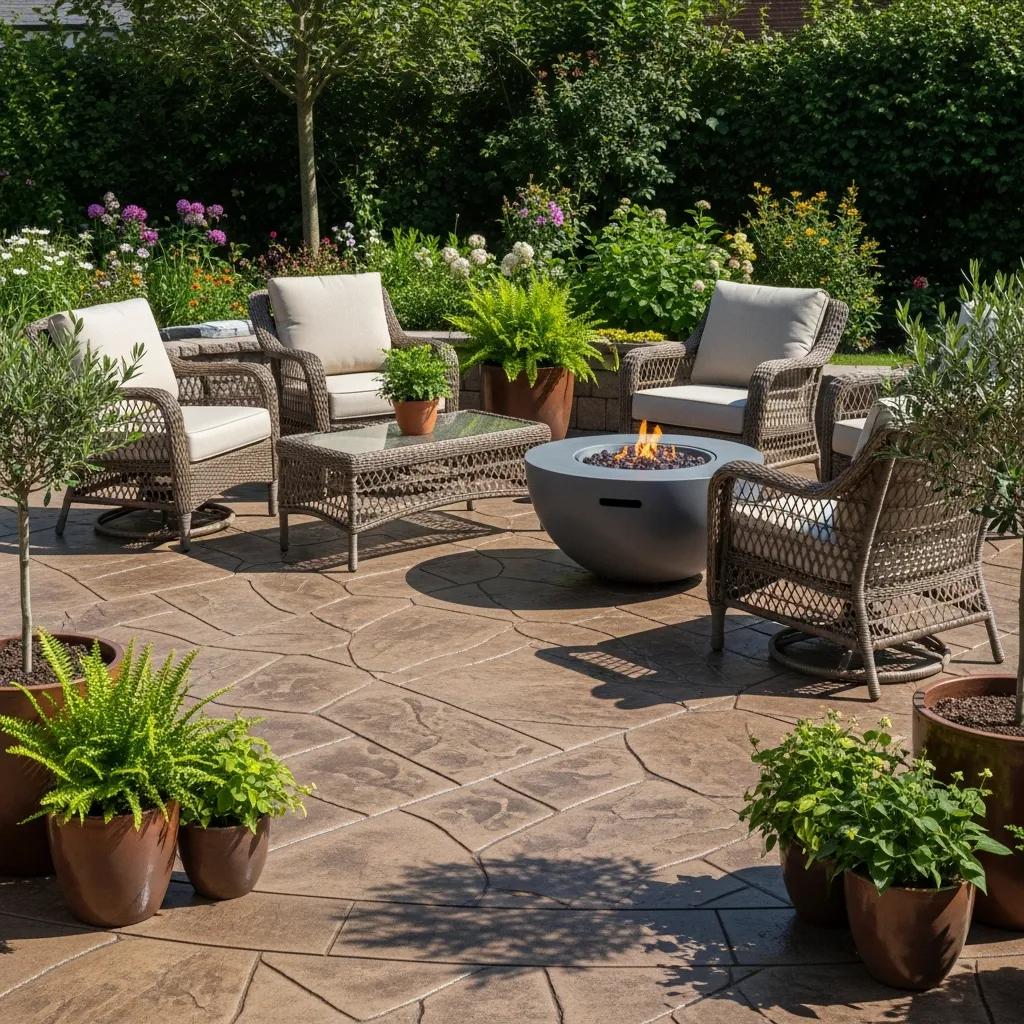
Concrete patio installation combines structural considerations with design, using a prepared subbase, edge restraint, and a finish appropriate to outdoor use and style preferences. Decorative finishes—such as stamped concrete that mimics stone or brick, integral color, or exposed aggregate—add visual character while delivering a durable outdoor surface for seating, fire pits, and landscape transitions. Maintenance requirements vary by finish: stamped and colored surfaces benefit from periodic sealing to protect color and release agents, while exposed aggregate requires occasional cleaning to avoid moss or staining. Choosing a patio design that complements Old Irving Park home styles—whether bungalow, craftsman, or traditional—ensures cohesion with existing landscaping and neighborhood character.
How Does Professional Concrete Repair Enhance Old Irving Park Homes?
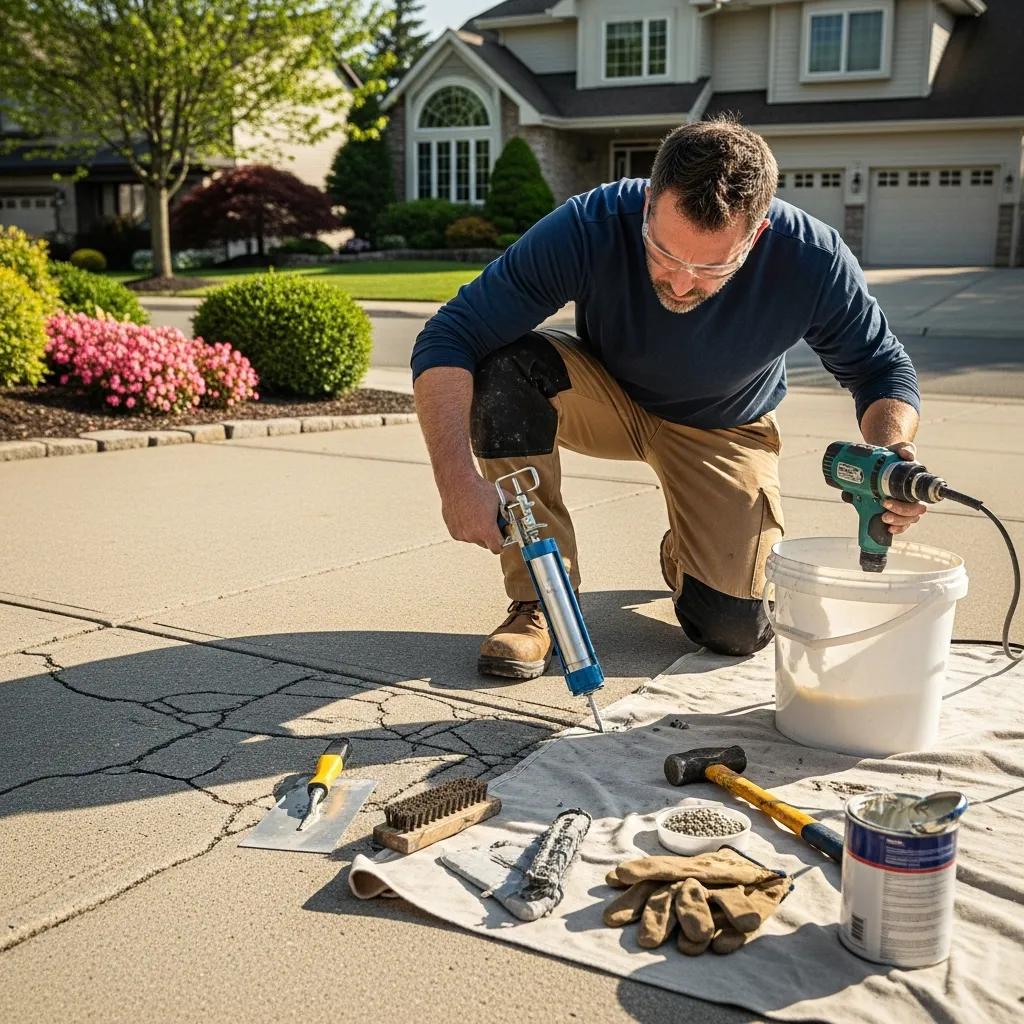
Professional concrete repair enhances Old Irving Park homes by restoring structural integrity, improving safety, and preserving curb appeal through targeted interventions that address underlying causes. Repair specialists diagnose causes—such as freeze-thaw cycles, inadequate subbase, or settlement—and apply appropriate methods like epoxy injection for structural cracks, patching for spalled areas, or leveling techniques for uneven slabs. The result is a safer walking and driving surface, reduced water infiltration that can damage adjacent structures, and prevention of small problems escalating into costly foundation or drainage work. Below are common repair types and why a timely professional response matters for long-term home performance.
Concrete repair covers a range of common issues and treatment approaches:
- Crack repair: Epoxy or polyurethane injection restores structural continuity and prevents moisture intrusion.
- Spalling remediation: Patching and primer systems remove delaminated concrete and re-establish protective covers.
- Leveling and mudjacking: Re-supporting settled slabs avoids trip hazards and drainage problems.
- Resurfacing: Bonded overlays restore appearance and provide a protective wearing surface.
Timely intervention limits deterioration and preserves a slab’s life cycle; delaying repairs typically increases labor and material costs while raising safety risks for occupants and visitors.
Common Concrete Repair Types: Crack, Spalling, and Leveling
Cracks, spalling, and settlement are distinct failure modes that require different repair mechanisms; identifying the cause is essential to choosing an effective remedy. Hairline cracks from drying shrinkage may need preventative sealing, while structural cracks caused by settlement or overload often require epoxy injection and subgrade correction. Spalling—surface flaking from freeze-thaw cycles or corrosion of embedded reinforcement—warrants removal of loose material, application of bonding agents, and a durable patch system to restore cover and appearance. Leveling techniques, including mudjacking or slabjacking, lift sunken slabs by injecting grout under the slab or replacing compromised subbase, which corrects drainage and safety issues and delays full replacement.
Benefits of Timely Concrete Maintenance and Restoration
Regular maintenance and prompt restoration provide measurable benefits to Old Irving Park homeowners by extending service life, reducing lifecycle costs, and maintaining safe conditions around the property. A maintenance program that includes joint cleaning, sealant reapplication, and targeted patching slows deterioration from water infiltration and freeze-thaw cycles, while restoration of worn surfaces restores curb appeal and resale readiness. Preventative maintenance typically costs a fraction of full replacement and preserves the neighborhood character by keeping finishes consistent with nearby homes. Homeowners who schedule inspections after severe weather or seasonal changes can catch issues early, which directly reduces the risk of more invasive structural repairs later.
Why Choose Local Concrete Contractors in Greensboro for Your Garage Slab and Foundations?
Choosing local concrete contractors in Greensboro offers practical advantages for garage slab and foundation work because local teams understand area soils, freeze-thaw patterns, and municipal code requirements that affect long-term performance. Local contractors can more quickly coordinate permits, inspections, and scheduling to align with seasonal windows suitable for curing, and they typically have established relationships with local suppliers for proper mix designs and reinforcement. For structural pours like garage slabs and residential foundations, contractors familiar with Greensboro practices place a premium on subgrade compaction, drainage control, and correct reinforcement to mitigate settlement and moisture risks. Below are expectations homeowners should hold when hiring local specialists and reasons local knowledge matters for foundation-level work.
When selecting a local contractor, look for these service elements and assurances:
- Site evaluation and permit coordination: Ensures code compliance and proper inspection sequencing.
- Subgrade and compaction verification: Reduces settlement risk and supports long-term slab performance.
- Specified reinforcement and control joints: Addresses load requirements and shrinkage stresses.
- Post-pour inspection and warranty discussions: Offers homeowner protection and clarity on coverage.
Local expertise shortens resolution times for unexpected issues and helps homeowners navigate local building department requirements efficiently.
Garage Slab Installation and Repair Services
Garage slab work demands thicker sections, appropriate reinforcement, and moisture-mitigation strategies to support vehicle loads and limit water intrusion into adjacent living spaces. Typical garage slabs use 4–6 inch thicknesses for light vehicles, increasing as required for heavier loads, and include perimeter drains or vapor barriers where moisture is a concern. Repair services address common failure modes such as slab cracking at door thresholds, differential settlement, and oil or chemical staining, using techniques including targeted removal and replacement, crack injection, or leveling. Proper detail at the garage-to-house interface and attention to drainage prevents moisture transfer to foundations and reduces the likelihood of interior moisture issues.
Residential Concrete Foundations: New Construction and Repair
Residential foundations in the Greensboro area include slab-on-grade, crawlspace, and full basement options, each requiring tailored engineering, reinforcement, and moisture control measures to protect the structure. New foundation pours emphasize correct excavation, subbase preparation, footing sizing per load demands, and coordination with structural engineers for complex sites; repairs typically involve underpinning, crack injection, or partial reconstruction depending on the severity of movement. Red flags that indicate the need for structural review include large horizontal cracks, stair-step masonry cracks, or persistent settlement; when these appear, coordination with an engineer and the building department ensures safe, code-compliant remediation.
What Are the Benefits of Stamped and Decorative Concrete in Old Irving Park?
Stamped and decorative concrete offers Old Irving Park homeowners a durable, lower-maintenance alternative to pavers or natural stone while delivering high aesthetic value that complements historic and traditional home styles. Decorative concrete combines color, texture, and patterning techniques to replicate more expensive materials with fewer joints and a continuous surface that resists weed growth and differential settlement. Durability benefits include monolithic performance, reduced maintenance compared with loose-set pavers, and fewer trip hazards when properly installed and sealed. The table below compares common decorative finish types to help homeowners pick the right option for patios and driveways.
Design Ideas for Stamped Concrete Patios and Driveways
Stamped concrete allows patterns and color palettes that echo Old Irving Park architectural vocabularies—such as cobblestone looks for historic facades or larger slate impressions for craftsman-style homes—while offering the benefit of a continuous, jointed surface that reduces weed ingress. Pairing stamped patterns with contrasting borders, integrated steps, and coordinated landscape lighting enhances depth and curb appeal. Design choices should consider scale: smaller patterns suit compact patios while larger motifs fit expansive driveways, and color selection should respect local tones to maintain neighborhood harmony. Photographic galleries of completed projects assist homeowners in visualizing finishes, and mockups or small sample pours provide a reliable preview before full installation.
Durability and Aesthetic Advantages of Decorative Concrete
Decorative concrete combines the lifecycle advantages of a monolithic slab with customizable aesthetics that often outperform loose-laid systems in cost-per-square-foot over time. Compared with pavers, decorative concrete reduces the incidence of shifting and settling because the slab behaves as a single structural element, while maintenance is generally easier—cleaning and resealing versus individual unit replacement. For homeowners considering resale value, well-executed decorative concrete enhances curb appeal and demonstrates attention to durable exterior upgrades. When planning decorative finishes, contractors should specify sealers and joint layouts that balance appearance with functional expansion and contraction control.
How Much Does Residential Concrete Work Cost in Old Irving Park and Greensboro, NC?
Estimating residential concrete costs in Old Irving Park depends primarily on measurable factors such as square footage, slab thickness, site preparation needs, reinforcement, and the chosen finish; these drivers determine labor, material, and equipment budgets. Costs increase with extensive excavation, poor access that requires special equipment, decorative finishes like stamping or exposed aggregate, and additional drainage or retaining work. Below is a table that outlines typical cost drivers and relative cost impact to help homeowners interpret estimates and compare bids on an apples-to-apples basis.
To help homeowners compare bids, here are key pricing and financing considerations:
- Request itemized bids: Ensure unit prices for excavation, concrete, reinforcement, and finish are listed separately.
- Ask about allowances: Get clarity on who pays for permit fees, testing, and unforeseen site conditions.
- Explore financing options: Typical choices include home equity lines, personal loans, or contractor financing where available; verify terms before committing.
When discussing pricing with local contractors, request clear scope definitions and confirm whether warranties or workmanship guarantees are included to avoid surprises.
Factors Influencing Concrete Driveway and Patio Pricing
Driveway and patio pricing is most sensitive to area and complexity factors, with shape complexity, edge treatments, and decorative patterns raising labor hours and formwork needs. A simple broom-finish driveway on a flat site with good access will be less costly than a curved, stamped driveway that requires additional formwork and patterning. Site access affects equipment mobilization and material handling time, while poor subgrade conditions may demand soil remediation or additional aggregate that increases costs. Homeowners should prioritize clear site photos and measurements when requesting estimates and consider phased work if budget constraints exist.
Cost Transparency and Financing Options for Homeowners
Transparent pricing practices help homeowners compare bids and avoid hidden fees; contractors should provide line-item estimates that separate materials, labor, permits, and ancillary services like drainage or landscape restoration. Red flags in opaque bids include vague scope descriptions, lump-sum allowances without limits, or missing permit responsibilities. Financing options range from home equity and personal lines to contractor-arranged plans; compare annual percentage rates and repayment terms and confirm whether financing affects project start time. Review contract terms for change-order procedures and retainage policies to ensure predictable final costs.
What Is the Process for Residential Concrete Projects in Old Irving Park?
A typical residential concrete project in Old Irving Park follows a predictable lifecycle: consultation and estimate, permitting and site prep, formwork and reinforcement, pour and finishing, curing and sealing, and final inspection and cleanup. Each phase serves a specific role in ensuring performance—site prep creates a stable base, reinforcement controls cracking, and proper curing determines concrete strength and durability. Scheduling should account for local climate windows because freeze-thaw cycles and high heat can affect pour timing and curing strategies. The numbered steps below summarize the process so homeowners can anticipate the timeline and their responsibilities during each stage.
The following numbered list outlines the standard project phases homeowners encounter:
- Consultation & estimate: Site visit, measurements, and a detailed written estimate.
- Permitting & mobilization: Contractor secures permits and schedules inspections with the local authority.
- Site preparation: Excavation, subbase placement, and compaction to design specifications.
- Formwork & reinforcement: Set forms, place rebar or mesh, and install control joints.
- Pouring & finishing: Place concrete, consolidate, and apply specified finish.
- Curing, sealing & inspection: Allow proper cure time, apply sealers, and complete final municipal or QA inspections.
Step-by-Step Guide from Consultation to Completion
During consultation, a contractor documents site conditions, suggests appropriate slab thickness and finishes, and outlines permit needs; expect a written scope and preliminary timeline at this stage. Permit and inspection processes vary by jurisdiction, so early coordination reduces schedule friction and ensures code compliance before excavation begins. Site preparation includes tree or root mitigation, grading for drainage, and compacted aggregate placement; quality control here prevents settlement and longevity issues. After pouring and finishing, curing protocols—such as moisture-retentive covers or curing compounds—determine final strength; homeowners should plan for limited access during the curing window to avoid damage.
Local Considerations: Weather, Regulations, and Neighborhood Styles
Old Irving Park homeowners should plan concrete work around Greensboro seasonal weather patterns—late spring through early fall tends to provide the most favorable curing conditions, while cold or wet periods require special measures like heated blankets or admixtures. Local building codes and inspection schedules affect permit lead times and must be factored into project planning to avoid delays. Stylistic considerations—matching finishes and colors to neighborhood character—help maintain property value and neighborhood cohesion, so review local design guidelines if present and consider small sample pours or mockups to confirm aesthetics before committing to the full project.
For next steps, homeowners can request a free estimate from a local contractor to evaluate site-specific conditions, obtain itemized pricing, and confirm scheduling windows for the best curing outcomes and minimal neighborhood disruption.

0 Comments