Greensboro Concrete Patio Costs: Installation Pricing Guide
Concrete patio cost in Greensboro typically ranges by finish and complexity, with common per-square-foot pricing that helps homeowners estimate total project budgets quickly. This guide explains typical concrete patio price ranges, compares plain, reinforced, and stamped finishes, and translates per-square-foot figures into example totals for common patio sizes. Many property owners ask “how much for a 20×20 concrete patio Greensboro” or request a “Greensboro patio quote” to plan budgets; this article addresses those queries and the main cost drivers. You will learn which site-preparation tasks add cost, how local labor rates influence pricing, permit considerations in Greensboro, and how concrete stacks up against pavers and flagstone for long-term value. The guide closes with a practical checklist for getting accurate concrete patio quotes and vetting contractors so you can request competitive bids with confidence.
What Is the Average Cost per Square Foot for Concrete Patios in Greensboro?
Concrete patio price per square foot in Greensboro commonly falls into distinct ranges depending on finish and reinforcement, with plain concrete at the low end and decorative stamped or colored finishes at the high end. Per-square-foot figures typically bundle basic materials, subbase preparation for a standard site, and finishing labor, though they may exclude extensive demolition, complex grading, or specialty drainage work. Understanding per-square-foot rates helps convert to realistic totals for typical backyard sizes and compare contractor quotes reliably. The next paragraphs compare plain, reinforced, and stamped concrete and then translate those ranges into example totals for common patio dimensions.
The following table summarizes typical per-square-foot ranges for common concrete patio options in Greensboro, useful for quick comparisons and featured-snippet queries.
This table highlights how tooling, color additives, and reinforcement drive the per-square-foot delta. Knowing these ranges makes it easier to evaluate line-item quotes and spot omissions.
How Do Plain, Reinforced, and Stamped Concrete Prices Compare?
Plain concrete represents the most cost-effective option because it requires standard formwork, typical finishing, and minimal additives; this lowers both materials and labor compared with decorative options. Reinforced concrete adds rebar or wire mesh, often increases slab thickness, and may require additional labor and material costs for anchors or footings; the reinforcement improves load capacity and long-term crack resistance. Stamped or colored concrete requires release agents, stamping tools, pigments, and more skilled finishing crews, which raises labor intensity and time on site and explains the higher per-square-foot price. Choosing between these types depends on budget, desired aesthetics, and expected loads — stamped concrete can deliver high curb appeal while reinforced slabs are recommended where durability matters most.
What Are Typical Total Costs for Common Patio Sizes?
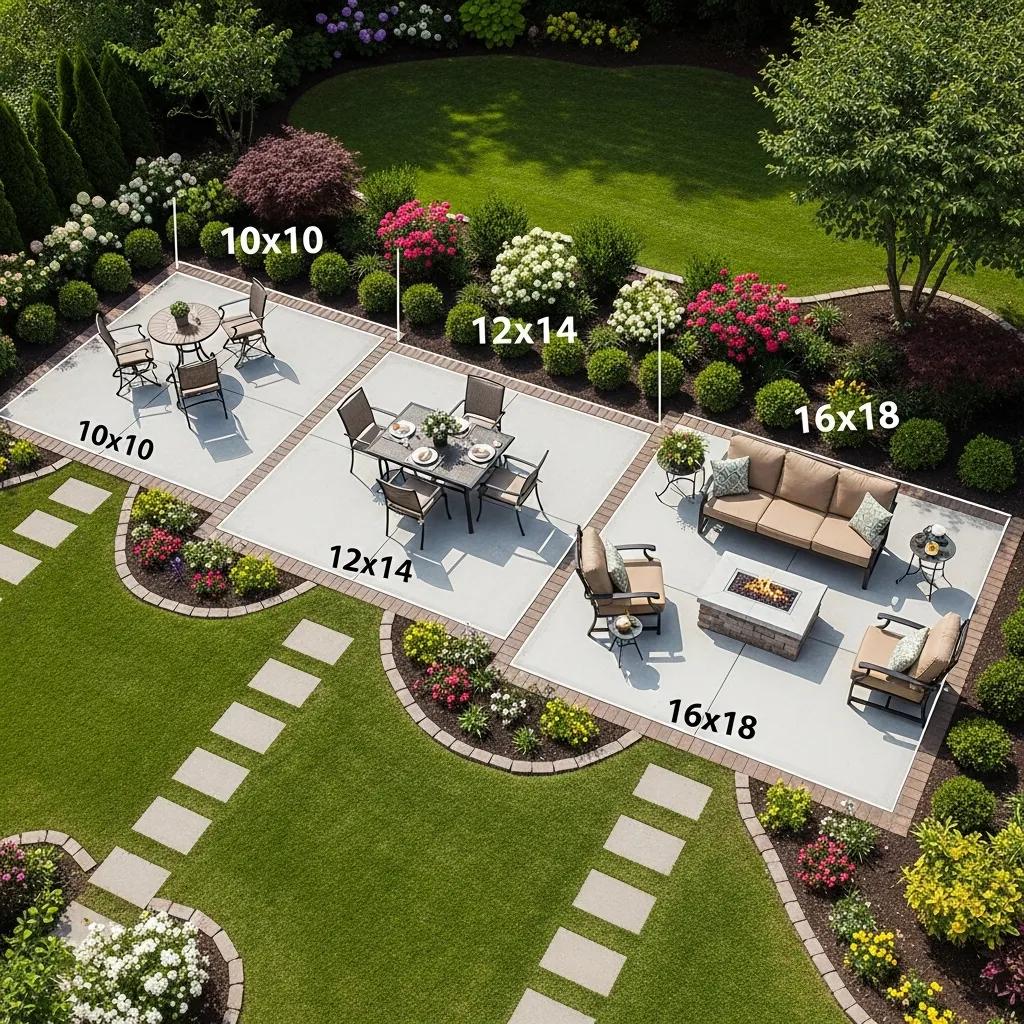
Translating per-square-foot rates into totals clarifies decision-making for common backyard projects and helps homeowners prepare realistic budgets.
For a 10×10 (100 sq ft) patio, expect plain concrete totals roughly $600–$1,200, reinforced $800–$1,500, and stamped $1,200–$2,500 assuming flat site conditions with no major prep. A 12×14 (168 sq ft) patio typically falls in ranges of $1,008–$2,016 plain, $1,344–$2,520 reinforced, and $2,016–$4,200 stamped under similar assumptions. For a larger 16×18 (288 sq ft) patio, plan for $1,728–$3,456 plain, $2,304–$4,320 reinforced, and $3,456–$7,200 stamped.
These estimates assume a straightforward installation; features such as curved forms, additional drainage, or integrated steps will increase totals. The next section examines the specific factors that cause these ranges to widen or narrow.
Which Factors Influence Concrete Patio Installation Costs in Greensboro?
Several core factors influence Greensboro concrete patio installation costs: material and finish selection, site conditions, patio size and complexity, reinforcement requirements, drainage and grading needs, and local labor market dynamics. Each factor alters either material quantities, crew-hours, or specialized equipment needs, and combinations of factors compound cost impacts. Understanding these drivers helps homeowners prioritize upgrades and control budgets without sacrificing structural integrity or desired aesthetics. The following list outlines major cost drivers with concise explanations to aid quick comparisons when soliciting quotes.
- Material and finish choice affects both materials and skilled-labor time, with decorative finishes costing more than plain slabs.
- Site conditions such as slope, existing structures, or root systems increase excavation, grading, and disposal costs.
- Patio size and shape change material efficiency and formwork time; irregular shapes require more labor per square foot.
- Reinforcement and thickness requirements raise material costs and labor to place rebar or mesh correctly.
- Drainage measures, footings for attached features, and access constraints add to project time and specialized work.
These factors interact: for example, a large stamped patio on a sloped lot may multiply labor and subbase needs, so assessing each factor together yields more accurate budgeting. The next subsections dive deeper into material choices and the role of size and complexity.
How Does Material Choice Affect Pricing: Plain, Colored, and Stamped Concrete?
Material choices influence cost in both direct and indirect ways: pigments, release agents, and sealants add per-unit material cost while decorative stamping demands more skilled finishers and longer cure-handling time. Colored concrete typically increases materials cost by a modest percentage (often 10–20% over plain concrete) due to pigment and additional mixing controls, whereas stamped concrete can increase overall price substantially because of tooling, patterning time, and multi-step finishing. Durability differences are modest—colored and stamped concrete retain the same base longevity as plain slabs when mixed and cured correctly—but maintenance like resealing for stamped surfaces should be planned. When balancing aesthetics and budget, consider placing decorative finishes on high-visibility areas while keeping larger utility areas plain to optimize value.
What Impact Do Patio Size and Design Complexity Have on Cost?
Patio size directly scales material costs, but design complexity changes labor rates nonlinearly because curved forms, multiple levels, and cutouts require more setup, formwork, and skilled finishing time. Fixed tasks—permits, mobilization, basic site setup—create a baseline cost that spreads across the project, which makes small patios cost more per square foot than larger ones in many cases. Complex geometries also increase waste from cut-offs and may require additional joints or control features, raising both material and labor line items on a quote. To control costs while keeping desired design elements, prioritize complexity only where it provides functional or visual impact and request contractor recommendations on efficient formwork solutions.
What Are the Site Preparation and Labor Costs for Concrete Patios in Greensboro?
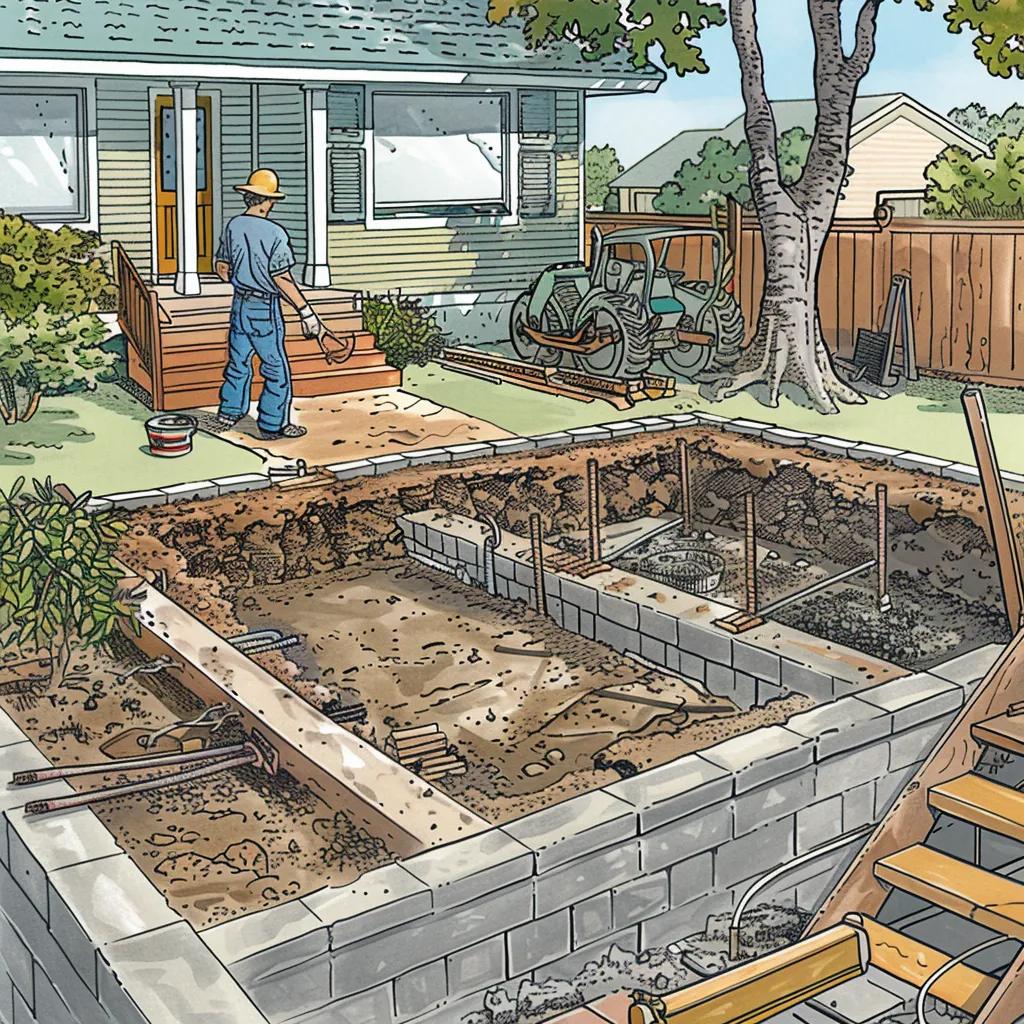
Site preparation and labor are significant components of a concrete patio budget; proper preparation ensures slab longevity and reduces the risk of settlement or cracking. Typical site-prep tasks include demolition of existing surfaces, excavation, subbase placement and compaction, grading for drainage, and any necessary tree-root or obstruction removal. Labor pricing depends on crew size, local hourly rates, and job complexity; efficient crews lower per-unit labor costs while access issues or staging constraints increase hours. Understanding these line items helps homeowners compare “apples-to-apples” quotes and identify whether a low bid is omitting essential preparation.
Before the cost table below, note that contractors often include site-prep line items in their formal quotes—demolition, excavation, base material, compaction, reinforcement, finish type, and sealing—even if some quotes separate them. The following table gives typical Greensboro-focused or national-benchmarked ranges to use when evaluating quotes.
This breakdown shows where contractors allocate budget and why a detailed line-item quote matters: inexpensive-looking base prices can hide expensive prep work. The next subsection explains labor-rate effects in greater detail.
What Are Typical Site Preparation Tasks and Their Price Ranges?
Common site-prep tasks ensure a stable base and correct slope for runoff and include excavation to depth, subbase placement (gravel or crushed stone), compaction, soil correction if needed, and installation of edge forms. Excavation costs vary with depth and disposal complexity; subbase costs scale with patio size and required compaction effort. Drainage work—such as installing a slight slope or a French drain—adds to costs but prevents water pooling that shortens a slab’s useful life. Contractors should list these tasks separately in a quote so homeowners can compare assumptions and ensure the necessary preparatory work is not omitted.
- Excavation and disposal are priced based on volume and access and can be the single largest prep expense for tough sites.
- Subbase materials and compaction are essential for slab performance and are costed by area and thickness.
- Drainage and grading corrections protect the slab long-term and often prevent costly repairs later.
These tasks together create the foundation for a durable patio, and omitting any of them from a quote is a red flag that can reduce initial cost but increase life-cycle expense.
How Do Local Labor Rates Affect Overall Installation Costs?
Local labor rates in Greensboro affect the job through crew-hour pricing, travel and mobilization, and scheduling priorities; higher demand seasons or constrained crew availability can push prices upward. Labor is estimated either as crew-hours for tasks (formwork, pour, finish, curing) or as a flat job rate that reflects expected crew productivity; understanding which method a contractor uses clarifies how variations in access or complexity will change the final invoice. Factors that increase labor hours include tight access, steep lots, elaborate stamping patterns, and extended cure protection for decorative finishes. Requesting labor-hour estimates or a labor breakdown helps spot unusually low labor lines that might indicate inexperienced crews or omitted tasks.
Do You Need Permits for Concrete Patio Installation in Greensboro, and What Are the Fees?
Permits for concrete patios in Greensboro depend on scope and local regulations; many simple, detached patios under 300 square feet may not require a building permit, while attached patios, those with roofs or steps, or projects altering drainage or grading often do. Checking with Greensboro building permits authorities ensures compliance with setback, drainage, and inspection rules that protect both owner and future buyers. Permit fees themselves for small projects are typically modest, but required plan reviews or rework following inspection findings can add indirect costs and timeline delays. Confirming permit requirements early prevents costly stoppages and ensures the job meets local code standards.
What Are Greensboro’s Local Regulations and Permit Requirements?
To determine permit needs, homeowners should verify whether the patio is attached to the house, alters site drainage, or exceeds local size thresholds that trigger a building permit; these criteria typically determine whether a permit application and inspection schedule are required. Contractors commonly prepare permit submittals that include a site plan, proposed drainage measures, and structural notes if reinforcement is needed; confirming who will obtain permits is an important contract item. Expect to present simple project drawings and site dimensions when applying, and factor inspection timing into schedule estimates because failed inspections may require remediation. Verifying current local regulations directly with Greensboro authorities ensures accurate expectations.
How Do Permits Influence the Total Project Budget?
Permits create direct costs in the form of application fees and indirect costs when inspections require adjustments or scheduling buffers that extend contractor time on site. Typical permit fees for small residential hardscape projects are generally limited but can vary with scope; more complex projects that affect stormwater or require engineered details increase fees and plan-review timelines. Inspection findings that require additional work—such as improving drainage or adding reinforcement—add to labor and materials beyond initial estimates. Budgeting a small contingency for permit fees and possible inspection-driven changes reduces surprises and helps keep projects on schedule.
How Does Concrete Compare to Other Patio Materials in Greensboro?
Concrete typically offers lower initial cost per square foot, lower routine maintenance effort, and strong durability compared with pavers or natural flagstone, making it a high-value option for many homeowners. Pavers provide modular repairability and high aesthetic variety but generally cost more to install and may need joint maintenance. Flagstone delivers premium natural aesthetics and longevity but commands higher materials and labor costs and can be uneven without careful installation. Long-term value depends on maintenance expectations, desired look, and whether repairability or resale appeal matters more than upfront cost. The following table presents average cost comparisons to help homeowners choose the best material for budget and performance goals.
This comparison highlights that concrete often delivers the best upfront value while pavers and flagstone have niche benefits that justify higher price for certain design goals. The next subsection explores these trade-offs in more detail.
What Are the Cost Differences Between Concrete, Pavers, and Flagstone?
Per-square-foot differences stem from material costs, installation complexity, and required base work: pavers are modular and require precise base preparation and joint work, flagstone involves large irregular pieces that require more labor to level, and concrete can be poured more quickly but may require decorative finishing to match aesthetics. Installation complexity also affects labor hours and therefore the final price; paver patios often cost more per square foot because installers must hand-set each unit and complete joint stabilization. For projects prioritizing low maintenance and budget, concrete is often the best choice; for projects prioritizing repairability and natural stone appearance, pavers or flagstone may justify their premium.
How Do Durability and Maintenance Affect Long-Term Value?
Concrete’s lifespan, when properly mixed, reinforced, and installed over an appropriate subbase, can exceed several decades with routine sealing and occasional crack repairs, making its cost-per-year highly competitive. Pavers allow individual units to be replaced easily, reducing long-term repair costs for localized failures but they require joint care to prevent shifting. Flagstone, while long-lasting, can be expensive to repair if individual stones loosen or sink. Evaluating total cost of ownership requires accounting for routine sealing, joint maintenance, repair frequency, and expected lifespan to derive annualized cost comparisons that align with homeowner priorities.
How Can You Get an Accurate Concrete Patio Quote and Choose the Right Contractor in Greensboro?
Getting an accurate Greensboro patio quote requires a structured approach: define desired size and finish, document site conditions and access, request itemized quotes with line items for site prep and materials, and verify contractor credentials and references. An accurate quote should clearly list excavation, subbase, reinforcement, concrete per yard or per sq ft, control joints, finish type, sealing, and cleanup. Collecting multiple detailed quotes enables side-by-side comparisons and helps identify omissions or unrealistically low bids. The checklist below outlines the essential questions and documentation to request from contractors and serves as a practical starting point for effective vetting.
- Ask for a line-item quote that separates site prep, materials, labor, reinforcement, and finishing.
- Request project timeline estimates including mobilization, pour date, and cure time.
- Verify contractor licensing, insurance, and local references with similar completed projects.
- Confirm material specifications (concrete mix strength, reinforcement type, subbase depth).
- Ask about warranties or guarantees on workmanship and recommended maintenance.
These questions help homeowners spot red flags such as missing subbase work or vague finish descriptions, and they set expectations for scope and timeline. The next subsection explains how to evaluate quotes and credentials more deeply.
What Questions Should You Ask Greensboro Patio Contractors?
When interviewing contractors, ask for specific references and photos of completed concrete patios with the finish you want, ask who will perform permitting and inspections, and request proof of insurance and any applicable trade licensing. Inquire about the concrete mix design, slab thickness, reinforcement strategy, and cure/seal method because these technical details directly impact durability. Ask about crew composition and whether subcontractors will be used, plus what contingencies are included for unexpected site conditions. A contractor who provides clear, written responses and a detailed line-item quote demonstrates professionalism and reduces the likelihood of surprises during construction.
How to Evaluate Quotes and Contractor Credentials Effectively?
Use an objective rubric to compare 2–3 quotes: score each quote on completeness, technical specifications (mix, reinforcement, subbase), timeline clarity, warranty terms, and total price; assign weightings that reflect your priorities (e.g., durability 30%, price 30%, timeline 20%, warranty 20%). Verify insurance and ask for references you can contact to confirm quality and timeliness. Watch for common red flags such as ambiguous scope, missing line items for subbase or compaction, unusually low prices, or high upfront deposits without a clear payment schedule. Requesting a written contract that includes detailed scope, materials, payment schedule, and change-order procedures protects both parties and clarifies expectations.
For practical quoting, provide contractors with specific information to get accurate bids: measured site dimensions, preferred finish (plain, colored, stamped), known access constraints, existing structures or tree roots, and whether you want reinforcement. Expect professional quotes to include separate line items for site prep, base materials, reinforcement, concrete volume, finishing, sealant, and cleanup so you can compare bids directly.
A brief practical note on contractor quotes: typical formal quotes will list site prep (excavation, base), reinforcement (rebar/wire mesh), concrete volume (per yard or per square foot), finish type, control joints, sealing, and cleanup. Reviewing these line items helps you evaluate whether a bid is complete or missing essential work.
For homeowners who want help comparing bids, prepare these items when requesting estimates: accurate measurements, finish choice, desired timeline, and permission to contact references. These specifics speed the quoting process and improve comparability across Greensboro patio quote responses.
Requesting quotes with clear scope and documentation increases the likelihood of an accurate and comparable estimate. If you gather 2–3 detailed, line-item bids and evaluate them with the rubric above, you will be well-positioned to choose a contractor who balances price, quality, and timeline.
For next steps, provide precise project details when requesting estimates to receive the most accurate Greensboro concrete patio installation cost projections possible. When you submit measurements, finish preference (plain, reinforced, stamped), and site photos, contractors can produce comparable line-item quotes that reveal true value and avoid hidden expenses.

0 Comments