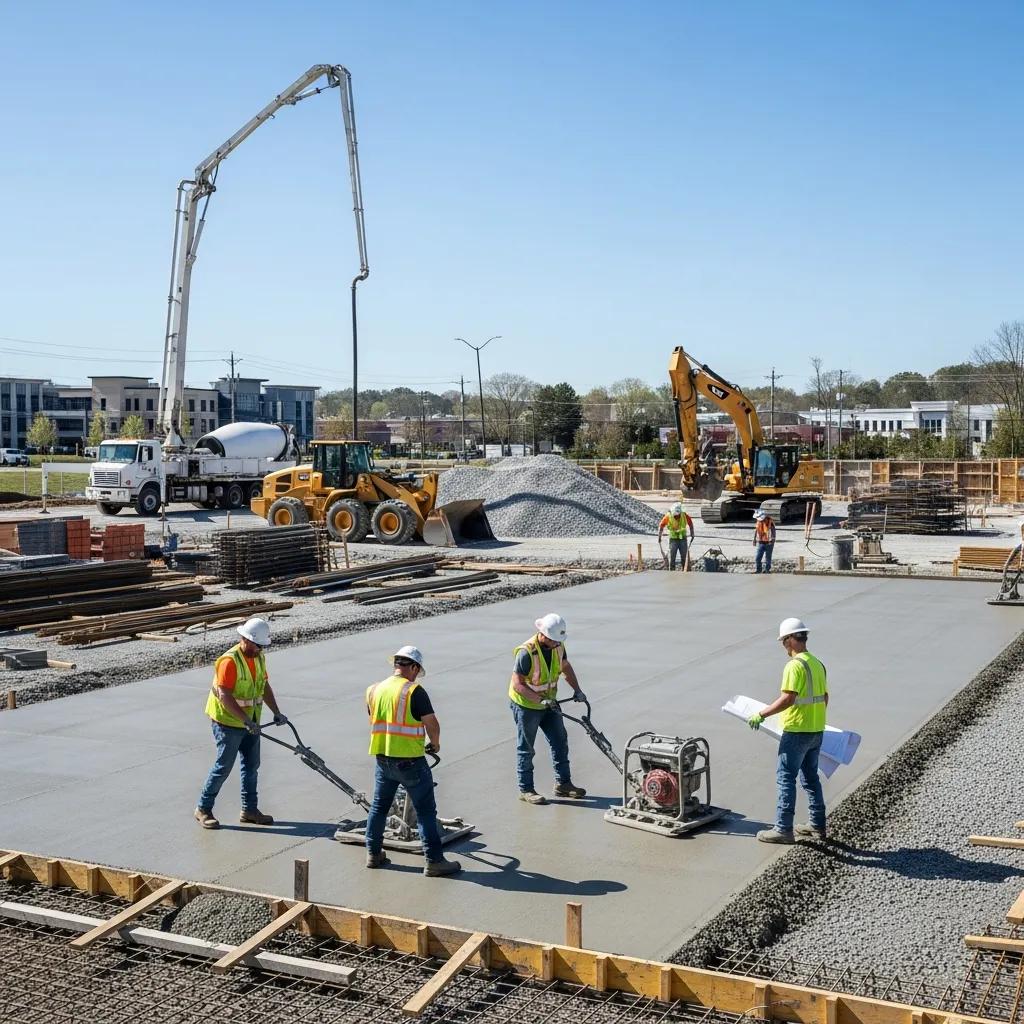
Expert Commercial Concrete Services in Greensboro, NC
Commercial concrete services encompass the design, construction, repair and finishing of concrete systems used by businesses, including parking areas, slabs, industrial floors and foundations. Choosing experienced local contractors helps ensure durable surfaces, regulatory compliance, and minimized downtime for operations in Greensboro, NC, where climate and soil conditions influence performance. This article explains what leading commercial concrete contractors do, how parking lot construction is executed step-by-step, best practices for repair, the advantages of industrial concrete flooring, and the technical considerations for commercial foundations. You will learn how to evaluate contractors, which materials and techniques extend service life, when to repair versus replace, and how flooring options affect safety and efficiency. Throughout the guide, practical checklists, comparison tables, and actionable tips will help facility managers, property owners, and project leads make informed decisions about commercial concrete services in Greensboro.
Who Are the Leading Commercial Concrete Contractors in Greensboro, NC?
Leading commercial concrete contractors in Greensboro, NC are firms that combine proper licensing and insurance with a documented local portfolio, commercial-grade equipment, and experience addressing regional climate and regulatory factors. They apply engineered mix designs, reinforced placement methods, and quality-control testing to deliver durable solutions suited to heavy traffic, freeze-thaw cycles, and site drainage challenges. The immediate benefit is reliable performance, reduced lifecycle costs, and compliance with accessibility and stormwater requirements that affect commercial sites. The following checklist highlights what separates top contractors and helps you verify credibility before commissioning work.
Leading contractors are characterized by:
- Proper licensing and active commercial insurance that covers liability and worker safety.
- A portfolio of local commercial projects demonstrating relevant scope, scale, and successful outcomes.
- Clear quality controls, testing procedures, and client references from recent commercial jobs.
These selection criteria lead naturally into the specific services most contractors offer and the decision points for choosing the right partner for your project.
What Services Do Greensboro Commercial Concrete Contractors Offer?
Commercial concrete contractors in Greensboro typically deliver a full spectrum of services that address new construction, corrective repairs, protective finishes, and maintenance regimes for business properties.
Core offerings include parking lot construction for retail and office sites, structural slabs for warehouses, commercial foundation work, industrial concrete flooring systems designed for high loads, and repair or resurfacing services to extend service life.
Ancillary services often include joint saw-cutting, rebar placement, sealants and pavement marking coordination to ensure the finished surface meets operational and regulatory needs.
For example, retail centers often prioritize quick curing mixes and pavement marking, while warehouses emphasize flatness and high load capacity for forklifts.
These services reduce liability and operational disruption by focusing on durability, safety and compliance. Understanding these service categories helps owners identify which contractor qualifications and past projects are most relevant to a planned scope of work.
How to Choose the Right Commercial Concrete Contractor in Greensboro
Selecting the right commercial concrete contractor requires a prioritized checklist that balances credentials, project management, warranty terms, and references. Start by confirming licenses and insurance, then review a contractor’s commercial portfolio for comparable projects and inspect recent work for craftsmanship and longevity. Evaluate bids not only on price but on specified mix designs, reinforcement details, planned curing regimes, and timeline clarity; request sample contract terms and workmanship warranties. During interviews, ask for local references and verify that the contractor understands Greensboro-specific considerations like freeze-thaw durability, stormwater controls, and ADA parking requirements.
- Verify license and insurance: request documentation and policy scopes.
- Compare portfolios and references: focus on similar commercial project types.
- Review bids for technical detail: mix design, reinforcement, curing, and schedule.
After narrowing candidates, request a written scope with milestones and payment terms. For convenience and additional information, note that the company described in this guide operates as a lead generation and information hub; check its Google Business Profile for local credibility and to view examples of referenced commercial project types.
How Is Greensboro Concrete Parking Lot Construction Done for Businesses?
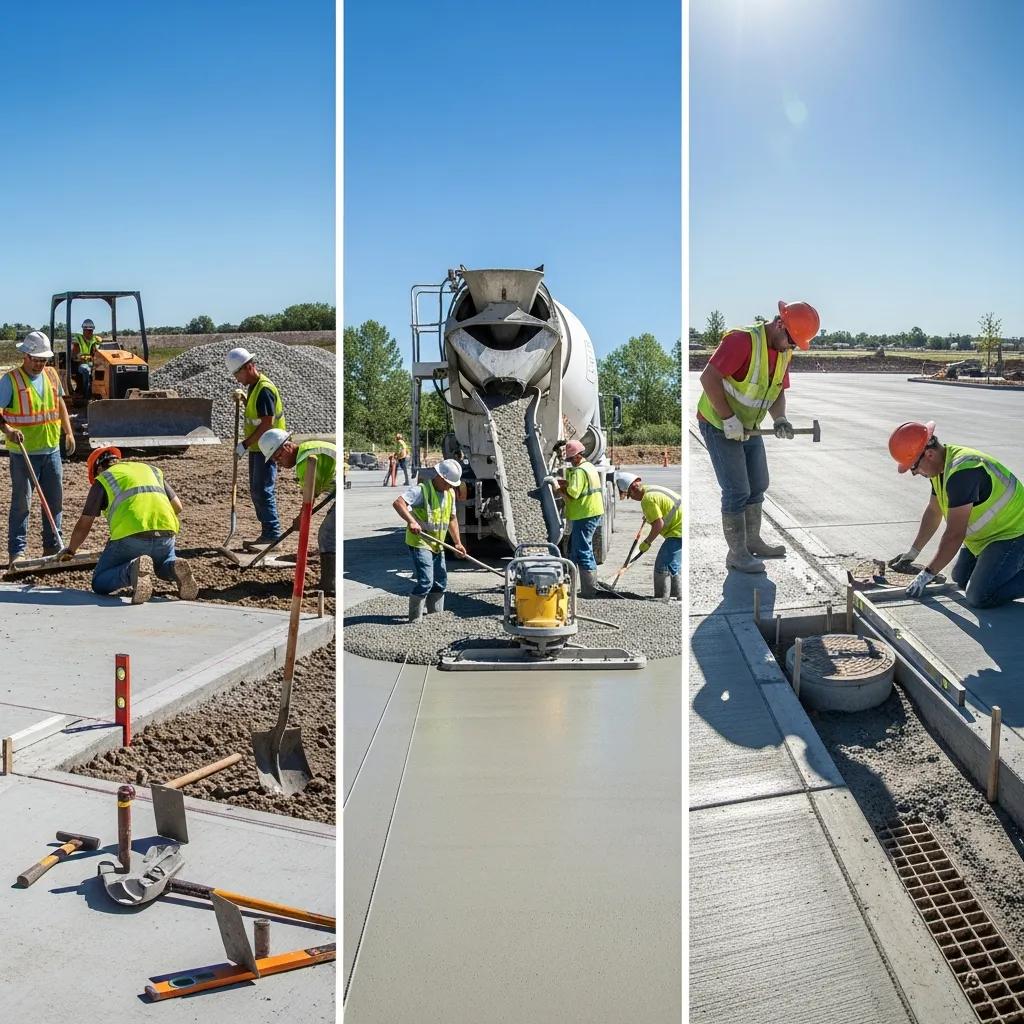
Concrete parking lot construction for businesses in Greensboro is a multi-phase process that combines site assessment, engineered base preparation, precisely specified concrete mixes, reinforcement strategies, and finishing procedures to achieve long-term performance and safety. Proper preparation of subgrade and drainage is critical in the Piedmont region to prevent settlement and freeze-thaw damage, while controlled jointing and curing protect pavement integrity under traffic loads. The stepwise approach below outlines the essential phases and quality checkpoints that determine a parking lot’s service life and maintenance profile.
What Are the Key Steps in Commercial Parking Lot Construction?
Concrete parking lot construction follows a clear sequence to ensure a durable surface that meets traffic and drainage demands. The process begins with site assessment, surveying, and permitting to set grades and stormwater controls. Next, contractors execute clearing, grading, and subgrade stabilization—often adding geotextile or compacted aggregate—to provide uniform support. Base installation and compaction prepare a stable platform followed by precise layout of reinforcement such as rebar or wire mesh. Concrete placement, finishing, and jointing use specified mix designs and saw-cut schedules to control cracking. Finally, curing and protection reduce early-age moisture loss and strength loss; pavement marking and sealants complete the job and ready the lot for use.
- Site assessment and permitting: establish grades and drainage.
- Subgrade stabilization and base compaction: create uniform support.
- Reinforced concrete placement, finishing, and curing: control durability.
These steps underscore why early investment in base and drainage often reduces long-term maintenance and repair costs for commercial owners.
Which Materials and Techniques Ensure Durable Parking Lots?
Durable parking lots depend on engineered mix design, proper reinforcement, jointing strategy, and protective measures that address commercial loadings and regional climate. A moderately high-strength concrete mix with appropriate air entrainment improves freeze-thaw resistance, while rebar or fiber reinforcement controls crack widths and load distribution. Joint spacing, saw-cut timing and sealants prevent random cracking and water infiltration. Surface finishes and penetrating sealers mitigate wear and chemical deterioration from deicers and vehicular fluids. Maintenance practices such as resealing and joint inspection extend life and delay costly overlays or replacements.
To compare common construction approaches, the table below summarizes options, costs and use cases for business owners evaluating parking lot builds.
This comparison highlights trade-offs between upfront cost and long-term performance for typical parking lot approaches.
Selecting reinforcement and drainage appropriate to traffic and soil conditions produces the best lifecycle value for commercial lots. For local estimate requests and access to regional portfolios, businesses can consult the website or check the company’s Google Business Profile for example projects and portfolio images. Additionally, property owners looking to enhance their outdoor spaces might consider patio services to complement their commercial concrete installations.
What Are the Best Practices for Commercial Concrete Repair in Greensboro?
Best practices for commercial concrete repair in Greensboro begin with accurate diagnosis, prioritization based on safety and function, and selection of repair methods that address root causes rather than symptoms. Effective repairs use compatible materials, proper surface preparation, and correct curing to restore structural capacity and appearance. Promptly addressing cracking, spalling, and settlement reduces liability and prevents progressive deterioration. The following bullets summarize critical repair priorities and maintenance protocols that minimize downtime and extend asset life.
- Prioritize safety-critical repairs first: trip hazards, large spalls, and structural settlement.
- Diagnose root causes: poor drainage, freeze-thaw cycles, inadequate reinforcement, or subgrade settlement.
- Use compatible repair materials and follow manufacturer curing instructions to ensure bond and longevity.
A methodical repair program that integrates preventive maintenance and scheduled inspections typically reduces long-term costs and helps owners plan phased repairs to limit business disruption.
When Is Commercial Concrete Repair Necessary?
Commercial concrete repair is necessary when visual or structural indicators suggest compromised performance, including cracking that affects drainage or safety, spalling that exposes reinforcement, settlement that creates trip or drainage problems, or joint failure that permits water infiltration. Small hairline cracks may be monitored, but progressive widening, undermining, or spalling requires intervention. Safety and liability concerns should always dictate priority—uneven surfaces near entrances or high-traffic pedestrian zones should be repaired immediately. Interim measures like temporary barriers or surface leveling protect users until permanent repair can be scheduled.
Recognizing severity levels and acting quickly prevents localized damage from escalating into full-panel replacement, which is more disruptive and costly.
How Do Professionals Perform Effective Concrete Repairs?
Professionals select repair techniques that match the cause and extent of damage: crack injection for non-structural cracks, patching with polymer-modified mortars for spalls, slab jacking for settlement, and full panel replacement when structural integrity is compromised.
Each repair begins with thorough cleaning, removal of unsound material, and surface profiling to ensure adequate bond.
Repairs incorporate proper reinforcement or dowels when load transfer is needed, followed by specified curing and protective sealing to meet durability goals.
Expected downtime varies: crack injection and patching can be quick with short return-to-service times, while panel replacement requires longer closure for forming, curing, and finishing.
Choosing the correct method reduces repeat repairs and restores functionality. For tailored repair estimates and photos of similar local repairs, facility managers can reference the lead-generation website or the company’s Google Business Profile for portfolios.
Why Choose Greensboro Industrial Concrete Flooring for Your Business Facility?
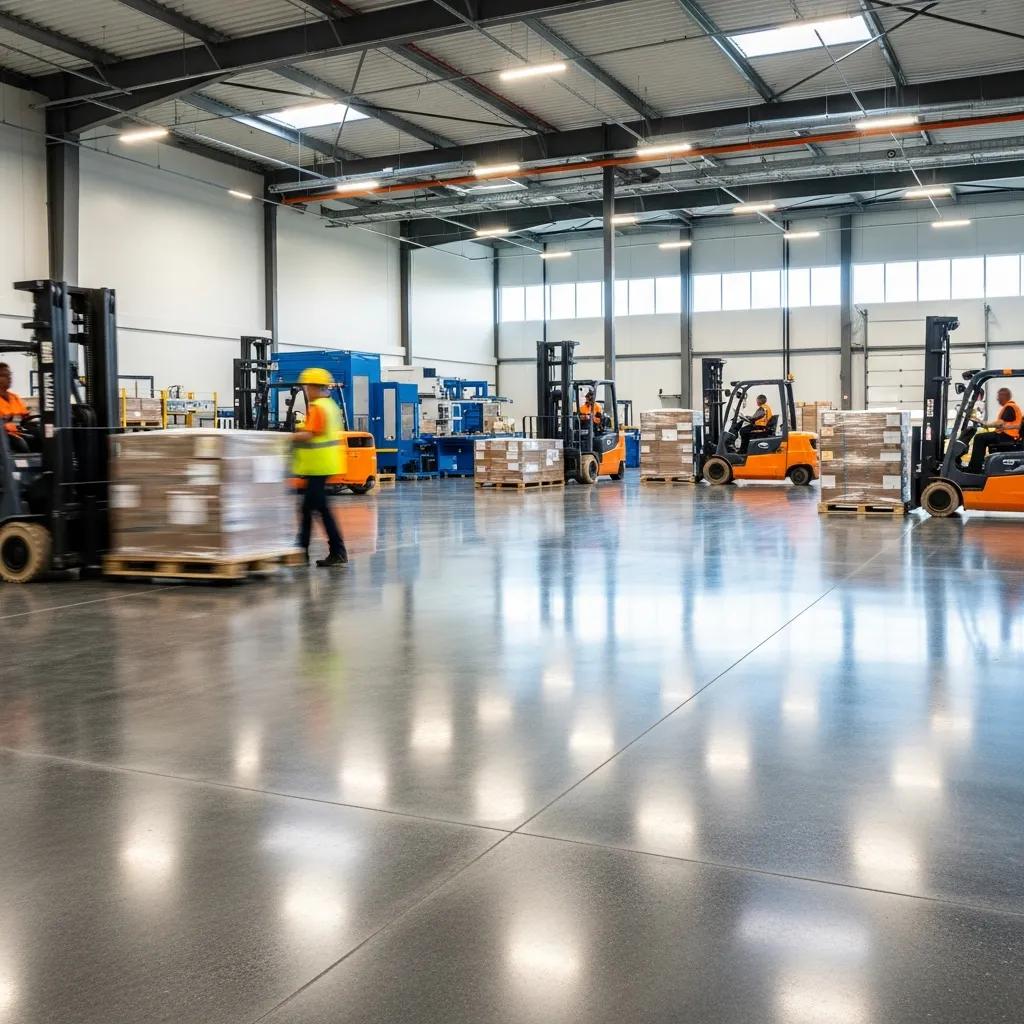
Industrial concrete flooring offers high load capacity, low long-term maintenance, and customizable finishes that suit manufacturing, warehousing, and processing facilities. Properly designed industrial floors deliver levelness, abrasion resistance, and cleanability that reduce downtime and improve operational efficiency under forklift traffic and heavy equipment loads. Compared with alternatives, concrete-based systems can be finished with epoxy, urethane, or polish to add chemical resistance, slip-control or ease of cleaning. Choosing the right system depends on industry-specific exposure, required slip resistance, and maintenance expectations.
Below is a comparison of common industrial flooring systems to guide selection based on operational priorities such as slip resistance and maintenance.
These options illustrate how performance attributes align with facility needs; polishing reduces dust and eases cleaning, while epoxy provides chemical protection where spills are frequent.
What Types of Industrial Concrete Flooring Are Available?
Industrial concrete flooring systems include sealed and densified concrete, polished concrete, epoxy and urethane coatings, and sacrificial overlays designed for specific exposure conditions.
Sealed concrete provides a durable surface with relatively low maintenance, while polished concrete increases compressive surface strength and reduces dusting for warehouses.
Epoxy and urethane coatings offer enhanced chemical resistance and tailored slip resistance for manufacturing or food processing environments.
Each system has trade-offs related to cure time, downtime, and repairability; understanding those trade-offs helps match flooring to throughput and cleaning regimes.
Selecting an appropriate system should factor in chemical exposure, expected traffic type, and cleaning methods to optimize lifecycle cost and safety.
How Does Industrial Flooring Improve Business Operations?
Industrial flooring improves operations by reducing maintenance interruptions, supporting heavy equipment loads, and enabling faster cleaning and sanitation cycles. A flatter, more durable surface improves forklift handling and reduces product damage and labor time spent on floor maintenance. Chemical-resistant coatings reduce downtime from spill-related deterioration, while polished surfaces often minimize dust and particulate generation that affect sensitive processes. Operational benefits also include improved safety metrics due to better traction and fewer surface defects that create trip hazards.
Operational improvements translate into measurable business outcomes: fewer unplanned stoppages, lower cleaning labor, and extended replacement cycles. For cost estimates tailored to operational needs and local examples of industrial floors, businesses may consult the informational website or view regional project images on the Google Business Profile. For additional ideas on enhancing your commercial property, explore decorative concrete options that combine aesthetics with durability.
What Should You Know About Commercial Concrete Foundations in Greensboro?
Commercial concrete foundations in Greensboro must be designed with site-specific geotechnical input, appropriate reinforcement, and drainage strategies to withstand loads and environmental stresses. Foundations translate building loads into the ground and therefore require careful soil testing, competent design that accounts for groundwater and frost depth, and construction controls that include formwork, proper consolidation of concrete, and inspection. Attention to these factors reduces long-term settlement and structural issues that can disrupt operations and increase repair costs. The next subsections outline the design-build phases and the environmental and construction variables that influence durability.
How Are Commercial Concrete Foundations Designed and Built?
Foundation design and construction proceed from site investigation and geotechnical recommendations to engineered design, formwork preparation, reinforcement placement, concrete placement, curing, and controlled backfill. Geotechnical reports inform bearing capacity requirements and recommend mitigation measures such as compacted fills or pile foundations when poor soils are present. Engineers specify reinforcement, concrete strength, and jointing for slab-on-grade systems or footings for framed structures. Construction inspections, slump testing and concrete strength testing validate compliance; proper curing and sequenced backfill protect the newly placed concrete during early strength gain.
Owners should expect staged deliverables: geotechnical data, design drawings, material submittals and inspection reports, which collectively reduce risk and improve predictability of foundation performance.
What Factors Affect Foundation Durability and Stability?
Foundation durability and stability are affected by soil conditions, groundwater levels, frost and freeze-thaw cycles, concrete mix quality, reinforcement detailing, and construction controls. Expansive clays or high groundwater require mitigation—such as deeper footings, drainage systems, or engineered fills—to prevent differential settlement. Inadequate consolidation, improper curing or low-quality mixes increase cracking potential and reduce durability. Mitigation strategies include improving drainage, using appropriate air entrainment and admixtures for frost resistance, specifying proper cover for reinforcement, and implementing robust quality assurance during placement.
- Prioritize geotechnical investigation: informs foundation type and mitigation needs.
- Specify mix and reinforcement suited to site conditions: controls cracking and load transfer.
- Enforce quality controls during placement: testing and inspection validate durability.
These measures form the foundation—literally and operationally—for long-term commercial building performance in Greensboro.
Frequently Asked Questions
What are the benefits of using industrial concrete flooring in commercial settings?
Industrial concrete flooring offers numerous advantages for commercial settings, including high load capacity, low maintenance requirements, and customizable finishes. These floors are designed to withstand heavy equipment and forklift traffic, reducing downtime and improving operational efficiency. Additionally, options like epoxy coatings enhance chemical resistance, while polished surfaces minimize dust and facilitate cleaning. By selecting the right flooring system, businesses can optimize safety, reduce maintenance costs, and extend the lifespan of their flooring, ultimately leading to better overall performance.
How can businesses ensure compliance with local regulations when constructing concrete structures?
To ensure compliance with local regulations during concrete construction, businesses should engage experienced contractors familiar with Greensboro’s building codes and zoning laws. This includes obtaining necessary permits, adhering to accessibility standards, and implementing stormwater management practices. Regular inspections during construction can help verify compliance with safety and environmental regulations. Additionally, consulting with local authorities or hiring a compliance specialist can provide guidance on specific requirements, ensuring that the project meets all legal obligations and avoids potential fines or delays.
What maintenance practices are recommended for commercial concrete surfaces?
Regular maintenance practices for commercial concrete surfaces include routine inspections, cleaning, and timely repairs. Inspecting for cracks, spalling, or surface wear allows for early intervention, preventing more extensive damage. Cleaning should involve removing debris and stains, while sealing surfaces can protect against moisture and chemical damage. Additionally, periodic resealing and joint maintenance help extend the lifespan of the concrete. Establishing a maintenance schedule tailored to the specific use and environmental conditions of the concrete can significantly reduce long-term repair costs and enhance durability.
What factors should be considered when selecting concrete materials for a project?
When selecting concrete materials for a project, several factors should be considered, including the intended use, load requirements, environmental conditions, and desired finish. The concrete mix design should account for factors like strength, durability, and resistance to freeze-thaw cycles. Additionally, the choice of reinforcement, such as rebar or fiber, can impact the concrete’s performance under stress. It’s also essential to consider local availability of materials and any specific regulatory requirements that may influence material selection, ensuring the project meets both performance and compliance standards.
How does weather impact the concrete curing process?
Weather significantly impacts the concrete curing process, as temperature and humidity levels can affect hydration and strength development. In hot weather, rapid evaporation can lead to surface cracking, while cold temperatures can slow down curing and increase the risk of freeze damage. To mitigate these effects, contractors may use curing compounds, wet curing methods, or insulated blankets to maintain optimal moisture and temperature levels. Understanding local climate conditions is crucial for planning the curing process to ensure the concrete achieves its intended strength and durability.
What are the common signs that concrete repair is needed?
Common signs that concrete repair is needed include visible cracking, spalling, uneven surfaces, and water pooling. Cracks that widen or deepen over time indicate underlying issues that require attention. Spalling, or flaking of the surface, often results from freeze-thaw cycles or chemical exposure. Uneven surfaces can create trip hazards and drainage problems, necessitating prompt repair. Regular inspections can help identify these issues early, allowing for timely interventions that prevent further deterioration and costly replacements.
What role does drainage play in concrete construction?
Drainage plays a critical role in concrete construction, as it helps prevent water accumulation that can lead to structural damage. Proper drainage design ensures that water is directed away from concrete surfaces, reducing the risk of erosion, freeze-thaw damage, and settlement issues. Incorporating features like slopes, drainage channels, and permeable materials can enhance water management. Effective drainage not only extends the lifespan of concrete structures but also minimizes maintenance needs and enhances safety by preventing water-related hazards.
Conclusion
Investing in professional commercial concrete services in Greensboro ensures durable, compliant, and efficient surfaces tailored to your business needs. By understanding the key aspects of contractor selection, construction processes, and maintenance practices, you can make informed decisions that enhance operational performance. Don’t hesitate to explore our full range of concrete services designed to meet the unique demands of your facility. Visit our website today to request a free estimate and discover how we can support your next project.

0 Comments