
Expert Concrete Walkway Services in Greensboro, NC
Concrete walkways are purpose-built outdoor pathways composed of poured concrete slabs, finishes, and reinforcement that create durable, safe, and attractive routes around homes and gardens in Greensboro, NC. This guide explains how concrete walkways deliver safety, longevity, and curb appeal specifically for Greensboro’s climate and soils, and it shows homeowners practical options for design, installation, costs, maintenance, and contractor selection. Many property owners need durable paths that resist freeze/thaw cycles, heavy rain, and root pressure while complementing landscaping and entryways; concrete meets these needs through material choice, base preparation, and finish selection. Below you will find clear benefits, comparisons of popular walkway types, a contractor-managed installation workflow, realistic cost ranges and an EAV-style pricing table, maintenance and repair guidance with an issues table, and a checklist of questions to vet local contractors. Throughout, keywords like Greensboro concrete walkways, garden paths Greensboro, and stamped concrete walkways Greensboro are integrated to help you evaluate options and make informed decisions for safe, beautiful paths.
What Are the Benefits of Concrete Walkways for Greensboro Homes?
Concrete walkways provide a long-lasting, low-maintenance hardscape solution that combines structural durability with visual flexibility for Greensboro homes. Properly designed concrete paths resist surface wear and settlement because they rely on a compacted subbase, control joints, and appropriate reinforcement to manage loads and local soil movement. Homeowners gain safety improvements—such as slip-resistant textures and smooth transitions for accessibility—while also increasing curb appeal and property value through attractive finishes and defined circulation. The next sections break down safety and durability features and then explore how finishes and design choices lift a home’s aesthetics.
Concrete walkways help homeowners reduce long-term upkeep and replacement cycles by providing a stable surface that resists erosion and rutting. Regular maintenance and correct initial installation further extend lifespan, reducing life-cycle costs compared with some loose-surface alternatives. Understanding safety features leads naturally into specific construction measures that prevent common failures and manage stormwater runoff effectively.
Concrete walkways enhance both functional performance and visual integration with landscaping, creating coherent outdoor circulation that supports everyday use and special-access requirements. Design choices that follow best practices in drainage and material selection keep surfaces safe year-round and minimize future repair needs.
How Do Concrete Walkways Enhance Safety and Durability?
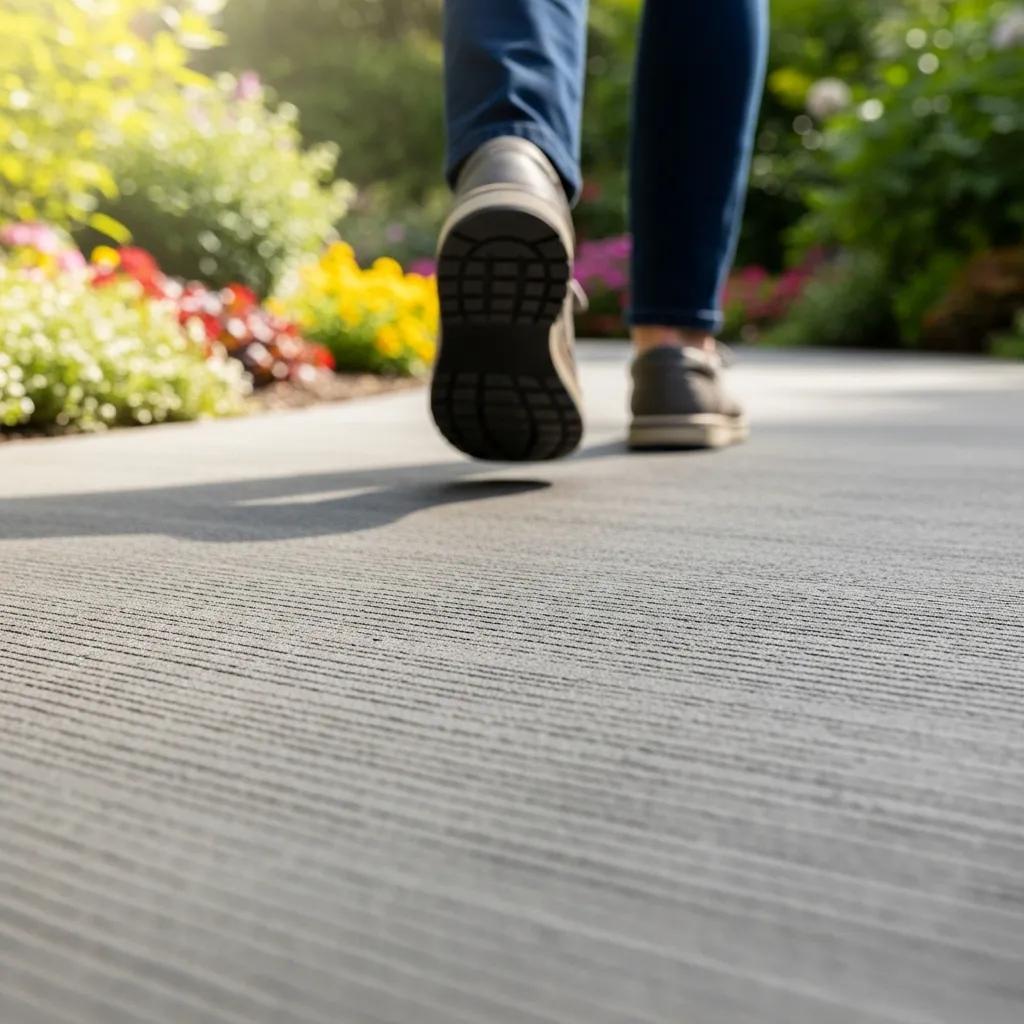
Concrete walkways enhance safety and durability through surface texture, structural detailing, and site drainage that together reduce slips and structural failures. Slip-resistant broom finishes, exposed aggregate, or patterned textures increase traction when wet, while control joints and reinforcement—rebar or welded wire mesh—prevent random cracking and distribute loads to avoid settlement. Subgrade preparation with a compacted gravel subbase stabilizes the slab and reduces frost heave and differential settlement, which are common causes of long-term damage. Effective grading and perimeter drainage prevent standing water at edges and joints, avoiding freeze-related deterioration and spalling.
A simple checklist of safety features helps homeowners verify a walkway’s resilience before installation or during inspection. This checklist supports decisions about finishes and reinforcement and transitions cleanly into aesthetic choices that balance texture with visual appeal for entryways and gardens.
In What Ways Do Concrete Paths Improve Property Aesthetics?
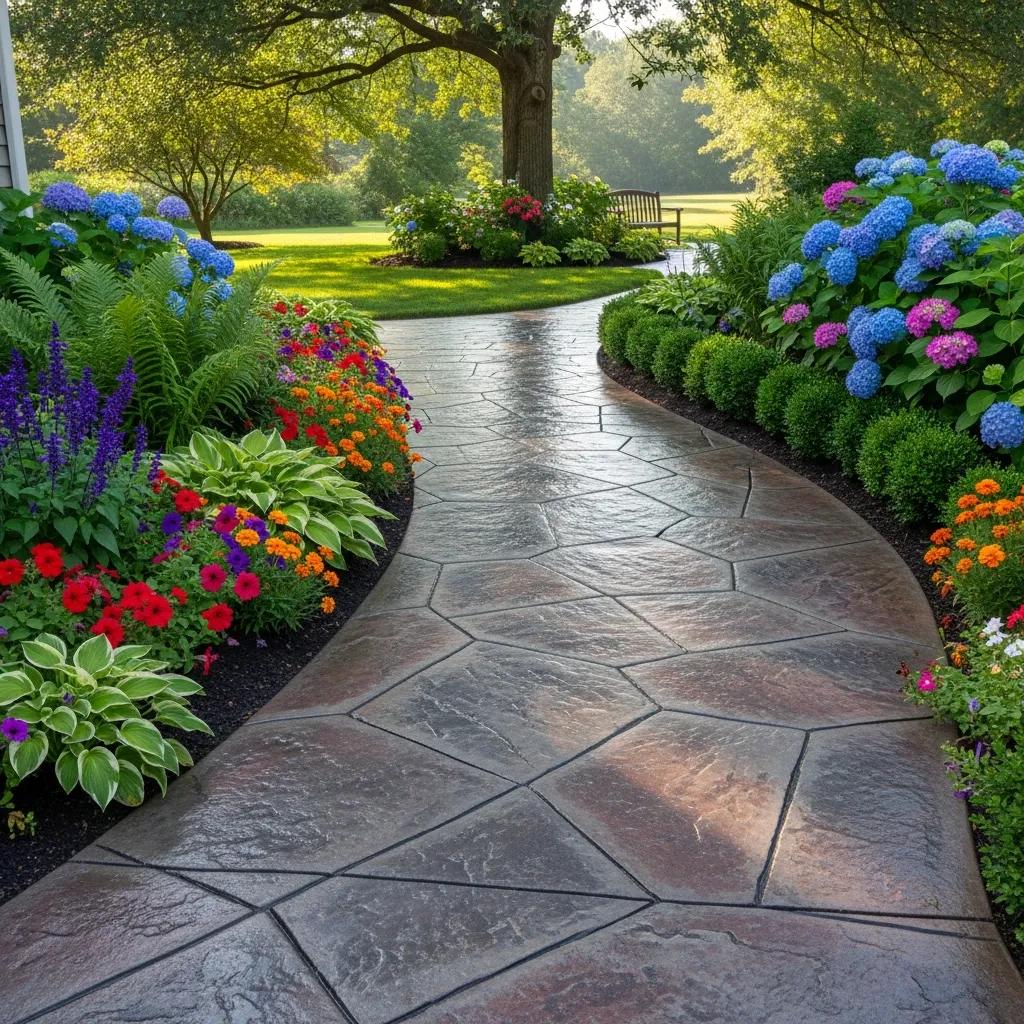
Concrete paths improve property aesthetics by offering a wide palette of finishes, colors, and patterns that integrate with existing hardscape and plantings to create cohesive curb appeal. Decorative options such as stamped concrete that mimics stone, colored concrete using integral pigments or surface stains, and exposed aggregate for textured visual interest allow homeowners to match walkway character to architectural style and garden design. Edging details, banding, and contrasted joints can frame planting beds and lawn areas, guiding sightlines and strengthening the overall landscape composition.
Selecting aesthetic treatments also requires consideration of durability and maintenance, since some decorative finishes need periodic resealing to preserve color and gloss. Thoughtful placement of paths and coordination with planting beds amplifies both function and visual harmony, which naturally leads into a comparison of the most popular concrete walkway types used locally.
Which Types of Concrete Walkways Are Popular in Greensboro, NC?
Homeowners in Greensboro commonly choose among plain broom-finish concrete, stamped and colored concrete, exposed aggregate, and permeable concrete options depending on budget, drainage needs, and desired appearance. Each type balances cost, texture, and maintenance differently: plain surfaces are economical and slip-resistant, stamped and colored finishes are decorative but require sealing, exposed aggregate provides durable texture and deicing resilience, and permeable concrete supports stormwater infiltration where runoff control is a priority. Comparing these options helps match a walkway type to site constraints and aesthetic goals.
Below is a quick comparison table showing characteristics and best use cases for popular walkway types to help prioritize choices based on durability, aesthetics, and maintenance.
Different walkway types suit distinct design goals and site conditions:
This comparison highlights that plain concrete provides the best value for heavy use, while decorative and permeable options add design or environmental benefits that justify higher initial costs.
What Are the Features of Stamped and Colored Concrete Walkways?
Stamped and colored concrete walkways pair surface patterning with pigments or stains to replicate natural materials and create a high-impact entry or garden route. Popular stamp patterns include ashlar slate, cobblestone, and random stone; coloring can be integral (mixed into the batch) or surface-applied stains that enhance tones and create depth. These finishes require sealing to protect color and to ease cleaning, and they may be slightly more susceptible to visible wear in high-traffic spots than plain broom finishes.
When choosing stamped or colored concrete, balance desired realism and maintenance expectations; samples and test panels can help predict long-term appearance. Proper sealing schedules and surface care then segue naturally into differences between narrower garden paths and primary residential walkways.
How Do Garden Paths and Residential Concrete Paths Differ in Design?
Garden paths and residential main walkways differ primarily in width, curvature, finish, and function, with garden paths favoring narrower, organic routes that emphasize experience and planting integration. Garden paths often use softer edges, permeable segments, or stepping-stone-like concrete pads to prioritize planting health and natural aesthetics, whereas primary residential paths prioritize accessibility, consistent load-bearing capacity, and direct routing to entries. Width standards differ: garden paths commonly measure 2–3 feet for intimate circulation, while entry walkways and ADA-conscious routes need 3–4 feet or more for comfort and compliance.
Material choices reflect these roles: permeable concrete or segmented pads suit gardens, while monolithic reinforced slabs suit primary access. Considering these functional differences sets the stage for understanding contractor-managed installation workflows and the steps professionals follow.
How Is the Concrete Walkway Installation Process Managed by Greensboro Contractors?
Professional installation of concrete walkways in Greensboro follows a predictable workflow that ensures code compliance, structural performance, and finish quality from site assessment through final cure. Contractors begin with a site survey and permitting check, then proceed to excavation, subbase compaction, forming, reinforcement placement, pouring, finishing, and curing, with final grading and cleanup to restore landscaping. Each step addresses common failure modes—like poor drainage or inadequate reinforcement—so adherence to the process reduces long-term repair needs.
Below is a numbered list summarizing the contractor-managed installation steps designed for clarity and featured-snippet optimization.
- Site assessment and permitting: Evaluate grade, soils, and local permit needs before work begins.
- Subgrade and subbase preparation: Excavate to depth, compact soil, and place crushed stone or aggregate base.
- Formwork and reinforcement: Install forms, place rebar or mesh, and set control joint layout.
- Pouring and finishing: Pour concrete, consolidate, apply finish texture, and strike joints.
- Curing and cleanup: Protect slab during curing, remove forms, and finalize grading and sealing.
What Steps Are Involved in Professional Concrete Walkway Installation?
Professional installation breaks down into discrete tasks with expected timelines and homeowner preparation points to ensure a smooth project from start to finish. After the initial survey and any permit processing, excavation and subbase work typically occupy one day to establish a stable platform, forms and reinforcement take another half-day, and the pour and finish occur on a single day with subsequent curing over several days to a week depending on weather. Homeowners should clear the area, plan for temporary access changes, and confirm drainage solutions are in place prior to pouring.
Clear communication about expected timelines and aftercare responsibilities reduces delays and ensures the contractor can complete finishing and sealing at the optimal cure stage. Understanding these operational details naturally suggests reasons to choose local contractors with regional knowledge and supply connections.
Why Choose Local Concrete Path Contractors in Greensboro, NC?
Choosing local concrete path contractors provides advantages in climate-specific expertise, permitting familiarity, and faster response for warranty work and repairs compared with distant firms. Local contractors understand Greensboro soil behavior, freeze/thaw patterns, and common drainage challenges, and they maintain relationships with nearby suppliers for timely materials. Verifying licensing, insurance, local references, and a portfolio of nearby projects gives homeowners confidence that the contractor can manage the unique demands of local installations.
Local presence also improves post-installation support and allows contractors to offer site visits for maintenance recommendations, which feeds directly into realistic cost and repair planning presented next.
What Is the Cost to Install and Repair Concrete Walkways in Greensboro?
Concrete walkway costs in Greensboro vary by type, finish, site complexity, and subgrade conditions; typical installed per-square-foot ranges provide a baseline but must be qualified by site-specific factors such as grading, access, and drainage. For straightforward broom-finish walkways, budget expectations are generally at the lower end of the range, while stamped, colored, or permeable systems occupy higher bands due to extra labor and materials. The table below presents EAV-style price bands to compare common walkway types and the factors most likely to increase costs.
Typical per-square-foot price ranges and cost-driving factors:
Summary: basic broom-finish slabs are the most economical, while decorative and permeable solutions add cost for appearance and stormwater benefits. Factors such as difficult access, extensive grading, or permit requirements commonly push estimates higher than base bands.
How Does Pricing Vary by Concrete Type and Design Complexity?
Pricing varies primarily with material inputs and labor intensity: plain concrete slabs use standard mixes and minimal finishing labor, while stamped patterns, integral color, or exposed aggregate require additional finishing time, specialty tools, and sealing materials that raise costs. Design complexity—curved edges, custom banding, multiple colors, or embedded features—adds layout and finishing hours, and may require special forms or saw-cut control joint patterns. Site-specific costs such as compacting a weak subgrade, installing retaining features, or rerouting drainage also increase the total project price.
To evaluate bids, compare line-item estimates for base prep, concrete per cubic yard, reinforcement, stamping/finishing, and sealing, and confirm whether cleanup, disposal, and permit fees are included. This cost discussion transitions into typical repair scenarios and their cost implications for homeowners.
Intro to repair cost list:
- Crack sealing and surface patching: Economical for hairline to moderate cracks and surface spalling.
- Mudjacking or slab lifting: Mid-range cost to correct minor settlement without full replacement.
- Partial slab replacement: Higher cost where localized sections are extensively damaged.
- Full slab replacement: Most costly but often most durable when large areas or subbase failures exist.
What Are Typical Repair Costs for Residential Concrete Paths?
Typical repair costs depend on the method and extent: crack sealing and small patches are relatively inexpensive and often priced by linear foot or small-area patches, mudjacking or slab lifting to correct settlement sits in a moderate range and can restore level surfaces, while partial slab replacement costs approach new installation rates for the replaced area. Full replacement becomes cost-effective when widespread cracking, heaving, or failed subbase conditions threaten safety and recurring repairs would exceed replacement in the medium term.
Assessing whether repair or replacement is appropriate requires inspecting control joint patterns, reinforcement exposure, settlement progression, and drainage causes—criteria that indicate when provisional repairs will suffice versus when complete replacement avoids repeat costs.
How Can You Maintain and Repair Concrete Walkways for Longevity?
A practical maintenance plan for concrete walkways includes routine cleaning, scheduled resealing for decorative finishes, seasonal inspections for drainage and joint performance, and prompt attention to vegetation and root issues to extend lifespan. Regular upkeep—sweeping, low-pressure washing, and resealing every 2–5 years for stamped or colored finishes—preserves surface integrity and color. The table below helps homeowners diagnose common walkway issues, likely causes, and typical repair approaches with rough cost guidance so they can decide when to DIY and when to call a professional.
Diagnosing common walkway issues and repair options:
What Are Common Maintenance Practices for Durable Concrete Paths?
Common maintenance practices extend concrete walkway life and include seasonal debris removal, annual inspection of joints and edges, resealing decorative surfaces every 2–5 years, and controlling nearby vegetation to prevent root intrusion. Cleaning with a gentle detergent and pressure-washing at safe PSI levels removes stains without damaging sealants, and timely resealing preserves colors and limits water penetration that accelerates freeze damage. Monitoring control joints and repairing failed caulking prevents water ingress into the subbase, which is often the root cause of settlement and heaving.
Consistent maintenance reduces the likelihood of escalating damage and informs timely decisions about repairs, which is the focus of the next section about when to schedule professional interventions.
List intro to maintenance checklist:
- Spring inspection: Check for freeze-thaw damage and clear winter debris.
- Summer cleaning: Sweep and wash surfaces; inspect sealer condition.
- Autumn drainage check: Clear gutters, confirm grading directs water away.
- Biennial sealing: Reapply sealer on stamped or colored surfaces as needed.
When Should You Schedule Repairs for Cracks or Damage?
Schedule repairs promptly when cracks widen beyond hairline dimensions, when slabs settle creating trip hazards, or when spalling exposes aggregate or reinforcement; these signs indicate structural risk or accelerated deterioration. Hairline cracks can be monitored and sealed to prevent water entry, but cracks that grow over time or show displacement require professional assessment to determine whether mudjacking, partial replacement, or full slab replacement is appropriate. Urgent repair is needed when rebar becomes exposed or when spalling poses safety concerns, as corrosion of reinforcement undermines slab strength and increases long-term costs.
Early intervention often prevents the need for full replacement, which underscores the value of routine inspections and proactive maintenance planning outlined in the previous checklist.
What Should You Consider When Choosing a Concrete Walkway Contractor in Greensboro?
When selecting a contractor, prioritize local experience, verifiable project portfolios, clear itemized estimates, and written warranties or service commitments that align with project scope and expected outcomes. Verify that the contractor understands local permitting, grading, and drainage requirements and ask for references or photos of nearby installations to assess workmanship and finish quality. A structured interview process helps compare bids by focusing on materials, reinforcement, curing regimes, cleanup, and post-installation support.
The following list provides essential qualities to look for in reliable Greensboro concrete path contractors, and it leads into specific interview questions to vet candidates effectively.
- Local portfolio: Evidence of similar projects completed in comparable soils and climates.
- Clear estimates: Itemized cost breakdowns covering site prep, materials, labor, and permitting.
- Warranty and follow-up: Written commitments for workmanship and correction of defects.
Which Qualities Define Reliable Greensboro Concrete Path Contractors?
Reliable contractors present a portfolio of local projects that demonstrate attention to subgrade preparation, joint layout, and finish consistency, and they provide itemized bids that clarify what is and is not included. They can explain reinforcement choices (rebar vs. wire mesh), concrete mix specifications, curing methods, and recommended sealant products, and they supply references from nearby properties. Written warranties or service agreements that specify remedy timelines and coverage terms indicate confidence in workmanship and facilitate future repairs if issues arise.
Understanding these qualities leads directly to the concrete list of questions to ask before hiring a contractor.
What Questions Should You Ask Before Hiring a Contractor?
A targeted set of questions uncovers contractor competence, project approach, and reliability; ask about local experience, sample projects, materials, reinforcement strategy, drainage solutions, permit handling, timeline, payment schedule, and warranty terms. Request specifics such as concrete mix strength, slump and admixtures, reinforcement spacing, control joint strategy, sealing recommendation, and cleanup procedures to compare technical alignment between bids. Also confirm proof of insurance and whether the contractor coordinates permits and inspections, as these items affect schedule and compliance.
Sample interview questions include: “Can you show recent local projects with similar scope?”, “What concrete mix and reinforcement do you specify and why?”, “How will you manage drainage and grading here?”, and “What warranty do you provide and what does it cover?” These questions help determine whether a contractor’s methods match best practices and homeowner expectations.
- Can you provide examples of similar projects completed locally? This verifies relevant experience.
- What is your approach to subbase and drainage for this site? This clarifies long-term performance measures.
- Which concrete mix, reinforcement, and finishing methods will you use? This details structural and aesthetic choices.
- How do you handle permits, inspections, and cleanup? This reveals project management competence.
- What warranty or follow-up services do you offer? This explains post-installation support.
Use these inquiries to compare bids and confirm that the chosen contractor will deliver safe, beautiful, and durable concrete walkways for your Greensboro property.


0 Comments