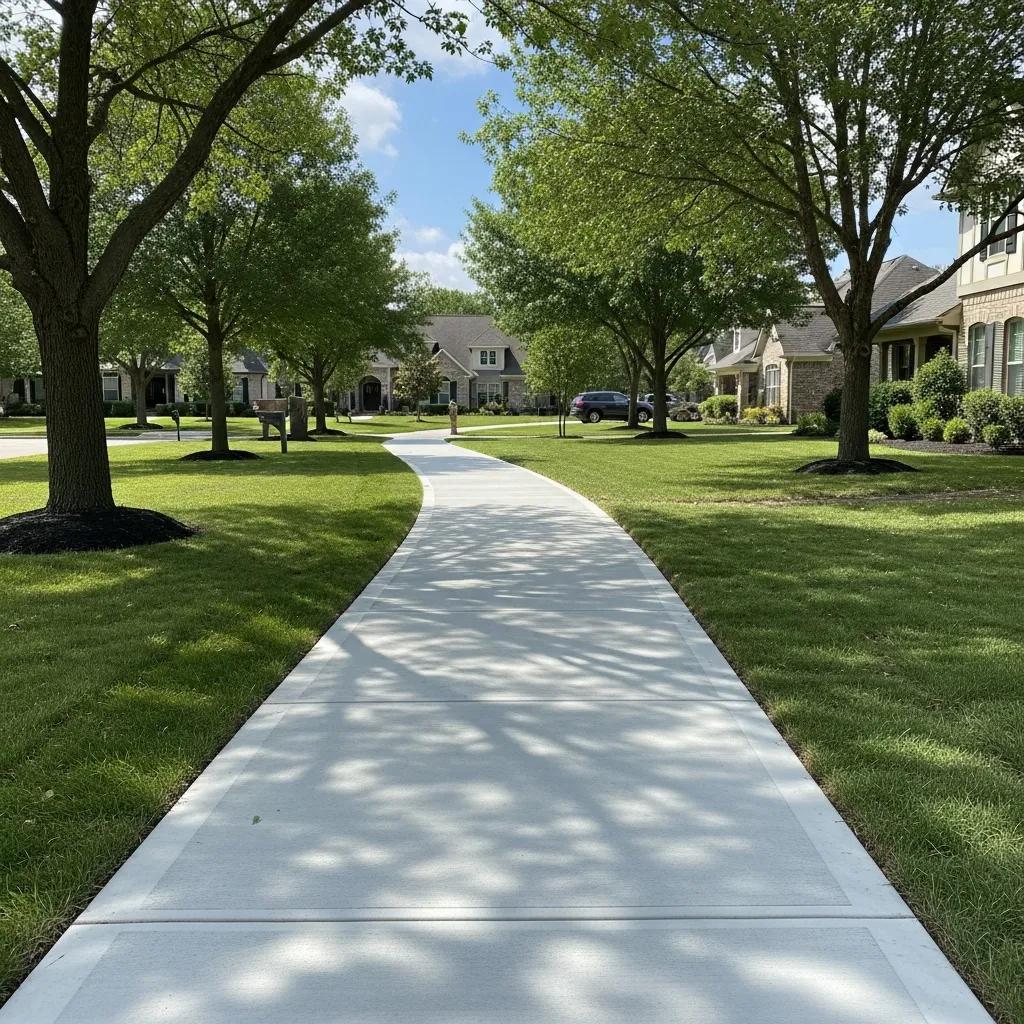
Starmount Forest Concrete Sidewalks: Installation, Repair & Cost Guide
Concrete sidewalks are durable pedestrian paths formed by poured concrete slabs placed on a prepared subbase, and in Starmount Forest they balance longevity, safety, and neighborhood character for Greensboro homeowners. This guide explains how concrete sidewalk installation works, when repair is preferable to replacement, what typical costs look like in Greensboro, and how design choices influence maintenance and curb appeal. Many homeowners face cracked, uneven, or weathered walkways that create trip hazards and lower property value; understanding installation steps, repair options, and cost drivers helps homeowners make informed decisions. You will find practical checklists for vetting contractors, a breakdown of common repair methods, and localized considerations for Starmount Forest like soil, drainage, and aesthetic expectations. The article covers benefits and safety, step-by-step installation, diagnosis and repair, pricing examples and quote tips, contractor selection guidance, and unique neighborhood concerns. Throughout, keywords such as Starmount Forest sidewalks, concrete sidewalk installation Greensboro, and sidewalk repair Greensboro are integrated to help you find actionable local guidance and compare realistic options.
What Are the Benefits of Concrete Sidewalks for Starmount Forest Homes?
Concrete sidewalks provide long-lasting, low-maintenance pedestrian surfaces for Starmount Forest properties because concrete’s compressive strength and proper subbase construction resist wear and settlement. This material creates a smooth, slip-resistant walking surface that reduces trip hazards and supports ADA-compliant pathways when installed with correct slopes and joint spacing. Homeowners gain curb appeal through customizable finishes—plain, broomed, stamped, or colored concrete—that can complement local landscaping and increase perceived property value. The next paragraphs examine structural durability and safety mechanisms before shifting to aesthetic and maintenance advantages for neighborhood settings.
Concrete sidewalks enhance durability and safety through engineered components: a compacted subbase stabilizes loads, reinforcement like mesh reduces shrinkage cracking, and control joints manage thermal movement to prevent random cracks. Properly specified concrete (adequate compressive strength and air entrainment) resists freeze-thaw damage common in Greensboro, while correct thickness distributes pedestrian and light maintenance loads. These structural measures translate into fewer repairs and a longer functional lifespan for Starmount Forest sidewalks, which in turn reduces trip-related liability for homeowners. Understanding these mechanical protections leads naturally to the aesthetic choices that affect maintenance schedules and long-term value.
Different concrete finishes offer distinct aesthetic and maintenance profiles suitable for Starmount Forest streetscapes: plain broom finishes are economical and slip-resistant, stamped concrete provides patterns that mimic stone or brick, and colored or exposed-aggregate surfaces add visual interest. Stamped and colored concrete require occasional resealing to preserve appearance, while exposed aggregate may need less frequent cleaning but can collect debris in surface recesses. Choosing a finish balances upfront cost, maintenance frequency, and neighborhood character; homeowners should weigh these factors when planning a sidewalk to ensure cohesion with surrounding homes. These visual and upkeep considerations inform contractor selection and budgeting in later sections.
Different sidewalk materials and decorative finishes compare across durability, cost, maintenance, and curb appeal for quick homeowner decisions.
This comparison helps homeowners match performance expectations with desired appearance for Starmount Forest sidewalks, guiding choices between cost and curb appeal.
How Is Concrete Sidewalk Installation Performed in Starmount Forest?
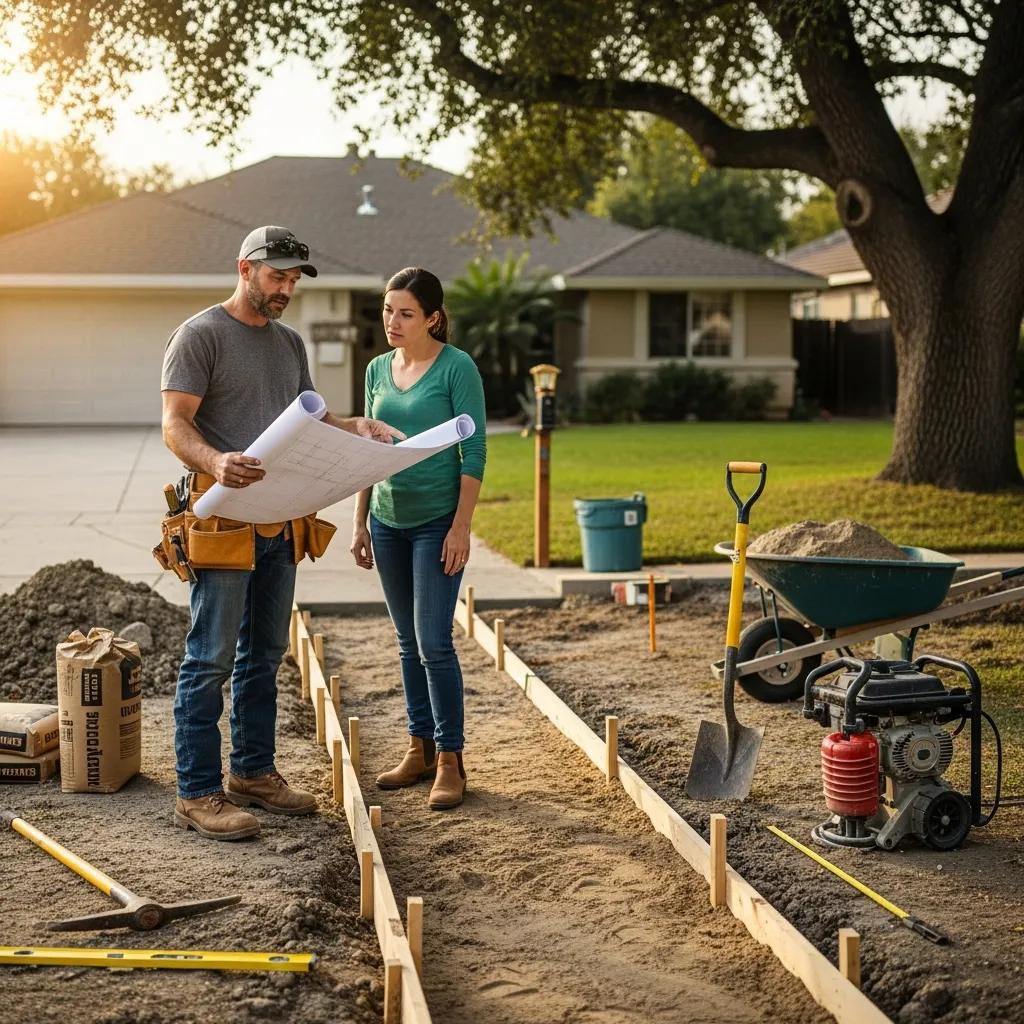
Concrete sidewalk installation in Starmount Forest follows a predictable workflow that begins with site assessment, subbase preparation, forming and reinforcement, pouring, finishing, and curing; the sequence ensures structural performance and a safe, attractive result. Contractors evaluate soil conditions and drainage, determine permit needs, and plan joint layout to control cracking before excavation begins. Each step directly affects longevity and safety, so homeowners should understand the process to set realistic timelines and prepare the site. The following subsections outline the stepwise actions and design options to expect when scheduling work.
What Are the Steps in the Concrete Sidewalk Installation Process?
Installation proceeds through distinct phases: assessment and layout, excavation and subbase compaction, formwork and reinforcement placement, concrete placement and finishing, and curing followed by cleanup and inspection. Typical small sidewalk projects take several days: one day for layout and subbase prep, one day for forming and pouring, and 3–7 days of controlled curing before light use, with full strength reached over 28 days. Contractors commonly use control joints every 4–6 feet to manage shrinkage cracking and may add reinforcement where heavier loads or poor soils exist. Understanding this schedule helps homeowners plan access, landscaping protection, and temporary rerouting for pedestrians.
Which Design Options Are Available for Concrete Sidewalks?
Design choices include plain broom finish, stamped patterns that imitate pavers or stone, integral color, exposed aggregate, and combinations with edging or scoring to create visual rhythm. Each option carries trade-offs: stamped and colored concrete increase upfront costs and require sealing every few years, while broom finishes are the most economical and low-maintenance. Selection should reflect Starmount Forest’s neighborhood character—subtle patterns and complementary colors often work best—and homeowners should ask contractors for portfolio examples to confirm suitability. These design decisions then influence long-term maintenance and cost comparisons discussed later.
Before discussing repairs, it is useful to map common failure modes to recommended fixes so homeowners can spot when intervention is necessary.
This diagnostic table clarifies which repairs address symptoms versus underlying structural issues, helping homeowners prioritize durable solutions.
When and How Should You Repair Concrete Sidewalks in Greensboro?
Repair timing depends on the type and severity of damage: hairline cracks can be sealed early, spalling may require patching before deterioration worsens, and heaved or settled slabs often need leveling or replacement. Prompt diagnosis reduces safety risks and prevents small issues from escalating into costly full replacements. Local climate and tree-root pressure in Greensboro influence both the choice of repair method and its expected longevity, so homeowners should favor solutions that address root causes rather than cosmetic fixes. Next, the following subsection maps specific problems to practical repair methods and then covers preventative maintenance strategies.
What Are Common Concrete Sidewalk Problems and Repair Methods?
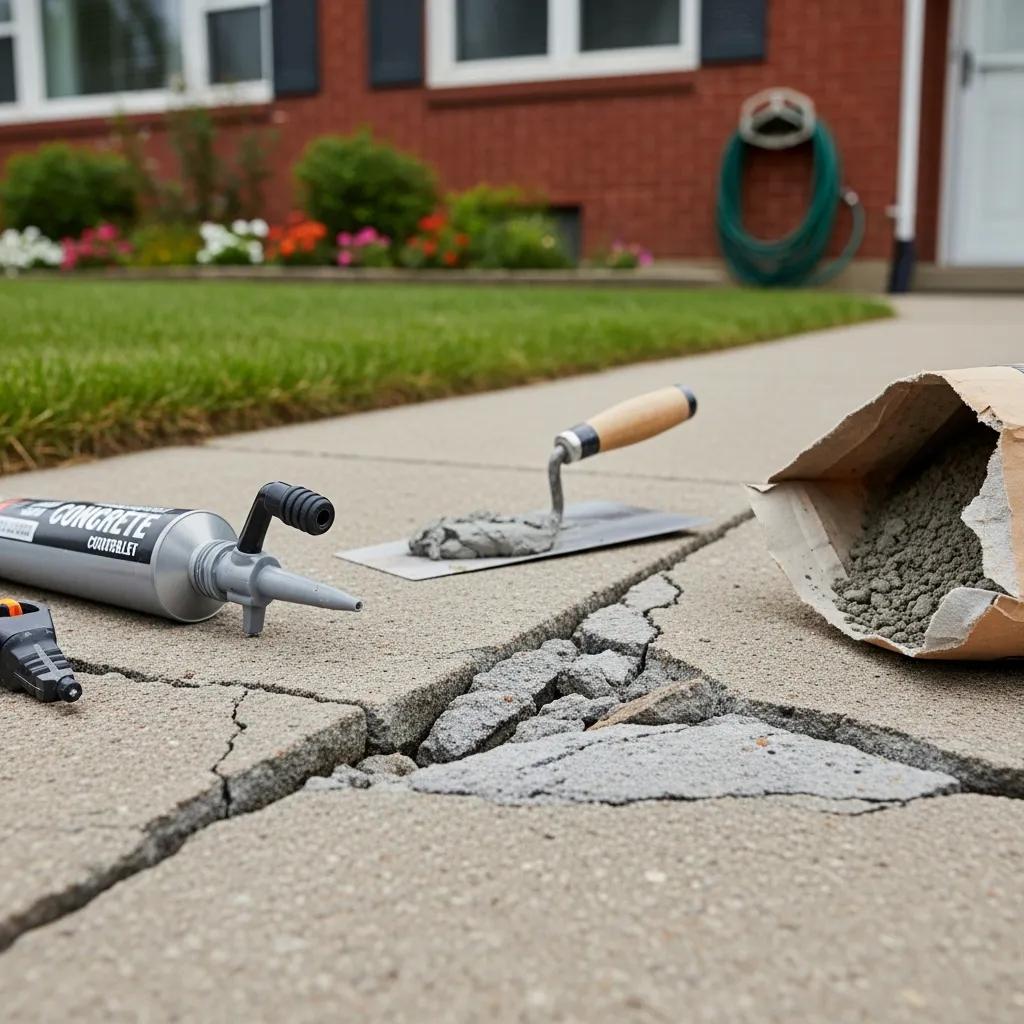
Common issues include cracks from shrinkage or thermal movement, spalling from freeze-thaw cycles or deicing salts, and slab movement caused by tree roots or unstable subbases; each has a targeted repair path. Crack sealing and small patching restore surface integrity for minor damage, while PolyLevel-style slab lifting or undersealing addresses settlement by re-leveling without full replacement. Full slab replacement becomes necessary when multiple panels are structurally compromised or when repairs would be short-term. Homeowners should weigh expected lifespan and disruption when choosing repair options, and call a professional when structural causes like drainage or roots are suspected.
How Can Preventative Maintenance Extend Sidewalk Lifespan?
Routine maintenance extends sidewalk life by reducing moisture infiltration and limiting freeze-thaw damage; key tasks include annual cleaning, resealing decorative surfaces every 3–5 years, and managing adjacent vegetation to prevent root intrusion. Seasonal checks after winter and heavy rains help identify hairline cracks and drainage issues before they worsen, and addressing surface drainage prevents undermining of the subbase. Implementing a modest maintenance schedule reduces lifecycle costs by delaying major repairs and maintaining a safer walking surface. These maintenance practices also help homeowners plan budgets and contractor consultations discussed in the cost section.
This mapping helps homeowners quickly diagnose and choose appropriate remedies, clarifying when a contractor visit is warranted.
What Are the Typical Costs for Concrete Sidewalks in Greensboro, NC?
Typical costs for concrete sidewalks in Greensboro vary by finish, site access, demolition needs, and subgrade preparation; basic broom-finish sidewalks generally fall within a lower per-square-foot band, while stamped or colored options increase material and labor costs. Cost drivers include labor, materials, reinforcement, permit fees, demolition and disposal, grading, and finish details. Homeowners should request itemized quotes showing per-square-foot rates and line items for demo, subbase, and finishing so comparisons are apples-to-apples. The next subsections explain unit pricing and provide guidance for getting accurate on-site estimates from local contractors.
How Is Concrete Sidewalk Pricing Calculated per Square Foot?
Per-square-foot pricing typically bundles materials, labor, equipment, and basic finishing; for a simple broom finish in Greensboro expect a lower-range per-square-foot rate, while stamped or colored finishes add a premium. Example calculation for a 150 sq ft walkway: multiply per-sq-ft base rate by area, add flat costs for excavation and permit, and include contingency for unexpected subbase repairs. Complexity—like tight access, significant demolition, or custom patterns—can increase time and labor multipliers rather than per-unit material costs alone. Asking contractors for sample calculations for a 100–200 sq ft path clarifies how finishes and site conditions change the final price.
How Can You Get Accurate Quotes from Local Contractors?
To obtain reliable, comparable quotes, prepare by measuring the planned walkway, taking photos of the site, noting drainage or root issues, and listing desired finishes and functional requirements. Ask contractors for itemized estimates that separate labor, materials, demo, permits, and warranty terms; request timelines and references for similar Starmount Forest projects. Important vetting questions include whether the contractor handles permits, uses reinforcement, provides written warranties, and how they address poor subbase discovery. Comparing these detailed estimates helps homeowners choose between cost, durability, and aesthetic priorities.
Different cost components influence a sidewalk estimate for Greensboro projects and can be compared as follows.
How Do You Choose the Right Local Concrete Contractor in Greensboro?
Selecting the right contractor involves verifying credentials, reviewing relevant experience, checking references and portfolio examples, and ensuring appropriate insurance and written warranties are in place. Contractors with local experience understand Starmount Forest conditions—soil, tree roots, drainage patterns, and neighborhood aesthetics—which reduces risk and improves outcomes. Homeowners should use a structured vetting checklist when comparing bids to ensure that technical aspects (joint spacing, subbase depth, reinforcement) and administrative items (permits, liability coverage) are addressed. The subsections below list credentials to verify and why local expertise matters for neighborhood projects.
What Credentials and Experience Should a Concrete Contractor Have?
Ask for proof of appropriate licensing or registration, general liability insurance, workers’ compensation coverage, and written warranties or workmanship guarantees for sidewalk work. Relevant experience includes documented examples of sidewalks, stamped finishes, and repair projects; portfolios and references from nearby properties are especially valuable. Verifying these credentials protects homeowners from liability and ensures the contractor follows industry best practices such as proper subbase compaction and control joint installation. Knowing what documentation to request simplifies comparisons and reduces the chance of selecting a contractor who cuts corners.
Why Is Local Expertise Important for Starmount Forest Sidewalk Projects?
Local expertise matters because neighborhood-specific factors—soil types, tree species with aggressive roots, drainage patterns, and common permit requirements—affect design and longevity; contractors familiar with Starmount Forest can anticipate these conditions. A locally experienced contractor will know practical joint spacing for freeze-thaw cycles in Greensboro, appropriate slope recommendations for surface runoff, and aesthetic choices that align with neighborhood expectations. Contractors who have completed nearby sidewalks can provide references and realistic timelines based on local inspection practices, reducing surprises during execution. This local insight should guide final contractor selection and project planning.
Checklist for vetting contractors includes core credentials and practical questions.
- Verify Licensing and Insurance: Request proof of registration and liability coverage.
- Ask for Local References: Request recent projects in Greensboro with contactable references.
- Request Itemized Estimates: Ensure bids separate labor, materials, demo, and permit fees.
- Confirm Warranties and Timeline: Get written warranties and a clear cure timeline.
What Unique Considerations Apply to Concrete Sidewalks in Starmount Forest?
Starmount Forest has site-specific considerations such as mature tree canopies, historic neighborhood aesthetics, and localized drainage patterns that influence sidewalk design and maintenance choices. Homeowners must balance preserving neighborhood character with structural strategies that mitigate root damage and manage runoff. Understanding City of Greensboro permitting pathways and when HOA rules apply also keeps projects compliant and avoids redesigns. The following subsections explain permit checks and climate impacts so you can plan a durable, neighborhood-appropriate sidewalk.
Are There Local Regulations or Permits for Sidewalk Installation?
Checking City of Greensboro permit requirements and any neighborhood or HOA restrictions is an essential first step; permits often require plan details showing slope, joint spacing, and ADA considerations for public-facing walkways. Permit timelines and fees vary, and contractors who handle permits streamline the process for homeowners; however, homeowners should confirm who files and pays for any municipal inspections. HOA rules may influence finish choices, setback, and color, so verify design constraints before finalizing plans. Confirming these regulatory items early prevents delays and aligns the project with local standards.
How Does Greensboro’s Climate Affect Concrete Sidewalk Durability?
Greensboro’s seasonal freeze-thaw cycles and occasional winter deicing practices increase the risk of spalling and scaling, so specifying air-entrained concrete mixes and proper curing is critical to durability. Adequate slope and drainage prevent water pooling that undermines subbase material, and joint spacing with proper reinforcement reduces uncontrolled cracking from thermal contraction. Seasonal maintenance—cleaning, sealing decorative finishes, and inspecting joints—mitigates climate-driven deterioration and extends service life. These design and care strategies help homeowners preserve sidewalks in Starmount Forest while minimizing long-term repair costs.
Local considerations summary:
- Tree Root Management: Integrate root barriers or choose slab designs that accommodate roots.
- Permit & HOA Compliance: Verify municipal and neighborhood rules early.
- Climate-Resistant Materials: Specify air-entrained mixes and proper curing for freeze-thaw resilience.
These targeted considerations tie neighborhood reality to technical choices, enabling durable installations that respect Starmount Forest character.
This article provides the technical grounding, repair maps, cost breakdowns, contractor vetting steps, and neighborhood-specific advice homeowners need to plan, price, and protect concrete sidewalks in Starmount Forest and broader Greensboro neighborhoods.


0 Comments