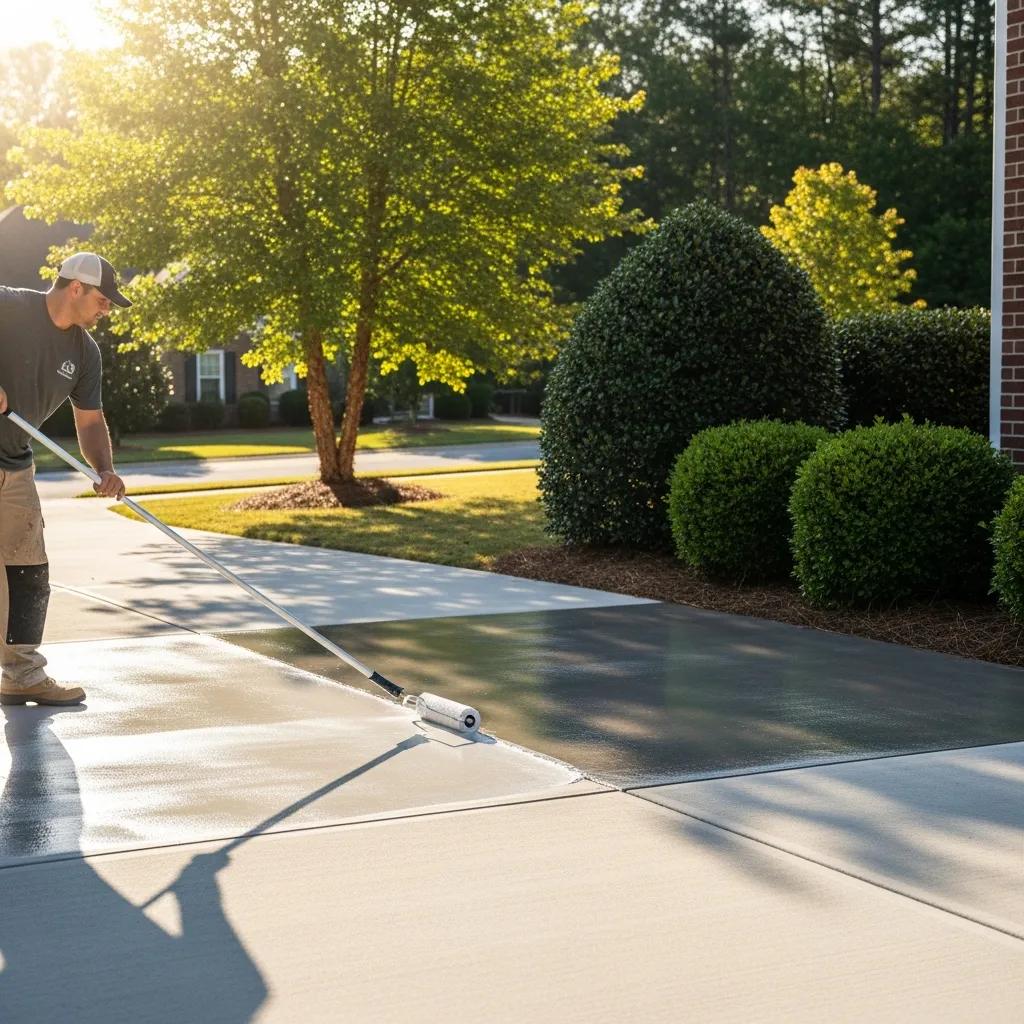
Professional Concrete Sealing Services in Greensboro, NC
Concrete sealing protects porous concrete surfaces by creating a barrier or reaction that reduces water ingress, UV damage, staining, and surface wear, and in Greensboro this practice directly addresses local climate stresses. In this guide you will learn why sealing matters for Greensboro properties, how different sealer chemistries work, what typical costs and value drivers look like, which residential and commercial services are common, and how professionals perform proper preparation and application. Many homeowners and facility managers face fading finishes, oil stains, freeze-thaw cracking, and moisture-related deterioration; concrete sealing provides a preventative solution that extends service life and simplifies maintenance. This article explains mechanisms (film-forming versus penetrating), compares acrylic, penetrating (silane/siloxane), epoxy and polyurethane options, and gives practical steps for choosing products and scheduling reseal cycles. Expect clear cost-factor guidance, comparison tables for fast decisions, and actionable maintenance tips tailored to driveways, patios, pool decks, garages, warehouses, and parking areas in Greensboro. Keywords such as concrete protection Greensboro, Greensboro concrete sealing, driveway sealer Greensboro, and how often to reseal concrete Greensboro are woven throughout to help you find the best local approach.
Why Is Concrete Sealing Essential for Greensboro Properties?
Concrete sealing is essential because it blocks water, chemicals, and UV rays that accelerate deterioration, making it a primary line of defense for concrete protection in Greensboro. The mechanism varies by sealer family: film-forming products create a surface coat that resists staining and UV fade, while penetrating agents chemically react within the pore structure to repel water and salts. The specific benefits include improved waterproofing, increased abrasion resistance, preserved color and finish, and simplified cleaning, all of which translate to fewer repairs and lower lifecycle costs. Given Greensboro’s seasonal humidity, hot summers, and occasional freeze-thaw cycles, sealing reduces moisture-driven spalling and salt damage and helps maintain curb appeal and property value. Understanding these core advantages leads naturally to how different sealer mechanisms address weather, UV, and contaminants at the material level.
Concrete sealing protects against moisture-driven freeze-thaw cycles and UV degradation by either forming a protective film or by penetrating and chemically treating pores to stop water ingress. Film-formers—such as acrylic coatings—create a continuous layer that reflects UV and stabilizes color, which prevents sun-driven chalking and keeps decorative finishes vivid under strong southern sunlight. Penetrating sealers, including silane and siloxane chemistries, react with cementitious components to form hydrophobic barriers below the surface, limiting freeze-thaw damage and salt migration that would otherwise cause cracking and scaling. This combination of surface and subsurface protection addresses both immediate aesthetic concerns and deeper structural risks, which is especially important for exposed driveways and pool decks. The protection mechanisms lead into another critical outcome: how sealing reduces stain and chemical penetration to simplify maintenance.
How Does Concrete Sealing Protect Against Greensboro’s Weather and UV Damage?
Concrete sealing protects by repelling water and limiting vapor pathways, which reduces freeze-thaw stresses and the absorption of de-icing salts or contaminants that drive micro-cracking. In practical terms, a penetrating silane/siloxane sealer chemically bonds inside the capillaries to create a water-repellent zone, while film-forming acrylics and polyurethanes absorb UV energy and prevent surface oxidation and color loss. These actions lower moisture cycling within concrete and slow the degradation process caused by alternating warm, humid conditions and cool periods. For example, sealed exterior driveways exposed to direct sun retain color longer and show fewer hairline cracks after winter salt exposure compared with unsealed surfaces. With these protective mechanisms in mind, it’s important to next consider how sealing also limits stain and chemical penetration for easier upkeep.
What Benefits Does Concrete Sealing Provide for Stain and Chemical Resistance?
Sealers reduce stain risk by blocking pore pathways that allow oil, grease, and chemical liquids to penetrate and bond with the concrete matrix, making spills easier to remove and preventing long-term discoloration. Film-forming sealers create a sacrificial layer that can be cleaned or refreshed, while penetrating agents keep contaminants near the surface where cleaning is more effective, rather than allowing stains to wick deep into the slab. Common contaminants in Greensboro include automotive oil on driveways, pool chemicals near decks, and lawn fertilizers; a properly chosen sealer minimizes staining from these sources and reduces the need for aggressive solvents. Routine maintenance—prompt wiping of spills, periodic gentle pressure washing, and resealing on an appropriate schedule—helps preserve both appearance and protective function. Understanding cleaning and maintenance expectations naturally leads to evaluating costs and the long-term value proposition of sealing.
What Are the Costs and Value of Concrete Sealing in Greensboro?

Concrete sealing costs vary by sealer type, surface condition, and project complexity, but the value comes from longer service life, reduced repair frequency, enhanced appearance, and lower cleaning costs over time. Typical local ranges depend on whether a penetrating sealer, acrylic film-former, or a heavy-duty epoxy/urethane coating is used, with penetrating sealers generally offering lower upfront cost and longer water-repellent life, and film-formers delivering visual enhancement at moderate cost. Key cost drivers include surface preparation (cleaning, degreasing, crack repair), sealer material cost, labor, area size, and accessibility; each factor influences both the initial price and expected longevity. Presenting these factors helps property owners weigh upfront expense against lifecycle savings and informs decisions such as choosing a penetrating sealer for a salt-exposed driveway versus a decorative acrylic for a sunlit patio.
Costs depend on several drivers and their relative impact on lifespan and maintenance, summarized here for quick estimation.
This table clarifies how each cost element affects long-term value and supports informed budgeting. With clear cost factors identified, the next section describes typical service offerings for residential and commercial properties.
What Factors Influence Concrete Sealing Costs in Greensboro?
Several specific factors influence final quotes, beginning with surface condition: dirty, oil-stained, or cracked concrete requires more cleaning and repair, increasing labor and material costs. The chosen sealer family also matters: simple acrylic sealers are usually less expensive per square foot than industrial epoxy or polyurethane systems designed for heavy traffic. Accessibility and timing play roles too—tight spaces, scheduled closures for commercial sites, or rapid cure-time requirements may raise costs, while contractor experience and local labor rates affect hourly pricing. Regulatory or disposal considerations for solvent-based products can also influence handling fees and environmental compliance steps. Understanding these variables leads directly to the long-term savings that justify the initial investment.
How Does Concrete Sealing Offer Long-Term Cost Savings?
Sealing reduces lifecycle costs primarily by delaying or avoiding expensive repairs such as slab replacement, concrete patching, or structural remediation that arise from long-term moisture ingress and freeze-thaw damage. A sealed driveway or parking lot typically requires less frequent cosmetic maintenance and fewer deep cleanings, translating to savings in cleaning chemicals, labor, and downtime. For instance, choosing a penetrating sealer that extends water-repellency for several years can halve repair frequency compared with an unsealed surface, and film-forming sealers protect decorative overlays that would otherwise fade and require re-coating. Quantifying these savings over a 10-year period shows improved return on investment through reduced repair and replacement costs, which makes preventive sealing an economically prudent choice for both homeowners and property managers.
Which Concrete Sealing Services Are Available in Greensboro?
Concrete sealing services in Greensboro cover a wide range of hyponyms—driveway sealing, patio sealing, pool deck sealing, garage floor sealing, and warehouse floor sealing—each tailored by sealer type and surface use. Residential offerings typically focus on aesthetics and water repellency for driveways, patios, and pool decks, while commercial services emphasize durability, slip resistance, and compliance for parking lots, loading docks, and warehouse floors. Specialty services include stamped concrete sealing, decorative high-gloss coatings, and slip-resistant additives for wet areas; contractors often package inspection, surface prep, sealing, and scheduled reseal plans as a service bundle. Service providers increasingly offer low-VOC and water-based options to address environmental and indoor-air-quality concerns, aligning with recent trends toward eco-friendlier sealants in the region.
Common residential and commercial service types include the following, explained briefly to guide selection.
- Driveway Sealing: Protects against oil stains and freeze-thaw damage while enhancing curb appeal.
- Patio & Pool Deck Sealing: Focuses on slip resistance and UV-stable finishes for safe, attractive outdoor spaces.
- Garage & Warehouse Coatings: Heavy-duty epoxy or polyurethane systems that resist abrasion and chemicals.
These service categories indicate how providers match sealer chemistry to use-case; following this overview is a concise, neutral mention of local offerings and how they meet typical homeowner and business needs. Local service providers offer tailored packages for residential driveway and patio projects as well as commercial parking and warehouse programs that combine inspection, professional surface prep, and application to meet performance expectations without overselling. This practical alignment of services to common use-cases helps property owners choose the appropriate sealer family and maintenance plan for long-term value.
What Residential Concrete Sealing Services Are Offered?
Residential services emphasize appearance and ease of maintenance for driveways, patios, walkways, pool decks, and garage floors, often balancing aesthetic enhancement with water repellency and slip resistance. Driveway sealing commonly uses penetrating sealers or acrylic film-formers depending on desired finish—natural or “wet look”—and homeowners are advised on reseal frequency based on traffic and exposure. Patio and pool deck projects prioritize slip-resistant additives and UV-stable coatings to maintain color and safety under sunlight and pool-chemical exposure. A typical residential package includes assessment, cleaning and degreasing, minor crack repair, sealer application, and scheduling guidance for reseal cycles to keep the surface protected and attractive.
What Commercial Concrete Sealing Solutions Are Provided?
Commercial solutions focus on heavy-traffic durability, chemical resistance, and compliance measures suitable for parking lots, loading areas, warehouses, and retail floors, with options ranging from penetrating treatments to thick epoxy or polyurethane coatings. Epoxy and urethane systems are often selected for indoor operations and warehouses because they resist abrasion, forklift traffic, and chemical spills while offering options for slip-resistant textures and warranty-backed performance. Parking lot and exterior commercial surfaces typically use high-penetration water repellents or durable film-formers designed to withstand vehicle traffic and de-icing salts. Service packages for businesses emphasize fast cure products and scheduling flexibility to reduce downtime while meeting operational and safety requirements.
How Is the Concrete Sealing Process Performed in Greensboro?
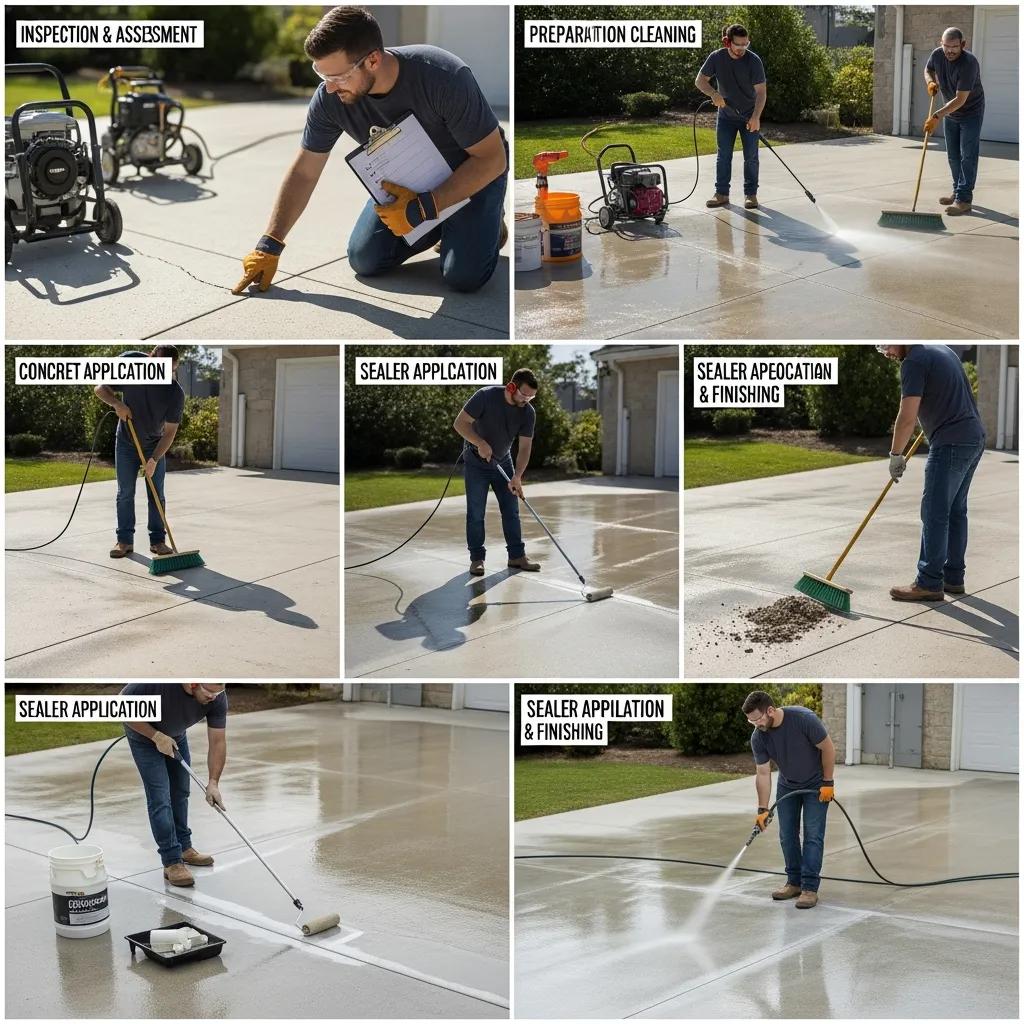
The concrete sealing process follows a predictable sequence: inspection and assessment, surface preparation (cleaning, degreasing, repair), sealer selection and application, curing, and ongoing maintenance and reseal scheduling. Inspection evaluates moisture levels, cracks, efflorescence, and contaminants to determine needed prep; proper assessment prevents common failures. Surface preparation is critical—pressure washing, chemical degreasers, mechanical grinding for heavy contamination, and crack filling create a sound substrate for sealer adhesion or penetration. Application methods vary by sealer family and project scale—rolling and brushing for small decorative areas, spraying for large exterior surfaces, and squeegee or trowel techniques for thick industrial coatings. After application, curing times depend on product chemistry and weather conditions, and a documented maintenance schedule ensures longevity.
Proper surface preparation begins with thorough cleaning, degreasing, and any necessary crack repair because adhesion and penetration depend on a contaminant-free substrate. Remove oil and grease using alkaline degreasers and pressure washing to expose the concrete’s pore structure; for heavy coatings, mechanical grinding or shot blasting may be required to achieve a profile that promotes bonding. Moisture testing—such as relative humidity or calcium chloride tests—helps confirm whether the slab is dry enough for film-forming coatings, since trapped moisture can cause delamination. Attention to these prep steps reduces the risk of sealer failure and leads into application methods that suit each sealer family and performance requirement.
What Are the Steps for Proper Surface Preparation?
Proper surface preparation includes cleaning, degreasing, crack and joint repair, and moisture assessment to ensure the sealer bonds or penetrates as intended. Start with sweeping and pressure washing to remove loose debris and surface contaminants, followed by targeted degreasing for oil spots using appropriate cleaners. Repair hairline cracks and joint deficiencies with compatible fillers and allow repairs to cure before sealing to avoid trapping moisture and creating weak points. Finally, perform moisture testing where required—especially for indoor epoxy or polyurethane systems—to confirm substrate readiness and prevent common failures related to trapped vapor pressure.
How Are Different Sealers Applied and Maintained?
Application techniques depend on sealer chemistry: acrylics are often rolled or sprayed for even film formation, penetrating silanes/siloxanes are typically low-pressure sprayed to ensure deep pore coverage, and epoxy/urethane coatings require squeegees or trowels with back-rolling to embed aggregate or textures. Maintenance varies by type: film-formers usually need resealing every 2–4 years depending on traffic and UV exposure, while penetrating sealers can last 3–7 years before reapplication; industrial epoxies may last longer but require repair of surface damage. Recommended maintenance includes regular cleaning with pH-neutral cleaners, prompt spill cleanup, and scheduled inspections to determine reseal timing. Understanding application and upkeep informs proper sealer selection for each surface and use-case.
Which Types of Concrete Sealers Are Best for Greensboro Properties?
Choosing the best sealer depends on desired appearance, traffic levels, environmental exposure, and maintenance expectations; broadly, options include acrylics (film-forming), penetrating silane/siloxane treatments, epoxy coatings, and polyurethane systems. Film-forming acrylics enhance color and surface gloss, ideal for patios and decorative concrete exposed to UV, while penetrating sealers excel at water repellency and freeze-thaw protection for driveways and exterior slabs. Epoxy and polyurethane coatings provide thick, durable protection for garages, warehouses, and commercial floors where chemical and abrasion resistance are priorities. A side-by-side comparison helps clarify tradeoffs and guides selection based on application, lifespan, and pros/cons.
This table clarifies performance tradeoffs and supports quick selection based on surface, exposure, and maintenance goals. When choosing among these options, consider available application approaches and tradeoffs; local providers typically offer both water-based and low-VOC variants for customers seeking greener options and may suggest specific packaging (inspection + prep + application) that balances upfront cost and expected longevity.
What Are the Differences Between Acrylic, Penetrating, and Epoxy Sealers?
Acrylics are film-forming coatings that create a visible layer enhancing color and gloss but typically require more frequent reapplication under heavy traffic, while penetrating sealers react within the pores to provide invisible hydrophobic protection that resists freeze-thaw damage and salt intrusion. Epoxy coatings form thick, hard finishes ideal for indoor industrial applications and offer superior chemical and abrasion resistance but can yellow in sunlight unless protected by a UV-stable topcoat. Each sealer family has distinct maintenance patterns and appearance outcomes, so selection should align with the property’s performance priorities and exposure conditions. These chemical and performance distinctions lead directly to recommendations tailored for Greensboro’s climate challenges.
How Do Sealer Types Address Greensboro’s Climate Challenges?
For Greensboro’s mix of humid summers, strong sun, and occasional winter freeze-thaw, penetrating sealers (silane/siloxane) are often recommended for exterior driveways and parking areas because they limit water ingress and salt damage, while acrylics are useful for sunlit patios where aesthetic enhancement and UV stability matter more than heavy traffic wear. Epoxy and polyurethane systems are appropriate for indoor commercial floors or garages that need chemical and abrasion resistance but are less ideal for direct outdoor UV exposure unless formulated with UV-stable components. Mapping sealer properties to common Greensboro scenarios—driveways, pool decks, warehouses—ensures you choose a sealer that balances protection, appearance, and lifecycle cost.
Why Choose Local Greensboro Experts for Concrete Sealing?
Local experts know Greensboro’s climate patterns, common substrate conditions, and practical prep approaches that influence successful sealing outcomes, making professional selection and application a strong choice for long-term performance. Professionals provide detailed assessment, moisture testing, and the right preparation techniques—pressure washing, degreasing, grinding, and repair—so sealers perform as intended rather than failing prematurely. In addition, local contractors commonly offer maintenance plans and scheduling that align with seasonal windows optimal for curing and reduce risk from temperature or humidity extremes. Choosing a local team helps ensure sealer selection, application timing, and maintenance schedules match regional needs and expectations.
Experienced local teams combine knowledge of regional climate with product selection and application best practices that protect investment and reduce lifecycle costs. Rather than relying on one-size-fits-all approaches, professionals tailor sealer chemistry and application methods to the surface type and exposure, offering options such as low-VOC water-based sealers for environmental concerns or industrial coatings for high-traffic commercial floors. For property owners seeking service, many Greensboro providers present inspection-based proposals that outline prep requirements, sealer choice, and a recommended reseal timeline to maintain performance. This local expertise and project-based approach supports reliable outcomes and informed decisions.
What Makes Our Greensboro Concrete Sealing Team Trusted and Experienced?
Experienced local teams apply industry-recommended sealers and proper preparation practices honed for Greensboro conditions, emphasizing diagnostics such as moisture testing and tailored prep over quick surface-only solutions. Professional crews usually follow systematic workflows—inspection, contaminants removal, crack repair, sealer selection, and controlled application—to minimize callbacks and extend service life. While specifics like certifications or years of operation should be confirmed with individual providers, the value of local knowledge and repeatable processes is clear: correct prep and compatible product selection reduce failure risk and maximize payoff. This emphasis on process and regional suitability naturally leads property owners to request references and documented maintenance plans.
What Do Greensboro Customers Say About Our Concrete Sealing Services?
For credibility, invite prospective clients to review real case studies and verifiable references from local projects rather than rely on generic claims; many service providers maintain photo records of before-and-after results and documented maintenance outcomes. Prospective customers should ask for examples of similar work—driveways, pool decks, or warehouse floors—and confirm the proposed sealer’s expected reseal cycle to align maintenance budgets. If direct testimonials are not available, request project photos or an inspection-based proposal that demonstrates understanding of the substrate and a clear maintenance schedule. These verification steps help ensure the selected provider delivers the promised protection and lifecycle value.

0 Comments