Professional Concrete Removal and Demolition in Greensboro, NC
Concrete removal and demolition services in Greensboro, NC provide safe, compliant, and efficient solutions for removing existing concrete structures and preparing sites for new construction or landscaping. This article explains what those services cover, why professional demolition teams use specialized equipment and safety protocols, and how responsible hauling and disposal or recycling are handled locally. Readers will learn typical cost ranges for residential and commercial projects, the permit scenarios that commonly apply in Guilford County, and practical steps to secure estimates and approvals. The guide also maps the demolition process from site assessment through final cleanup, including common timelines and expected disruption. Finally, it outlines why hiring experienced contractors—who offer permit assistance, specialized equipment, and transparent pricing—can reduce risk and accelerate project turnaround in Greensboro. The following sections cover service definitions, cost breakdowns, permit rules and applications, hauling and recycling options, step-by-step process expectations, and reasons to choose professional concrete removal services.
What Are Concrete Removal and Demolition Services in Greensboro?
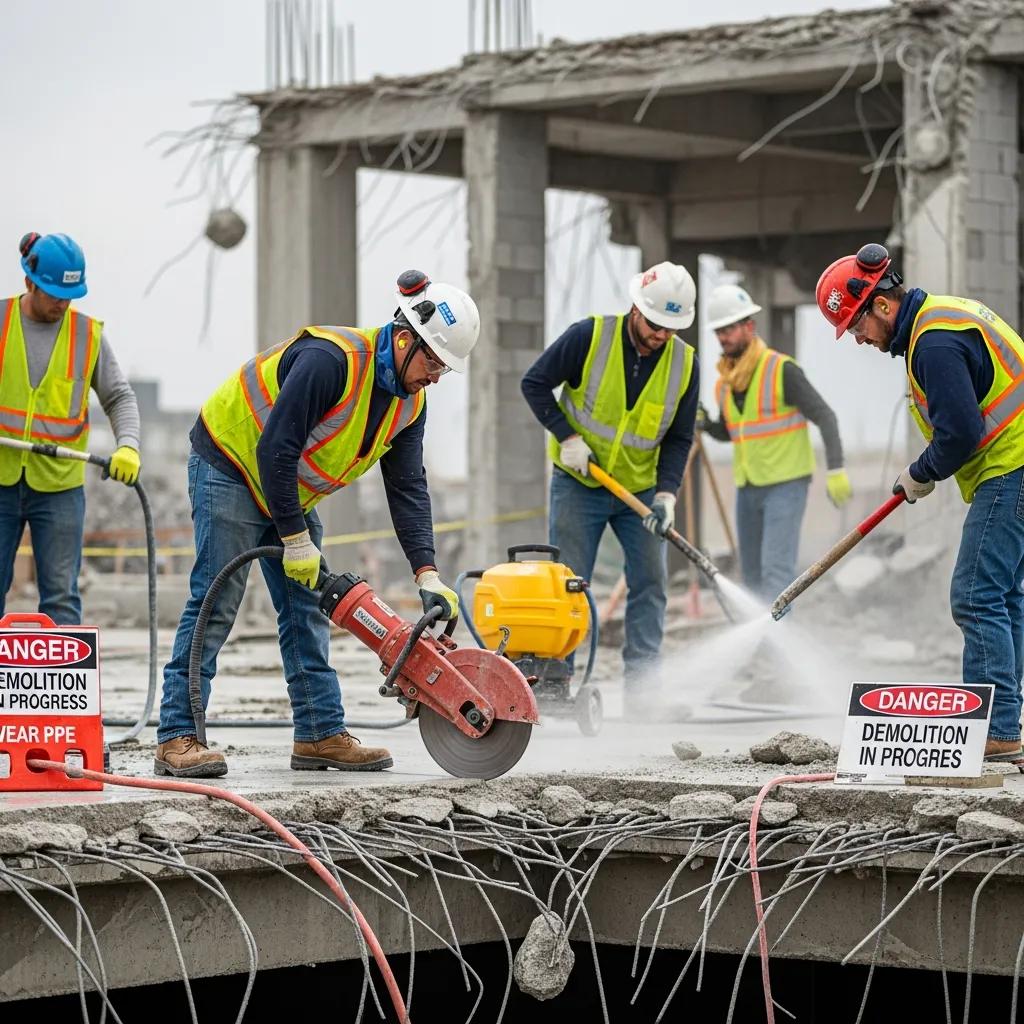
Concrete removal and demolition services in Greensboro encompass breaking, cutting, hauling, and disposing of unwanted concrete while preparing a site for its next use. These services operate by combining mechanical demolition (breaking and cutting) with logistics (staging, hauling, disposal or recycling) to deliver safe, site-ready outcomes. The immediate benefit is rapid clearance of structures that obstruct construction, landscaping, or property improvements while minimizing site damage and regulatory exposure. Service teams typically coordinate utility checks and local permit requirements before active demolition begins, which reduces project delays and safety hazards. Understanding this scope clarifies why specialized crews and equipment matter when removing reinforced slabs, driveways, or commercial foundations in Greensboro.
Concrete removal projects vary in scale and complexity, so crews customize demolition methods and disposal pathways to match site conditions. The next subsection lists common concrete structures that pros remove and notes differences between residential and commercial scopes.
Which Concrete Structures Can Be Removed or Demolished?
Common removable concrete structures include driveways, patios, sidewalks, garage slabs, foundation sections, retaining walls, and small masonry structures; commercial projects can expand to loading docks, curbs, and warehouse slabs. Residential jobs are often smaller in area but may involve tighter access, landscaping concerns, and underground utilities that increase complexity. Commercial demolition typically involves thicker slabs, heavier reinforcement, and coordination with site managers to maintain business operations, which raises logistics and permitting needs. For planning, approximate scope indicators—such as square footage and slab thickness—help define labor and equipment requirements and guide initial cost estimates. Knowing the structure type informs demolition technique selection and disposal strategy.
How Do Professional Teams Perform Concrete Demolition Safely and Efficiently?
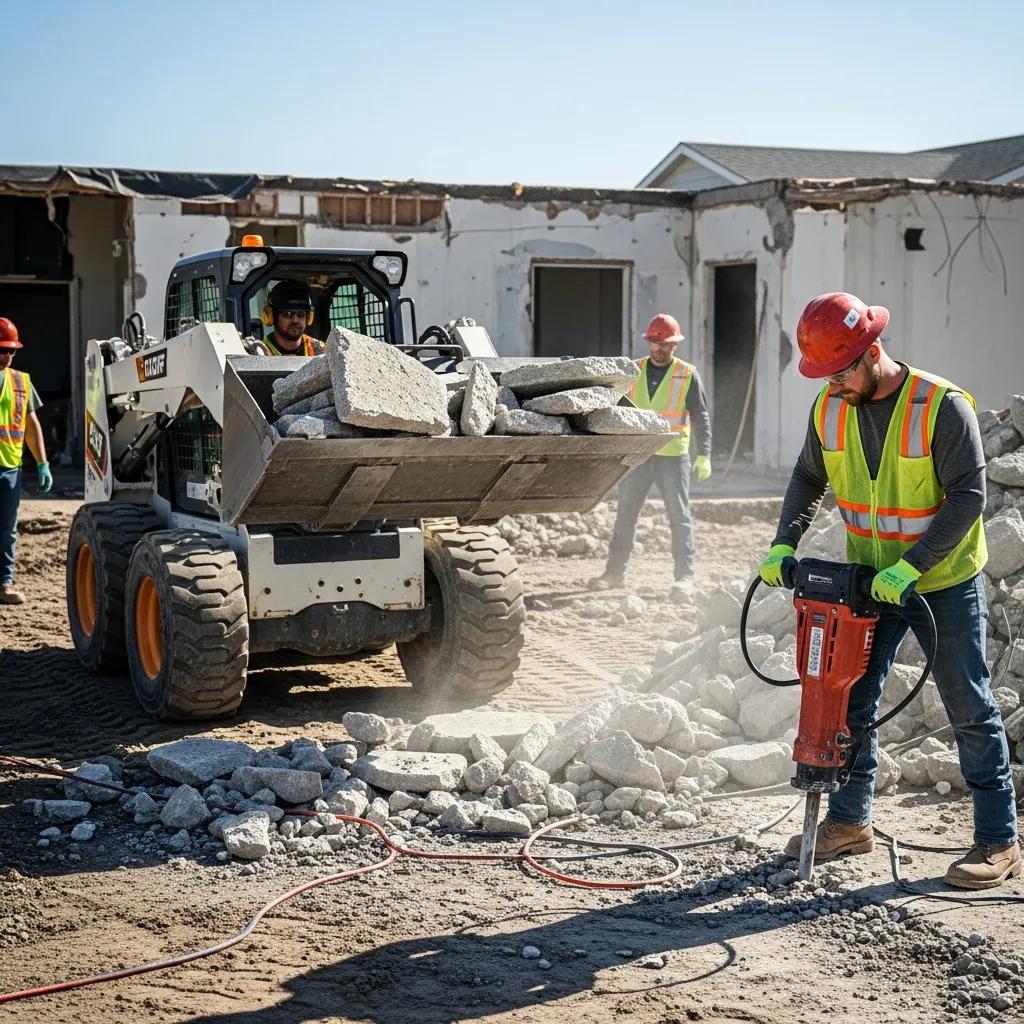
Professional demolition teams use a mix of tools—jackhammers, skid loaders, hydraulic slitters, and saws—paired with dust suppression, traffic control, and staged debris handling to perform work efficiently and safely. Safety protocols include PPE for crews, spotters for utility lines, barricades or flagging for traffic control, and method statements documenting sequence and environmental controls. Efficiency comes from phasing work, using powered breakers and loaders to reduce manual labor, and pre-planning haul routes to minimize on-site idle time. Experienced crews also coordinate permit verification and neighbor notifications to limit liability and disruption. These combined practices reduce accidents, keep projects on schedule, and ensure the site is ready for the next phase of construction.
How Much Does Concrete Removal Cost in Greensboro, NC?
Concrete removal cost in Greensboro typically depends on project type, size, reinforcement level, and disposal method, with residential driveway or patio removals usually costing less than commercial slab demolition. Average ranges broadly reflect surface area and complexity: small patios and walkways tend to fall at the lower end, while thick, reinforced commercial slabs trend higher due to equipment needs and disposal volume. The primary value delivered is predictable budgeting through itemized quotes that separate labor, equipment, hauling, and disposal or recycling fees. Accurate estimates require measurements, slab thickness, reinforcement details, and site access information, all of which influence the final price and timeline. Below is a comparative table summarizing typical project types, attributes, and estimated cost ranges to help homeowners and contractors plan.
This comparison highlights how size, reinforcement, and access drive costs; clients should use these ranges as planning guidance and obtain detailed quotes for accuracy.
The cost is influenced by several factors that contractors will itemize in proposals to create transparent pricing and avoid surprises for property owners.
What Factors Influence Concrete Removal Pricing?
Several variables influence concrete removal pricing, including project size, slab thickness and reinforcement, site access, proximity to disposal or recycling facilities, and permit or traffic-control requirements. Larger surface areas and greater slab thickness raise labor hours and equipment wear, while heavy reinforcement (rebar) increases breaking difficulty and disposal weight. Restricted access—narrow driveways, limited street parking, or soft ground—can require manual labor or smaller equipment, which raises unit costs. Disposal method also matters: recycling may reduce landfill fees but add processing or transport coordination. Contractors typically reflect these factors in itemized quotes so property owners can compare options and identify cost-saving measures.
Primary cost drivers include:
- Project size and slab thickness: Increased volume multiplies labor and disposal costs.
- Reinforcement and embedded items: Rebar or embedded fixtures increase demolition complexity.
- Access and site conditions: Tight or obstructed access raises labor intensity.
- Disposal vs recycling options: Facility proximity and recycling availability affect fees.
- Permits and traffic control: Required municipal permits and lane closures add to total cost.
These factors help homeowners weigh quotes and ask targeted questions when vetting contractors, leading into the next subsection on how to secure a free estimate.
How to Get a Free Concrete Removal Estimate in Greensboro?
Obtaining a free concrete removal estimate typically starts with providing site photos, measurements, and basic project details to potential contractors, followed by a site visit for complex jobs. Homeowners should prepare a checklist with slab dimensions, thickness, any visible reinforcement, access constraints, and nearby utilities before contacting providers. Contractors often offer photo-based ballpark estimates for simple driveways or patios but recommend on-site inspections for foundation removals or commercial projects to verify hidden conditions. Expect a quoted timeline for the site visit and receipt of an itemized estimate that breaks down labor, equipment, hauling, disposal, permit costs, and proposed schedule. Asking specific questions—about recycling options, insurance coverage, and cleanup standards—helps compare bids effectively and reduces the risk of change orders later.
What Are the Permit Requirements for Concrete Removal in Greensboro?
Permit requirements for concrete removal in Greensboro depend on what is being removed and whether the work affects public right-of-way, structural foundations, or involves significant mobilization that triggers county or city approvals. In general, minor residential projects like small patio replacements often need no permit, whereas work on sidewalks, public curbs, structural foundations, or significant commercial demolition usually requires permits and inspections. The value of understanding permit rules early is twofold: it avoids fines or stop-work orders and ensures demolition plans meet local standards for safety and environmental controls. The EAV table below maps common scenarios to the likely permitting authority and typical timeframes or fees to expect when planning demolition activities in Guilford County and Greensboro.
This mapping clarifies common permit pathways and why contacting local authorities or working with contractors who offer permit assistance reduces delays.
Understanding when a permit is needed saves time and cost, so the next subsection gives practical rules of thumb and steps to apply.
When Is a Permit Needed for Concrete Demolition?
Permits are commonly required when demolition affects public infrastructure (sidewalks, curbs), alters structural foundations, or involves controlled demolition of commercial buildings; small private replacements may be exempt. Rule-of-thumb thresholds include any work within the public right-of-way, structural changes to load-bearing foundations, or projects that require traffic control or utility disconnection. Exceptions can apply for minor repairs or like-for-like replacements under certain size limits, but local code and property location determine applicability. Because permit rules change and can be interpreted differently, confirming requirements with Greensboro or Guilford County building departments before starting work is a prudent step. This verification prevents fines and ensures inspections that protect safety and property value.
How to Apply for Concrete Removal Permits in Greensboro?
Applying for concrete removal permits typically involves submitting an application with project plans, scope descriptions, site maps, and contractor information to the appropriate city or county office, and paying the applicable fees. Applicants should include dimensions, method statements for demolition and dust control, traffic-control plans if work affects the street, and proof of contractor licensing or insurance where required. Processing times vary, so applicants can expedite approval by providing complete documentation and, when available, working with contractors who assist in preparing plans and submitting applications. Once approved, scheduled inspections verify that demolition and disposal comply with conditions, and keeping records of permits and inspections is important for future property transactions or warranty claims.
How Is Concrete Hauled and Disposed of Responsibly in Greensboro?
Responsible hauling and disposal in Greensboro balance cost, environmental impact, and regulatory compliance by choosing between direct landfill disposal, transfer stations, or recycling facilities that process crushed concrete into aggregate. Hauling logistics involve staging debris, loading into dump trucks or roll-offs, and transporting material under weight and route regulations. Recycling reduces landfill demand and can provide aggregate for new projects, often lowering disposal fees and environmental footprint, but it requires crushing equipment and coordination with local recycling facilities. The table below compares disposal options across transport needs, environmental impact, and relative cost implications to help property owners make informed decisions.
This comparison underscores recycling as an environmentally preferable option when logistics and facility access align with project needs.
What Equipment Is Used for Concrete Hauling and Disposal?
Hauling and disposal typically use equipment such as dump trucks for transport, skid steer loaders or wheel loaders for debris collection, roll-off containers for staging, and mobile or stationary crushers for recycling aggregate. Dump trucks carry broken concrete to landfills or recycling facilities and vary in capacity to match haul distances and volume. Loaders and skid steers speed material transfer from the work area to haul units, while roll-off containers allow controlled staging on constrained sites. Mobile crushers permit onsite processing to reduce hauling volume and create usable aggregate, though they require additional permits and setup. Selecting the right combination of equipment reduces labor hours, minimizes site disturbance, and can lower disposal costs when recycling is available.
Can Concrete Be Recycled in Greensboro?
Yes, concrete can be recycled in Greensboro by crushing demolished slabs and processing the material into aggregate for base layers, road bedding, or new concrete mixes; recycling reduces landfill use and often offers cost or environmental benefits. The recycling process involves separating non-concrete contaminants, crushing concrete to specified sizes, and screening for suitable aggregate gradations. Benefits include reduced transport distances when local processors are available, lower embodied carbon compared with virgin aggregate, and potential cost offsets if recycled aggregate replaces purchased materials. Property owners should verify local recycling facility acceptance criteria and coordinate with contractors to segregate loads for recycling. Deciding to recycle also ties into permit and disposal planning and can be a selling point for sustainable projects.
What Should You Expect During the Concrete Removal Process?
Expect a structured process that begins with a detailed site assessment and planning phase, followed by a staged demolition day, debris hauling, and a thorough cleanup and grading to leave the site ready for its next use. The site assessment evaluates utilities, access, slab condition, reinforcement, and nearby structures to create a method statement and risk plan. On demolition day, crews implement traffic control, dust suppression, and safety zones before mechanical breaking, cutting, and loading commence in a sequenced manner to maintain efficiency. Hauling occurs in cycles that match truck capacities and site constraints, while final cleanup involves removing residual debris, sweeping or grading the surface, and verifying any required inspections or sign-offs. Clear expectations about timelines and disruption help property owners plan around noise, temporary access limitations, and on-site personnel.
How Is Site Assessment and Planning Conducted?
Site assessment begins with visual inspection, measurement of slab dimensions and thickness, and identification of utilities, slopes, and access limitations that influence demolition technique and equipment selection. Teams also look for embedded items—such as bolts, anchors, or buried utilities—that require special handling, and they note surrounding landscaping or hardscape elements to protect during work. Based on these findings, contractors prepare a plan that covers sequence of operations, required equipment, traffic-control measures, dust mitigation, and disposal pathways. This documentation supports permit applications and provides clients with a clearer schedule and cost expectations. Thorough planning reduces surprises and establishes a smooth transition to the active demolition phase.
What Happens During Demolition, Hauling, and Site Cleanup?
During demolition, crews execute the planned sequence—cutting control joints, breaking slabs into manageable sections, staging debris, and loading material into haul units—while enforcing safety zones and dust controls. Hauling proceeds on a cadence that optimizes truck capacity and on-site loading speed, with crews coordinating trips to disposal or recycling facilities to reduce downtime. After hauling, crews perform site cleanup tasks such as removing small debris, raking or grading the surface, and conducting a final sweep to prepare the area for backfill, new concrete, or landscaping. Typical residential projects often complete in one to three days depending on size, while larger or commercial jobs may require phased operations spanning multiple days or weeks. Clear communication about these phases helps owners minimize disruption and schedule follow-on work.
Why Choose Professional Concrete Removal Services in Greensboro?
Professional concrete removal services deliver safety, compliance, and speed through trained crews, appropriate equipment, and knowledge of local permitting and disposal options—benefits that reduce risk and often save money compared to DIY approaches. Experienced contractors bring method statements, insurance coverage, and coordination with local authorities, which protects property owners from liabilities like utility damage or code violations. Professionals also provide transparent, itemized pricing and can offer eco-friendly disposal or recycling pathways that minimize environmental impact and may lower net costs. For projects requiring quick turnaround or complex logistics, the value of a coordinated team often outweighs the upfront cost differential.
The advantages of hiring pros include reduced safety risk, access to specialized equipment, faster completion, and assistance with permits and disposal—but it is important to vet providers carefully. The following list outlines core contractor guarantees and considerations to evaluate when selecting a provider.
- Safety and compliance: Professional teams adhere to safety protocols, insurance requirements, and building codes to protect property and people.
- Specialized equipment access: Contractors bring breakers, loaders, and haul fleets sized to the project, reducing time and manual labor.
- Transparent pricing and documentation: Itemized quotes separate labor, equipment, hauling, and disposal fees to prevent surprises.
- Permit and logistics assistance: Experienced providers help navigate local permit processes and coordinate inspections and traffic control.
How Do Experienced Contractors Ensure Safety and Efficiency?
Experienced contractors use documented method statements, qualified equipment operators, and layered safety controls—PPE, spotters, barricades, and dust suppression—to minimize hazards and downtime. They size crews and equipment to match scope, which improves demolition cadence and reduces overall labor hours. Contractors maintain insurance and bonding where required and often perform pre-demolition utility locates and neighbor notifications to manage risk. Efficiency also comes from staging debris for rapid loading, optimizing haul trips, and using recycling or transfer facilities that shorten turnaround. These practices protect property owners and ensure predictable schedules and outcomes.
What Are the Advantages of Transparent Pricing and Quick Turnaround?
Transparent pricing clarifies what the owner pays for—labor, equipment, hauling, disposal, and permits—reducing the likelihood of surprise charges after work begins, while quick turnaround limits disruption and enables faster progression to construction or landscaping. Itemized quotes allow owners to compare recycling versus landfill options, evaluate equipment choices, and understand permit fees. Contractors that commit to turnaround timelines help owners schedule follow-on trades, reducing overall project duration and carrying costs. When vetting quotes, request documented scopes of work, payment terms, and a timeline to ensure the selected provider aligns with project priorities and budget.
This combination of clear pricing and efficient execution yields safer projects, fewer delays, and better budget control for property owners in Greensboro.
Key questions to ask potential contractors:
- Is the price itemized for labor, equipment, hauling, and disposal?
- Do you provide permit assistance and inspection coordination?
- What recycling options do you recommend for this project?


0 Comments