
Concrete Removal Cost in Greensboro, NC: Get a Quote for Professional Services
Concrete removal in Greensboro, NC covers breaking, hauling, and responsible disposal of concrete debris and is the first step toward replacing or repurposing outdoor and structural surfaces. This article gives practical cost guidance, explains the primary drivers of price, and shows what information contractors need to provide an accurate quote, so you can plan your budget and timeline with confidence. Homeowners and property managers often ask how much to demolish a slab or tear out a driveway; the practical answers depend on size, thickness, reinforcement, access, and disposal or permit obligations, which we address in detail. You will learn what influences local concrete hauling price Greensboro residents typically see, average ranges by project type, when permits apply, and how responsible disposal and recycling affect total cost. The guide also explains the concrete removal workflow, benefits of hiring experienced local contractors, and a clear checklist to get a free, itemized quote from a local provider. Read on for tables, step lists, and examples that make comparing bids and understanding demolition cost Greensboro straightforward and actionable.
What Factors Influence Concrete Removal Costs in Greensboro?
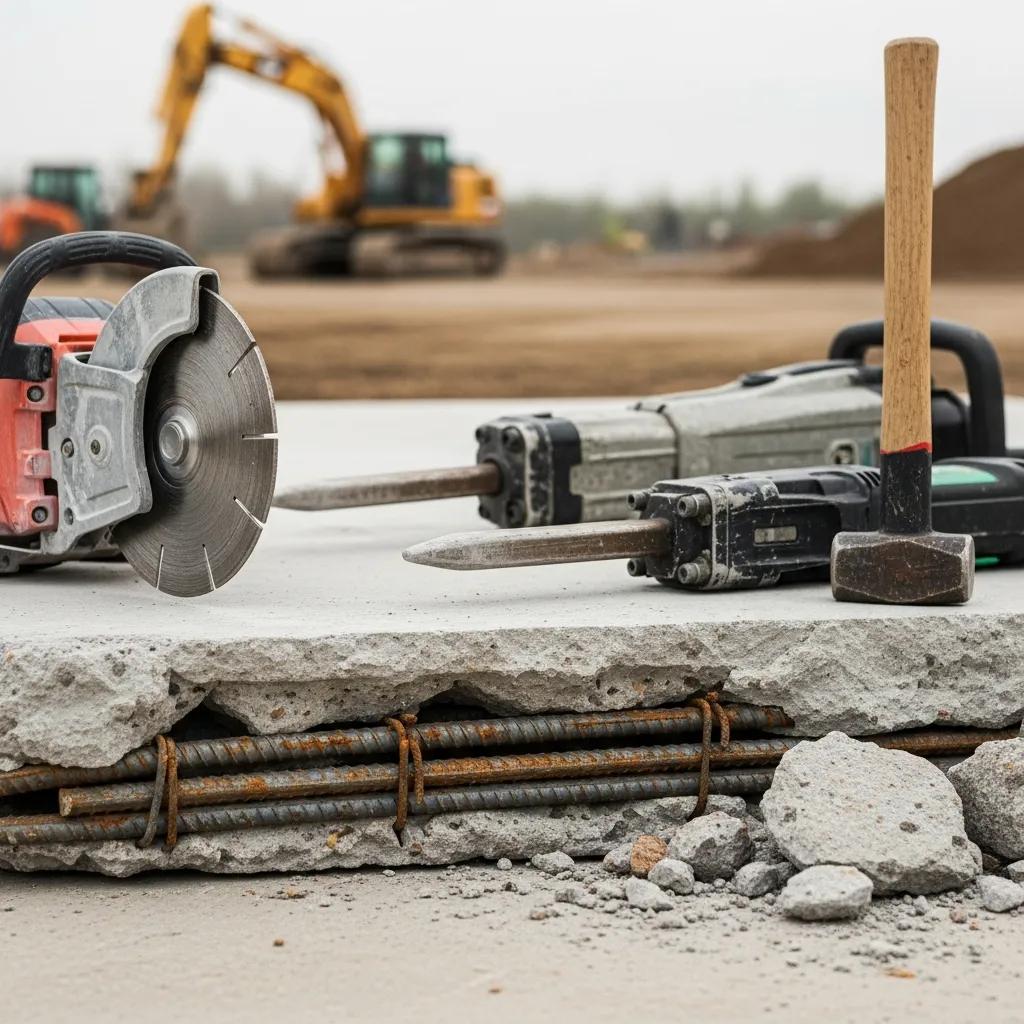
Concrete removal cost in Greensboro is driven by a handful of predictable factors that change labor, equipment time, and disposal volumes, producing the final project estimate. The primary mechanism is that larger volumes and harder-to-access locations require more machine time, crew hours, and haul trips, which raises both demolition and hauling line items; understanding those drivers helps you evaluate competing bids. Key factors include slab area and thickness, presence of reinforcement (rebar or mesh), site accessibility, disposal or recycling options, and any permit or inspection fees required locally. Below is a quick list highlighting the top cost drivers and how they influence estimates so you can spot why two quotes may differ on identical-sounding jobs.
- Size and thickness significantly increase labor and disposal volumes, raising per-project cost.
- Reinforcement like rebar increases labor and tool wear, often adding specialized cutting and removal time.
- Poor accessibility (narrow yards, stairs, street-parking limits) increases manual labor and equipment rental.
- Disposal method and local transfer-station fees affect per-ton or per-load charges that appear on invoices.
- Permit requirements and associated inspections add processing time and fixed fees to the project budget.
The table below maps these factors to their typical cost impact and an illustrative value or range to help you estimate the likely price delta for a Greensboro removal project.
This table clarifies how each attribute translates to price movement and prepares you to ask targeted questions when comparing estimates. Understanding these factors next leads into how slab size and thickness specifically change per-square-foot and disposal calculations.
How Do Size and Thickness Affect Pricing?
Size and thickness together determine the concrete volume that must be broken, loaded, hauled, and disposed of, which directly links to labor, equipment hours, and disposal tonnage. A standard example illustrates the mechanism: a 500 sq ft driveway at 4 inches thick contains roughly 6.17 cubic yards of concrete, while the same area at 6 inches increases volume by 50 percent and substantially increases weight for hauling and disposal. Contractors commonly translate volume into estimated tons to calculate disposal fees and truckloads, so small increases in thickness can push a job from a single haul to multiple loads. Price per square foot typically reflects the average time to break and remove a standard thickness slab; thicker or variable-depth slabs move a job into a higher per-square-foot band. When planning, measure both area and depth, because even modest increases in thickness meaningfully raise the final demolition and hauling cost.
This connection between volume and disposal cost leads naturally to considering reinforcement and access, which often compound the volume-driven effects described here.
What Role Does Reinforcement and Accessibility Play?
Reinforcement such as rebar or welded wire mesh creates mechanical resistance that requires cutting, prying, and sometimes torching or specialized saws, which increases crew time and tool wear compared with non-reinforced concrete. Reinforced slabs slow breaking progress, can require additional labor to free embedded pieces safely, and may add discrete labor line items on invoices for rebar cutting and removal. Accessibility restrictions—narrow gates, stairs, or limited street parking—prevent use of large excavators or truck placement, forcing more hand labor, smaller equipment, and additional handling time. These scenarios typically produce a measurable uplift in labor costs; contractors often apply added percentages or a flat accessibility surcharge to cover the extra time. If you expect reinforcement or limited access, plan to discuss mitigation options with bidders, such as using smaller machinery or staged removal, to manage cost impacts.
Understanding these physical cost drivers helps when comparing baseline price ranges for common project types in Greensboro.
What Are the Average Prices for Concrete Removal by Project Type?
Average prices for concrete removal in Greensboro vary by project type because typical size, thickness, and reinforcement differ across driveways, patios, and slabs, and disposal/permit line items can be added separately. The core mechanism is that each project type implies a predictable scope—driveways tend to be larger and thicker, patios often have decorative finishes or embedded features, and interior slabs may include footers—so each category maps to a common price band. Below is a concise pricing table to use as a starting reference; note that the ranges reflect demolition, hauling, and typical disposal fees and that individual quotes should be itemized for clarity.
This table gives a high-level sense of expected ranges and helps you match quotes to the right project category. Next, we break down driveways and patios with example scenarios that clarify what pushes a project to the low or high end of these ranges.
How Much Does Driveway Concrete Removal Cost in Greensboro?
Driveway removal estimates depend on single- vs. double-car width, slab thickness, reinforcement, and vehicle access, with per-project totals reflecting the larger volumes and heavier use typical of driveways. For example, a single-car driveway of about 300–400 sq ft at standard thickness may be on the lower end of driveway ranges, while a double-car or reinforced driveway of 600–1,200 sq ft moves toward the higher end due to increased tonnage and potential rebar. Driveways often permit machine access from the street, which reduces manual labor, but heavy reinforcement or base materials can add line items for additional breaking time and hauling. Recycling concrete where feasible can offset disposal fees by reducing landfill charges and sometimes producing credit toward hauling costs, so discuss recycling options when reviewing bids.
What Are the Prices for Patio and Slab Removal Services?
Patios and slabs vary widely: small decorative patios or sidewalks pose lower volume but can demand careful removal to avoid damaging nearby landscaping, while large slabs or those with embedded footers and utilities require more planning and labor. Decorative finishes, embedded planters, or stone inlays increase complexity because contractors must remove materials carefully or break them into smaller pieces for hauling, raising labor hours. Interior slabs and foundation sections that include footers or contiguous structural elements often require additional excavation and disposal, which increases equipment time and disposal tonnage. When getting quotes, ask whether the estimate includes handling for embedded features and whether disposal is itemized, so you can compare true like-for-like prices across bidders.
Knowing when permits are required can also change cost and timing, so the next section explains local permit considerations for Greensboro and Guilford County.
Do You Need Permits for Concrete Removal in Greensboro, NC?
Whether a demolition or concrete removal needs a permit in Greensboro depends on scope, whether the removal affects structural elements, and local regulations; the short answer is: sometimes a permit is required. The mechanism is that municipalities permit work that affects public safety, drainage, or structures to ensure code compliance, so larger demolitions, removals that alter foundations, or projects requiring street access or curb cuts commonly trigger permitting.
Below is a brief table showing common permit types, the issuing authority, and the typical fee range or note so you can identify when an application will be necessary for your project.
This permit summary helps you determine when to budget for permit costs and inspection timelines. The next subsections outline how to apply and typical fee expectations so you can streamline approvals.
How to Obtain Demolition Permits in Greensboro and Guilford County
To obtain demolition or removal permits for concrete work in Greensboro and Guilford County, the typical process starts with contacting the local building or permitting office to verify the scope requirements and to submit an application with supporting documents. Required documentation generally includes a project description, site plan or sketch showing the area to be removed, and contractor information if a licensed professional will perform the work; larger jobs may also require erosion control or traffic-control plans. Processing times vary by workload and the complexity of the request, so allow several business days to a few weeks for approval on larger projects and prepare required documentation ahead of your scheduled start date. Contractors experienced with local permitting can assist with applications, which reduces delays and helps ensure inspections are scheduled promptly.
Preparing the right paperwork and understanding likely fees reduces surprises, which leads into the typical fee ranges and requirements you should expect.
What Are the Typical Permit Fees and Requirements?
Typical permit fees for concrete removal and related demolition work vary by municipality and the scale of the project; smaller non-structural removals can carry low flat fees while larger demolitions or those affecting right-of-way incur higher charges and inspection requirements. Fees may include application charges, inspection fees, and bonds or deposits for public-right-of-way work in some cases, and these can change, so verify current rates with the local permitting office before finalizing a contract. It is common practice for contractors to either include permit fees as a separate line item in their estimate or advise clients to obtain permits directly; asking how a bidder handles permits will clarify comparisons. Keeping permit budgeting in mind avoids last-minute cost increases and ensures your project meets local regulatory requirements.
How Is Concrete Removed and Disposed of Responsibly in Greensboro?
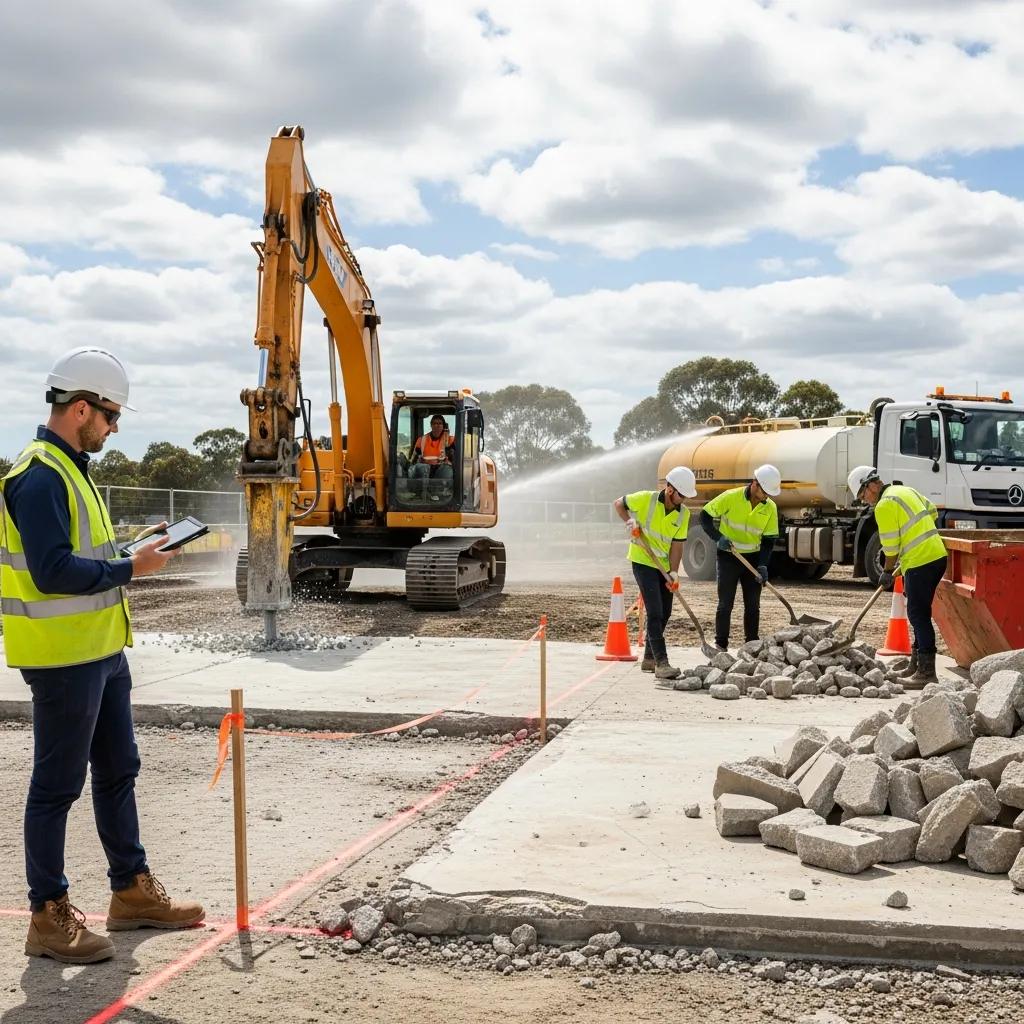
Responsible concrete removal follows a defined workflow—site prep, breaking, loading, hauling, disposal or recycling, and cleanup—to minimize risk, contain dust and runoff, and ensure lawful disposal. The mechanism for responsible disposal often favors recycling where available because crushed concrete can be reused as aggregate or base material, reducing landfill use and sometimes lowering disposal fees. Below is a numbered list that outlines the standard steps contractors use during removal so you understand the sequence and where cost is allocated.
- Site assessment and preparation: Contractors secure the area, identify utilities, and set up erosion and dust control measures.
- Breaking and cutting: Heavy equipment or handheld breakers reduce concrete to manageable pieces for loading.
- Loading and hauling: Debris is loaded into trucks and transported to disposal or recycling facilities.
- Disposal or recycling: Materials are weighed and accepted at transfer stations or recycling centers per local rules.
- Final cleanup and grading: The site is cleared, and base or soil is prepared for the next phase.
These steps explain where time and costs accumulate in a removal job and point to opportunities—like recycling—to lower the disposal portion of the bill. The next subsection describes local recycling flows and how they affect overall cost and environmental impact.
What Are the Steps in the Concrete Removal Process?
The concrete removal process begins with a site assessment that identifies slab boundaries, reinforcement, utility locations, and access, which informs equipment selection and time estimates. Breaking methods range from handheld breakers to excavator-mounted hydraulic hammers depending on slab size and access; the choice balances speed and site preservation. Once broken, concrete is loaded into haul trucks and transported to either a recycling plant or transfer station, where it may be crushed and repurposed as base material, offering a circular-material benefit. Final cleanup includes grading and, if required, compaction of recycled base material or backfill, returning the site to a neat condition and preparing it for replacement work. Knowing these steps helps homeowners anticipate the schedule and the cost components visible on professional quotes.
This process overview connects directly to local recycling options that often reduce net disposal fees and environmental impact.
How Does Eco-Friendly Disposal and Recycling Work Locally?
Eco-friendly disposal in the Greensboro area typically means directing clean concrete to recycling facilities where crushing equipment converts demolition rubble into graded aggregate for reuse, thereby lowering landfill volumes and sometimes qualifying for disposal-cost savings. The mechanism is straightforward: clean, uncontaminated concrete is cheaper to process and can be accepted as a reuse material; mixed loads with soil or wood may require additional handling and incur higher fees. Working with local haulers familiar with transfer-station requirements and licensed recyclers increases the chances that your concrete will be repurposed, which benefits the environment and can reduce your disposal line item. When discussing bids, ask whether a contractor routinely recycles concrete and how they handle contaminated or mixed debris, because recycling practices directly influence both cost and sustainability outcomes.
Why Choose Professional Concrete Removal Services in Greensboro?
Hiring a professional for concrete removal brings safety, efficiency, regulatory compliance, and proper disposal practices to your project, reducing homeowner liability and avoiding costly mistakes. Professionals combine trained crews, appropriate equipment, and knowledge of permit and disposal requirements to execute work faster and with fewer surprises than ad hoc approaches. The benefits of hiring experienced local contractors include accurate, itemized quotes and established relationships with recycling and disposal facilities that can reduce out-of-pocket disposal costs.
- Safety and compliance: Professionals manage hazards and ensure work meets local codes and inspection requirements.
- Efficiency and the right equipment: Experienced crews complete work faster using appropriate tools and machinery.
- Correct disposal practices: Contractors know local disposal/recycling options and handle weigh tickets and paperwork.
- Reduced homeowner liability: Properly licensed crews and insurance mitigate risk for property owners.
These practitioner advantages shorten project timelines and reduce the odds of unexpected costs, which connects to the specific ways transparent pricing and customer support improve your experience with a contractor.
What Are the Benefits of Hiring Experienced Local Contractors?
Experienced local contractors bring valuable local knowledge—permitting pathways, common site constraints in Greensboro neighborhoods, and proven vendor relationships for hauling and recycling—that streamlines projects. Their crews are trained to handle reinforcement, limit damage to surrounding landscaping, and select machinery matched to the site, which reduces time and secondary repairs. Local contractors also provide realistic scheduling and often include permit assistance as part of their service offering, simplifying administrative tasks for homeowners. When you interview bidders, ask for details on how they handle permits, recycling, and access challenges; those answers reveal practical experience that directly affects final cost and the smoothness of project execution.
Knowing what an ideal quote contains helps you evaluate transparency and choose the best value rather than the lowest price.
How Do Transparent Pricing and Customer Support Enhance Your Experience?
Transparent pricing means an itemized estimate showing demolition, hauling, disposal, permit fees, and any access or reinforcement surcharges so you can compare bids on the same basis and avoid surprises at invoice time. Good customer support includes clear communication about schedule windows, change-order handling, and documentation such as weigh tickets for disposal, all of which reduce disputes and help you track costs. When reviewing quotes, look for line items that specify disposal method and per-ton assumptions, permit responsibilities, and payment terms; absence of such detail is a red flag. Contractors who offer straightforward, itemized proposals coupled with accessible customer support typically provide better outcomes and predictable final costs.
After understanding benefits and how to vet bids, the final practical step is getting a free, accurate quote—which the next section explains in detail.
How Can You Get a Free Quote for Concrete Removal in Greensboro?
Getting an accurate free quote requires supplying clear measurements, photos, and access details so contractors can estimate labor, equipment, and disposal needs without extensive site visits. The mechanism for accurate quoting is simple: precise inputs yield tighter estimates; missing information forces contractors to include contingency in their price or require an on-site inspection. Below is a checklist of the information most contractors request to produce a reliable, itemized estimate.
- Measurements and thickness: Provide square footage and slab depth to estimate volume.
- Photos of the area and access points: Show gates, stairs, driveway grades, and street parking.
- Description of reinforcement or embedded features: Note visible rebar, footers, or utilities.
- Desired timeline and disposal preference: State whether you prefer recycling or landfill disposal.
Supplying these items up front speeds response times and increases the accuracy of quotes, which leads into what to expect from the bidding process and how to compare offers effectively.
What Information Is Needed to Request an Accurate Quote?
To request an accurate concrete removal quote, include clear dimensions (length and width), slab thickness, photos from multiple angles, notes on any visible reinforcement, and whether there are landscaping or utility concerns nearby. Contractors may ask whether you need the area backfilled or prepped for replacement, since backfill and grading alter equipment and labor requirements. Mention any permit status or questions about right-of-way access so the bidder can include permit fees or advise on whether permits are necessary. Providing these precise details upfront reduces the need for conservative contingencies and yields quotes that can be compared on an itemized basis.
Knowing how best to contact providers and what to expect during initial outreach completes the process of securing reliable bids.
How to Contact Local Concrete Hauling Companies and Service Providers
When contacting local concrete hauling companies or removal contractors, use email with photos or an online form for initial assessments, and schedule on-site estimates when access or reinforcement is unclear; phone calls are useful for quick clarifications and scheduling. On first contact, expect a preliminary estimate based on your provided details and a follow-up site visit for final pricing on complex or reinforced jobs. Compare multiple itemized quotes and ask each bidder the same set of questions about disposal, permits, timeline, and whether recycling is included to ensure apples-to-apples comparisons. Follow up with contractors who provide written, itemized quotes and documented disposal procedures, because that transparency helps prevent unexpected costs during project execution.
This closes the practical guidance to understand concrete removal costs in Greensboro and to get an accurate, comparable quote for your project.


0 Comments