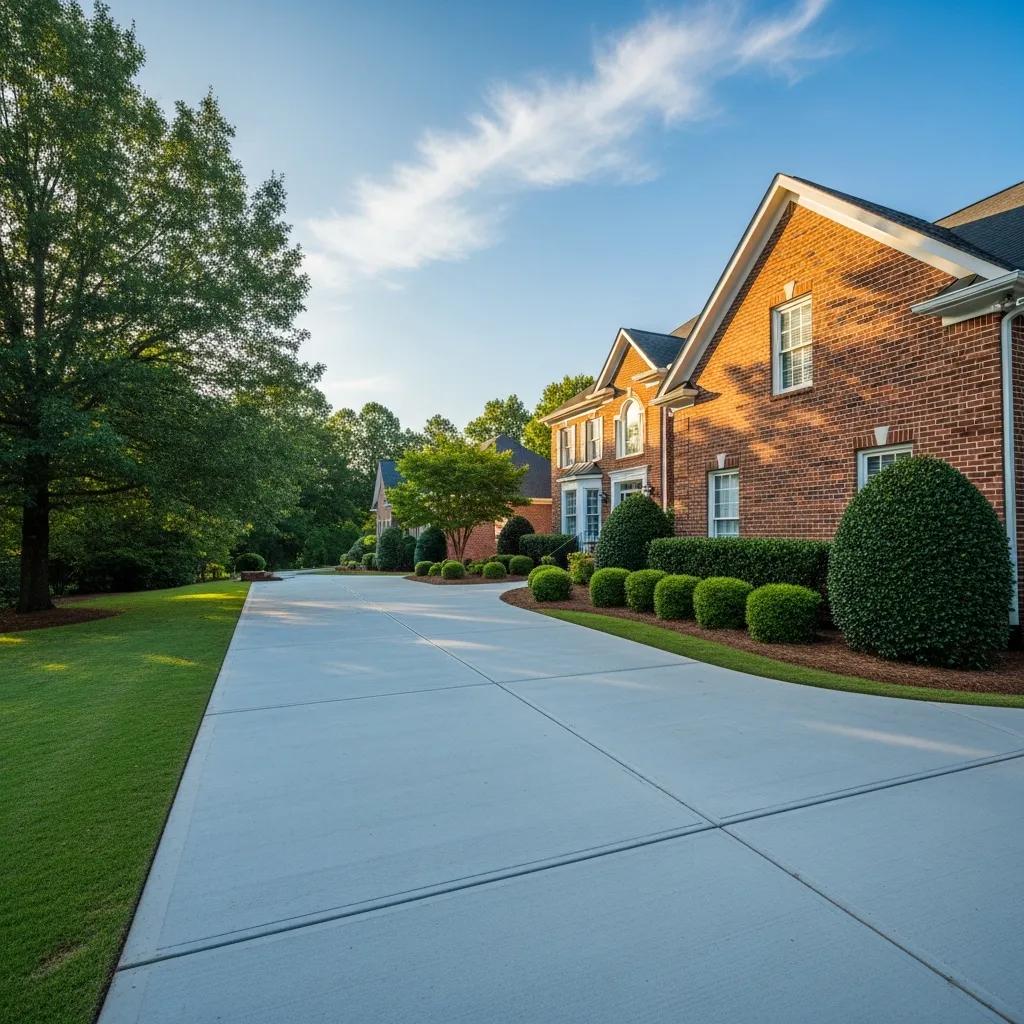
Concrete Paving in Greensboro, NC: Durable Surfaces for Residential and Commercial Needs
Concrete paving is the process of creating durable paved surfaces—driveways, patios, sidewalks, parking lots, and roads—by placing engineered concrete mixtures on prepared sub-bases to form load-bearing slabs. In Greensboro, NC, durable concrete paving addresses local needs by resisting freeze-thaw cycles, managing stormwater, and serving both residential and commercial applications with long service life. This article explains the benefits, cost factors, service types, decorative options, maintenance practices, and guidelines for hiring local contractors so property owners can make informed decisions about concrete driveways Greensboro NC and commercial concrete paving Greensboro. Readers will learn how concrete achieves longevity through proper sub-base, mix design, reinforcement, and curing; how pricing is calculated and what typical ranges look like; which paving services are available; and how stamped or permeable concrete can enhance curb appeal and manage runoff. The following sections cover benefits, costs (with example EAV estimates), service types (including permeable systems), decorative uses, maintenance and repair, and why choosing local Greensboro concrete contractors matters for durability and compliance.
What Are the Benefits of Durable Concrete Paving in Greensboro?
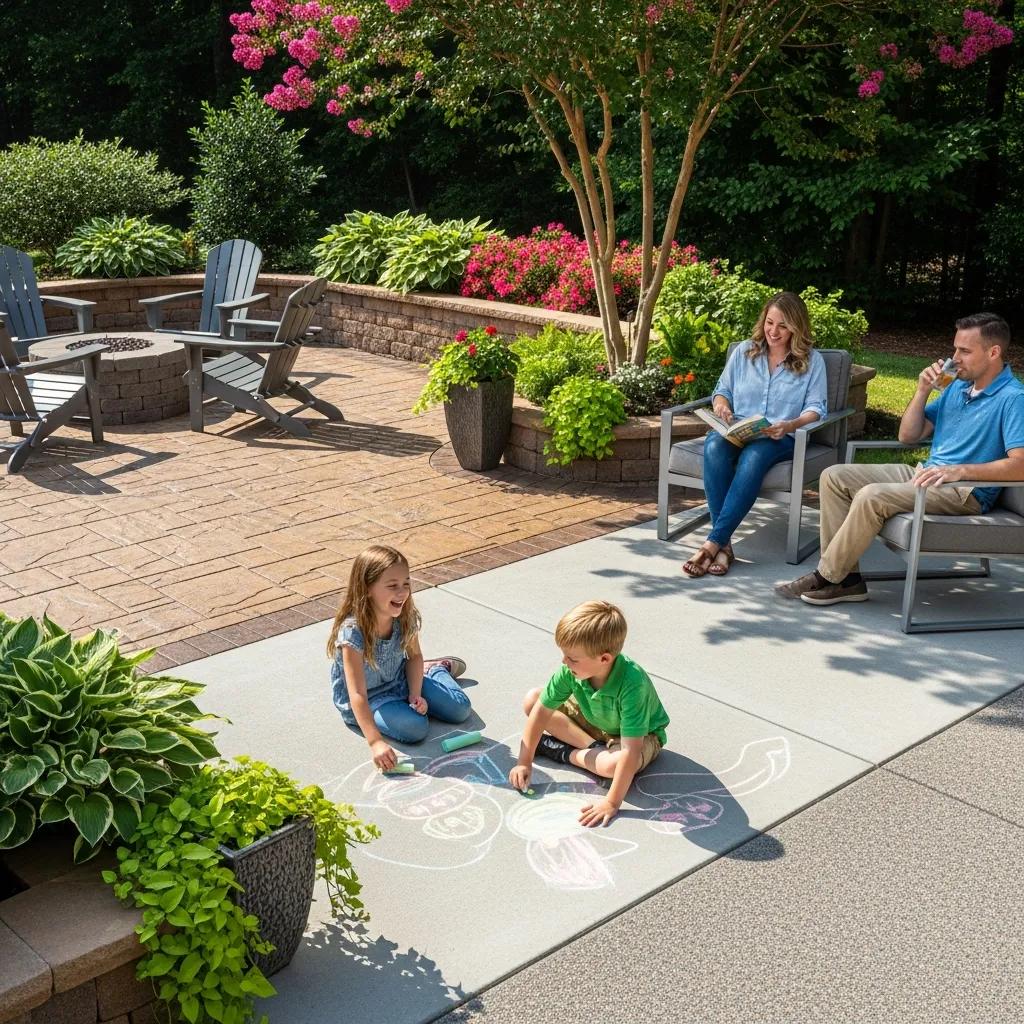
Durable concrete paving provides long service life, strong resistance to freeze-thaw damage, and lower lifecycle maintenance compared with many alternatives by combining a sound sub-base, appropriate mix design, reinforcement, and protective sealants. This mechanism reduces potholes, rutting, and frequent repairs, delivering predictable performance for driveways, parking lots, and sidewalks in Greensboro’s Piedmont climate. Homeowners and property managers gain value through fewer repairs, lower long-term cost per year, and the ability to choose decorative finishes that increase curb appeal. The section below lists the primary benefits and then compares concrete with asphalt and pavers so readers can quickly weigh options for their project type.
- Longevity: Properly installed concrete often lasts 30–40 years or more with routine maintenance.
- Weather resistance: Mix design, drainage, and sealants limit freeze-thaw deterioration.
- Low maintenance: Occasional sealing and targeted repairs reduce lifecycle costs.
These benefits point toward the next topic: how concrete achieves longevity and weather resistance through specific construction techniques and materials.
This simple comparison shows concrete’s superior long-term durability and cost-efficiency for many Greensboro applications. Understanding the technical steps that produce that durability clarifies how to specify and inspect a quality installation.
How Does Concrete Paving Offer Longevity and Weather Resistance?
Concrete achieves longevity and weather resistance by combining a stable sub-base, well-graded aggregate, appropriate cementitious mix design, adequate reinforcement, and controlled curing, which together limit cracking and moisture penetration. A properly compacted sub-base and engineered drainage reduce freeze-thaw damage by preventing water from saturating the slab and expanding during cold snaps. Reinforcement—rebar or wire mesh—controls crack widths and improves load distribution, while curing maintains hydration to reach design strength; sealing further prevents chloride and water ingress. By addressing each of these elements during design and construction, paving professionals minimize common failure modes and extend service life, which leads naturally into a comparison of concrete versus other surface options.
Why Choose Concrete Over Asphalt and Pavers in Greensboro?
Concrete typically outperforms asphalt in lifespan and long-term cost per square foot because concrete resists rutting and oxidation that accelerate asphalt degradation in seasonal climates. While asphalt has a lower upfront cost and is quicker to install, it often requires resurfacing and patching more frequently, raising lifecycle costs; pavers offer design flexibility but demand ongoing joint maintenance and can settle without a proper base. For driveways and heavy-use commercial slabs where durability and minimal maintenance are priorities, concrete is usually the recommended choice; for aesthetic-focused patios or areas requiring permeability, pavers or stamped concrete may be preferable. The choice depends on project goals, budget, and desired maintenance profile, which leads into how much different concrete projects cost in Greensboro.
How Much Does Concrete Paving Cost in Greensboro, NC?
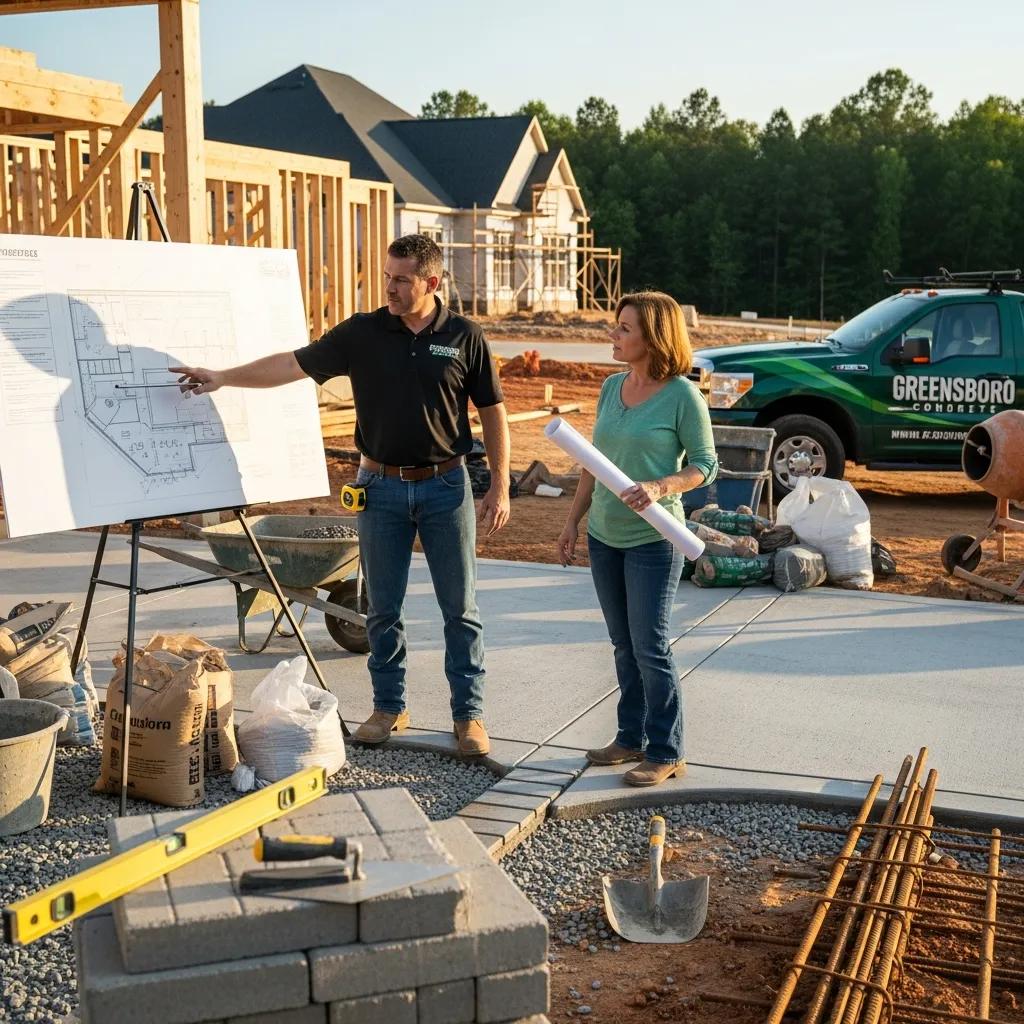
Concrete paving cost in Greensboro depends on area, finish, reinforcement, site access, and preparation—typical residential ranges and commercial examples are given below to help estimate budgets. Price drivers include excavation and grading, sub-base material and compaction, concrete mix strength and admixtures, reinforcement, decorative finishes, and drainage or permit requirements. The EAV table that follows gives representative entities (driveway, patio, parking lot) with attributes (per-square-foot cost, material options, reinforcement) and values to illustrate typical ranges and assumptions for Greensboro projects. After the table, a concise list of cost drivers clarifies which elements move estimates most, then sample ranges show what homeowners and facility managers can expect.
- Site preparation: Extent of excavation, grading, and soil stabilization dramatically affects cost.
- Reinforcement and mix: Higher-strength mixes and rebar add material and labor expense.
- Finish and decorative options: Stamped, colored, or exposed aggregate finishes increase per-square-foot pricing.
Understanding these drivers helps property owners evaluate estimates and prepare for realistic bids, which leads into average price ranges and mini-case examples for typical residential and commercial projects.
What Factors Influence Concrete Driveway and Patio Pricing?
Several interrelated factors influence pricing: the complexity of site prep (grading, tree roots, poor soils), the required slab thickness and reinforcement for use-case, finish type (broom finish vs stamped decorative), drainage and slope work, and local permit or code compliance. Site access and demolition of existing pavement can shift a low-cost job into a medium or high-cost bracket due to equipment needs and disposal. Mix design choices—air-entrained concrete for freeze-thaw resistance, admixtures for faster set or higher strength—also affect material cost and performance, while specialized finishes and colorants add labor and curing considerations. Recognizing which factors most influence your estimate helps prioritize budget decisions and ensures bids are comparable, which transitions to sample price ranges for common projects.
What Are the Average Price Ranges for Residential and Commercial Projects?
Typical price ranges depend on assumptions about area, finish, and reinforcement; these mini-cases illustrate low, median, and high scenarios to set expectations for Greensboro projects. A straightforward 12′ x 40′ residential driveway with standard broom finish and minimal reinforcement sits near the lower end of the residential range, while large commercial lots with engineered subgrades, heavy-duty slabs, and ADA-compliant striping or drains reach the higher end of commercial pricing. When reviewing bids, confirm assumptions about slab thickness, aggregate base depth, reinforcement, finish, and warranty terms to compare apples to apples.
- Driveway example: Low $6/sq ft (basic), Median $8/sq ft (reinforced), High $10+/sq ft (decorative finishes).
- Patio example: Low $8/sq ft (basic), Median $11/sq ft (stamped), High $15/sq ft (complex patterns/exposed aggregate).
- Parking lot example: Low $5/sq ft (standard), Median $7/sq ft (engineered drainage), High $10+/sq ft (heavy-duty design).
These ranges provide starting points for budgeting and inform what to request in a quote; for an accurate estimate, homeowners should request a site visit and written scope from local contractors who understand Greensboro soil and climate conditions.
What Types of Concrete Paving Services Are Available in Greensboro?
Concrete paving services in Greensboro cover residential and commercial installations, repair and resurfacing, decorative finishing (stamped, colored, exposed aggregate), and permeable concrete systems for stormwater management. Service providers can design and build driveways, patios, sidewalks, parking lots, road patches, and heavy-duty industrial slabs that meet load requirements and regulatory standards such as ADA accessibility. Repair services include crack repair, partial and full-depth patching, overlay and resurfacing, and joint replacement to restore function and appearance. The table below summarizes common service types, their typical project sizes, and basic maintenance needs to help owners choose appropriate options.
This overview clarifies which service aligns with a property’s functional and aesthetic needs; the next subsections outline installation steps for residential features and design considerations for commercial projects.
How Are Concrete Driveways, Patios, and Sidewalks Installed and Maintained?
Installation follows a predictable sequence: site survey and layout, excavation and sub-base preparation, formwork and reinforcement placement, concrete placement and finishing, and curing followed by sealing and joint work. Proper sub-base depth and compaction are essential to prevent settlement and frost heave; contractors commonly use compacted crushed stone with geotextile separation for stability. Maintenance includes routine cleaning, resealing every 2–5 years depending on exposure, sealing of control joints, and timely crack repair to prevent water infiltration; small cracks can be routed and sealed while larger defects require patching or localized replacement. Understanding these steps enables property owners to monitor workmanship and schedule preventive maintenance that extends service life.
- Survey and prep: Confirm slope for drainage and mark utilities.
- Sub-base and forms: Inspect compaction and base depth before pouring.
- Finish and cure: Ensure proper curing practices and timely sealing.
These steps show where quality matters most and lead into commercial design considerations that scale these principles for heavier loads.
What Commercial Concrete Paving Solutions Does Greensboro Offer?
Commercial solutions include engineered parking lots, heavy-duty slab-on-grade for warehouses, reinforced approaches for truck traffic, permeable concrete for stormwater management, and ADA-compliant pedestrian access design. Design considerations expand to slab thickness, load-bearing reinforcement, expansion and contraction joint layout, sub-base engineering, and integrated drainage systems to manage runoff and protect adjacent structures. Commercial projects often require coordination with local building codes, stormwater regulations, and accessibility standards, so plans typically include structural calculations and drainage detail. Proper commercial design reduces lifecycle costs and liability, and transitions naturally into how decorative concrete options can be used to enhance property appearance while meeting performance needs.
Greensboro Concrete Paving: Durable Residential & Commercial Surfaces
Stamped and decorative concrete provides homeowners and commercial properties with customizable aesthetics—patterns, colors, and textures that mimic stone, brick, or tile—without the maintenance complexity of loose units. The technique embeds color and texture during finishing, and uses stamping tools and release agents to create surface patterns; exposed aggregate and integral color are alternative decorative approaches that emphasize texture and durability. Decorative finishes require careful timing during placement, controlled curing, and appropriate sealers to protect color and pattern from UV and wear. The following list details popular patterns and finishes used locally and explains how design choices affect maintenance and longevity.
- Stamped stone and slate patterns: Mimic natural materials for patios and walkways.
- Colored and antiqued concrete: Use integral pigments and surface treatments.
- Exposed aggregate: Durable texture ideal for non-slip areas and modern aesthetics.
These options improve curb appeal and resale potential when matched to architectural style, which brings us to specific patterns and their typical uses in Greensboro.
What Are Popular Stamped Concrete Patterns and Finishes in Greensboro?
Common stamped patterns include stone, slate, brick, and cobblestone textures that complement traditional and contemporary homes, while colored and antiqued finishes create depth and realism for patios and entryways. Exposed aggregate surfaces reveal pebbles and coarse aggregate for a textured, slip-resistant finish often used on driveways and pool decks; integral coloring or topical stains provide consistent color that ties into landscaping. Durability considerations include choosing UV-stable pigments, using proper sealer types for traffic levels, and ensuring stamping occurs at the right slump and set time to prevent pattern failure. Selecting a finish that balances desired appearance with expected traffic and maintenance creates a durable decorative surface that enhances property value.
How Does Decorative Concrete Improve Curb Appeal and Property Value?
Decorative concrete can significantly enhance curb appeal by providing a cohesive, high-end look that complements home architecture and landscaping, which often translates into higher perceived property value at resale. A well-executed stamped patio or a colored driveway can differentiate a listing and justify modest price premiums because buyers perceive upgraded exterior finishes as lower-maintenance improvements. Return on investment depends on finish cost versus market expectations; tasteful, well-maintained decorative paving typically performs best in neighborhoods where aesthetics influence comparable sales. Balancing decorative expense against expected market uplift guides decisions on whether to prioritize decorative upgrades or invest in basic long-term durability, and this balance informs maintenance needs described in the next section.
How Can You Maintain and Repair Concrete Paving for Long-lasting Durability?
Maintaining durable concrete involves regular cleaning, timely sealing, prompt crack repair, and assessing when resurfacing or replacement is warranted, with practices tailored to Greensboro’s climate and seasonal freeze-thaw cycles. Sealing intervals, cleaning methods, and repair techniques vary by finish and use: decorative surfaces may need gentler cleaners and more frequent resealing, while heavy-duty slabs prioritize joint repair and full-depth patching when structural distress appears. The section below lists best practices for sealing and crack repair, followed by a recommended timetable for cleaning and resurfacing that helps owners preserve performance and appearance over time.
- Cleaning: Annual power wash with mild detergent to remove oils and stains.
- Sealing: Reseal decorative or drive surfaces every 2–4 years; high-traffic lots may extend to 5 years based on wear.
- Crack repair: Small hairline cracks routed and sealed; larger structural cracks require professional assessment.
These routines reduce moisture intrusion and freeze-thaw damage, and they lead into specific sealing and repair recommendations for Greensboro properties.
What Are Best Practices for Concrete Sealing and Crack Repair in Greensboro?
Best practices include selecting air-entrained concrete initially to resist freeze-thaw cycles, applying the appropriate topical sealer after full cure (typically 28 days), and scheduling reseal intervals based on exposure—generally every 2–5 years for driveways and patios. For cracks under 1/4 inch, routing and sealing with a flexible polyurethane or silicone material prevents water migration; for wider or structural cracks, professional epoxy injection or partial-depth repair restores structural integrity. Seasonal timing matters: avoid sealing or major repairs when temperatures will drop below recommended ranges or when rainfall is likely; in Greensboro, late spring through early fall is often optimal for sealing work. Knowing when to DIY and when to call a contractor helps owners preserve surfaces without unnecessary expense, which informs decisions about resurfacing frequency discussed next.
How Often Should Concrete Surfaces Be Cleaned and Resurfaced?
A practical maintenance timetable is annual cleaning, resealing every 2–5 years depending on exposure and finish, and professional resurfacing when surface defects, widespread scaling, or structural cracking appear that compromise function or appearance. Indicators for resurfacing include pervasive surface spalling, networked cracks that recur after repair, or an uneven surface that affects drainage or accessibility; when these signs appear, an overlay or full-depth replacement may be more cost-effective than piecemeal fixes. Light cosmetic wear can often be addressed by a thin overlay, while structural distress requires engineered repair or replacement. Establishing a routine inspection schedule ensures problems are detected early and informs budgeting for long-term upkeep.
Why Choose Local Greensboro Concrete Contractors for Your Durable Paving Projects?
Local Greensboro concrete contractors offer advantages in knowledge of regional soil conditions, freeze-thaw behavior, local building codes, and permitting processes, which reduces the risk of specification errors and rework. Local firms can often respond faster for warranty or post-installation concerns and have experience sourcing materials suited to Piedmont Triad climate needs, such as air-entrained mixes and appropriate aggregates. When selecting a contractor, homeowners should verify credentials, request local references and portfolio examples, confirm insurance and written estimates, and ask about quality-assurance practices and warranty terms. The checklist below outlines essential vetting steps that help homeowners secure contractors who deliver durable, code-compliant concrete paving.
- Verify licensing and insurance: Request proof of current licenses and liability coverage.
- Review portfolio and references: Ask for examples of similar Greensboro projects and local references.
- Obtain detailed written estimates: Ensure scope includes base prep, reinforcement, mix design, and curing.
These checks reduce risk and lead to better outcomes; the following subsections expand on qualifications and quality assurance steps to expect from reputable local contractors.
What Qualifications and Experience Should You Look for in Greensboro Contractors?
Look for contractors who demonstrate relevant project experience with driveways, patios, and commercial slabs, can provide a portfolio of completed local work, and are familiar with local codes and ADA requirements; while specific license types vary, confirmation of appropriate trade licensing and insurance is essential. Ask targeted questions during estimate visits: how will the sub-base be prepared, what mix design and reinforcement will be used, how will joints and drainage be handled, and what is the proposed curing and sealing schedule? Request a written scope that lists slab thickness, aggregate base depth, reinforcement details, finish type, and cleanup/disposal responsibilities so estimates are comparable. Clear documentation and demonstrated local experience reduce surprises during construction and set expectations for quality, which connects to the contractor’s on-site quality assurance practices described next.
How Do Local Contractors Ensure Quality and Customer Satisfaction?
Quality assurance typically includes material verification (batch tickets and mix design adherence), on-site supervision during placement and finishing, documented compaction and base inspection, and post-installation walkthroughs with the client to identify any issues before final acceptance. Good contractors provide a written warranty or workmanship guarantee, clear communication about scheduling and change orders, and a documented plan for handling punch-list items and warranty claims. Red flags include evasive answers about materials, no written scope or warranty, or reluctance to provide local references; conversely, transparent documentation and a structured QA process indicate an emphasis on long-term performance. These practices ensure project durability and customer satisfaction and complete the practical guidance property owners need to plan resilient concrete paving in Greensboro.

0 Comments