Downtown Greensboro Concrete Driveways: Installation, Repair & Costs
A concrete driveway is a durable paved surface made from a reinforced concrete slab that provides a stable, long-lasting approach to a home or building; in Downtown Greensboro, NC, choosing concrete for a new driveway balances local climate resilience with design flexibility. This guide explains what concrete driveways are, why they suit downtown Greensboro properties, and what homeowners should expect for installation, repair, and cost planning. Many property owners face questions about longevity, municipal permitting, and aesthetic options that affect curb appeal and resale value; this article provides practical, locally relevant answers and step-by-step guidance. You will learn the benefits of concrete driveways in Downtown Greensboro, how a proper installation is performed, common repair solutions and decision rules for repair versus replacement, the main cost drivers for projects in 2024–2025, popular concrete types and their maintenance, and how to vet and choose a reputable local contractor. Throughout, the guide uses regional context—permitting nuances, weather-related curing considerations, and aesthetic choices—to help you plan a new driveway, manage repairs, and estimate likely budgets for projects in Downtown Greensboro.
What Are the Benefits of Concrete Driveways in Downtown Greensboro?
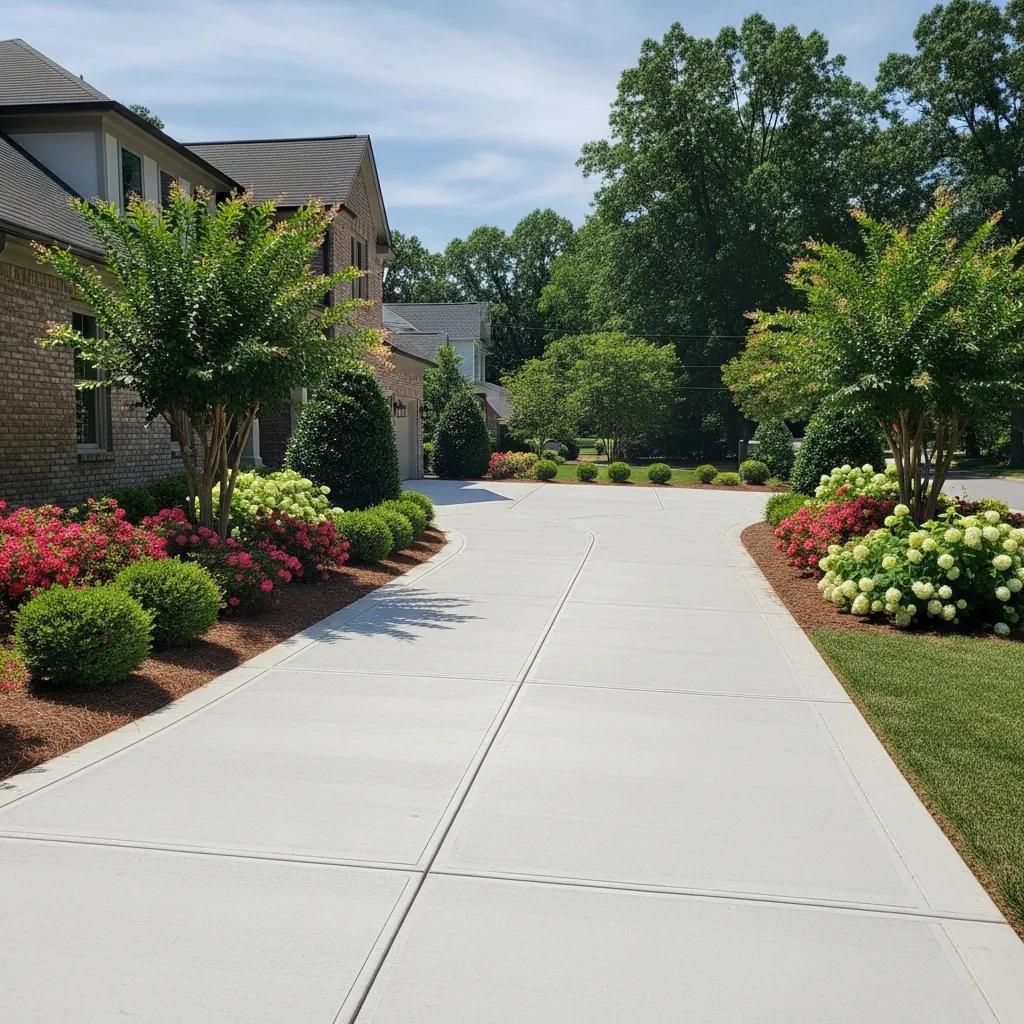
Concrete driveways deliver a combination of durability, low maintenance, and strong curb appeal that fits many Downtown Greensboro properties; their long service life and design versatility make them a frequent choice for neighborhoods with mixed residential and historic character. Concrete resists rutting and rut-filling better than many paving alternatives and tolerates seasonal freeze-thaw cycles when properly mixed and cured, which supports a 25–40+ year lifespan under normal conditions. A new concrete driveway can also increase property value through improved curb appeal and a clean, finished frontage that buyers notice. The material’s ability to accept decorative finishes—stamped, colored, or exposed aggregate—lets homeowners match downtown architectural styles while keeping long-term upkeep manageable.
Concrete driveways offer these primary advantages for Downtown Greensboro homeowners:
- Durability and Longevity: Properly designed concrete lasts multiple decades and withstands vehicle loads without frequent resurfacing.
- Low Maintenance: Regular sealing and occasional cleaning are generally sufficient to maintain appearance and prevent staining.
- Curb Appeal and Value: Decorative finishes and clean finishes improve first impressions and resale prospects.
- Cost-effectiveness Over Time: When lifecycle costs are compared, concrete often outperforms short-lived alternatives.
These benefits lead directly into technical factors that determine lifespan and performance, including slab thickness, reinforcement, and subgrade preparation—elements that must be addressed during installation to realize the advantages listed above.
How Does a Concrete Driveway Enhance Durability and Longevity?
A concrete driveway achieves durability through a combination of appropriate slab thickness, reinforcement, and a well-prepared subgrade; these components work together to distribute loads, prevent settlement, and control cracking. Typical residential driveways use a minimum slab thickness of 4 to 6 inches depending on anticipated loads, and adding rebar or wire mesh increases tensile capacity to limit crack progression under vehicle stress. The subgrade must be compacted and graded with a granular base to reduce differential settlement caused by soil movement or groundwater, while proper curing preserves concrete strength by controlling moisture loss in the first days after placement. Attention to jointing—control joints and expansion joints—also directs where cracks occur and reduces unsightly random cracking, which in turn prolongs structural performance and aesthetic life.
Understanding these structural elements is essential before considering finishes or decorative options, because the underlying slab quality dictates long-term resilience and determines whether additional protective measures like sealants or overlays will perform as expected.
In What Ways Do Concrete Driveways Improve Curb Appeal and Property Value?
A concrete driveway enhances curb appeal through clean lines, consistent surface texture, and the ability to incorporate decorative techniques that match Downtown Greensboro architectural styles; buyers often perceive a well-built driveway as an indicator of overall property care. Decorative options such as stamped patterns that imitate brick or stone, integral color or topical stains for hue variation, and exposed aggregate for textural contrast allow homeowners to create a tailored frontage that complements facades and landscaping. A professionally finished concrete apron and neatly edged transitions to sidewalks and planting beds improve visual coherence and often contribute to a measurable uplift in perceived property value. Regular maintenance such as resealing and pressure washing preserves the finish and sustains that added curb appeal over time.
These aesthetic improvements should be weighed alongside maintenance requirements and budget considerations, because decorative approaches can raise upfront cost while also delivering better resale impressions and longevity when executed correctly.
How Is Concrete Driveway Installation Performed in Downtown Greensboro?
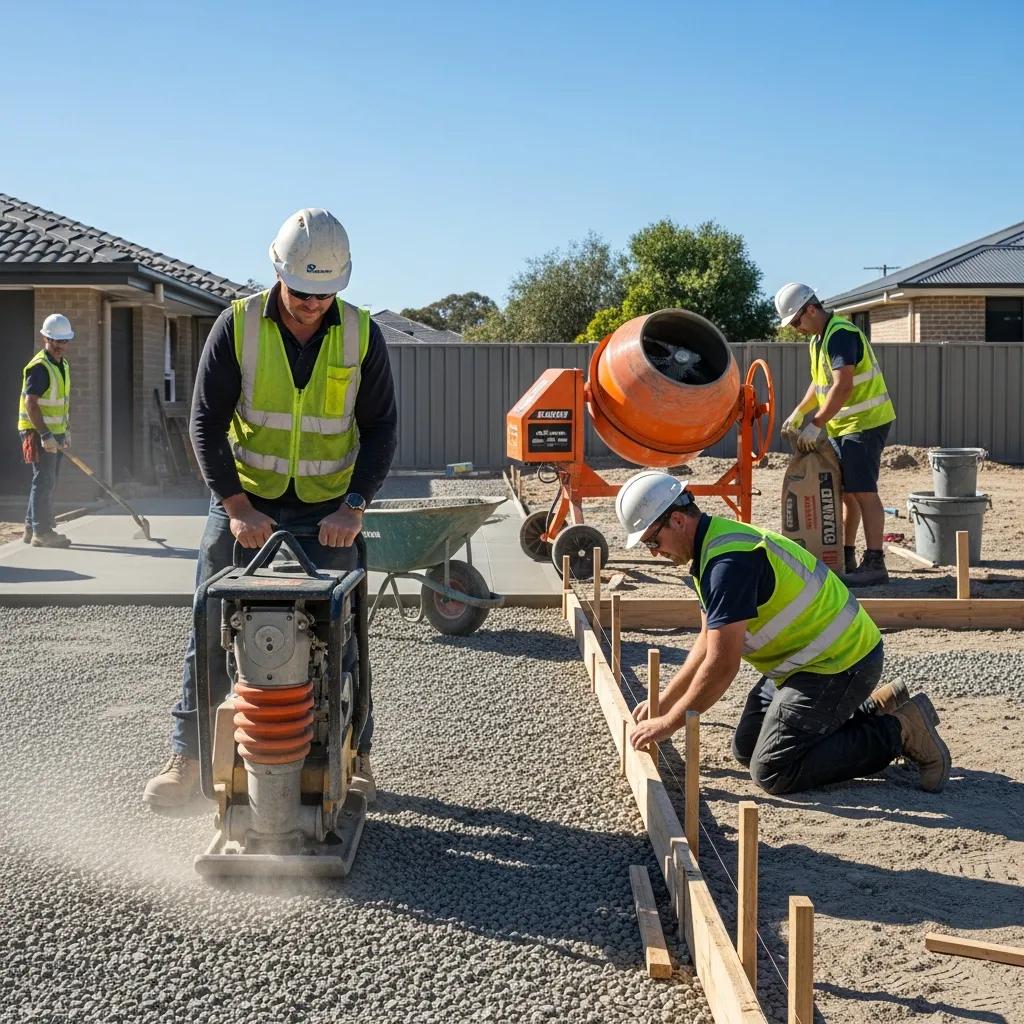
A proper concrete driveway installation in Downtown Greensboro follows a predictable sequence: site assessment and permits, subgrade preparation and base installation, forming and reinforcement, concrete placement and finishing, jointing, and controlled curing; each step influences final performance and appearance. Local climate factors—temperature and humidity—affect curing times and finishing windows, so crews adjust mix designs and curing methods to mitigate rapid moisture loss or slow strength gain. Scheduling typically covers several days for prep and placement, followed by a curing period during which traffic is restricted; realistic project timelines include permit lead time and inspection scheduling when required by local authorities. Paying close attention to drainage and grading during installation reduces standing water and prevents long-term deterioration.
Local contractors frequently manage permits, inspections, and coordination with municipal offices, streamlining the process for homeowners by ensuring code compliance and inspection readiness; asking a contractor about their permitting process and inspection track record is a practical step before hiring.
What Are the Key Steps in the Installation Process?
A successful driveway installation progresses through defined steps that ensure long-term performance and compliance with local expectations, and homeowners should be able to follow a basic checklist to monitor quality. The sequence starts with site clearing, accurate grading and compaction of the subgrade, placement of a compacted granular base (typically 4 to 6 inches), installation of edge forms and reinforcement (rebar or wire mesh), controlled concrete placement with slump verification, finishing to the chosen texture, sawing of control joints within 6 to 18 hours after finishing, and application of curing techniques such as wet curing or membrane-forming compounds. Equipment used includes plate compactors, concrete trucks, vibrators, screeds, and joint saws; quality checkpoints include verifying base compaction, reinforcement placement at correct cover, and proper joint spacing. Homeowners can use a short checklist—permit obtained, base compacted, reinforcement in place, slump within spec, joints sawed within recommended window—to confirm installation standards are being met.
This stepwise approach naturally leads to considerations about local permitting and downtown-specific requirements that can influence timing and allowable finishes.
What Local Permitting Requirements Affect Installation in Downtown Greensboro?
Permitting for driveway replacement or new construction in Downtown Greensboro typically requires checking city and county codes for driveway width, curb-cut approvals, stormwater management, and any applicable historic-district design standards; these regulations can affect slope, material choices, and edge treatments. Inspections may be required at the subgrade stage and after final placement to ensure drainage and structural standards are met, and downtown properties in designated historic areas could face additional review of surface textures or visible finishes to preserve neighborhood character. Homeowners should confirm permit fees, required documentation, and inspection sequences with municipal planning or public works departments early in project planning. Questions to ask potential contractors include whether they secure necessary permits, schedule inspections, and provide documentation of compliance.
Knowing permit requirements helps set realistic schedules and prevents costly rework, which brings us to common repair scenarios you may encounter and how they are addressed in Greensboro.
What Are the Common Concrete Driveway Repair Solutions in Greensboro?
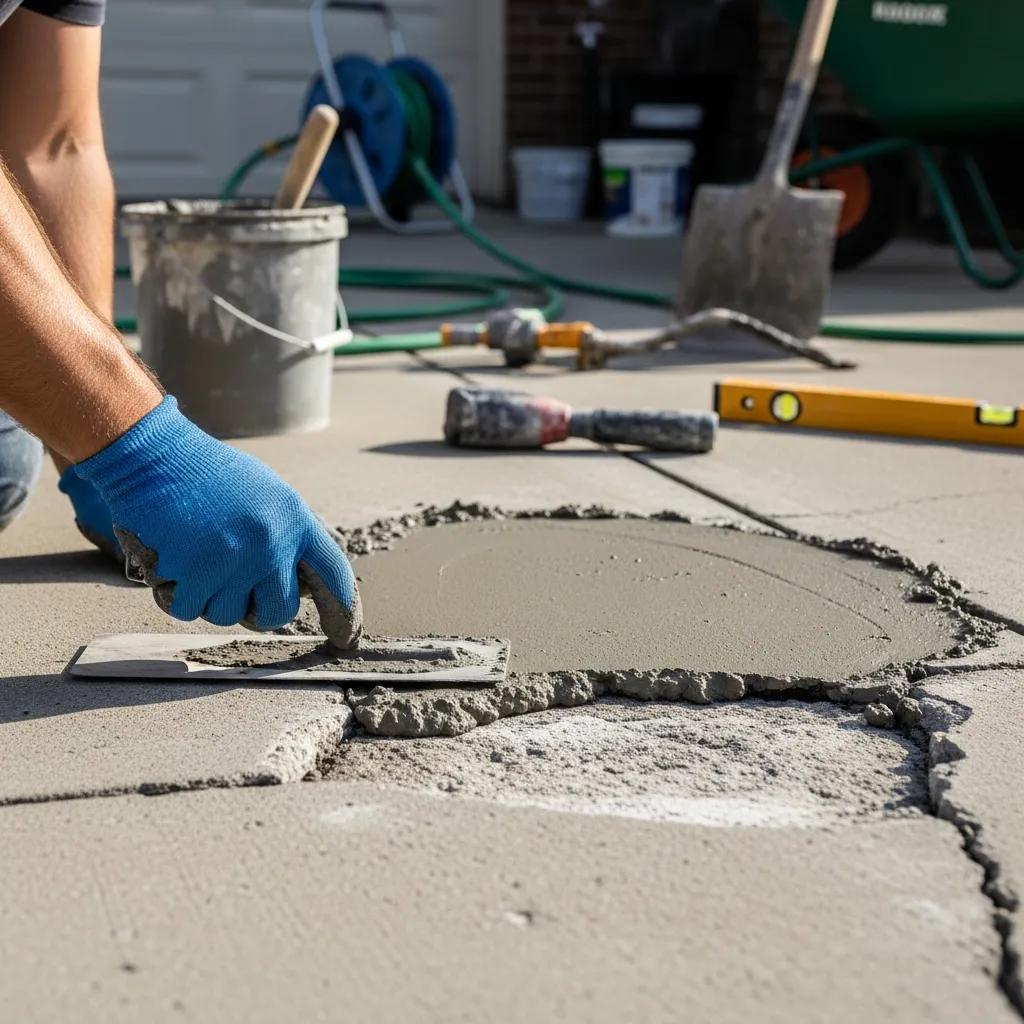
Concrete driveway repairs in Greensboro address typical issues such as cracks, potholes, surface spalling, and settlement; repair techniques vary from simple crack sealing to slab replacement depending on severity and underlying causes. Minor hairline cracks are often managed with sealing and joint repairs to prevent water ingress, while larger cracks or spalling may require patching with polymer-modified repair mortars or partial slab replacement. Settling or heaving caused by subgrade failure is commonly addressed through mudjacking or slab replacement depending on the extent of movement and long-term prognosis. Estimating life extension after repair depends on technique and root cause remediation—repairs that do not fix drainage or subgrade problems typically have shorter useful lives.
When deciding between repair and replacement, consider system-level indicators and the expected remaining service life of the slab; this decision logic follows from evaluating the visible damage, slab age, and underlying soil or drainage conditions.
- Common repair methods include:Crack sealing: Filling surface cracks to block moisture ingress and limit propagation.Patching: Removing damaged concrete and installing a polymer-modified patch for localized failures.Leveling/mudjacking: Restoring elevation where subgrade voids have caused differential settlement.
How Are Cracks, Potholes, and Uneven Surfaces Repaired?
Repair techniques are chosen based on defect type: hairline and non-structural cracks are sealed to limit water penetration and freeze-thaw damage, potholes and spalled areas are removed and patched with bonding agents and high-strength repair mixes, and uneven slabs due to voids can be lifted using slab leveling or replaced if the subgrade is irreparably compromised. Materials include epoxy or polyurethane injection for structural crack repair, polymer-modified cementitious patches for surface restoration, and foam or grout used in slab-lifting applications; each material has expected durability benchmarks tied to application quality and substrate preparation. Proper preparation—cleaning, removing unsound concrete, and ensuring sufficient bonding—is essential for repair longevity, and applying a sealant after patch cure further protects repairs from moisture and stains. Selecting the right repair approach requires diagnosing the cause of damage, because surface-only fixes fail when underlying soil or drainage problems persist.
Diagnosing root causes leads directly to decision thresholds for repair versus replacement, which balance remaining service life and cost.
When Should You Choose Repair Versus Replacement?
The decision to repair versus replace a concrete driveway depends on damage extent, slab age, and whether underlying subgrade problems or repeated failures are present; general guidance helps homeowners evaluate options. If damage is limited to isolated areas that make up a small percentage of the slab and the subgrade remains stable, targeted repairs and resurfacing can restore function and appearance at lower cost. However, when more than roughly 25–30% of the slab exhibits severe cracking, multiple failed repairs exist, or signs of systemic subgrade failure are evident (widespread settlement, undermining), full replacement is often more cost-effective long-term. Consider the remaining expected service life post-repair: if repairs deliver only a few additional years while replacement provides multiple decades of service, replacement may be the better investment.
Understanding these cost trade-offs requires clarity about the main cost drivers that influence project budgets, which the next section explores in depth.
What Factors Influence the Cost of Concrete Driveways in Downtown Greensboro?
Several variables determine concrete driveway pricing in Downtown Greensboro, including square footage, slab thickness, reinforcement needs, decorative finishes, demolition and disposal, and site conditions such as slope and access; these factors combine to produce a wide but trackable price range. Material and labor make up unit pricing, while add-ons like stamped patterns, colored integrals, exposed aggregate, or permeable concrete systems increase costs due to additional labor and specialized finishing. Drainage solutions, retaining walls, or difficult site access can raise total budgets substantially, and permit or curb-cut fees add to project overhead. Sample project budgets span from modest replacement of a single-car apron to larger multi-vehicle driveways with decorative treatment; evaluating itemized estimates helps homeowners compare value, not just headline prices.
Below is a comparative table that shows common cost drivers, their typical per-SF impact, and brief descriptions to clarify why each element affects final pricing.
How Is Concrete Driveway Pricing Calculated per Square Foot?
Per-square-foot pricing is calculated from material costs (cement, aggregate, admixtures), reinforcement (rebar or wire mesh), labor for subgrade preparation and finishing, equipment and formwork, and contractor overhead and profit; decorative finishes and sealants are additional line items. A typical pricing formula separates base concrete cost from add-ons: total price = (materials + labor + equipment + overhead) per SF plus extras for demolition, grading, finishes, and permits. For Downtown Greensboro in current 2024–2025 conditions, base poured concrete with standard finish and minimal reinforcement will have a lower per-SF bracket, while thicker slabs, heavy reinforcement, and decorative treatments move a project toward the higher end. Requesting an itemized estimate that lists slab thickness, reinforcement type, base depth, and finish makes it possible to compare apples-to-apples between bids.
Knowing what’s included in a per-SF estimate sets expectations for additional costs discussed next.
What Additional Costs Affect Total Project Price?
Beyond per-square-foot rates, several non-unitized costs can influence the total project price: removal and disposal of an existing driveway, additional grading or retaining walls, drainage improvements, curb-cut approvals, and any required repairs to adjacent sidewalks or apron areas. Site constraints such as limited access for trucks, tight downtown alleys, or steep drive approaches increase labor time and mobilization costs, and unforeseen subsurface conditions (underground utilities, unsuitable soil) can lead to change orders. Homeowners should budget contingency funds for such issues and clarify whether estimates include permit fees and final site cleanup. Transparent estimates specify each potential add-on and the scenarios likely to trigger them, which reduces surprises mid-project.
What Types of Concrete Driveways Are Popular in Greensboro?
Downtown Greensboro homeowners commonly choose between plain broom-finished concrete, stamped concrete, colored concrete, and exposed aggregate finishes; each type offers different aesthetics, maintenance needs, and relative cost profiles suited to various property styles. Plain concrete provides a clean, economical surface with good durability; stamped and colored concrete add design versatility to match historic or modern facades, while exposed aggregate introduces texture and slip resistance favored in certain design schemes. Permeable concrete systems are an emerging option where stormwater management is a priority, allowing infiltration and reducing runoff. Choice depends on desired appearance, maintenance tolerance, budget, and any downtown historic-district design constraints.
The table below compares these popular driveway types with maintenance frequency, aesthetic notes, and typical cost ranges to help homeowners decide.
What Are the Features of Stamped, Colored, and Exposed Aggregate Concrete?
Stamped concrete uses patterned impressions to simulate natural materials such as cobblestone or slate and typically requires a release agent and color hardener during finishing; it provides high visual impact but often commands a premium due to additional labor and tooling. Colored concrete achieves hue through integral pigments mixed into the batch or through topical stains; integrally colored mixes provide uniform color that resists wear, while topical treatments allow for richer tones but require periodic maintenance. Exposed aggregate reveals the surface stones by removing the cement paste layer, creating a textured, slip-resistant surface that is durable and visually distinctive but may trap dirt if not cleaned periodically. Each option varies in longevity and maintenance: stamped and colored surfaces generally need resealing every few years, while exposed aggregate requires occasional cleaning and edging care.
Choosing among these finishes depends on desired aesthetic, maintenance tolerance, and budget, and those choices should align with municipal design guidance when applicable.
How Do Different Concrete Types Affect Maintenance and Aesthetics?
Maintenance schedules differ by finish: plain broom-finished concrete generally needs cleaning and a seal every 3–5 years, stamped or colored surfaces typically require resealing every 2–4 years to preserve color and surface integrity, and exposed aggregate benefits from periodic pressure washing and infill resealing to maintain texture and appearance. Aesthetically, stamped and colored concrete offer the highest design flexibility to match period architecture or contemporary styles, while exposed aggregate provides a natural, tactile look that ages gracefully. Permeable concrete requires proactive maintenance—vacuuming or pressure washing to prevent pore clogging—to retain infiltration capacity, which affects both performance and appearance. Selecting a finish involves balancing desired curb appeal with realistic upkeep commitments.
Maintenance planning and finish selection should guide contractor selection, which is the focus of the next section.
How to Choose a Trusted Concrete Contractor in Downtown Greensboro?
Selecting a reputable concrete contractor involves verifying licensing and insurance, reviewing a portfolio of similar downtown projects, confirming warranty terms, and ensuring clear, itemized estimates that explain slab thickness, reinforcement, base depth, and finish details.
Contractors who offer site evaluation, permitting assistance, and documented quality-control checkpoints (compaction tests, joint layout plans, cure methods) add value by reducing risk and ensuring code compliance.
Checking references, reading reviews with attention to recent projects, and requesting before-and-after photos of work in downtown contexts helps validate a contractor’s capability to handle site-specific constraints such as narrow access, historical district guidelines, or drainage complexity.
A transparent contract and a written warranty on workmanship and materials are practical protections for homeowners.
The table below lays out contractor qualifications and what homeowners should expect from reputable providers when selecting a team for a concrete driveway project.
What Qualifications and Services Should You Look For?
Look for contractors who can demonstrate proper licensing and insurance coverage, provide a written warranty, present a portfolio of completed driveways similar in scale and finish, and offer site evaluation and permitting support as part of their service package. A vetted contractor will explain slab design choices—thickness, reinforcement, base depth—and the reasons behind them, offer documented references, and include a clear schedule for work and inspections. Services such as handling curb-cut approvals, coordinating municipal inspections, and providing a post-installation care plan signal a higher level of professionalism and reduce homeowner administrative burden. Confirming these qualifications helps ensure your project meets performance expectations and municipal requirements.
These vetting steps naturally lead to how to interpret reviews and estimates, which are covered next.
How Do Customer Reviews and Free Estimates Influence Contractor Selection?
Customer reviews and free estimates are tools to assess contractor reliability and value: reviews reveal recurring strengths or complaints, while detailed free estimates allow direct comparison of materials, labor, and scope rather than headline price alone. Vet reviews for specificity—projects similar to yours, timely completion, and responsiveness to issues—and request references to speak with prior clients about workmanship and warranty responsiveness. When comparing estimates, ensure each includes slab thickness, base preparation, reinforcement type, finish description, permit handling, cleanup, and warranty terms; avoid low-ball bids that omit key components. Red flags include vague scopes, missing warranty details, or pressure to sign without a written contract.
Using these validation techniques reduces risk and aligns expectations before work begins, which helps projects in Downtown Greensboro proceed smoothly and in compliance with local standards.

0 Comments