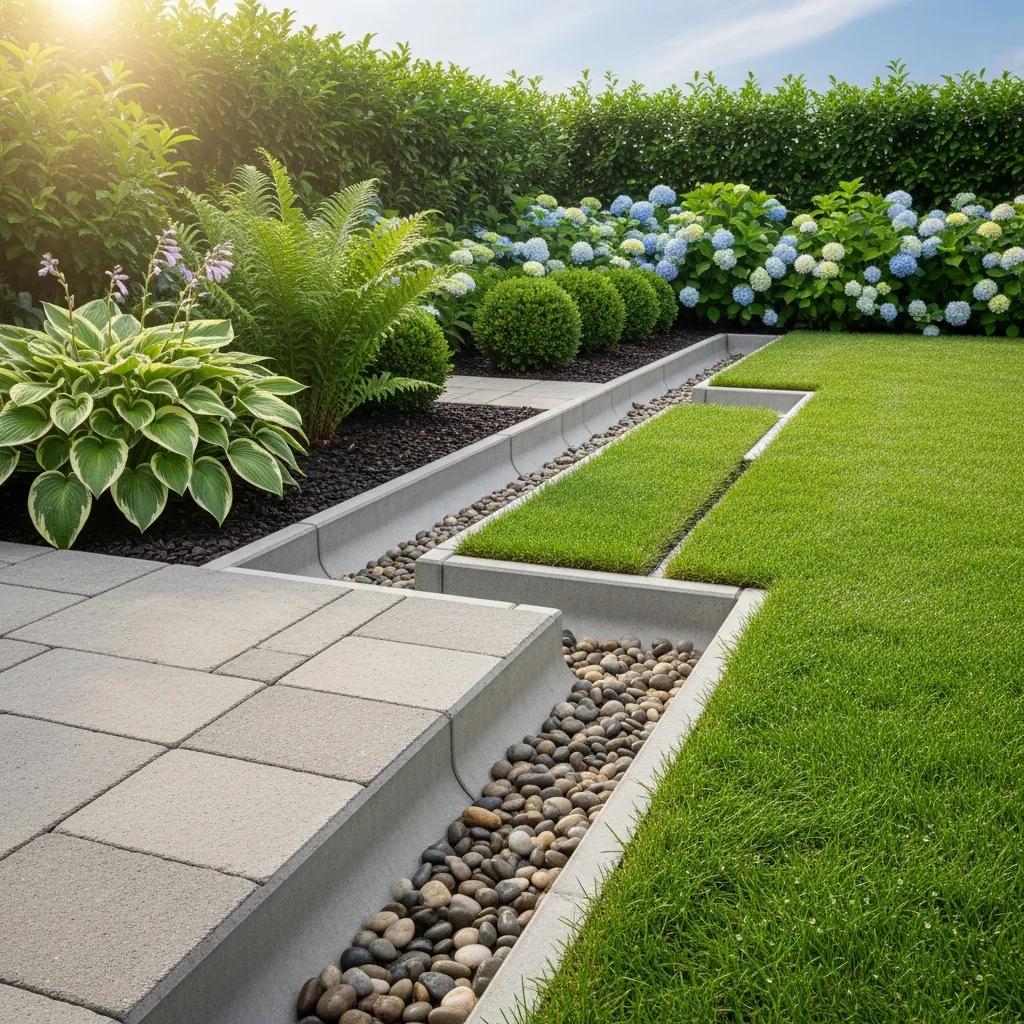
Effective Concrete Drainage Solutions for Greensboro, NC Homes
Concrete drainage refers to engineered systems—trenches, channels, culverts, and concrete-encased pipework—designed to collect, convey, and safely discharge stormwater and subsurface flow away from structures. In Greensboro, NC, effective concrete drainage prevents foundation heave, basement flooding, soil erosion, and landscape damage by managing stormwater runoff and groundwater before it contacts buildings. This article explains local causes of water damage, compares concrete drainage options suitable for Greensboro’s clay soils and seasonal rainfall, and walks through installation, stormwater management, maintenance, permitting, and cost considerations. You will learn which solutions—French drains, channel drains, surface drains, culverts, grading, and sump pump integration—work best for residential and commercial sites, what installation involves, and how to maintain systems for long-term protection. The following sections address causes and consequences, recommended concrete drainage types, stormwater management strategies, step-by-step installation and maintenance processes, the value of local contractors, and typical cost components and FAQs relevant to Greensboro property owners.
What Causes Water Damage in Greensboro and Why Concrete Drainage Matters?
Concrete drainage matters because it intercepts and redirects excess water before saturation, structural damage, or erosion occurs; it functions by collecting surface and subsurface flow and conveying it to safe discharge points. Greensboro’s water damage drivers include a mix of regional climate patterns, local soil composition, site grading failures, and blocked conveyance systems; each driver increases the risk that water will pond near foundations or migrate into basements. Understanding these causes makes clear why durable, well-designed concrete drainage is often the most reliable way to protect structures and landscapes in the area. The next paragraphs explain how local clay soils and climate interact with these risks and list typical property impacts you should watch for.
Greensboro’s rainfall patterns and soil chemistry directly influence infiltration and runoff and therefore the design choices for drainage systems; the next subsection examines those soil and climate mechanics.
How Do Greensboro’s Clay Soils and Climate Affect Water Retention?
Greensboro’s native clay soils tend to have low permeability and shrink-swell behavior, which reduces infiltration and promotes surface runoff and perched water tables near slab-on-grade foundations. Clay particles hold water tightly, so after heavy or prolonged rain events water remains near the surface longer, increasing lateral pressure against foundation walls and elevating the risk of seepage into basements and crawlspaces. Seasonal rainfall concentrations—periods of intense storms followed by humid intervals—mean repeated wetting and drying cycles that stress soils and drainage systems, making durable conveyance and reliable discharge necessary. Understanding that clay soil limits natural drainage helps explain why subsurface solutions like French drains and reinforced concrete conduits are commonly recommended in Greensboro.
This soil behavior leads to specific, measurable property problems that owners commonly encounter.
What Are the Common Water Damage Problems in Greensboro Properties?
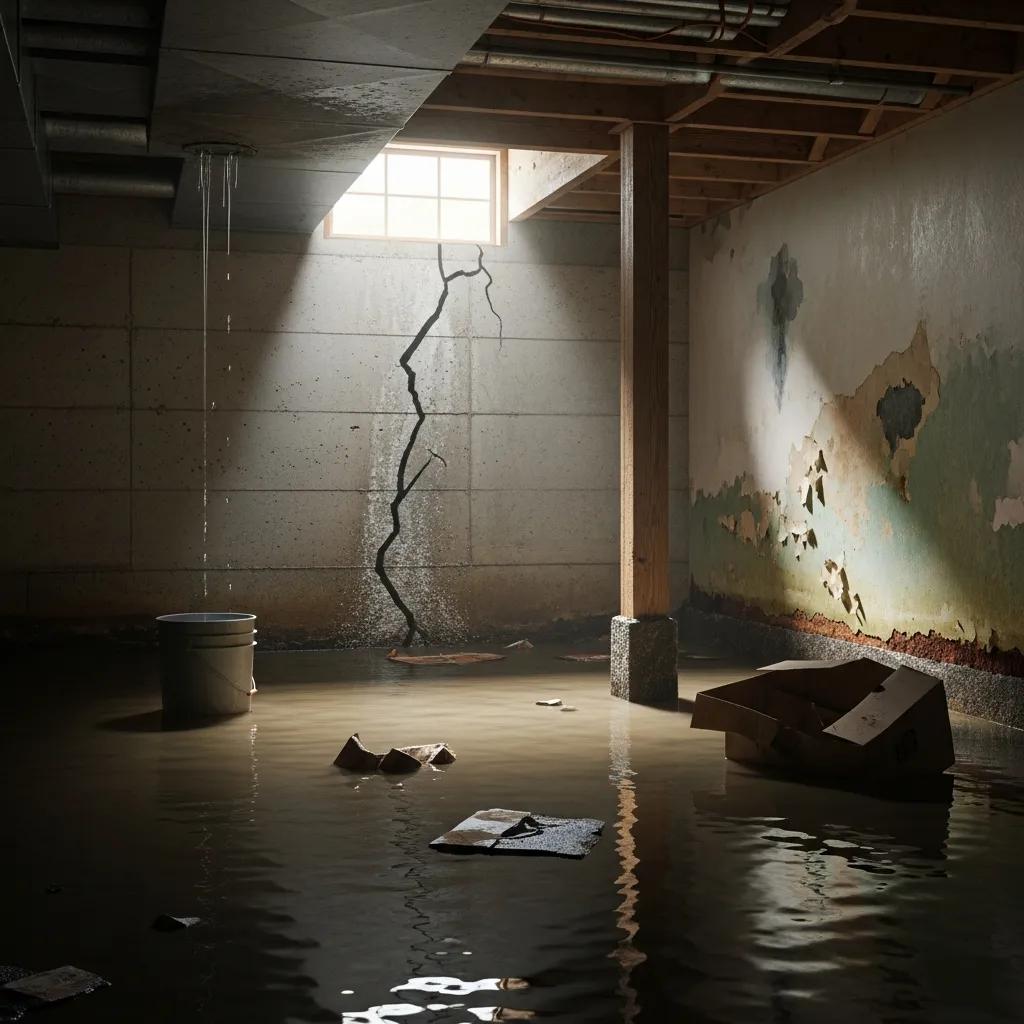
Typical water damage outcomes in Greensboro include basement and crawlspace flooding, foundation cracking from hydrostatic pressure, landscape erosion, and localized standing water that degrades hardscapes and lawn health. Saturated soils can undermine footings and cause differential settlement that translates into visible cracks, while persistent moisture encourages mold growth and long-term structural deterioration inside buildings. Properties with poor grading or clogged gutters compound these issues by concentrating runoff against walls instead of directing it to a safe outlet. Recognizing these symptoms early makes it possible to choose targeted concrete drainage solutions that address both surface runoff and subsurface flow before damage escalates.
Which Concrete Drainage Solutions Are Best for Greensboro Properties?
Selecting the right concrete drainage solution depends on whether the problem is surface runoff, subsurface groundwater, or concentrated high-flow events; the most effective choices combine systems to manage both sources. Concrete-based options commonly used in Greensboro include French drains for subsurface interception, channel and surface drains for paved areas, concrete culverts for conveyance of larger flows, site grading to establish positive drainage, and sump pump integration for active groundwater removal. Each solution has a specific mechanism and benefit that makes it suitable for different site conditions, especially where clay soils limit infiltration. The following subsections describe French drain mechanics and the role of channel and surface drains, then provide a concise comparison table to help choose the right approach.
Below is a quick, numbered list of common concrete drainage solutions and one-line benefits to target featured-snippet style queries.
- French drains — Intercept subsurface flow and direct it away from foundations to reduce hydrostatic pressure.
- Channel drains — Capture surface runoff across driveways and patios to prevent pooling and pavement damage.
- Surface drains — Collect localized sheet flow in landscape low spots to protect soil and plantings.
- Concrete culverts and grading — Convey higher volumes across properties and establish positive slope for runoff control.
- Sump pump integration — Actively remove groundwater from basements and direct discharge to safe outlets.
The table below compares key solution attributes so you can match system type to the most common Greensboro use-cases.
This comparison highlights that combining systems (for example, French drains plus sump pump redundancy) often provides the most robust protection for Greensboro properties given soil and rainfall characteristics.
Local providers in Greensboro typically offer design, installation, repair, and maintenance packages for these concrete drainage systems and can advise on system combinations based on site conditions. Hiring a contractor familiar with local soils and municipal outlet rules simplifies permitting and ensures outlet placement meets local expectations. For many homeowners, an initial site assessment by a local drainage specialist identifies the highest-risk areas and recommends a prioritized remediation plan that balances budget, disruption, and performance. Next we examine how those systems integrate with broader stormwater management principles.
How Is Stormwater Management Implemented with Concrete Drainage in Greensboro?
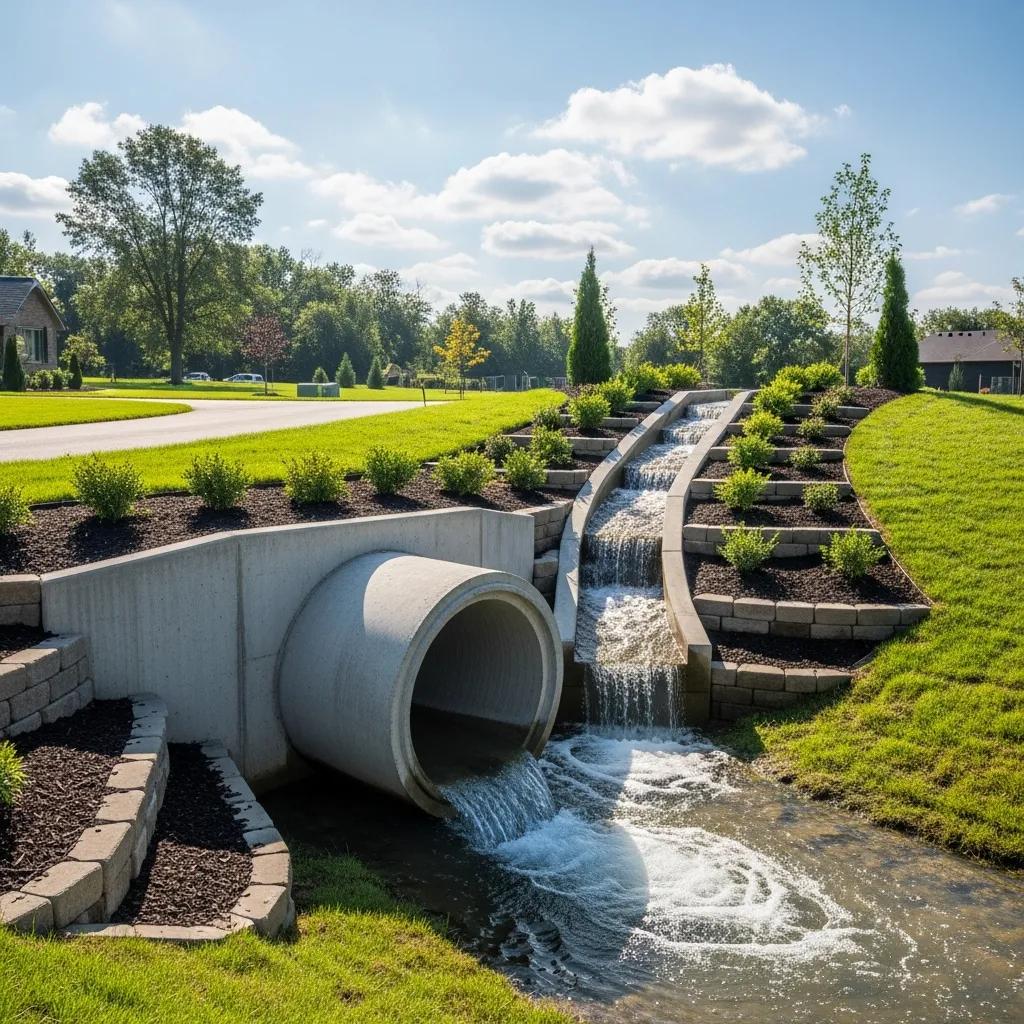
Stormwater management using concrete drainage combines on-site control—collection, conveyance, temporary storage, and discharge—with consideration for downstream systems and municipal acceptance criteria. The key is to design systems that handle peak flows without causing off-site impacts: that may mean sizing culverts and channel drains for expected runoff, incorporating temporary retention where feasible, and ensuring discharge points do not create erosion. On-site measures using concrete elements are often paired with grading and erosion-control practices to reduce velocity and sediment transport, protecting both the property and adjacent right-of-way. The following subsections explain culvert and grading roles and how sump pumps connect with concrete drainage components.
What Role Do Concrete Culverts and Grading Play in Controlling Runoff?
Concrete culverts and properly engineered grading control runoff by providing a defined path that safely moves stormwater from collection points to approved outlets, protecting slopes and neighboring properties from erosion. Culvert sizing is based on expected peak flow, upstream drainage area, and allowable discharge velocity; even a small property may require a reinforced concrete pipe or box culvert where flow concentrates. Grading complements culverts by establishing positive slopes away from foundations, preventing ponding and promoting consistent conveyance to channels or municipal systems. Designers often combine armoring and riprap at outlets to dissipate energy and prevent downstream erosion, which preserves both the culvert structure and adjacent landscapes.
How Do Sump Pumps Integrate with Concrete Drainage Systems?
Sump pumps integrate with concrete drainage by collecting groundwater in a concrete sump pit, activating pumps to move water through discharge piping, and routing it to daylight, a channel drain, or a permitted outlet to prevent re-entry. Sump pit construction typically uses concrete to form a stable, durable chamber that resists soil movement and supports reliable float switch operation. Proper system integration considers pump capacity, check valves, frozen-pipe precautions, and redundancy such as battery backup or secondary pumps to handle power outages during storms. Routing discharge to a safe, non-damaging outlet and ensuring compliance with local discharge rules is essential to avoid shifting water problems to neighboring properties.
What Is the Process for Installing and Maintaining Concrete Drainage Systems in Greensboro?
Installing concrete drainage systems follows logical phases: site assessment and design, excavation and bedding, placement of pipe or channel elements with concrete work as required, testing and commissioning, and final landscape restoration. Each phase has specific quality checks—confirming slope, ensuring geotextile separation, verifying outlet acceptance, and testing pump operation—that reduce the chance of early failure and unnecessary callbacks. Maintenance is an ongoing requirement: scheduled inspections, debris removal from grates, sediment flushing from subsurface drains, and periodic pump servicing extend service life and protect investment. Below are a detailed installation step list followed by a maintenance schedule table to guide ongoing care.
The ordered installation steps below are designed to target featured-snippet queries about how to install concrete drainage systems.
- Site assessment and design: survey grades, identify runoff paths, and design system to meet flow and outlet requirements.
- Excavation and bedding: excavate trenches to designed slope, place bedding material, and compact to provide stable support.
- Pipe/channel placement and backfill: install perforated or solid pipe, gravel envelope, geotextile wrap, and pour concrete channels or culvert structures.
- Outlet construction and testing: connect to safe discharge, perform flow tests, and commission pumps if used.
- Restoration and documentation: restore surfaces, reinstall hardscapes, and document as-built grades and outlet locations.
The table below offers a practical maintenance schedule for common concrete drainage components to help you plan service intervals and tasks.
This maintenance plan reduces the risk of blockages and structural deterioration, and the next paragraph outlines typical repair and upkeep techniques for long-term protection.
What Are the Step-by-Step Installation Procedures for Concrete Drains?
A professional installation begins with a thorough site assessment that documents existing grades, soil type, and utilities and then advances through design, excavation, component placement, and testing to ensure performance. Excavation requires correct trench depth and slope—typically a minimum fall of 1% (1/8 inch per foot) or greater per linear foot—followed by bedding of compacted granular material to support pipes or channel sections. Perforated pipe for French drains is wrapped in geotextile fabric and surrounded by clean gravel before backfilling; concrete channel drains are set into saw-cut or formed trenches with proper anchoring and integral connections to downstream piping. Final steps include outlet construction, hydraulic testing, surface restoration, and documentation of as-built conditions to guide future maintenance and any permitting requirements.
How to Repair and Maintain Concrete Drainage for Long-Term Protection?
Common failures include sediment accumulation, root intrusion, grout or concrete cracks, and pump wear, each of which has practical repair methods ranging from flushing and root removal to patching concrete or replacing worn pumps. Routine preventive tasks—clearing grates, removing silt from cleanouts, verifying outlet free discharge, and servicing pump seals—prevent many failures and extend system life. For small concrete cracks, epoxy injection or localized patching can restore integrity, while extensive structural damage may require partial replacement of channel sections or culvert repair. When problems persist or involve structural or outlet issues, consult a licensed local drainage professional to assess the repair scope and ensure compliance with permit conditions.
Why Choose Local Greensboro Drainage Contractors for Concrete Drainage Solutions?
Local Greensboro contractors bring practical, place-based knowledge about clay soils, microclimates, common failure points, and municipal acceptance standards that directly influence effective drainage design. Familiarity with typical site conditions—such as neighborhood topography, common outlet routes, and seasonal rainfall timing—lets local experts place outlets and grade slopes in ways that minimize risk to both the property and adjacent land. Local contractors also expedite permit processes by knowing which municipal departments to contact and what documentation is usually required for different outlet or culvert projects. The following subsections provide concrete examples of how local expertise improves outcomes and summarize common permitting triggers in the Greensboro area.
How Does Local Expertise Ensure Effective Water Damage Prevention?
Local contractors who have worked across Greensboro neighborhoods know where water typically concentrates after storms and can adjust trench profiles, outlet placement, and surface treatment to avoid repeating common failures. For example, they often locate outlets away from down-gradient properties and size channels to match neighborhood runoff patterns, reducing downstream erosion risk and neighbor complaints. Experienced local teams also anticipate soil shrink-swell impacts when specifying bedding and concrete tolerances, which minimizes early cracking and settlement. These combined adjustments—small on paper but significant in practice—translate into systems that reliably protect foundations and landscapes throughout variable Greensboro weather.
What Are the Relevant Greensboro Permits and Regulations for Drainage Installation?
Permitting often involves municipal stormwater departments or public works and centers on whether the proposed discharge connects to public right-of-way, impacts downstream properties, or requires structural work in regulated buffers; local contractors know which triggers typically require formal permits. Common triggers include discharging into public storm sewers, installing culverts in swales that cross property lines, or making structural changes that alter pre-development flow paths. Contractors familiar with Greensboro and Guilford County procedures can prepare basic documentation—site plans, outlet details, and erosion-control measures—to streamline review and reduce the chance of permit revisions. Confirming permit needs early in the design phase prevents costly rework and ensures drainage solutions remain both effective and compliant.
What Are the Typical Costs and FAQs About Concrete Drainage in Greensboro?
Cost guidance helps homeowners prioritize interventions; typical drivers include system type, linear length, excavation difficulty in clay soils, required concrete work, pump and electrical needs, and any permitting or outlet mitigation. Rather than fixed prices, expect project estimates to reflect labor, materials, excavation depth, and access challenges that increase time and equipment needs. To make this actionable, the table below breaks down common cost components and typical ranges so you can understand which line items drive budgets in Greensboro-area projects. After the table, quick FAQs address common homeowner questions about pricing and prevention.
Concrete drainage projects have predictable cost drivers that influence final bids; the following table explains typical components and their usual ranges.
Understanding these components clarifies why two similar-looking projects can have different bids; factors like rock, tree roots, or restricted access can shift costs significantly. The short FAQs below answer common pricing and prevention questions to help homeowners prepare for quotes and plan budgets.
How Much Does French Drain Installation Cost in Greensboro, NC?
French drain costs vary primarily by linear footage, trench depth, site accessibility, and whether outlet connections or concrete encasement are required; typically, homeowners should plan using ranges rather than fixed quotes. Key cost drivers include excavation in dense clay, the length of perforated pipe and gravel envelope, any required daylighting outlets or connections to municipal systems, and labor rates tied to equipment needs. Getting accurate, site-specific quotes requires an on-site assessment to map grades, locate utilities, and confirm outlet feasibility—factors that directly affect final pricing. For homeowners, preparing a clear scope and asking contractors about typical material options and maintenance-based lifecycle costs helps compare proposals fairly.
How Can Yard Drainage Solutions Prevent Basement Flooding and Soil Erosion?
Yard-level measures—proper grading, strategically placed surface drains, channel drains at hardscape transitions, and diversion swales—work together with foundation-level systems to reduce the volume and velocity of water reaching the structure and thereby prevent basement flooding and soil loss. Positive grading moves water away from foundations; surface drains capture sheet flow before it concentrates, and channel drains protect paved areas and prevent runoff from undercutting curbs or patios. Integrating yard solutions with subsurface drains and, where necessary, sump pump systems creates layered defense so that even heavy rains are less likely to cause interior water intrusion or progressive erosion. Routine maintenance—keeping drains clear, checking slopes, and repairing erosion promptly—preserves system performance and reduces the need for significant repairs.
- Preventive grading: Maintain a consistent slope away from foundations for immediate volume control.
- Combined systems: Pair surface and subsurface drainage to address both sheet flow and groundwater.
- Regular maintenance: Clear grates and inspect outlets to maintain system capacity and prevent backups.
These integrated measures and scheduled care reduce the frequency and severity of basement flooding and slow or stop landscape erosion when combined into a coherent property drainage plan.


0 Comments