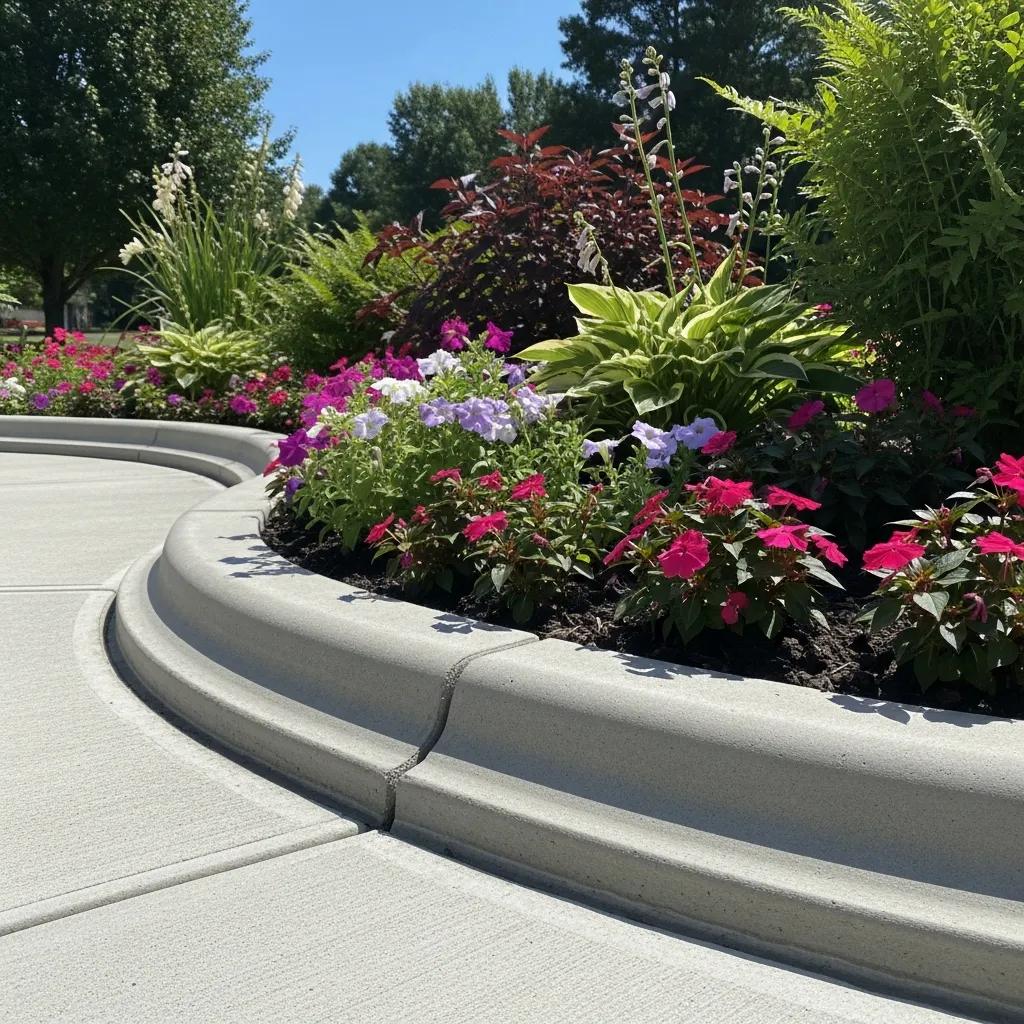
Concrete Landscape Curbing for Lasting Appeal in Greensboro, NC
Concrete landscape curbing is a formed concrete edging system poured or extruded along garden beds, driveways, walkways, and property perimeters to create durable borders that define outdoor spaces. This article explains how concrete curbing enhances curb appeal, controls erosion, reduces weed migration, and delivers long-term low-maintenance performance tailored to Greensboro, NC landscapes. Homeowners and property managers will learn about common styles — including stamped, colored, and extruded curbing — pricing factors, the professional installation process, and practical maintenance steps that extend service life. The guide highlights local climate considerations such as humidity and storm runoff, practical budgeting advice, and stylistic choices that complement Greensboro architecture and plant palettes. Read on for clear cost comparisons, step-by-step installation guidance, and actionable maintenance routines that help you choose and preserve attractive, long-lasting concrete borders.
Concrete curbing provides both functional and aesthetic value by creating crisp separations between turf, planting beds, and hardscape, while also forming a physical barrier that slows surface runoff and retains soil. The sections below cover benefits, cost ranges, popular decorative designs, the professional installation workflow, and maintenance practices, each with practical examples and semantic detail relevant to Greensboro homeowners. Each H2 includes concise lists, comparison tables, and expert-oriented explanations so you can compare styles, estimate budgets, and decide when to hire a local installer. This structure moves from “why” to “how” and finishes with “how to care” so you can take immediate next steps to plan a curbing project that matches your property goals.
What Are the Benefits of Concrete Curbing for Greensboro Landscapes?
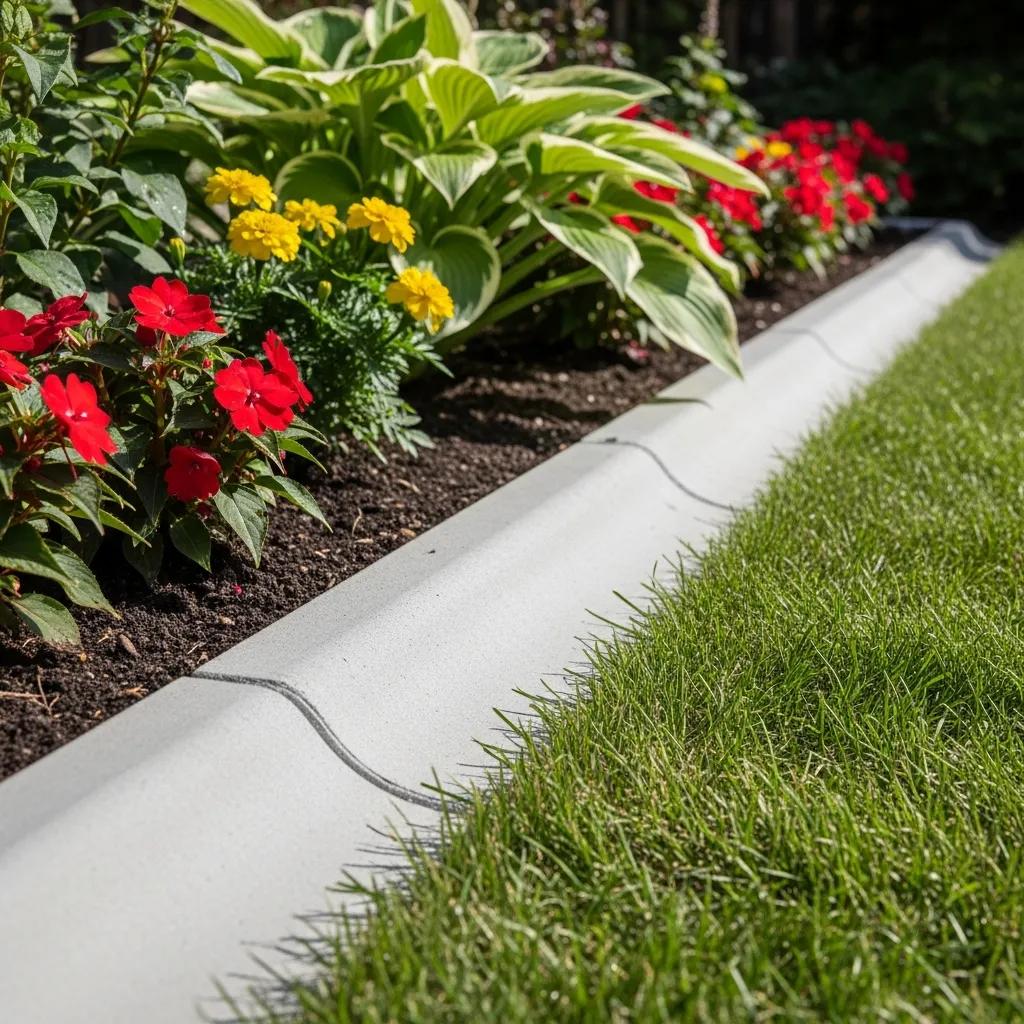
Concrete curbing provides measurable benefits by forming a permanent, low-profile edge that controls erosion, prevents soil and mulch migration, and frames landscape features for improved visual impact. The mechanism is straightforward: a poured or extruded concrete band creates a continuous physical barrier and finished surface that resists displacement from foot traffic, lawn equipment, and stormwater flows. As a result, properties gain long-term containment of planting media, reduced weed encroachment where curbing integrates with landscape fabric, and a consistent visual boundary that improves perceived upkeep. These outcomes translate into reduced ongoing maintenance and more stable planting beds, which is particularly valuable in Greensboro’s humid climate with periodic heavy rains.
Concrete curbing benefits include both functional outcomes and aesthetic returns, and they often combine to increase curb appeal and reduce maintenance budgets over time. The following list summarizes core advantages for quick reference and featured-snippet style clarity.
Concrete curbing offers several key benefits for residential and commercial landscapes:
- Enhanced Curb Appeal: Curbs visually frame planting beds and walkways, creating a finished look that increases perceived property quality.
- Erosion Control: A continuous concrete band retains soil and reduces sediment runoff during heavy storms.
- Weed Prevention: Physical separation paired with weed barrier reduces lateral weed migration into beds.
- Durability and Low Maintenance: Properly reinforced and sealed curbing resists cracking and requires minimal upkeep compared with soft edges.
- Customization: Stamped, colored, or textured finishes let curbing match brickwork, stone, or modern hardscape palettes.
These benefits connect directly to practical outcomes: lower labor for edging, clearer planting lines for landscape design, and a stronger visual identity for the property. Understanding these mechanisms sets the stage for choosing the right curbing style and estimating costs for installation in Greensboro.
Intro to cost comparison table: the table below compares common curbing benefits in terms of mechanism and typical outcomes so you can weigh functionality against aesthetic priorities.
This comparison shows how specific components of curbing — the band, subgrade, and finish — produce measurable results such as maintenance savings and visual improvement. The next section translates these benefits into local cost expectations and budgeting guidance for Greensboro projects.
After evaluating benefits and outcomes, many property owners seek professional help to ensure proper grade, reinforcement, and finishes; local installers in Greensboro are available for on-site evaluations and quotes — request a quote from a qualified installer to match benefits to a realistic project plan and timeline.
How Does Concrete Curbing Enhance Curb Appeal and Property Value?
Concrete curbing enhances curb appeal by providing consistent visual edges that define planting beds, walkways, and driveways, making landscapes look intentionally designed rather than ad hoc. The mechanism is visual framing: a neat, finished border reduces perceived clutter and signals well-maintained upkeep, which buyers and appraisers notice when touring properties. As an example, a simple shift from ragged mulch edges to stamped concrete curbing can immediately make front-yard plantings read as cohesive design elements rather than maintenance tasks. This effect often translates into improved first impressions and incremental increases in perceived value, particularly in neighborhoods where architectural materials are matched by complementary curbing colors and patterns.
Concrete curbing’s aesthetic flexibility — including colored or stamped finishes that mimic stone or brick — supports tailored design strategies for different home styles in Greensboro. Selecting a hue that complements roof and brick, or a pattern that echoes walkway textures, reinforces the property’s design language. The next subsection explains material choices and why they influence durability and maintenance expectations.
Why Is Concrete Curbing Durable and Low Maintenance in Greensboro?
Concrete curbing achieves durability through a combination of proper subgrade preparation, quality concrete mix with adequate cement and aggregate proportions, and reinforcement where needed to resist cracking. Reinforcement options such as mesh or rebar and the use of expansion joints reduce stress-related failures; sealing the finished surface protects pigment and prevents moisture ingress that can accelerate wear. In Greensboro’s climate, freeze-thaw cycles are less severe than in colder regions, but humidity and storm events make good drainage and curing practice critical; proper slope and drainage integration prevent undermining.
Routine maintenance is limited: periodic cleaning, re-sealing every few years depending on wear, and prompt minor crack repair preserve appearance and performance. Compared with soft-edge alternatives like mulch or plastic edging, concrete curbing reduces annual edge-trimming and replenishment tasks, delivering savings in labor and materials over time. The following section explains cost ranges and how material choices influence per-foot pricing.
How Much Does Concrete Curbing Installation Cost in Greensboro NC?
Typical concrete curbing installation in Greensboro is priced per linear foot and varies by style, site conditions, and finish; common local ranges fall within clear tiers depending on complexity. Standard poured or extruded curbing without decorative stamping or color typically sits at the lower end of per-foot pricing, while stamped and colored or reinforced designs add to labor and material costs. Site preparation, accessibility, and existing obstacles such as tree roots or irrigation lines are common cost drivers that adjust onsite labor and time. Below is a concise price-range statement for featured-snippet clarity followed by factors that influence those figures.
Direct price-range guidance: expect a typical range of approximately $12–$35 per linear foot in many projects, with stamped or colored finishes often at the higher end of that band.
The factors below explain why price varies and how to plan a budget that fits project goals.
- Labor and Accessibility: Hard-to-access yards or narrow spaces increase crew time and complexity.
- Style and Finish: Stamped or colored curbing requires extra finishing time and materials.
- Site Preparation: Extensive grading, root removal, or drainage fixes increase costs.
- Linear Footage: Larger continuous runs can reduce per-foot labor overhead.
- Permits and Regulations: Local permitting needs, if any, add administrative costs and time.
Intro to cost comparison table: the table below shows typical style-based cost tiers so you can compare options quickly when planning.
This table clarifies how style choices and structural requirements translate to pricing ranges, enabling homeowners to select a level of finish that balances budget with desired visual impact. When preparing a budget, calculate total linear footage, add a contingency for site surprises (typically 10–20%), and prioritize drainage and subgrade work to avoid future repairs.
Practical budgeting note and CTA: for an accurate local estimate, schedule an on-site assessment so installers can account for grading, root systems, and access; request a free on-site estimate or use a local cost calculator to refine your budget before committing to final design choices.
What Factors Influence Greensboro Concrete Curbing Prices?
Several on-site and design factors determine final pricing for concrete curbing projects in Greensboro, each influencing labor or material intensity and therefore the per-foot cost. Labor rates and crew productivity affect the baseline cost, while difficult access, sloped terrain, and existing vegetation increase preparation time and machinery needs. Design complexity — such as curved layouts, stamped textures, and color blending — raises finishing time and requires skilled craftsmen, moving a project into higher price tiers. Subgrade anomalies like poor soils or the need for reinforcement for driveway edges add material and structural costs that protect long-term performance.
Understanding these factors helps prioritize budget items and avoid surprise expenses; planning marshals funds toward permanent improvements like drainage and reinforcement that reduce lifetime costs. The next subsection shows sample calculations and practical ways to phase work to keep a project within budget.
How to Budget for Decorative Concrete Edging in Greensboro?
Budgeting for decorative curbing begins with measuring linear footage and choosing a style tier, then adding allowances for prep, drainage, and contingencies; an example helps illustrate this process. For a 100-foot run, selecting a stamped finish at a midpoint of $28 per linear foot yields a base estimate of $2,800; adding 15% for site prep and contingency increases total to about $3,220. To reduce upfront cost without sacrificing longevity, consider phasing the project across beds or choosing colored but unstamped finishes as a compromise between cost and style. Investing in proper drainage and reinforcement from the start prevents costly repairs later and often yields better long-term value than cheaper initial installs.
Smart budgeting pairs a clear scope with prioritized improvements so that cosmetic finishes are layered on a structurally sound base; the next section covers popular design choices to help you select a finish that matches both budget and architecture.
What Are Popular Decorative Concrete Curbing Designs and Styles in Greensboro?
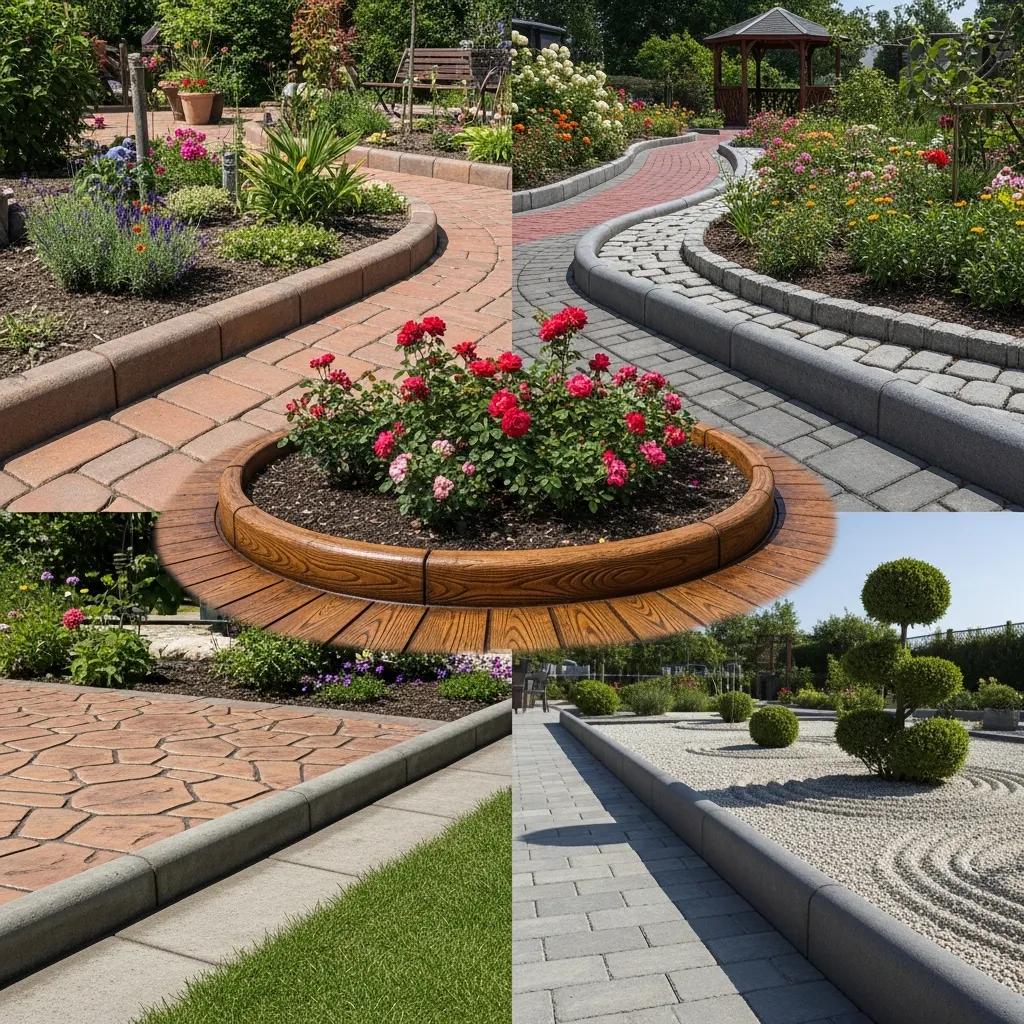
Greensboro properties often use decorative curbing to echo local architecture and landscape character, with common styles including simple rounded bands, stamped stone or brick patterns, and colored acid-stain finishes that mimic natural materials. The mechanism of design is to match scale, color, and texture with existing elements — for example, a brick-pattern stamp complements a brick veneer house while a warm tan stain complements southern-style plantings. Design choices should consider scale: narrow, low-profile curbs suit cottage gardens, while taller, sculpted bands work for formal beds and commercial landscapes. Below are common style categories to guide selection.
Common decorative curbing styles include:
- Standard Rounded Edge: Clean profile for minimalist or modern yards.
- Stamped Stone or Brick Pattern: Mimics masonry for cohesive materials language.
- Colored/Acid-Stained Finish: Subtle color integration with natural palettes.
- Extruded Profile with Cap: Modern linear look for pathways and drive edges.
These style options cover a wide range of budgets and design aims, and choosing one depends on the visual relationship you want between plants, hardscape, and the house. The following subsections discuss color/pattern options and how custom edging integrates with different garden types.
Which Colors and Patterns Are Available for Concrete Borders in Greensboro?
Concrete borders can be pigmented with integral color, acid-stained for variegated tones, or finished with surface-applied tints that accent texture; each approach produces a different aesthetic and maintenance profile. Integral color is mixed into the concrete for consistent hue throughout the band and resists surface wear, while acid staining reacts with the concrete to create natural, mottled variations that emulate stone. Stamped patterns replicate cobblestone, slate, or brick textures and are often combined with contrasting joint lines or sandblasted highlights to increase realism. When selecting colors and patterns in Greensboro, consider local architectural tones — warm brick reds, muted tans, and charcoal grays — and choose finishes that complement roof and façade materials.
Choosing a pattern and color should also factor in exposure and traffic, since darker pigments may hide stains while lighter tones show wear; the next subsection explains how custom edging works with various garden styles.
How Can Custom Concrete Edging Complement Greensboro Gardens?
Custom concrete edging can be tailored to garden typologies common in Greensboro — from formal front-yard beds to relaxed cottage gardens and contemporary courtyard plantings — by adjusting profile height, curvature, and finish. For formal gardens, a symmetric, sculpted profile with a stone-pattern stamp reinforces geometry and pathway sightlines; for cottage or pollinator-friendly beds, a lower rounded edge provides a casual frame that doesn’t overwhelm plant massing. Practical layout tips include using continuous curbing to create maintenance-friendly mow strips, incorporating gentle radii to follow natural bed lines, and aligning color tones with dominant planting hues for cohesion. Integrating edging with pathways and hardscape creates visual continuity and reduces soil migration into walking surfaces.
Well-designed custom edging supports both aesthetics and horticulture by defining root zones and simplifying maintenance routines, which leads naturally to the next section describing professional installation steps that produce these reliable outcomes.
What Is the Professional Concrete Curbing Installation Process in Greensboro?
Professional concrete curbing installation follows clear stages to ensure durability and finished appearance: site assessment and marking, subgrade preparation and compaction, forming or extruding the curb profile, finishing and texturing, controlled curing, and sealing. This stepwise workflow controls variables — such as soil bearing capacity and drainage — that determine long-term performance; installers translate design into physical contours that guide surface water and resist movement. Typical timelines vary with run length and complexity but most residential runs are completed in a few days for prep and pour plus additional curing time before sealing. The numbered list below captures the core on-site steps in a format suited for featured-snippet “how to” answers.
- Site assessment and layout: Marking lines, noting irrigation and roots.
- Subgrade prep and compaction: Excavation, setting proper grade and base.
- Forming or extrusion: Installing forms or using an extruder for continuous bands.
- Mixing, pouring, and finishing: Applying texture, stamps, or color treatments.
- Curing and sealing: Controlled curing, followed by a protective sealer.
This clear sequence reduces risk of failures like undermining or premature cracking by ensuring each phase addresses structural and aesthetic needs. The next subsection drills down into what each step entails on-site.
Local hiring note and CTA: for quality work, hire local Greensboro professionals who can schedule site visits and provide a written scope and warranty; contact a local installer to schedule a walkthrough and obtain a detailed estimate.
What Steps Are Involved in Installing Concrete Landscape Edging?
Installing concrete landscape edging begins with precise layout and marking, followed by excavation to the designed depth and width while preserving irrigation lines and root zones where feasible. After excavation, the subgrade is compacted and a granular base installed as needed to provide uniform support; reinforcement (mesh or rebar) is placed where edges will face load or where longer spans risk movement. The concrete is then poured or extruded into forms, and finishing techniques — floating, stamping, or troweling — create the desired texture and appearance. Proper curing under controlled moisture conditions prevents rapid drying and shrinkage cracks, and a sealant application after cure locks in color and adds a protective film against stains and moisture.
In short, methodical site preparation, correct mix and reinforcement, and careful curing and finishing produce long-lived curbing that resists typical Greensboro stresses like heavy rain and root pressure. The next subsection explains why local expertise matters in these decisions.
Why Choose Local Greensboro Experts for Concrete Curbing Installation?
Local Greensboro experts bring knowledge of soil types, seasonal weather patterns, and neighborhood-specific design preferences that influence curbing details such as drainage planning and compatible color palettes. Their familiarity with common yard constraints — mature tree roots, irrigation layouts, or HOA design guidelines — helps avoid costly rework and ensures installations meet local expectations. Vetting criteria include reviewing recent project photos, checking references, and confirming that quoted scopes include subgrade prep, reinforcement, and sealing rather than just surface finishing. Choosing local professionals also enhances responsiveness for follow-up maintenance or warranty concerns, which protects your investment over time.
Selecting a qualified installer reduces risk and aligns technical choices with aesthetic goals; the following section covers routine maintenance that preserves those benefits.
How to Maintain and Extend the Longevity of Concrete Curbing in Greensboro?
Maintaining concrete curbing focuses on periodic cleaning, scheduled re-sealing, and timely repairs to small cracks to prevent water infiltration and freeze/thaw stress. Clean curbing annually to remove soil and organic buildup that can harbor moisture, inspect for hairline cracks and edge displacement after storms, and reseal according to product recommendations — typically every 2–5 years depending on wear and exposure. The mechanism behind this regimen is simple: sealing limits moisture penetration and surface wear, while early crack repair prevents propagation that can become structural. Implementing a seasonal checklist that aligns with Greensboro’s climate reduces the chance of minor issues becoming major repairs.
Below is a practical maintenance checklist formatted as a list for clarity and easy execution.
- Annual inspection and cleaning: Remove debris and check for displacement after major storms.
- Re-seal every 2–5 years: Apply an appropriate sealer to protect color and surface integrity.
- Prompt crack patching: Fill hairline cracks quickly to prevent water intrusion and undermining.
- Keep drainage clear: Ensure swales and downspouts direct water away from curbing subgrade.
These tasks keep curbing functioning as intended and minimize lifecycle costs compared to reactive, large-scale repairs. The next subsection details sealing best practices and product categories.
What Are Best Practices for Concrete Curbing Care and Sealing?
Best practices for care and sealing start with selecting the right category of sealer — penetrating sealers for a natural look or film-forming sealers for deeper sheen and surface protection — then applying after the concrete has fully cured and been cleaned. Preparation requires pressure washing and allowing the surface to dry completely; follow product-specific instructions regarding temperature and humidity for application. Re-seal frequency depends on exposure, but a typical schedule is every 2–5 years for film-forming products and as needed for penetrating sealers based on water absorption tests. Signs a re-seal is needed include loss of sheen, increased water absorption, or surface staining; addressing these signs promptly preserves both appearance and structural performance.
Preparing and sealing correctly reduces long-term maintenance and helps maintain color and texture choices made during installation. The next subsection covers common repairs and when to call a professional.
How to Repair Common Concrete Curbing Issues in Greensboro?
Common issues include small cracks, minor spalling, and occasional displacement from undermining; simple triage identifies what a homeowner can fix versus when to hire a pro. For hairline cracks and surface spalling, clean the area, use a compatible patching compound, and reseal after cure — these tasks are manageable for competent DIYers with proper materials. Larger structural cracks, sections that have shifted due to subgrade failure, or repeated spalling indicate deeper problems with drainage or compaction and warrant professional assessment and repair. When in doubt, document the issue with photos, prevent further water exposure, and contact a local installer for an evaluation to avoid escalating damage.
Timely, appropriate repairs extend the life of curbing and protect the initial investment made in design and installation.
This repair table shows common failure modes and appropriate interventions so homeowners can choose DIY fixes or seek professional remediation based on issue severity. Regular maintenance and rapid response to small problems preserve curbing performance and aesthetic value over time.

0 Comments