
Concrete Grinding and Surface Preparation Services in Greensboro, NC: Your Guide to Durable and Safe Floors
Concrete grinding and surface preparation combine mechanical abrasion and profiling techniques to remove imperfections, correct level issues, and create the proper surface profile for coatings and final finishes. For Greensboro properties, targeted Greensboro concrete grinding and surface prep reduce trip hazards, improve coating adhesion, and extend service life for industrial, commercial, and residential floors. This guide explains what professional grinding involves, the equipment and abrasives commonly used, and how surface preparation delivers durability, safety, and aesthetic improvement across local projects. You will learn the sequence of assessment, coarse-to-fine grinding, dust control, and quality checks needed to achieve consistent floor flatness and a prepared substrate ready for epoxy, sealant, or polish. The following sections cover definitions and equipment, the primary benefits for Greensboro sites, specialized service types, a step-by-step process map with time estimates, cost drivers and typical pricing considerations, and reasons to choose local Greensboro experts for efficient execution.
What Is Professional Concrete Grinding and Surface Preparation?
Professional concrete grinding and surface preparation is the controlled removal and profiling of a concrete surface to meet specified flatness, texture, and cleanliness requirements for repair or coating. The process works by using abrasive diamond tooling and mechanized grinders to remove high spots, thin coatings, laitance, and contaminants while grading the surface to a chosen concrete surface profile (CSP). The primary benefit is creating a repeatable, adhesive-ready substrate that improves coating performance and extends the floor’s usable life. Understanding the equipment roles and the staged approach clarifies why precision and dust control are central to effective surface prep before coatings or polishing.
The table below explains the typical equipment types, the attribute to consider, and the functional outcome when used during professional grinding.
This equipment mapping clarifies which tools deliver specific surface outcomes and sets the stage for how coarse-to-fine operations are planned. The next subsection breaks down how grinding changes surface quality at a material level.
How Does Concrete Grinding Improve Surface Quality?
Concrete grinding improves surface quality by mechanically abrading the upper matrix to remove weak or contaminated layers and expose sound aggregate and paste, which increases mechanical interlock for adhesives and coatings. The mechanism relies on progressing diamond grits from coarse to fine to eliminate coatings, reduce peaks, and develop the target concrete surface profile (CSP) for the intended coating system. A practical result is enhanced adhesion for epoxy floor preparation Greensboro projects and a more uniform appearance for polished concrete finishes. Understanding grit progression and CSP targets helps specify appropriate grinding passes to achieve both functional and aesthetic outcomes.
This explanation of mechanism leads directly to the specific equipment used in Greensboro projects and how each machine contributes to the desired surface effect.
What Equipment Is Used for Concrete Grinding in Greensboro?

Typical equipment used for Greensboro concrete grinding includes walk-behind diamond grinders for small to medium jobs, planetary grinders for uniform surface conditioning, and ride-on grinders for large warehouses or heavy leveling tasks. Diamond abrasives—components of the grinding system—come in segmented or resin-bond formats and vary by grit to allow staged removal from coarse demolition through fine finish. Dust control systems with HEPA filtration and containment are a necessary pairing to these grinders to manage silica hazards and comply with best-practice safety measures. Selecting the right combination of grinder and vacuum balances removal rate, finish quality, and onsite safety for each job.
Choosing the right machine and dust control equipment prepares the substrate properly and leads into the value proposition of these preparation steps, which is the focus of the next section.
Greensboro Concrete Grinding & Surface Prep for Safer, Durable Floors
Concrete grinding and surface preparation deliver measurable benefits that matter for Greensboro facilities, including extended floor longevity, improved safety by removing trip hazards, better adhesion for coatings, and lower long-term maintenance costs. These benefits arise because grinding removes deteriorated surface layers, creates a predictable profile for coatings, and ensures flat, consistent transitions that reduce accidents. Local conditions—seasonal humidity and substrate variability—mean quality surface prep often determines whether a coating system performs to expectation. Below is a concise list of the top benefits and how each contributes to durable, safe floors.
- Enhanced Durability: Proper grinding removes weak surface material and prepares a solid substrate for coatings that withstand wear.
- Improved Safety: Leveling and profiling eliminate trip hazards and ensure consistent transitions in pedestrian and vehicular areas.
- Better Coating Adhesion: A defined CSP increases mechanical bond strength for epoxy, sealers, and primers.
- Aesthetic and Maintenance Gains: Grinding evens surface appearance and reduces the frequency of repairs.
These benefits directly support cost-effective maintenance strategies and inform decisions about service scope for commercial or residential projects. The next subsection explains how grinding contributes to durability and expected longevity improvements.
How Does Grinding Enhance Durability and Longevity of Concrete Floors?
Grinding enhances durability by removing the weak, often carbonated or contaminated top layer of concrete and exposing a denser, stronger substrate that bonds effectively with sealants and coatings. The reason this matters is coatings that adhere to a properly profiled surface are less prone to delamination, wear-through, or edge-lift, which extends lifecycle intervals between maintenance cycles. For example, mechanical abrasion that reaches an appropriate CSP for epoxy systems reduces premature failure modes driven by poor adhesion. Recognizing the link between surface prep and coating longevity helps plan proactive maintenance that minimizes total lifecycle cost.
Understanding durability gains leads naturally into how surface preparation also mitigates safety risks by addressing trip hazards and flatness issues.
How Does Surface Preparation Increase Safety by Eliminating Trip Hazards?
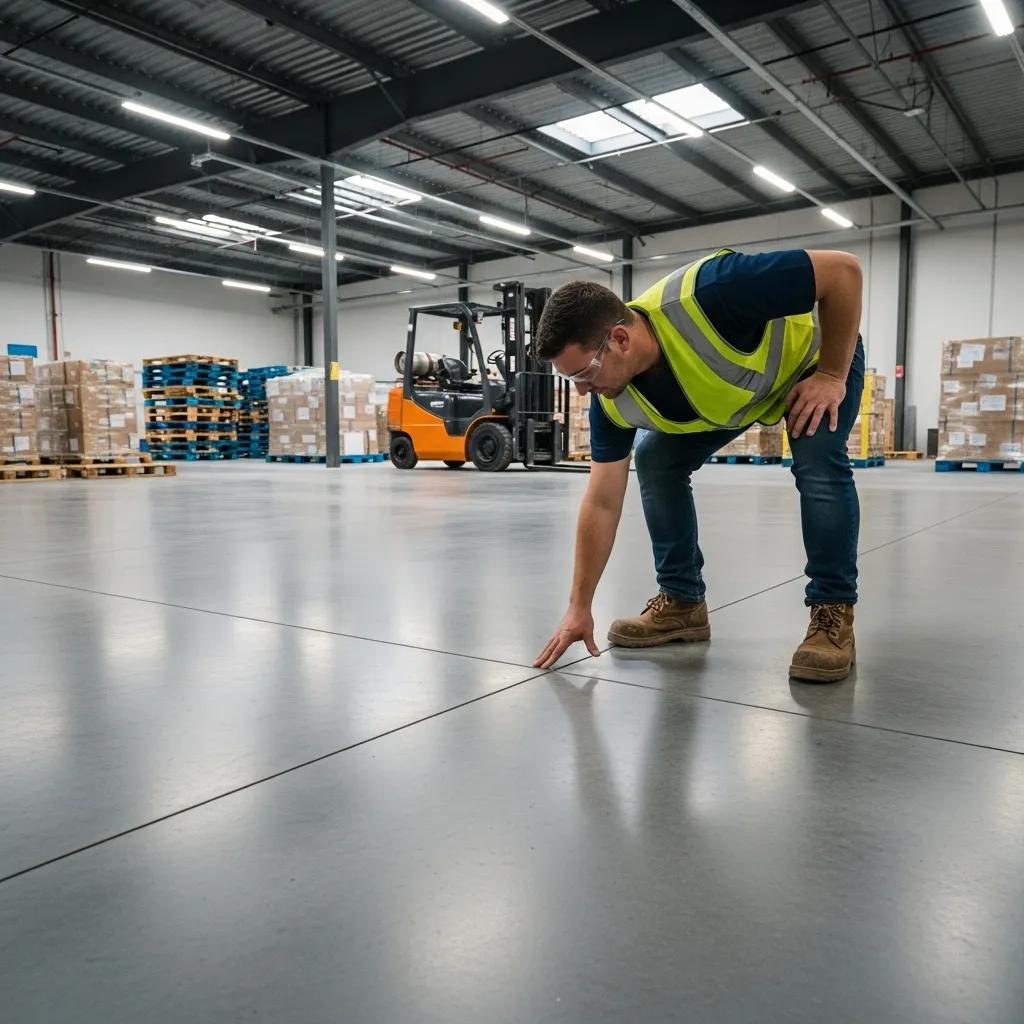
Surface preparation increases safety by leveling abrupt elevations, grinding down high lips at joints, and opening shallow depressions that can catch wheels or feet, thereby removing common trip hazards. The process uses flatness metrics and visual inspection to identify transition points outside acceptable tolerances and then applies grinding, feathering, or targeted patching to smooth these areas. Standard practice measures flatness and transition thresholds to ensure compliance with functional requirements and to minimize liability. Eliminating these hazards not only protects occupants but also improves operational flow, particularly in busy commercial and warehouse environments.
Smoothing and hazard removal prepare the groundwork for selecting the right specialized services for different project types, discussed next.
Which Specialized Concrete Grinding Services Are Available in Greensboro?
Greensboro concrete grinding providers offer specialized services that include commercial concrete grinding, residential concrete grinding, epoxy floor preparation, polishing, coating removal, and floor leveling for large slabs. Each service is a hyponym under the broader hypernym of surface preparation services and is chosen based on use case, required finish, and project scale. The table below helps compare service types by typical use case and expected outcome to guide selection between commercial, residential, and coating-prep options.
This comparison table clarifies service selection by aligning common outcomes with project needs and leads into a discussion of how commercial and residential scopes differ in equipment, scheduling, and performance expectations.
What Are the Differences Between Commercial and Residential Concrete Grinding?
Commercial and residential concrete grinding differ primarily in scale, machine selection, specification tolerances, and scheduling constraints. Commercial projects often use ride-on or high-capacity planetary grinders to cover large warehouses quickly and meet strict flatness (FF/FL) and CSP specifications required by industrial coatings. Residential projects typically rely on walk-behind grinders for garage bays or basement floors and focus more on aesthetic outcomes or smaller remedial repairs. Scheduling is also different: commercial jobs prioritize minimizing downtime and coordinating with production, while residential work often accommodates occupant access and shorter mobilization. These distinctions inform equipment choice and crew size.
Recognizing those differences informs the techniques used for floor leveling and the specific requirements for epoxy floor systems, discussed next.
How Does Concrete Floor Leveling and Epoxy Preparation Work?
Concrete floor leveling combines grinding, localized removals, and corrective fills such as skim coats or self-leveling compounds to achieve the flatness and profile required for the chosen finish, while epoxy preparation emphasizes achieving a consistent CSP and verifying moisture and cleanliness. The process typically begins with assessment and moisture testing, followed by coarse grinding to remove high spots, filling low areas where needed, and progressive grinding to the target profile. For epoxy, clean, dry surfaces with the correct CSP and no bond breakers are essential for adhesion and longevity. A checklist—moisture test results, profile grade, and cleanliness—ensures readiness before coating application.
Effective leveling and epoxy prep reduce rework and lead naturally to a clear step-by-step process that technicians follow, which is the next major section.
What Is the Step-by-Step Process of Concrete Surface Preparation?
Concrete surface preparation follows a defined sequence: assessment and testing, initial coarse grinding and defect removal, progressive grinding to target profile, dust control and cleanup, and final inspection and QA. Each stage has an associated time estimate depending on project size and condition—assessment (1–3 hours for small projects), coarse grinding (several hours to days), progressive finishing (additional hours), and cleanup/QA (1–4 hours). This structured approach ensures predictable outcomes and reduces the likelihood of coating failures or uneven finishes. The numbered steps below summarize the workflow and typical time windows to set expectations for scheduling and costs.
- Assessment and Testing: Visual inspection, moisture testing, flatness measurements; time: 1–3 hours for small spaces.
- Initial Coarse Grinding: Remove coatings, high spots, and deep imperfections; time: hours to days, depending on area.
- Progressive Grinding: Move through grit progression to achieve target CSP and finish; time: several hours.
- Dust Control and Cleanup: HEPA vacuuming, containment removal, and surface cleaning; time: 1–4 hours.
- Final QA and Handover: Verify profile, cleanliness, and flatness before coating or handoff; time: 1–2 hours.
This stepwise overview leads directly into the technical stages of grinding and the grit progression used to remove imperfections, which is explored next.
What Are the Stages of Grinding and Imperfection Removal?
Grinding stages typically start with coarse tooling to remove thick coatings, rips, or major high spots, followed by intermediate passes to smooth the surface and then fine passes to reach the target CSP or polish level. A sample grit progression for coating prep might move from 30–60 grit for removal to 80–120 grit for final profiling; polishing applications progress to much finer abrasives. The reason for progressive stages is to control removal rates, avoid over-grinding, and produce a reproducible surface suitable for the next treatment. Planning these stages reduces wasted effort and delivers a predictable base for coatings or polished finishes.
How Is Dust Controlled During Concrete Grinding?
Dust control during grinding combines integrated dust-extraction systems on grinders, HEPA-filtered vacuums, containment barriers, and procedural steps like pre-wetting and staged cleaning to mitigate respirable crystalline silica exposure. Dustless grinding systems and high-efficiency filtration remove airborne particulate at the source, while containment prevents spread to adjacent occupied spaces—important for commercial and residential settings. The regulatory and safety rationale is that proper dust control protects workers and downstream coatings from contamination; therefore, planning for adequate extraction is part of the project scope and equipment selection. Good dust control practices also simplify final cleanup and QA, enabling confident coating application.
Clear dust control strategies influence project cost; the next section examines cost drivers and typical local ranges.
What Factors Influence the Cost of Concrete Grinding in Greensboro?
Several factors determine cost for concrete grinding in Greensboro: project size (square footage), concrete condition and existing coatings, required surface profile and flatness tolerances, equipment and labor needs, accessibility, and scheduling constraints affecting downtime. Each factor alters crew time or machine selection, so understanding their influence helps stakeholders budget accurately. The table below compares common cost drivers, their attributes, and the typical impact on per-square-foot pricing to provide a transparent framework for estimating project costs.
This cost-driver table shows where budget adjustments typically occur and sets the stage for scenario-based pricing examples described next.
How Do Project Size and Concrete Condition Affect Pricing?
Project size affects pricing through economies of scale: large warehouse slabs typically yield lower per-square-foot rates because mobilization and high-capacity equipment amortize across more area, while small garages often cost more per square foot due to fixed setup time. Concrete condition and coating complexity also drive cost—removing multiple failed coatings or addressing deep spalls requires more passes, additional tooling, and possible repairs. These condition-driven factors increase both labor and material costs and can change scheduling. Understanding these drivers helps owners choose the right service level and evaluate trade-offs between scope and budget.
Estimating cost also depends on equipment and labor requirements, discussed in the next subsection.
What Equipment and Labor Requirements Impact Concrete Grinding Costs?
Equipment selection (walk-behind vs ride-on grinders, planetary systems, HEPA vacuums) and required crew size directly impact costs because higher-capacity machines and specialized operators increase daily rates. Some projects require specialized tools for heavy coating removal or very tight flatness tolerances, which adds rental or capital-cost considerations. Labor expertise—operators experienced with floor flatness specifications and dust control—reduces rework risk but may command higher rates. Factoring these elements into an estimate clarifies the trade-off between speed, finish quality, and overall project cost.
Understanding cost helps when choosing local experts who can optimize scheduling and equipment availability, which is the next major topic.
Why Choose Local Greensboro Experts for Concrete Grinding and Surface Preparation?
Choosing local Greensboro experts for concrete grinding and surface preparation brings benefits in knowledge of local substrate conditions, climate-driven scheduling, faster mobilization, and lower travel-related costs. Local providers understand how humidity and seasonal temperature changes affect moisture testing, drying times, and coating cure schedules, which improves the odds of first-time success. Additionally, local contractors typically have established equipment staging and local supplier relationships that reduce lead times for specialized abrasives and extraction units. These practical advantages reduce downtime and help maintain operational continuity for Greensboro businesses.
- Seasonal Scheduling Knowledge: Local teams plan around humidity and temperature for proper moisture testing and coating cures.
- Faster Mobilization: Reduced travel time shortens project lead time and limits downtime for operations.
- Equipment Availability: Local staging ensures the right grinder and extraction systems are available when needed.
- Local References and Familiarity: Experience with regional substrates and building types informs method selection.
These local advantages translate into higher first-pass success rates and better customer outcomes, and they lead into how quality assurance and commitment to standards ensure satisfaction.
What Advantages Do Local Knowledge and Advanced Equipment Provide?
Local knowledge allows contractors to select appropriate grinding sequences, account for seasonal cure windows, and pre-plan containment for adjacent occupied spaces—all informed by Greensboro’s climate and building stock. Advanced equipment availability, such as ride-on grinders and HEPA extraction, enables efficient execution on large commercial sites while maintaining regulatory compliance and dust control. The combination of local experience and modern machines reduces rework, optimizes cost, and shortens project schedules. Clients benefit from these efficiencies through predictable timelines and outcomes.
How Does Commitment to Quality Ensure Customer Satisfaction?
A commitment to quality in concrete grinding and surface preparation includes rigorous assessment, adherence to specified CSP and flatness tolerances, controlled dust mitigation, and clear QA checkpoints before handoff. Quality assurance activities—moisture verification, visual and profilometer checks, and documented cleanup—create acceptance criteria that protect both owner and applicator and reduce post-installation issues. Providers who implement these checks and document outcomes deliver predictable performance and higher satisfaction. Clear communication about scope, schedule, and acceptance criteria further aligns expectations and completes the professional approach to surface preparation.
This quality-first approach, coupled with local knowledge and appropriate equipment, delivers durable, safe floors for Greensboro properties and closes the practical guidance offered in this article.

0 Comments