
Cement Repair in Greensboro, NC: Comprehensive Residential and Commercial Concrete Solutions
Concrete repair, often called cement repair, is the process of diagnosing, stabilizing, and restoring damaged concrete to safe and usable condition in Greensboro, NC. The work addresses surface defects, structural cracks, slab settlement, and finishing issues caused by freeze-thaw cycles and expansive clay soils common in the Piedmont region, restoring safety, curb appeal, and service life. This article explains local causes of concrete deterioration, outlines residential and commercial repair services, compares leading restoration methods, and gives transparent cost guidance so property owners can make informed decisions. Readers will learn how epoxy injection, polyurethane leveling (PolyLevel), mudjacking, patching, and resurfacing are applied locally, what to expect for driveways, patios, warehouse floors, and parking lots, and how maintenance and sealing protect repairs over time. The guide integrates practical checklists, three comparison tables, and actionable maintenance schedules tailored to Greensboro’s climate, helping homeowners and facility managers prioritize repairs and select appropriate methods. To start, we examine the primary causes of concrete damage specific to Greensboro and the signals that indicate professional attention is needed.
What Are the Common Causes of Concrete Damage in Greensboro?
Concrete damage in Greensboro typically results from a mix of environmental stressors, subgrade problems, and mechanical wear that together accelerate deterioration and create safety hazards. Freeze-thaw cycles, expansive clay soils, deicing salts, poor initial installation (insufficient subbase or reinforcement), and heavy commercial loads are frequent contributors to cracking, spalling, and settlement. Understanding these root causes helps property owners choose targeted repairs—surface patching and sealers for scaling, epoxy injection for structural cracks, and slab leveling for settlement—so that interventions address the underlying mechanism rather than just symptoms. The following list summarizes the primary local causes and what each implies for repair decisions.
Common local causes of concrete damage and short implications:
- Freeze-thaw cycles and moisture infiltration: Repeated freezing of absorbed water causes surface scaling and microcracks, indicating a need for sealing and moisture mitigation.
- Expansive clay soils and shrink-swell: Soil movement produces differential settlement and slab offsets, pointing to leveling or subbase remediation.
- Deicing salts and chemical attack: Salt accelerates surface deterioration and rebar corrosion, supporting use of protective sealers and repairs that restore cover.
- Poor installation or subbase issues: Inadequate compaction or reinforcement leads to premature cracking and may require removal and replacement.
- Heavy loads and repetitive traffic: Commercial areas show full-depth failures needing overlays or full-depth patching for structural strength.
Recognizing these causes clarifies whether a repair should focus on cosmetic resurfacing, structural crack bonding, or slab stabilization, and prepares property owners to request the right assessment from local contractors.
How Do Freeze-Thaw Cycles Affect Concrete Durability?
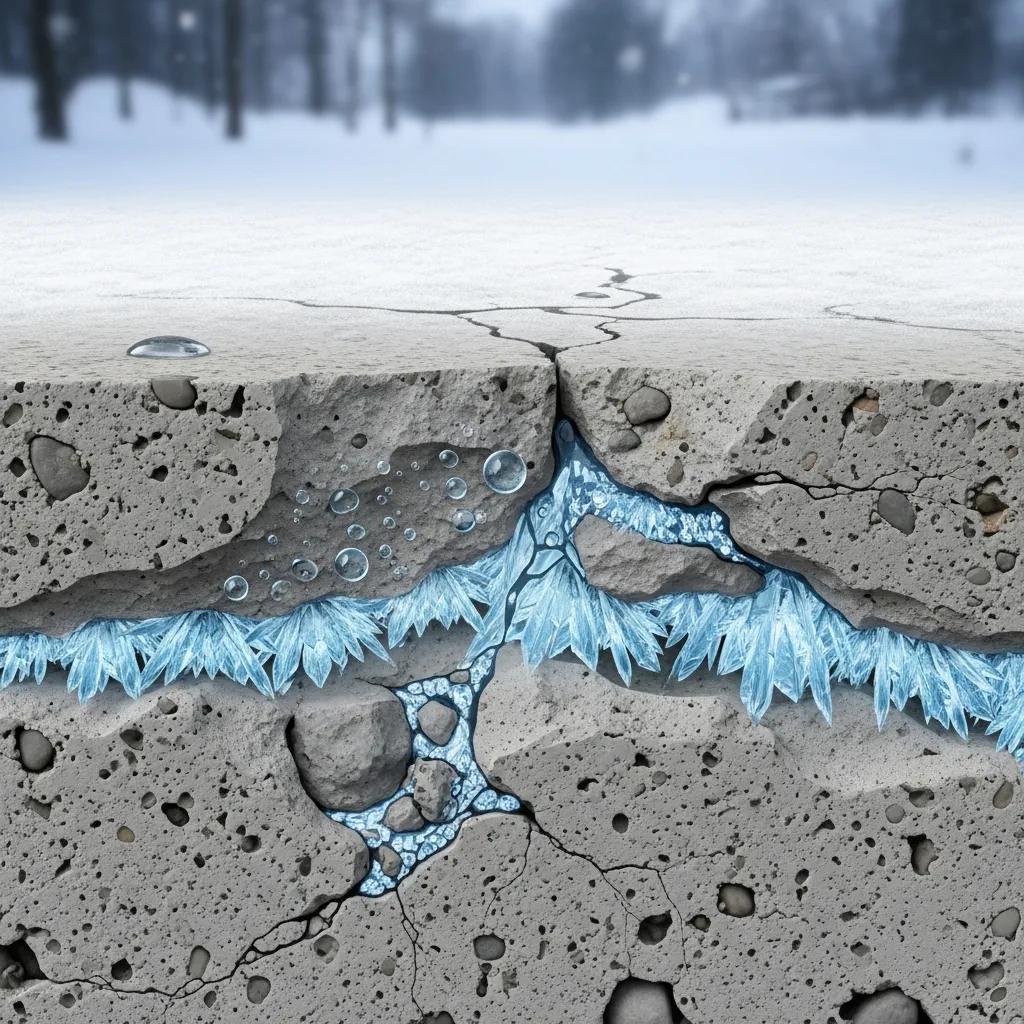
Freeze-thaw damage occurs when water absorbed into concrete pores freezes, expands, and generates internal pressure that leads to scaling, microcracking, and progressive surface loss. Over successive cycles this mechanism reduces concrete density near the surface, promotes spalling, and exposes aggregate and rebar, which accelerates deterioration if left untreated.
Visual signs to watch for include flaking, gritty surface texture, and a network of fine horizontal cracks that broaden over time; these cues guide whether to apply a penetrating sealer, perform patching, or plan an overlay. Preventative measures focus on reducing water ingress—improving drainage, sealing joints, and avoiding aggressive deicers—and mitigation often involves both surface treatments and, when needed, repair methods that restore cover and structural continuity. Understanding freeze-thaw mechanics leads naturally into soil-driven movement issues, which present a different set of repair priorities.
What Role Do Expansive Clay Soils Play in Concrete Cracking?
Greensboro’s underlying clay soils can expand when wet and shrink when dry, producing vertical and lateral movements that stress slabs and foundations and cause differential settlement and stair-step cracking. These shrink-swell cycles create displacement at joints and offsets between adjacent slabs, often seen as uneven sidewalks or a driveway slab that no longer meets an adjacent apron. Mitigation strategies include controlling surface drainage, improving subgrade with appropriate fill, and selecting flexible repair techniques—such as polyurethane slab stabilization or engineered leveling—that accommodate minor soil movement while restoring serviceability. For severe subgrade failures, full replacement with engineered base materials may be necessary; assessing soil behavior helps determine whether stabilization or replacement is the appropriate long-term solution.
Expert Cement Repair in Greensboro, NC for Homes & Businesses
Residential concrete repair services in Greensboro cover driveways, patios, sidewalks, pool decks, garage slabs, and shallow foundation slabs with tailored solutions from patching to leveling and resurfacing. Local approaches balance cosmetic restoration—resurfacing and decorative overlays—with structural repairs like epoxy crack injection, PolyLevel slab lifting, and targeted replacement of failed sections. Homeowners often begin with a professional inspection to identify cause (surface scaling vs settlement) and then prioritize interventions that extend life while controlling cost.
Below is a compact service matrix to help homeowners match common problems to likely repair methods and realistic service timelines.
This matrix clarifies that many residential repairs are quick to deliver but should be matched to the root cause; for example, leveling addresses settlement while resurfacing treats surface degradation. After an initial diagnostic, homeowners can evaluate trade-offs between minimally invasive lifting and full replacement, keeping in mind life-expectancy and local climate impacts.
How Is Concrete Driveway Repair Performed?
Driveway repair typically starts with a thorough inspection to identify crack patterns, spalling severity, and any settlement that suggests subbase issues, which informs whether patching, injection, resurfacing, or leveling is needed. Preparation involves cleaning, removing loose material, and cutting or routing cracks to create a sound substrate for patch materials or injection ports; this step is critical to ensure adhesion and longevity.
For structural cracks, epoxy injection restores load transfer, while patching and resurfacing restore surface appearance; PolyLevel or mudjacking addresses slab drop by lifting and re-supporting the concrete. Homeowner checklist before repair includes documenting damage, clearing vehicles, and asking for a written scope—these steps help ensure the selected method targets both symptoms and cause.
What Are Effective Solutions for Patio and Sidewalk Repairs?
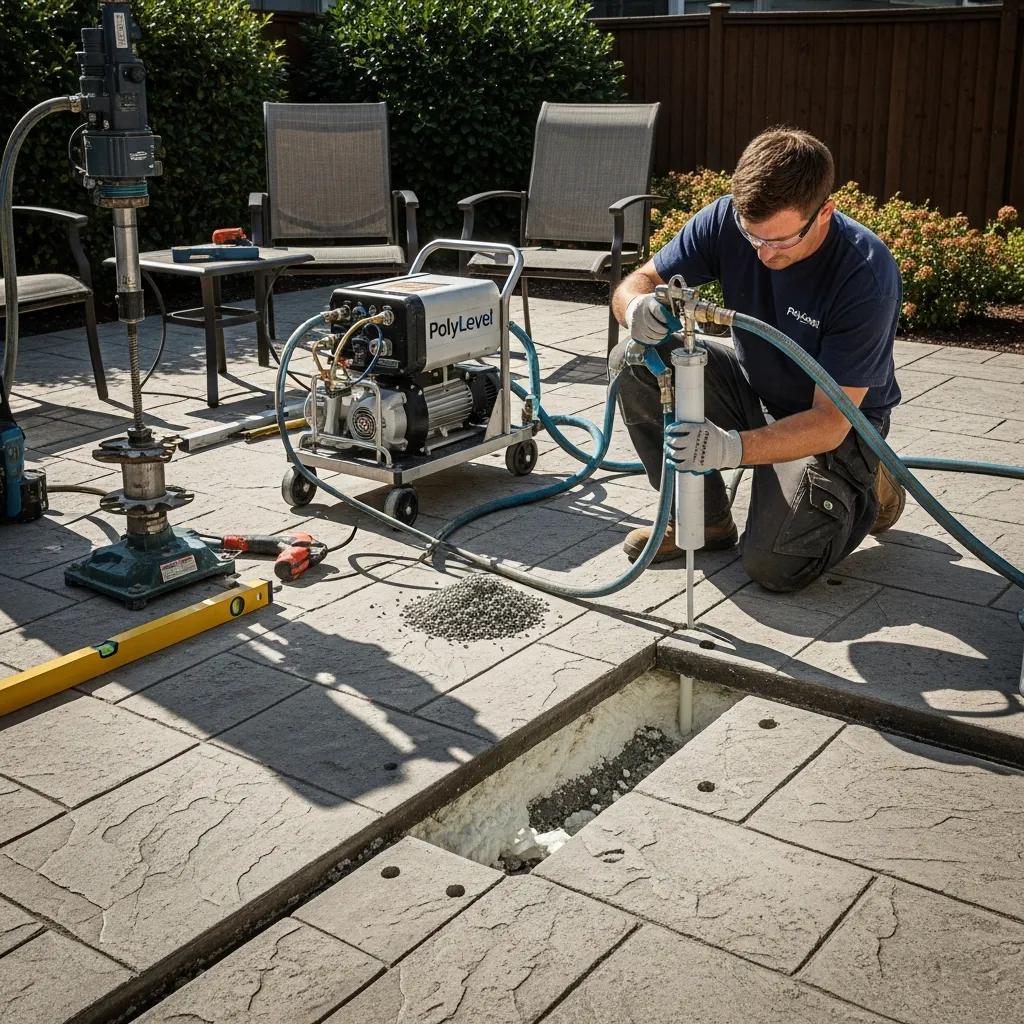
Patios and sidewalks can be repaired using a range of methods depending on whether the priority is appearance or safety: patching fixes localized damage, resurfacing refreshes large worn areas, and leveling reduces trip hazards from settled slabs. Decorative overlays or stamped resurfacing restore aesthetics for patios, while for sidewalks and pool decks slip-resistant textures and proper slope for drainage are key to safety and longevity. When settlement is present, PolyLevel or mudjacking can lift sections with minimal surface disruption; when freeze-thaw scaling dominates, sealing and resurfacing combined with improved drainage are preferred. Selecting the optimal solution depends on cost, expected lifespan, and whether the substrate movement is ongoing or a one-time event.
What Commercial Concrete Repair Solutions Does Greensboro Offer?
Commercial concrete repair in Greensboro addresses large-area durability, safety, and uptime concerns for warehouses, loading docks, parking lots, and public sidewalks; solutions emphasize long-term performance under heavy loads and regulatory compliance. Commercial work commonly uses high-performance overlays, industrial epoxy coatings, full-depth patching for potholes, joint repair, and slab stabilization to restore service while minimizing operational disruption. Projects require coordination for traffic control, phasing to maintain business access, and material choices that meet performance specifications; local providers often plan work during off-hours and use rapid-curing materials to shorten downtime. Below are typical commercial-focused strategies that pair repair technique with operational priorities.
Commercial repair approaches and considerations include:
- High-load floor strengthening: Use epoxy or polymer overlays to restore compressive and wear resistance while providing a smooth surface for forklifts and heavy equipment.
- Parking lot resurfacing and patching: Prioritize full-depth repairs for potholes and overlays for aged pavement to extend service life and improve drainage.
- Loading dock stabilization: Address settlement and joint distress with slab stabilization and precise joint repair to preserve alignment and function.
These commercial strategies focus on durability and uptime, and understanding them helps facility managers weigh short-term disruption against long-term lifecycle costs.
How Are Warehouse Floors and Loading Docks Repaired?
Warehouse floors and loading docks are repaired by first assessing substrate strength, existing reinforcement condition, and moisture vapor emission rates, which determine whether diamond grinding, epoxy overlay, or full-depth patching is appropriate. Epoxy and industrial coatings deliver chemical resistance and abrasion protection while diamond grinding improves flatness and prepares surfaces for coatings; when slabs show settlement, polyurethane slab stabilization or engineered infill may be required to re-establish grade. Joint repairs and saw-cut joint replacement address spalling and loss of load transfer, restoring function for heavy loading. Minimizing operational downtime often dictates using rapid-set materials and phased execution, and contractors coordinate work sequencing to keep critical operations running during repairs.
What Techniques Are Used for Parking Lot and Commercial Sidewalk Repairs?
Parking lots and commercial sidewalks typically require large-area assessment for cracking, surface oxidation, and full-depth failures; techniques range from localized full-depth patching to mill-and-overlay and joint sealing to prevent ingress. Full-depth patching removes failed concrete and installs new, compacted base and concrete for durable repairs, while overlays restore macroscopic surface performance and provide a smoother driving surface. Joint routing, crack sealing, and timely resurfacing slow degradation from repeated traffic and deicing salts, preserving the lot until a full replacement is warranted. Coordinating line striping, staging, and ADA-compliance during scheduling ensures repairs meet regulatory requirements and minimize customer disruption.
Which Repair Methods Are Best for Concrete Restoration in Greensboro?
Selecting the best repair method requires matching the technique to the failure mode—narrow structural cracks, slab settlement, surface scaling, or full-depth deterioration—while considering cost, disruption, and expected life. Epoxy injection bonds and restores load-carrying capacity for narrow structural cracks, polyurethane-based PolyLevel lifts settled slabs with minimal excavation, mudjacking provides a lower-cost lift using cement slurry, and resurfacing or overlays address surface wear and aesthetics.
The table below compares common methods against typical use-cases, pros, cons, and typical cost ranges so property owners can quickly scan which methods fit their needs.
This comparison highlights that no single method suits every problem; practitioners choose based on structural needs, soil behavior, and budget constraints. Understanding those trade-offs leads into more specific explanations of how methods like epoxy injection and PolyLevel work in practice.
How Does Epoxy Injection Repair Narrow Concrete Cracks?
Epoxy injection repairs narrow cracks by filling voids with a low-viscosity, high-strength resin that bonds cracked faces and restores tensile and shear transfer across the defect, effectively returning structural continuity to the slab. The process involves cleaning the crack, installing injection ports, sealing the surface, injecting epoxy under low pressure, and allowing cure before removing ports and finishing—a method that seals without extensive removal of surrounding material. Best uses include hairline to medium-width structural cracks where rebar corrosion is not extensive and where water intrusion is controlled; epoxy injection is less effective when cracks are actively moving or when contamination prevents adhesion. Proper diagnosis and surface preparation are essential to ensure a lasting repair that can significantly extend service life.
What Are the Benefits of PolyLevel Versus Mudjacking for Concrete Leveling?
PolyLevel uses high-density polyurethane foam injected beneath a slab to lift and support settled concrete, offering rapid cure times, minimal excavation, and a lighter footprint on soils compared with traditional mudjacking, which pumps a cementitious slurry beneath slabs. PolyLevel typically provides faster return-to-service, does not introduce heavy loads that can re-squeeze soft soils, and resists washout, whereas mudjacking is often lower-cost initially but can be more invasive and heavier on weak subgrades. The choice depends on soil conditions, load requirements, and budget: PolyLevel is recommended for precise lifts, minimal disruption, and where longevity is a priority; mudjacking may suit lower-budget residential lifts on stable subgrades. These considerations naturally inform cost expectations and help owners decide between leveling and replacement.
How Much Does Concrete Repair Cost in Greensboro, NC?
Concrete repair costs in Greensboro vary by repair type, extent of damage, materials, access, and whether commercial specifications (coatings, warranties) are required, but typical local ranges can guide budgeting. For quick reference, common ranges include crack filling at roughly $2–$6 per linear foot, resurfacing around $3–$7 per square foot, and leveling or patching varying more widely based on slab size and soil conditions. Major cost drivers include the method chosen (PolyLevel vs mudjacking vs replacement), site access, need for traffic control, and required cure times that affect downtime. The table below maps common repairs to unit pricing ranges and the primary cost drivers to help property owners estimate and compare options.
These ranges are illustrative and actual bids will reflect local conditions and specifications; obtaining multiple assessments that diagnose root causes will yield the most reliable estimates. Knowing cost drivers also helps owners prioritize early repairs to avoid higher replacement costs later.
What Factors Influence Residential Concrete Repair Pricing?
Residential pricing depends on damage extent, method choice (patching, injection, resurfacing, leveling, replacement), site access, and preparatory work such as excavation or base replacement, all of which affect labor and materials. Smaller crack repairs and local patching are relatively inexpensive, while slab lifting or full replacement increases labor, equipment, and disposal costs. Homeowners can reduce costs by addressing small defects early, consolidating repairs by area, and ensuring good drainage to limit recurring damage. When comparing estimates, ask for scope that ties recommended method to observed cause so that cost reflects durable solutions rather than short-term cosmetic fixes.
How Are Commercial Concrete Repair Costs Determined?
Commercial repair costs reflect project scale, performance specifications (industrial coatings, tight flatness tolerances), traffic control needs, and downtime impact, often making operational continuity and warranties as significant cost drivers as raw materials. Projects requiring rapid-cure, heavy-duty overlays, or engineered joint systems demand higher-grade materials and specialized labor, increasing overall budgets. Coordinating staging and executing work during off-hours can mitigate revenue loss but may increase mobilization costs. For commercial clients, a life-cycle cost approach—balancing upfront expense against expected service life and maintenance—yields better value than selecting the cheapest immediate fix.
How Can You Maintain and Protect Repaired Concrete in Greensboro’s Climate?
Maintaining repaired concrete in Greensboro focuses on sealing to limit water ingress, controlling drainage to reduce soil movement, timely crack sealing, and scheduled inspections to catch early problems before they escalate. Regular sealing every 2–3 years for exposed surfaces reduces freeze-thaw damage and salt penetration, while annual visual checks and professional inspections every 2–3 years or after major weather events catch developing issues. Landscaping and gutter management that divert water away from slabs and foundations reduce expansive clay responses, and choosing appropriate deicing strategies during winter minimizes chemical damage. Below is a practical checklist and guidance for maintenance priorities that property owners can implement.
Maintenance checklist and rationale:
- Inspect annually: Look for new cracks, offsets, and scaling; early detection enables less-costly repairs.
- Seal every 2–3 years: Apply penetrating or film-forming sealers as appropriate to protect against moisture and salts.
- Address drainage and grading: Ensure surface and downspout runoff is directed away from slabs to reduce soil movement.
- Promptly fill small cracks: Use appropriate sealants to prevent water ingress and freeze-thaw expansion.
Applying these maintenance steps reduces long-term repair frequency and cost, and combined with scheduled professional inspections creates a proactive program that preserves concrete investments in Greensboro’s variable climate.
What Are Recommended Concrete Sealing Practices?
Sealing practices should match surface type and performance goals: penetrating sealers protect against chloride and water ingress without altering surface appearance, while film-forming sealers provide stain resistance and ease cleaning but may require reapplication more frequently. Application timing is critical—apply sealers when concrete is clean, dry, and surface temperatures are within manufacturer recommendations; typically reseal every 2–3 years depending on wear. For high-traffic or commercial areas choose durable, UV-stable formulations and schedule application to minimize downtime. Professional application often ensures proper coverage and curing, while some homeowners may opt for DIY sealers on small areas—understanding product limitations ensures expectations are met.
How Often Should Concrete Be Professionally Inspected and Maintained?
Owners should perform annual visual checks and schedule professional inspections every 2–3 years or after severe weather events that may accelerate freeze-thaw or cause sudden settlement. Inspections should focus on active water infiltration, slab offsets greater than 1/4 inch, wide or widening structural cracks, and signs of rebar corrosion—any of which suggest immediate professional intervention. Proactive maintenance triggered by inspections (sealant renewal, localized patching, drainage correction) reduces the likelihood of large-scale replacements. Establishing a routine inspection and maintenance schedule ties together early detection, appropriate repairs, and long-term asset stewardship.

0 Comments