
Professional Concrete Sealer Application in Greensboro, NC: Expert Services for Durable Concrete Protection
Professional concrete sealer application in Greensboro, NC, is the process of applying chemical treatments that protect concrete surfaces from moisture, UV damage, stains, and wear to extend service life and preserve appearance. This guide explains what professional sealing involves, why it matters for Greensboro properties, which sealer chemistries work best locally, how pros prepare and apply coatings, what influences cost, and how owners maintain sealed surfaces. Many property owners face humid summers, occasional freeze-thaw cycles, and strong sunlight—conditions that accelerate spalling, efflorescence, and surface deterioration if concrete is left unprotected. A professional approach combines accurate assessment, correct sealer selection, and controlled application to reduce failure risk and maximize lifespan. Below we cover climate-specific protection, a side-by-side comparison of major sealer types, a stepwise professional application workflow, cost drivers and pricing context, maintenance schedules tailored to local conditions, and the reasons property owners choose professional concrete sealer application services in Greensboro.
Expert Concrete Sealer Application in Greensboro, NC
Professional concrete sealing is the targeted application of surface or penetrating chemistries to shield concrete from local environmental stressors, improving durability and appearance. The mechanism depends on the sealer class: film-forming products create a protective barrier against staining and abrasion, while penetrating sealers chemically interact with concrete to repel water and reduce freeze-thaw damage. This combination of mechanisms reduces moisture ingress, limits chemical attack, and preserves aggregate and finishing details—benefits that translate into lower repair costs and retained curb appeal. Understanding these protections helps owners decide when a professional inspection and tailored sealer strategy are warranted for driveways, patios, porches, and garage floors. Below are the primary advantages owners can expect from a professionally applied sealer in Greensboro.
Concrete sealer application benefits for Greensboro properties include:
- Moisture control and freeze-thaw protection: Professionals reduce water penetration that drives cracking and spalling.
- Stain and chemical resistance: Properly chosen sealers limit oil, fuel, and deicer damage, preserving surface integrity.
- Aesthetic enhancement and longevity: Sealers can deepen color, add sheen, and slow surface wear for better long-term value.
These benefits make a strong case for professional application in Greensboro, where climate and usage patterns create specific risks that conventional, DIY approaches may not fully address. For many property owners, engaging a local professional service offers faster, more reliable results and an inspection-driven recommendation for sealer selection and maintenance.
How Does Concrete Sealing Protect Against Greensboro’s Climate Challenges?
Concrete sealing protects surfaces in Greensboro by addressing humidity, seasonal temperature swings, and elevated UV exposure through chemistry-specific mechanisms. Penetrating sealers create a water-repellent barrier at the molecular level, reducing capillary suction and preventing freeze-thaw cycle damage that can cause micro-cracking and spalling. Film-forming sealers add a sacrificial surface layer that resists staining, abrasion, and UV-driven degradation when UV-stable formulations are chosen. In practice, this means sealed patios resist mildew and staining in humid months, while sealed driveways better withstand occasional winter freeze events without rapid surface deterioration. Assessing local exposure and selecting a compatible sealer chemistry are essential steps that determine protection effectiveness; the next subsection examines how benefits differ by surface type to guide selection.
What Are the Key Benefits of Sealing Driveways, Patios, and Garage Floors?
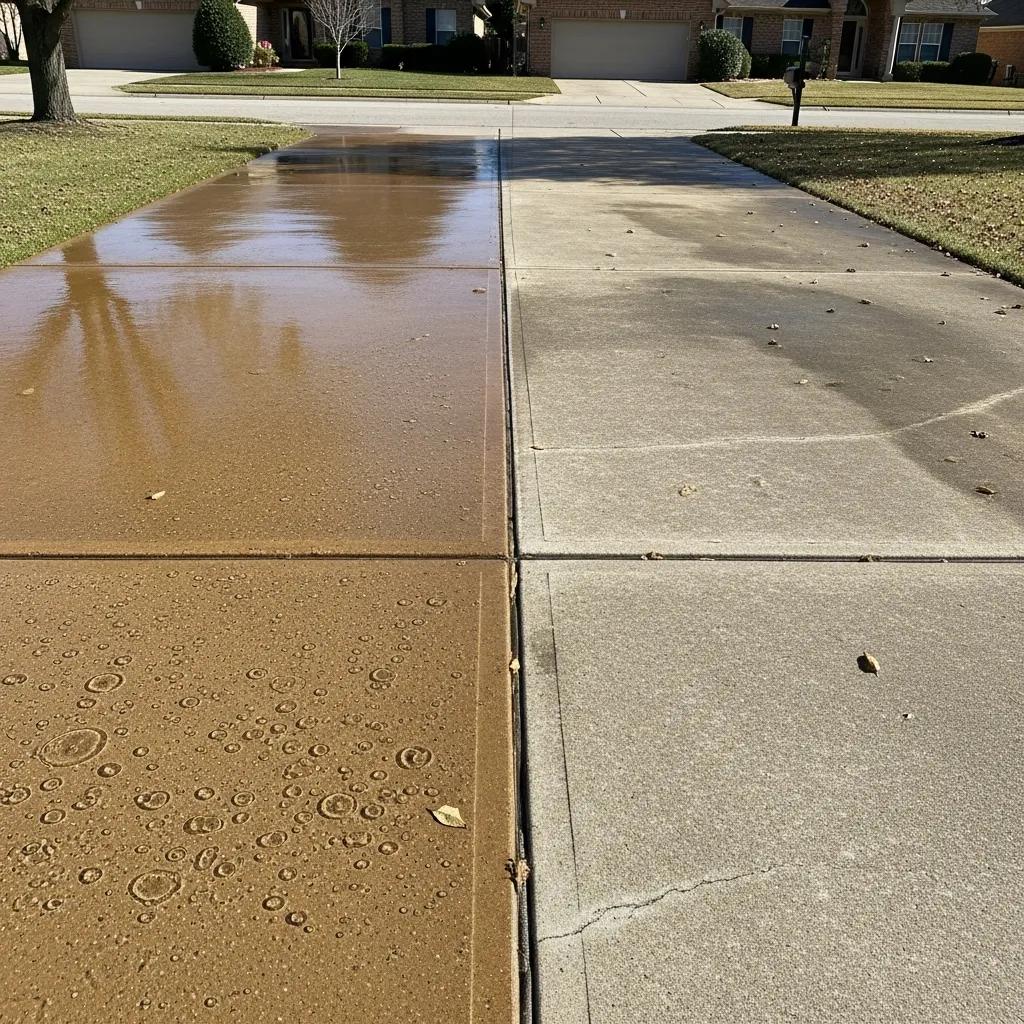
Sealing driveways, patios, and garage floors delivers surface-specific advantages by matching sealer performance to expected stresses and aesthetic goals. For driveways, a durable film-forming acrylic or high-performance coating can provide stain resistance and color enhancement while reducing dusting from surface wear. Patios benefit from sealers that enhance texture and color contrast and resist mold and mildew in shaded, humid areas. Garage floors typically require chemical and abrasion resistance—epoxy or polyaspartic systems are often recommended for interior concrete where oil and solvent exposure occurs. Choosing the right product and professional application method reduces maintenance frequency and improves functional performance for each surface type, setting the stage for the technical comparison of sealer chemistries in the following section.
Which Types of Concrete Sealers Are Best Suited for Greensboro Surfaces?
Selecting the right sealer for Greensboro surfaces means balancing UV stability, water repellency, chemical resistance, finish preference, and expected lifespan. Major sealer categories include acrylics, epoxies, polyaspartics, and penetrating silane/siloxane systems; each has distinct mechanisms and use-cases. Film-forming acrylics enhance appearance but have shorter outdoor lifespans, while epoxies and polyaspartics form robust films ideal for interior floors and high-traffic areas. Penetrating sealers chemically bond within the concrete matrix to repel water without altering surface sheen; they are preferred where freeze-thaw resistance and breathability are priorities. The table below compares key attributes and common applications to aid decision-making.
Different sealer types suit specific surfaces and exposure conditions:
What Are the Differences Between Acrylic, Epoxy, Polyaspartic, and Penetrating Sealers?
Acrylic sealers are film-forming, provide color enhancement, and are typically economical, but they usually last 1–3 years outdoors before reapplication is needed. Epoxy coatings are two-part systems that form a hard, chemical-resistant layer ideal for garage interiors; however, conventional epoxies can yellow under UV without additives. Polyaspartic coatings cure rapidly, offer excellent UV stability, and combine the toughness of epoxy with faster return-to-service, making them attractive for both interior and selective exterior applications. Penetrating silane/siloxane sealers chemically bond below the surface to repel water while allowing vapor transmission; they do not change surface appearance but deliver longer-term moisture protection in freeze-thaw environments. Understanding these distinctions helps match sealer chemistry to surface function and expected exposure.
How Do Sealer Types Address UV, Moisture, and Chemical Resistance?
Sealer classes use different mechanisms to counter UV, moisture, and chemicals: film-formers block surface contact and reflect or absorb UV depending on formulation, while penetrating sealers alter pore chemistry to repel water without forming a film. UV resistance is strongest with UV-stable polyaspartics and modern acrylics formulated with stabilizers, whereas traditional epoxies require additives or topcoats to resist UV discoloration. Chemical resistance is highest with epoxy and polyaspartic systems due to dense, cross-linked films that prevent solvent and oil penetration. Penetrating sealers excel at preventing moisture-driven deterioration like efflorescence and freeze-thaw damage because they reduce capillary water movement without trapping vapor. These mechanisms should guide sealer choice based on local UV intensity, moisture risk, and exposure to oils or deicing agents.
How Is the Professional Concrete Sealing Process Performed in Greensboro?
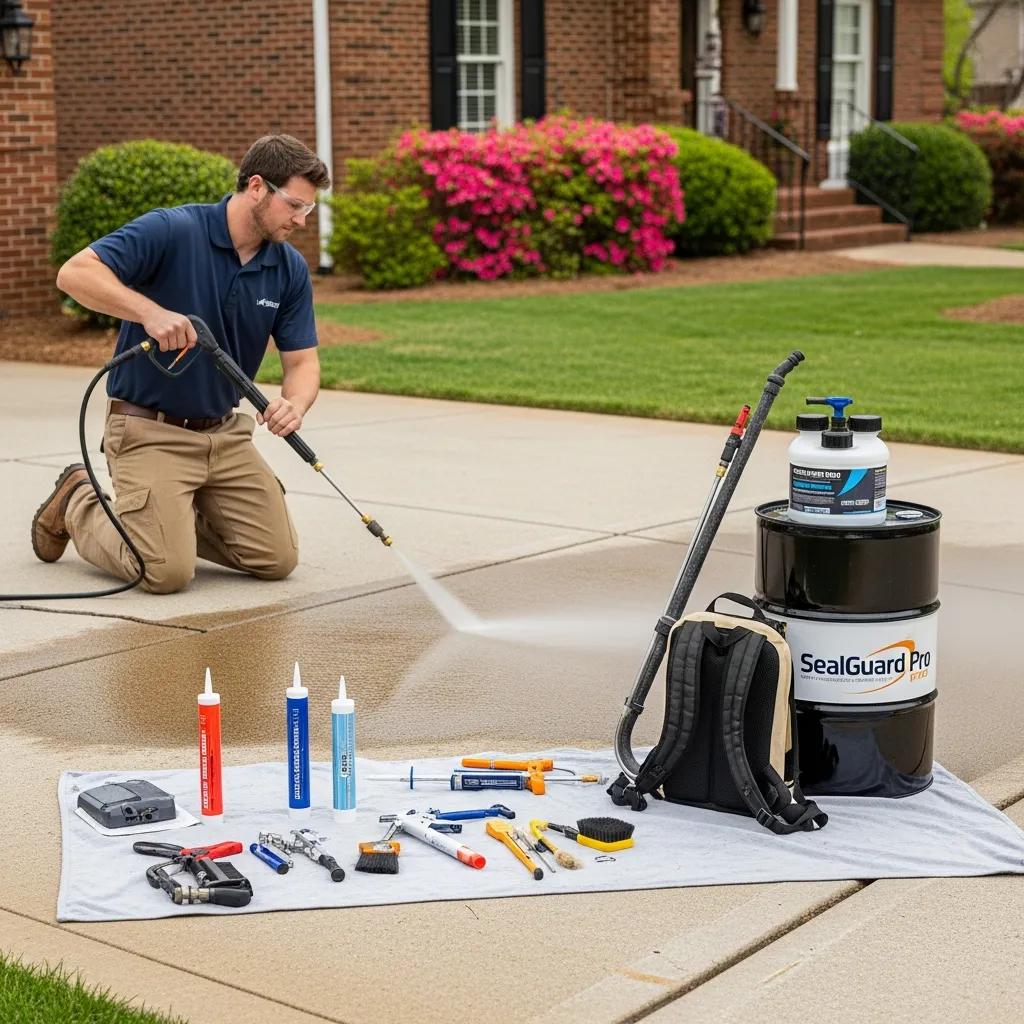
A professional concrete sealing process begins with an assessment to determine substrate condition, moisture levels, and appropriate sealer chemistry, then proceeds through thorough preparation, controlled application, and monitored cure to ensure reliable performance. Pros perform moisture testing and surface profiling and evaluate cracks or delamination to decide between penetrating or film-forming systems. Proper mechanical cleaning and repair provide the profile and substrate integrity required for adhesion, and application methods are chosen to match sealer viscosity and film requirements. The final steps—curing and a return-to-service protocol—ensure the sealer achieves its designed protection and finish. Below is a concise, stepwise process professionals follow to optimize results.
Professionals typically follow these key steps when sealing concrete:
- Site assessment and moisture testing: Determine substrate condition, presence of contaminants, and moisture vapor levels.
- Surface cleaning and repair: Remove contaminants, degrease, fill cracks, and mechanically profile (grind/shot-blast) as needed.
- Priming and sealer selection: Choose and apply primers when required to improve adhesion for film-forming systems.
- Controlled application: Use spray, roller, or squeegee techniques in accordance with product guidelines and environmental conditions.
- Curing and protection: Enforce dry times and traffic restrictions until the sealer reaches recommended cure strength.
This procedural checklist highlights how professional controls and quality checks reduce failure risk and extend service life; next we examine preparation details that underpin successful adhesion and coating performance.
What Are the Critical Steps in Surface Preparation for Optimal Sealer Adhesion?
Surface preparation is the single most important determinant of sealer longevity, involving contaminant removal, mechanical profiling, crack repair, and moisture control. Cleaning begins with pressure washing and degreasing to remove oils, dirt, and salts that undermine adhesion; stubborn contamination may require chemical cleaners and scrubbing. Mechanical profiling—grinding or shot-blasting—creates a consistent surface texture that improves mechanical bond for film-forming coatings and exposes sound concrete for penetrating treatments. Cracks and spalls are routed and repaired with compatible patching mortars or flexible fillers to prevent telegraphing through the sealer. Ensuring substrate moisture is within manufacturer limits before application avoids blistering and adhesion failure and sets the stage for correct application and curing.
How Is the Sealer Applied and Cured for Long-Lasting Protection?
Application technique and curing control determine whether a sealer performs to specification, requiring attention to coat counts, environmental conditions, and equipment selection. Film-forming sealers may need two thin coats applied with a roller or squeegee for uniform coverage, while penetrating sealers are often applied in an even flood coat to allow molecular penetration. Temperature and humidity limits are critical; high humidity or low temperatures can extend cure times, while high heat can accelerate solvent evaporation and trap bubbles. Professionals monitor pot life for two-part systems, use proper mixing and induction times, and enforce manufacturer-recommended return-to-traffic windows to prevent premature wear. Observing these steps minimizes common pitfalls like lap marks, pooling, or uneven gloss and helps the coating deliver the expected protection.
What Are the Costs and Factors Influencing Concrete Sealing Services in Greensboro?
Costs for concrete sealing in Greensboro vary based on surface condition, sealer chemistry, square footage, and required repairs, with professional pricing reflecting labor, materials, and preparatory work. Typical cost drivers include the extent of mechanical profiling, crack and patch repairs, and whether a high-performance film-forming coating (like polyaspartic) or a penetrating sealer is selected. Below is a table that outlines major cost factors and their typical impact to help owners interpret quotes and prioritize investments.
Common cost drivers for sealing projects include:
How Do Surface Type and Sealer Choice Affect Pricing?
Surface complexity and sealer selection directly affect time, labor, and material costs: decorative stamped concrete requires careful masking and slower application, increasing labor rates, while plain slabs allow faster, lower-cost treatments. Premium film-forming systems like polyaspartic or high-solids epoxies require more expensive material costs and skilled application, raising total price but offering longer service life and better chemical resistance. Penetrating sealers are often less expensive per gallon and quicker to apply but may require more frequent reapplication depending on exposure. Evaluating the lifecycle cost—initial price plus maintenance cycles—helps property owners decide whether a higher upfront investment delivers lower total cost over time.
Are There Cost Benefits to Professional Sealing Versus DIY Methods?
Professional sealing offers higher upfront cost than many DIY options but provides value through thorough preparation, correct product selection, warranty options, and longer lifespan that reduce overall life-cycle expenses. DIY approaches can save money initially but often skip mechanical profiling, use incorrect sealer types, or apply unevenly, which increases failure risk and shortens service intervals. Professionals mitigate these risks with diagnostic testing, appropriate equipment, and experience managing environmental variables, making professional application cost-effective for high-use or high-value surfaces. When weighing options, consider the cost of premature resealing and repairs against the assurance of a properly applied professional system.
How Can Property Owners Maintain Sealed Concrete Surfaces in Greensboro?
Maintaining sealed concrete in Greensboro requires routine cleaning, periodic inspection, and timely resealing based on sealer class and exposure to traffic, chemicals, and sunlight. Effective maintenance preserves both function and appearance by removing staining agents, preventing trapped moisture, and identifying early signs of wear such as loss of water beading or localized delamination. A simple maintenance schedule aligned with sealer type helps homeowners extend service life and delay costly repairs. The table below maps common maintenance tasks to frequency and expected outcomes to support an actionable upkeep plan.
What Maintenance Practices Extend the Lifespan of Concrete Sealers?
Simple preventive actions significantly extend sealer life: regular sweeping and seasonal gentle washing remove abrasive grit and organic staining before they compromise the coating. Use pH-neutral cleaners and avoid harsh acids or strong alkalis that degrade many sealer chemistries, and remove oil or chemical spills promptly using absorbents and appropriate cleaners. For film-forming systems, avoid abrasive scrubbing that can scuff the finish; for penetrating sealers, periodic reapplication when repellency diminishes maintains water resistance. Seasonal checks after wet months and winter salt exposure provide opportunities to clean and spot-repair, preserving both aesthetics and protection.
When and How Often Should Concrete Surfaces Be Resealed?
Reseal frequency depends on sealer class, exposure, and traffic: exterior acrylics often require reapplication every 1–3 years, penetrating silane/siloxane treatments typically last 3–5 years or more, and interior epoxies or polyaspartic coatings can provide 3–7 years of service depending on use. High-traffic or chemically exposed areas may need earlier attention, while shaded or lightly used surfaces can extend intervals. Owners can perform a simple water beading test—if water no longer beads, consider resealing—and consult product-specific guidance for precise windows. Regular inspection combined with targeted maintenance ensures resealing occurs before significant substrate damage occurs, preserving long-term value.
Why Choose Our Professional Concrete Sealer Application Services in Greensboro?
Our professional concrete sealer application services in Greensboro focus on combining local environmental understanding with methodical assessment and quality control to deliver durable, fit-for-purpose protection. The approach begins with substrate evaluation and moisture testing to determine whether a penetrating or film-forming solution best meets the property’s needs, then follows standardized preparation, application, and curing protocols to minimize failure risk. Emphasizing trained technicians, calibrated equipment, and product selection aligned with local climate effects helps ensure consistent outcomes across driveways, patios, and garage floors. Property owners who prioritize long-term performance often select professional services for the thoroughness and accountability they provide.
Reasons property owners choose professional application services include:
- Assessment-driven recommendations: Tailored sealer selection based on testing and surface condition.
- Consistent preparation and application: Mechanical profiling, repairs, and controlled curing for reliable adhesion.
- Warranty and accountability: Professionals document processes and performance expectations to support service quality.
If property owners in Greensboro want a site inspection or customized estimate, professionals typically provide consultation and written recommendations outlining sealer options and maintenance schedules without obligation. This next step helps align budget, performance expectations, and timing for a properly executed sealing project.
What Expertise and Quality Products Differentiate Our Service?
Professional differentiation rests on a systematic process: accurate diagnostics, specifications that match exposure and traffic, and selection of products from reputable manufacturers with documented performance. Expertise includes understanding when mechanical profiling or specialty primers are necessary, selecting UV-stable formulations for exterior use, and staging applications to respect cure windows and weather constraints. Quality control practices—such as performing adhesion and moisture checks, following manufacturer mixing and application protocols, and documenting cure conditions—reduce variability and improve long-term results. Together, these practices create a more predictable protective outcome than ad hoc or one-size-fits-all approaches.
How Do Customer Testimonials and Warranties Reflect Our Commitment?
Customer testimonials and clear warranty language help communicate performance expectations and build confidence, but they must be factual and verifiable to be meaningful. Short project summaries highlighting similar local jobs, objective performance notes (for example, longevity under specified traffic), and transparent warranty terms (coverage period and what is included) are effective for prospective clients. In the absence of specific publicized reviews or formal written warranties here, property owners should request documented work examples and warranty terms from any provider before committing. Doing so ensures the service agreement aligns with expected outcomes and provides recourse if the sealer fails prematurely.

0 Comments