Cost-Effective Concrete Patio Resurfacing in Greensboro, NC
Concrete patio resurfacing in Greensboro, NC restores worn outdoor spaces with a thin, durable overlay that renews appearance and extends service life without the cost and disruption of full replacement. This article explains what resurfacing is, how it compares to replacement, typical costs and local pricing ranges, the most popular overlay types for Greensboro patios, contractor selection criteria, and practical maintenance to preserve results. Homeowners facing cracked, faded, or slippery patios will find actionable guidance on choosing stamped overlays, epoxy or spray texture finishes, and the sealing and repair routines that work in the Piedmont Triad climate. We map out cost drivers, provide per-square-foot estimates, and offer checklists and tables that make budgeting and specification easy for do-it-yourselfers and when interviewing local pros. Read on to learn how a thoughtful patio overlay or resurfacing project can deliver durable, decorative outdoor living improvements that fit an affordable renovation budget in Greensboro.
What Is Concrete Patio Resurfacing and How Does It Enhance Your Greensboro Home?
Concrete patio resurfacing is the process of applying a bonded overlay or coating to an existing slab to repair surface damage and create a renewed finish, improving both durability and appearance. The resurfacing overlay acts as a new wearing surface that bonds to the original concrete, bridges hairline cracks, and accepts decorative treatments like stamping, staining, or textured non-slip finishes. For Greensboro homeowners, resurfacing addresses common local issues such as freeze-thaw surface scaling and UV-driven color fade while avoiding the time, cost, and waste associated with demolition and full replacement. Understanding these benefits helps homeowners weigh resurfacing options against other concrete services and decide whether an overlay meets their durability, aesthetic, and budget goals. The next subsections define resurfacing technically and explore how it boosts durability and visual appeal.
Definition and Benefits of Concrete Patio Resurfacing
Concrete patio resurfacing is a surface renovation technique that uses a thin cementitious or polymer-modified overlay to correct surface imperfections and create a new finished layer over existing slabs. This method repairs minor spalling, efflorescence, and surface discoloration while adding a protective layer that resists abrasion and reduces permeability. Homeowner benefits include cost savings compared with full replacement, faster project timelines with less disruption, and customization through color, texture, and stamp patterns that mimic stone or tile. In Greensboro’s climate, overlays also lower maintenance needs by improving resistance to moisture and surface wear, making patios safer and more attractive for year-round outdoor living.
How Resurfacing Improves Patio Durability and Aesthetics
A properly installed overlay uses a bonding agent and a compatible overlay mix to create a composite system where the new layer transfers loads and resists surface deterioration, effectively extending the slab’s usable life. Overlays with color hardeners, sealers, or polymer modifiers improve abrasion resistance and protect against freeze-thaw cycles common in North Carolina, while texture additives and non-slip topcoats enhance safety around pools and steps. Aesthetic options range from integral color and acid staining to stamped patterns that replicate brick, flagstone, or wood, allowing patios to match landscaping and outdoor living designs. Combining durability upgrades with decorative finishes yields a patio surface that performs better and presents like higher-end hardscaping, reducing the likelihood of early rework.
How Much Does Concrete Patio Resurfacing Cost in Greensboro, NC?
Transparent cost expectations make planning a Greensboro patio overlay straightforward: typical price ranges depend on method, surface prep, and finish complexity, and are usually quoted per square foot. Per-square-foot pricing helps homeowners compare options and estimate project budgets for small to large patios; final quotes should reflect actual site conditions and any necessary repairs. Cost drivers include the condition of the existing slab, the choice of overlay material (cementitious, polymer-modified, epoxy), decorative treatments (stamping, color, texture), accessibility, and required curing or traffic restrictions. Below is a practical, scannable cost matrix that shows typical per-square-foot ranges for common resurfacing approaches to help with initial budgeting and PAA-style price queries.
Different resurfacing approaches come with distinct price points and inclusion assumptions, such as basic prep, primer, overlay, and topcoat.
Average Pricing Ranges for Different Resurfacing Options
Typical pricing tiers reflect both materials and labor intensity: a simple thin cement overlay that renews texture and color will be at the lower end, whereas stamped overlays or multi-color integrals command premium pricing. Basic resurfacing generally covers cleaning, light grinding or profiling, application of a bonding primer, a thin overlay layer, and a sealer — a scope that fits many budget-conscious homeowners. Decorative overlays that include stamping or complex color blending require more labor, additional materials like color hardeners and release agents, and longer finishing time, which increases per-square-foot rates. Epoxy or polymer systems cost more upfront but can provide longer service life and increased chemical resistance for patios adjacent to grills or outdoor kitchens.
Factors Influencing Concrete Patio Resurfacing Costs
Several site-specific factors influence resurfacing estimates and should be discussed during an on-site inspection to avoid surprises in final pricing. Surface condition and prep needs top the list — heavy spalling, deep cracks, or significant slab movement require repair or stabilization before overlay work can proceed, increasing cost and timeline. Design complexity, such as intricate stamp patterns, multiple color zones, or inset borders, raises labor and material use, while access limitations (tight yards, steep grades) or necessary equipment (scaffolding, lifts) can add logistical charges. Regional labor rates and seasonal demand in Greensboro also influence quotes, as do choices of sealer and warranty options; homeowners should request itemized bids to compare how each factor affects the bottom line.
What Are the Popular Concrete Patio Resurfacing Types in Greensboro?
Greensboro homeowners commonly choose among stamped overlays, epoxy coatings, spray texture finishes, and stain-and-sealer systems based on desired aesthetics, durability, and budget. Each treatment is a hyponym within the broader category of concrete services and patio renovation, offering different balances of visual impact, slip resistance, and lifecycle costs. Decision-makers should align finish choice with intended patio use—entertaining, poolside, or low-maintenance lounging—and the local climate’s impact on material performance. The table below compares these common resurfacing types on durability, typical cost ranges, and best use-cases to make selection easier.
Stamped Concrete Overlays: Designs and Benefits
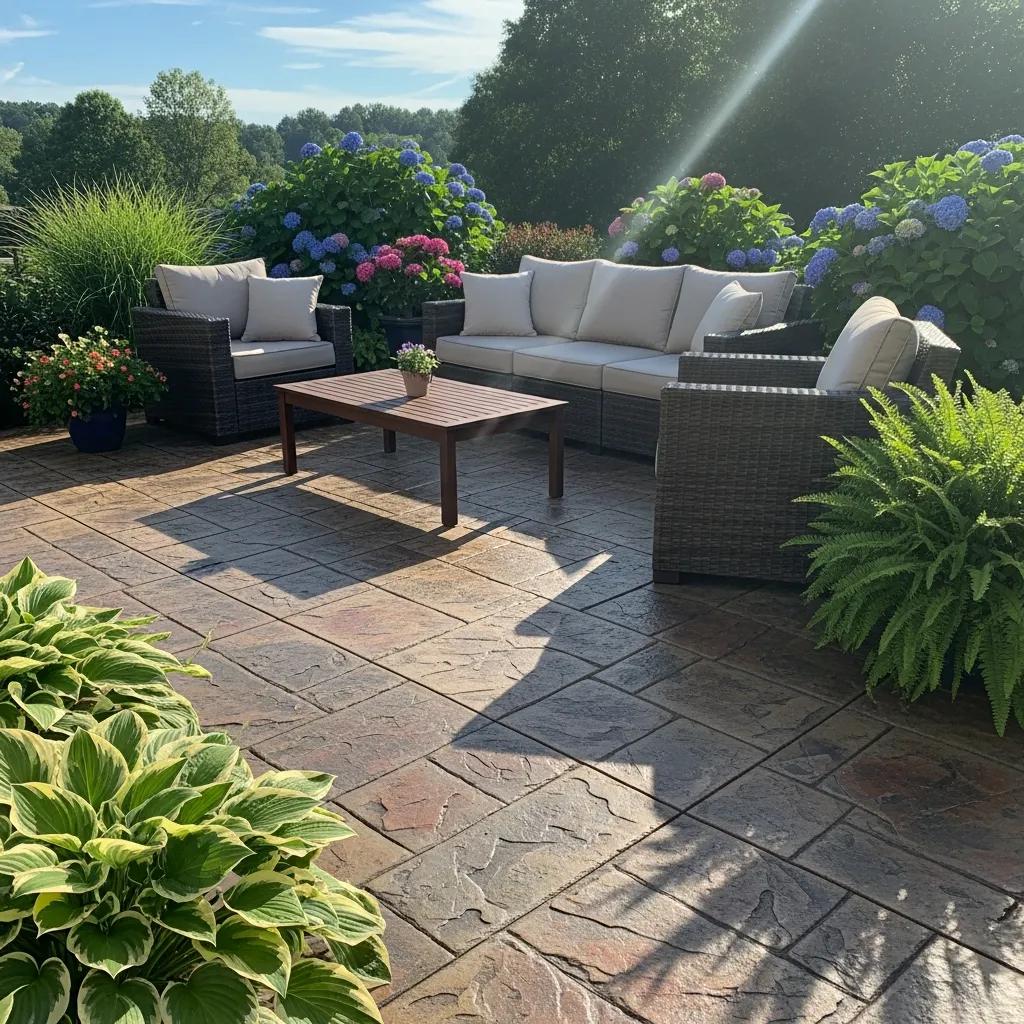
Stamped concrete overlays mimic natural materials—such as flagstone, brick, or wood—by pressing patterns into a fresh overlay and adding color hardeners, resulting in high visual impact without the cost of quarried stone. This hyponym of decorative concrete overlay offers immense design flexibility: borders, inset patterns, and multi-tone blends allow patios to integrate with landscaping or match architectural styles. Durability typically ranges into the decade with proper sealing and upkeep, though textured patterns may require more frequent cleaning to retain appearance. When selecting stamping, homeowners should consider pattern scale relative to patio size and plan for occasional resealing to preserve color and reduce wear.
Epoxy Flooring and Spray Texture Finishes: Durable Alternatives
Epoxy flooring and spray texture finishes are durable overlay options that emphasize toughness and slip resistance, making them ideal for patios near pools or active outdoor kitchens. Epoxy systems form a continuous, chemical-resistant film that bonds to properly prepared concrete, providing a smooth finish with high abrasion resistance but potentially more UV sensitivity, which can be mitigated with UV-stable topcoats. Spray texture finishes apply aggregate or polymer-modified textures that deliver non-slip surfaces and quick installation turnaround, fitting homeowners who prioritize safety and a matte aesthetic. Surface prep, including grinding and moisture testing, is critical for both approaches to ensure adhesion and long-term performance.
How to Choose the Right Patio Overlay Contractor in Greensboro?
Selecting a reputable contractor is critical to achieving a long-lasting resurfaced patio; the right provider demonstrates local experience, clear scope definition, and reliable warranty practices. Because resurfacing performance depends on surface profiling, bond primers, and correct curing, contractors must show documentation of similar local projects, explain their substrate preparation steps, and provide written estimates that break out repair versus finish work. Comparing proposals on qualifications and scope is more valuable than choosing purely on price; a lower bid that omits critical prep often leads to premature failure. The subsections below list key qualities to verify and targeted questions to ask during contractor selection to help homeowners make informed choices.
Key Qualities of Reliable Greensboro Concrete Resurfacing Contractors
Trustworthy resurfacing contractors combine demonstrable local project experience with transparent processes and warranties that protect workmanship and materials. Look for providers who can supply a recent local portfolio showing before-and-after photos, explain their surface preparation protocol (including diamond grinding or shot blasting when required), and detail the overlay materials and curing methods used. Proper licensing and insurance are important to reduce homeowner liability during work, and a written warranty outlining remedy scopes signals confidence in long-term performance. Requesting references or visiting recent installations gives practical insight into finish quality and adherence to timeline commitments.
Questions to Ask Before Hiring a Patio Resurfacing Company
Ask direct questions that probe a contractor’s technical approach, scheduling, and post-installation care so quotes become comparable and risks are minimized. Key questions include whether the contractor performs moisture testing before coating, what specific overlay products and sealer brands they use, how they handle underlying structural or drainage issues, and what warranty and maintenance recommendations accompany the job. Request a clear project timeline that notes curing and traffic restrictions, and ask for an itemized bid showing prep, materials, finishing, and any allowances for decorative work. Listening for concrete-specific answers—such as substrate profiling techniques and joint treatment plans—helps differentiate experienced resurfacing specialists from general landscapers.
What Are the Maintenance Tips for Resurfaced Concrete Patios in Greensboro?
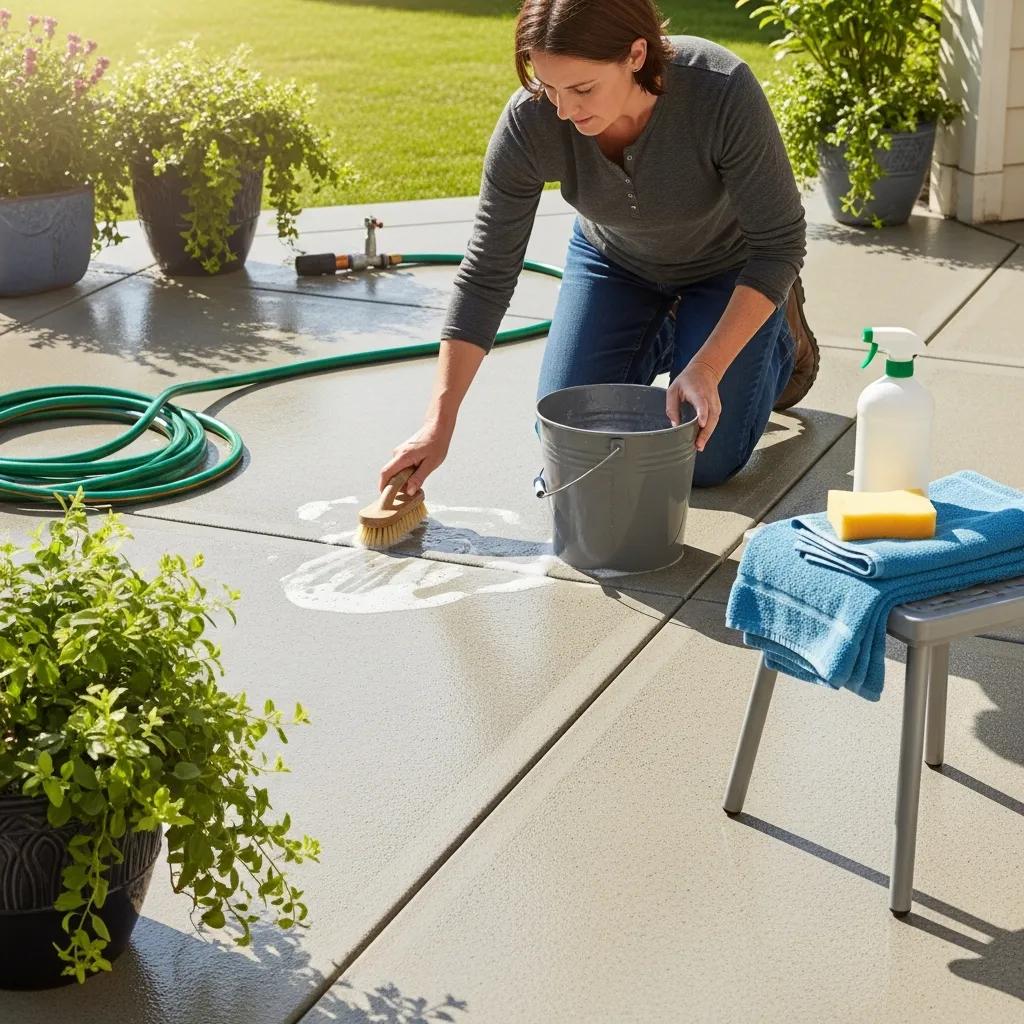
Proper maintenance preserves overlay appearance and extends functional life, with routine cleaning and timely resealing forming the backbone of a practical care plan for Greensboro patios. Seasonal cleaning removes debris, prevents stain buildup, and limits freeze-thaw damage from trapped moisture; resealing maintains color vibrancy and surface protection at manufacturer-recommended intervals. Addressing minor cracks and localized wear early prevents more extensive damage and delays the need for full replacement, while professional inspections every few years can catch substrate issues before they become systemic. The table below outlines a simple maintenance schedule and expected benefits to help homeowners plan routine upkeep and budget for periodic service.
Routine Cleaning and Sealing Practices for Lasting Results
A routine maintenance regimen begins with regular removal of debris and gentle washing using pH-neutral cleaners that won’t degrade sealer films; pressure washing at low settings is acceptable for tough grime but should be used carefully to avoid damaging the overlay. Sealer selection matters: breathable, UV-resistant sealers protect color and surface integrity, and resealing every two to three years in Greensboro’s climate balances protection with cost. Seasonal tasks include clearing leaves in fall to avoid staining and checking for standing water after heavy rains to confirm proper drainage. Implementing these simple practices keeps a resurfaced patio looking new and reduces the frequency of costly spot repairs.
How to Address Common Issues Like Cracks and Wear
Small surface cracks and localized wear can often be stabilized with patching compounds or thin overlay touch-ups that restore aesthetics and prevent moisture ingress, but clear thresholds should dictate DIY versus professional intervention. Homeowners can use polymer-modified patching compounds for hairline to quarter-inch cracks, followed by spot sealing, while larger cracks, differential settlement, or repeated failures indicate a structural concern requiring professional assessment. When wear exposes base concrete or undermines adhesion, a professional evaluation can determine whether localized repair or a new overlay is necessary. Recognizing early warning signs—widening cracks, persistent pooling, or delamination—allows timely corrective action and preserves the investment in resurfacing.
Why Choose an Affordable Concrete Patio Makeover in Greensboro, NC?
An affordable patio makeover through resurfacing typically delivers comparable aesthetic upgrades to replacement while minimizing cost, waste, and disturbance to the yard and schedule. Resurfacing preserves the existing slab, which reduces demolition waste and environmental impact, shortens project timelines, and allows homeowners to regain outdoor use more quickly. When decorative overlays are chosen, patios can be transformed into functional outdoor living zones—dining, lounging, or poolside—at a fraction of replacement cost, improving curb appeal and potentially increasing property value. The following subsections quantify cost-effectiveness and outline design strategies that maximize the return from decorative concrete solutions.
Cost-Effectiveness Compared to Full Patio Replacement
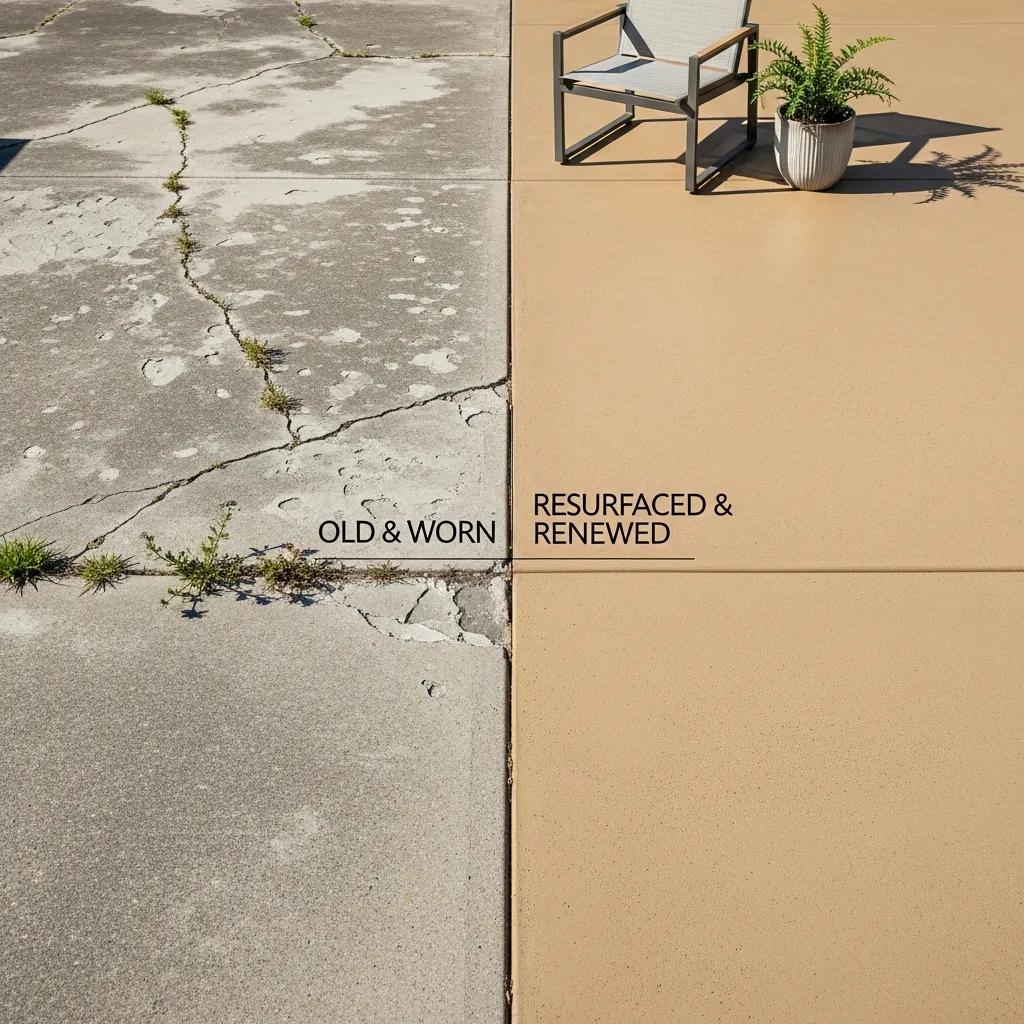
Resurfacing usually costs a fraction of full concrete demolition and replacement because it avoids labor-intensive removal, subbase repairs, and heavy equipment mobilization; typical timeline savings are measured in days rather than weeks. For many patios with intact structural slabs and only surface deterioration, overlaying restores function and appearance while keeping lifecycle costs lower when proper maintenance is observed. Environmental benefits include reduced landfill waste and lower embodied energy compared with new concrete pours. However, when severe slab movement, undermined subbase, or extensive drainage failures exist, full replacement may still be the correct long-term choice; assessing structural conditions before deciding is essential.
Enhancing Outdoor Living Spaces with Decorative Concrete Solutions
Decorative overlays enable homeowners to zone outdoor spaces with different finishes—defined seating areas, textured walkways, or colored dining patios—integrating slip-resistant options and color palettes that complement landscaping. Design ideas include stamped borders to frame dining areas, contrasting textures to define pathways, and coordinating overlay colors with outdoor furnishings to create cohesive entertaining environments suited to Greensboro’s year-round gatherings. Decorative overlays also allow for practical additions like built-in firepit surrounds or grill pads that resist heat and stains when using the right topcoats. When implemented thoughtfully, these upgrades increase usable outdoor space and strengthen the property’s outdoor-living appeal with a modest investment.
- Evaluate slab condition before choosing resurfacing: Surface issues can often be fixed without replacement.
- Match finish to use: Choose non-slip textures for poolside areas and refined stamps for entertaining zones.
- Plan for maintenance: Factor resealing and routine cleaning into lifecycle costs to preserve appearance.
- Get multiple itemized quotes: Compare preparation, materials, and warranty terms.
- Verify local references and portfolio: Inspect recent work in similar climates.
- Schedule work seasonally: Plan installations during moderate weather for optimal curing and finish quality.

0 Comments