Concrete Sidewalk Repair in Greensboro, NC: Expert Leveling and Patching Solutions for Safe Walkways
Uneven, sunken, or cracked sidewalks create trip hazards and erode curb appeal; this guide explains how professional concrete sidewalk repair in Greensboro, NC restores safety, accessibility, and long-term durability. You will learn what causes sidewalk failure locally, how concrete leveling (including polyurethane foam injection) and mudjacking lift and stabilize slabs, and when patching or full replacement is the right choice. The article outlines practical repair workflows, cost considerations, homeowner responsibilities under local practices, and seasonal maintenance to prevent recurrence. It also compares modern leveling methods against conventional approaches and provides checklists and tables to help homeowners evaluate repair options and contractor estimates. Read on for clear, actionable information on diagnosing common walkway problems, selecting appropriate repair techniques such as PolyLevel or polymer-modified patching, and preparing for accurate quotes in Greensboro. This roadmap starts with causes and moves through leveling, patching, costs, responsibility, and prevention so you can make an informed decision about restoring safe walkways.
What Causes Uneven and Cracked Sidewalks in Greensboro, NC?
Uneven and cracked sidewalks result from a combination of subsurface movement, surface stresses, and environmental exposure that undermine slab support and cause differential settlement. Local mechanisms—soil shrink-swell, erosion of subgrade material, tree root intrusion, and freeze-thaw cycles—create voids or heave beneath concrete, which translates into vertical displacement and cracking on the surface. Poor original compaction, inadequate control joints, and improper drainage amplify these effects by allowing water to pool and wash away the base under slabs. Understanding these root causes helps homeowners target the right repair: addressing subsurface voids with leveling methods or correcting surface deterioration with patching, while also tackling drainage and landscaping to prevent repeat failures. The next subsection explains how Greensboro’s specific soil types and climate influence sidewalk durability and accelerate these mechanisms.
How Do Greensboro’s Soil and Climate Affect Sidewalk Durability?
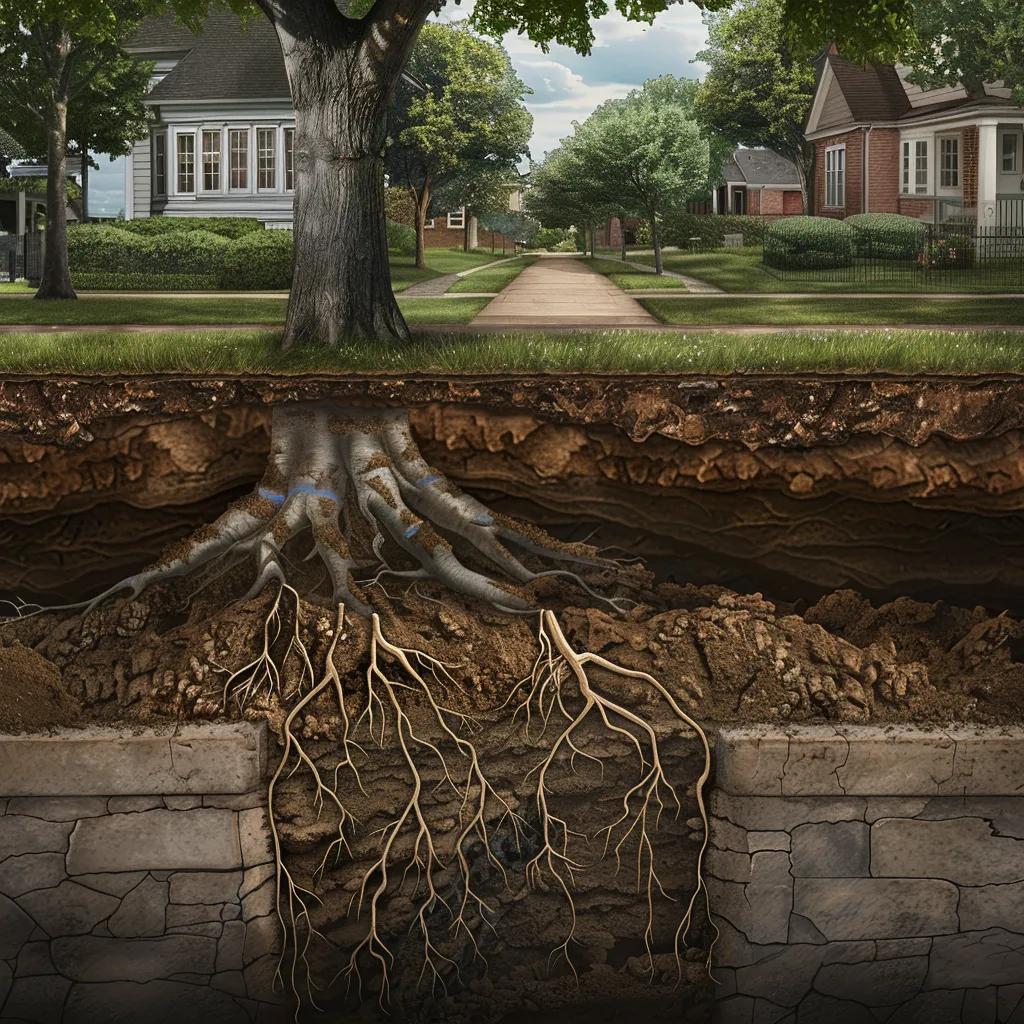
Greensboro sits on soils that commonly include clay and other shrink-swell materials that expand with moisture and contract when dry, creating cyclic movement beneath concrete slabs. Seasonal rainfall patterns and occasional freeze-thaw events exacerbate soil erosion and create transient voids beneath sidewalks, which allow slabs to settle unevenly or develop cracks over time. Heavy downpours can wash fine particles out from under slabs, producing localized undermining that manifests as sudden settlement or the formation of trip hazards. Recognizing this link between weather, soil behavior, and slab performance helps homeowners prioritize drainage improvements and subsurface stabilization alongside any surface repairs to ensure a longer-lasting outcome.
The following subsection outlines the common damage types you’ll see and how to assess severity.
What Common Sidewalk Damage Types Require Repair?
Sidewalk damage typically appears as vertical differential between adjacent slabs (trip hazards), transverse or longitudinal cracks, map cracking, spalling, and surface scaling caused by freeze-thaw or deicing chemicals. Vertical displacement of 1/2 inch or more is a common trigger for repair because it creates a measurable trip risk and often signals voids underneath that require leveling or support. Spalling and surface delamination indicate material breakdown and may be repairable with patching compounds when the underlying slab remains structurally sound. Identifying whether damage is localized (single slab or edge) or widespread (multiple adjacent slabs, continuous settlement) informs the decision between targeted leveling/patching and full replacement; the next H2 explains leveling methods that restore slab alignment and support.
How Does Concrete Leveling Restore Sidewalks in Greensboro?
Concrete leveling restores sidewalks by filling voids beneath sunken slabs and re-establishing uniform support so slabs return to their designed elevation and load distribution. Leveling methods such as polyurethane foam injection (PolyLevel/PolyRenewal) and traditional mudjacking work by injecting material under the slab to displace soil and lift concrete, but they differ in invasiveness, weight, cure time, and precision. Effective leveling not only removes trip hazards but also stabilizes the subgrade to reduce the chance of repeat settlement when combined with drainage correction and soil compaction measures. Homeowners should evaluate the lift capacity, expected downtime, and longevity of each method when selecting an approach, and the table below summarizes key attributes for quick comparison before exploring the polyurethane process in detail.
This comparison highlights why modern polyurethane leveling is often chosen for rapid, precise lifting with minimal surface disruption; the next subsection explains how the polyurethane foam method works and its benefits.
What Is Polyurethane Foam Injection and Its Benefits?
Polyurethane foam injection is a minimally invasive leveling method that injects an expanding resin under concrete to fill voids and lift slabs back to grade with small access holes. The expanding polymer bonds with the subgrade and hardens quickly, providing high lift precision and fast cure times that typically allow sidewalks to be returned to service within 15 minutes to an hour. Because the material is lightweight compared with mudjacking slurry, it places less additional load on the subgrade and resists moisture intrusion and washout, improving long-term stability. Benefits also include reduced surface disruption, smaller repair footprints, and the ability to address irregular void geometries that conventional pumping methods struggle to fill; these advantages make polyurethane attractive for many residential and commercial sidewalk repairs before considering when mudjacking is preferable.
How Does PolyLevel Compare to Traditional Mudjacking?
PolyLevel-style polyurethane leveling and traditional mudjacking differ significantly in material weight, injection hole size, lift control, and susceptibility to future settlement, which affects method selection for specific site conditions. Polyurethane uses small drilled holes and a lightweight, expanding resin that cures rapidly and offers precise incremental lifts, while mudjacking pumps a heavier cementitious slurry through larger openings that can require more surface patching and longer downtime. Long-term performance varies: polyurethane resins resist water and maintain void filling with less chance of re-settlement, whereas mudjacking may be more economical for large, uniform areas but can reintroduce settlement where the soil remains unstable. Choosing between them depends on the project goals—minimal downtime and precision favor polyurethane; large-volume, lower-cost lifts may still use mudjacking—so the next H2 explores patching techniques for surface defects and cracks.
Greensboro, NC Concrete Sidewalk Repair: Expert Leveling & Patching
Patching and crack repair restore surface integrity by removing damaged material, preparing sound substrate, and applying compatible repair compounds that bond and resist traffic and weather. Effective approaches start with a careful assessment to determine crack width, depth, and whether the crack is structural or merely surface; the workflow then includes cleaning, routing or chiseling as needed, priming or bonding agents, and applying epoxy or polymer-modified cementitious mortars tailored to the defect. Surface spalling and delamination require removal of loose concrete, reinstatement of reinforcement cover if exposed, and a patch material selected for freeze-thaw resistance in Greensboro’s climate. When patching is performed with proper surface preparation and compatible materials, repairs that follow these steps can extend slab life and improve safety, leading naturally to a closer look at the professional repair process.
Professionals follow a standard multi-step process for durable sidewalk repairs:
- Assessment and Documentation: Inspect slabs, measure displacements, and photograph damage before work begins.
- Surface Preparation: Remove loose material, clean joints, and ensure a sound bonding surface.
- Repair Application: Route and fill cracks or apply patch mortars and sealants suitable for traffic.
- Finishing and Cure: Texture and cure patches per product instructions to match adjacent concrete.
This sequence ensures a lasting bond between patch and existing slab; the next subsection explains the detailed workflow professionals use for crack and spalling repairs.
How Are Sidewalk Cracks and Spalling Repaired Professionally?
Professional repair begins with assessing whether cracks reflect surface shrinkage or deeper structural movement; this assessment determines whether crack routing and sealing or patch replacement is needed. After removing loose material and cleaning the area, technicians often widen narrow cracks slightly (routing) to create a V-shaped profile that improves bonding and allows sealant or epoxy to penetrate. For spalls and delamination, sound concrete is exposed and a polymer-modified patching mortar is used to restore thickness, edge profile, and durability; proper bonding agents and mechanical preparation help prevent re-failure. Professionals finish repairs to match surface texture and ensure controlled curing, and they advise on drainage or subgrade fixes when underlying causes suggest the repair alone won’t prevent recurrence.
When Is Patching Suitable Versus Full Replacement?
Patching is suitable when damage is localized, the slab retains structural integrity, and settlement is limited to surface deterioration or isolated cracks without widespread undermining. Examples where patching suffices include shallow spalling, hairline to moderate cracks, and edge repairs where the underlying support remains intact; these conditions allow targeted restorative work without the cost and disruption of replacement. Full slab replacement is warranted when multiple adjacent slabs show substantial settlement, extensive structural cracking, repeated prior repairs, or when ADA-compliance issues cannot be met through partial fixes. Evaluating the scope of damage, anticipated future settlement, and durability needs helps determine whether patching is a short-term fix or a long-term solution, and the next H2 discusses typical costs and how pricing is influenced in Greensboro.
How Much Does Sidewalk Repair Cost in Greensboro, NC?
Sidewalk repair costs in Greensboro depend on the chosen method—leveling with polyurethane, mudjacking, patching, or full replacement—along with slab size, site access, and underlying remediation needs. Typical ranges for common repairs vary: targeted polyurethane leveling often costs between $250 and $500 per slab, mudjacking may be economical for larger contiguous areas at approximately $3 to $6 per square foot, and replacement is the most expensive option due to demolition and new concrete work, often ranging from $8 to $15 per square foot. Homeowners should request itemized estimates that separate labor, materials, equipment, permit fees, and any drainage or root mitigation so bids can be compared fairly. The table below breaks down cost drivers with sample ranges and relative impact to help prioritize budget planning and contractor selection.
This cost breakdown shows labor, access, and slab extent are often the largest budget variables; the following subsection details specific factors that influence pricing and how homeowners can obtain accurate estimates.
What Factors Influence Sidewalk Repair Pricing?
Several interrelated factors influence sidewalk repair pricing: the repair method (polyurethane, mudjacking, patching, replacement), the total square footage or number of slabs, site access and logistic complexity, the need for soil remediation or tree root work, and local permit or inspection requirements. Labor intensity and equipment mobilization increase costs when tight access, stairways, or heavy root systems demand manual work rather than machine access. Material selection—lightweight expanding resin versus cementitious slurry or polymer-modified patch mortars—affects both upfront material costs and expected longevity, influencing lifecycle value. Understanding these drivers helps homeowners ask targeted questions and weigh short-term savings against long-term performance, which leads to practical steps for getting accurate estimates described in the next subsection.
How Can Homeowners Get Accurate Repair Estimates?
To get accurate, comparable estimates homeowners should prepare a concise scope and provide measurements, photos, and a description of the observed problems when requesting bids from contractors. Ask each contractor to specify the repair method, itemize labor and material costs, note any assumptions about subgrade condition, state expected cure and return-to-use times, and outline warranties or post-repair monitoring.
- Measure slab dimensions and count affected slabs.
- Document vertical differentials and take photos from multiple angles.
- Request written scope, timeline, and warranty terms.
Comparing these standardized elements makes it easier to choose a proposal that balances cost, durability, and disruption; the next H2 clarifies who typically bears responsibility for sidewalk maintenance and when to involve professionals versus DIY.
Who Is Responsible for Sidewalk Maintenance and Repair in Greensboro?
Responsibility for sidewalk maintenance varies by municipality but commonly falls to the adjacent property owner to keep sidewalks safe and repair trip hazards, though the city may handle repairs during public works projects or in certain designated zones. Property owners should verify Greensboro’s current sidewalk ordinances and maintenance policies, because local rules determine when the city may require repairs, offer repair programs, or assess costs back to the property owner. Liability is a practical consideration: unaddressed trip hazards create potential for claims if injuries occur, so prompt repair reduces risk and demonstrates due care. Given these responsibilities, the next subsection explains where to find the ordinance guidance and what documentation or permits might be needed before performing repairs.
What Are Greensboro’s Sidewalk Repair Ordinances and Homeowner Duties?
Homeowners should consult Greensboro’s city planning or public works resources for definitive guidance on sidewalk maintenance obligations, permit requirements, and any available municipal repair programs or cost-sharing options. Typical homeowner duties include maintaining sidewalks adjacent to their property in a safe condition and securing necessary permits when performing structural repairs or replacements that alter the public right-of-way. Where city rules require notification or inspection, following those steps helps avoid fines and clarifies liability if incidents occur prior to repair. Checking official municipal guidance ensures compliance and informs whether a contractor must coordinate inspections or permits before beginning significant repair work, which leads into deciding when professionals should be hired rather than attempting DIY fixes.
When Should You Choose Professional Repair Over DIY?
Choosing professional repair is advisable when damage involves vertical slab displacement, structural cracking, widespread settlement, underlying drainage issues, or the need for specialized methods like polyurethane leveling or mudjacking. DIY methods may be appropriate for small surface hairline cracks, cleaning and sealing, or applying surface sealants where structural integrity is intact; however, these small interventions do not address subgrade voids or lifted slabs. Professionals bring equipment, diagnostic experience, and materials selection knowledge needed to stabilize slabs, correct drainage, and comply with local permit requirements, reducing the risk of repeat problems. For safety and longevity, hire a qualified contractor for leveling, complex patching, or any repair tied to underlying soil or root causes; the last H2 covers preventive maintenance homeowners can perform to reduce future repairs.
How Can Property Owners Maintain and Prevent Sidewalk Damage in Greensboro?
Proactive maintenance extends sidewalk lifespan by addressing small problems before they grow, controlling surface water, and preventing root and soil disturbances that undermine slabs. Seasonal inspections—after heavy rains and in late winter—identify early cracks, erosion at slab edges, or displaced soil that should be corrected promptly. Simple interventions such as cleaning debris, ensuring downspouts and gutters direct water away from slab edges, sealing hairline cracks, and avoiding deicing salts that accelerate surface scaling all reduce deterioration and delay more costly repairs. The next subsection provides a concise maintenance checklist homeowners can apply, followed by guidance on how landscaping and grading affect slab stability.
What Maintenance Tips Extend Sidewalk Lifespan?
A targeted maintenance checklist helps homeowners prioritize the most impactful actions to protect concrete sidewalks and reduce repair frequency. Recommended tasks include annual inspections, prompt crack sealing for hairline cracks, maintaining joints and sealants, cleaning and preventing vegetation growth at slab edges, and directing roof and yard runoff away from slabs. Avoid using rock salt or high-chloride deicers that can accelerate concrete deterioration in freeze-thaw cycles; instead use sand or pet-safe alternatives for traction when necessary. Regular attention to these items reduces the rate of surface breakdown and minimizes the likelihood of subgrade erosion that would necessitate leveling or replacement.
How Does Proper Drainage and Landscaping Affect Sidewalk Stability?
Proper drainage and thoughtful landscaping are central to sidewalk stability because surface and subsurface water movement is the primary driver of soil erosion and void formation under slabs. Grading that directs roof runoff and landscape irrigation away from walkways, use of gutters and downspout extensions, and avoiding soil build-up against slab edges prevent moisture accumulation that can wash out fines beneath the concrete. Tree selection and root management are also critical—larger trees near sidewalks may require root mitigation strategies or root barriers to prevent heave, while compacted soils with proper fill and geotextile stabilization reduce future settlement. Implementing these landscape and drainage measures complements repair work and significantly improves the longevity of leveling or patching interventions.

0 Comments