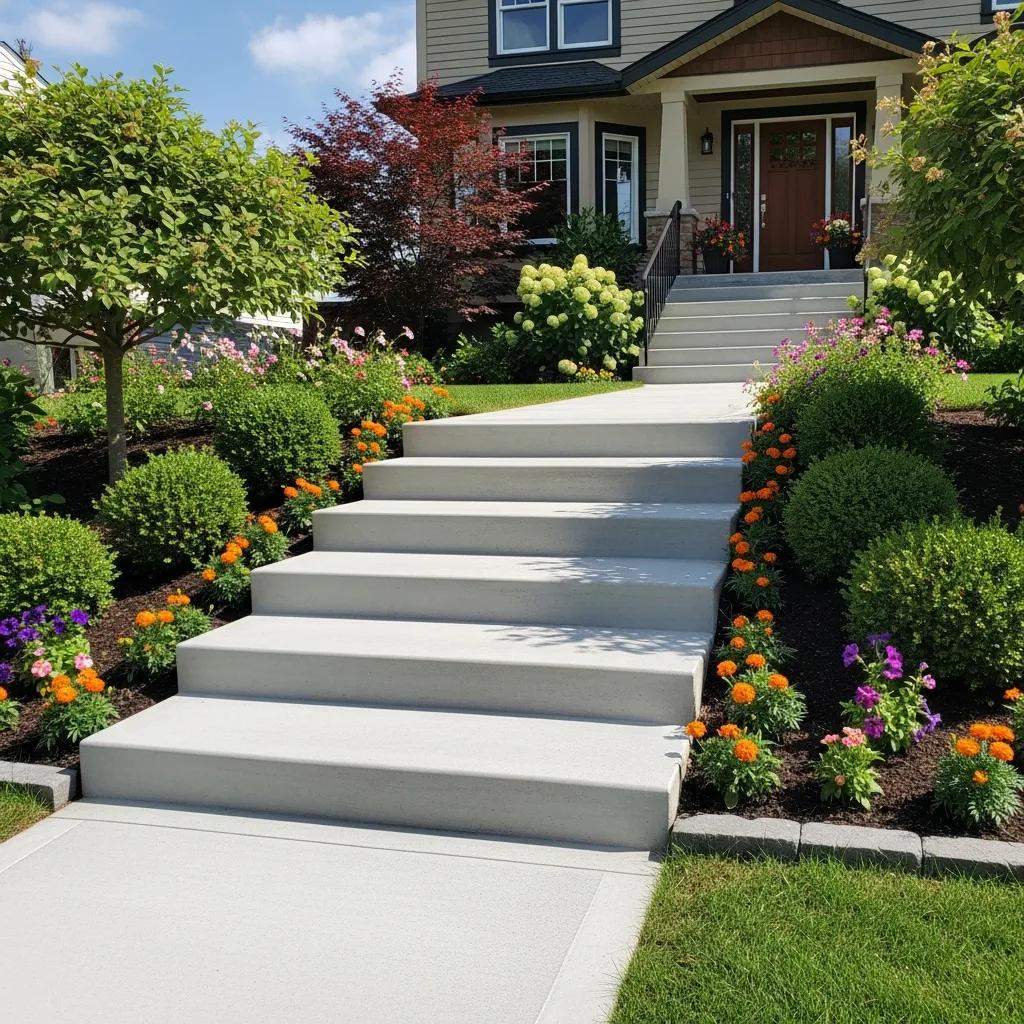
Guilford College Area Concrete Steps: Costs, Installation & Repair
Concrete steps are a fundamental component of exterior entryways, providing safe vertical circulation while contributing to curb appeal and durability for properties near Guilford College in Greensboro, NC. This guide explains what concrete steps are, how different types function, and why proper installation and timely repair matter for homeowners and property managers seeking reliable outdoor stairs and entryways. Readers will learn to distinguish precast from poured-in-place systems, compare decorative finishes like stamped and stained concrete, follow an installation workflow, assess repair options, and prepare for accurate local cost estimates. Safety, longevity, and aesthetics are central concerns: correct footing, reinforcement, and finish selection reduce cracking and slip risks while improving property value. The article maps installation procedures, common repair methods, local cost drivers, and practical vetting steps for contractors, including how to request line-item quotes and verify licensing. Throughout, keywords such as concrete steps Guilford College area, concrete step installation Greensboro, and stamped concrete steps Greensboro are integrated to help local property owners find actionable, region-specific guidance on steps, landings, and stair maintenance.
What Are the Key Types of Concrete Steps for Residential and Commercial Properties?
Concrete steps for residential and commercial use fall into clear categories that balance speed, customization, durability, and aesthetic flexibility. Precast concrete steps are factory-made units installed quickly on a prepared foundation, while poured-in-place steps are formed and cast onsite for tailored dimensions and finishes; both serve as concrete structures and hardscaping solutions. Decorative options—stamped, stained, and exposed aggregate—allow owners to match masonry or natural materials while retaining the structural benefits of concrete; each finish affects maintenance and slip resistance. Understanding structural meronyms like tread, riser, landing, and reinforcement (rebar) clarifies where failures typically occur and which step type best suits a project’s load and design needs. The next section breaks down the technical differences between precast and poured-in-place systems to help you choose the right approach for porches, entryways, and multi-step staircases in the Guilford College area.
Different step types compared across common decision attributes:
This comparison highlights trade-offs between speed and customization: precast favors quick installs while poured-in-place favors tailored designs and complex landings. The following subsection explores these trade-offs in more detail.
How Do Precast and Poured-In-Place Concrete Steps Differ?
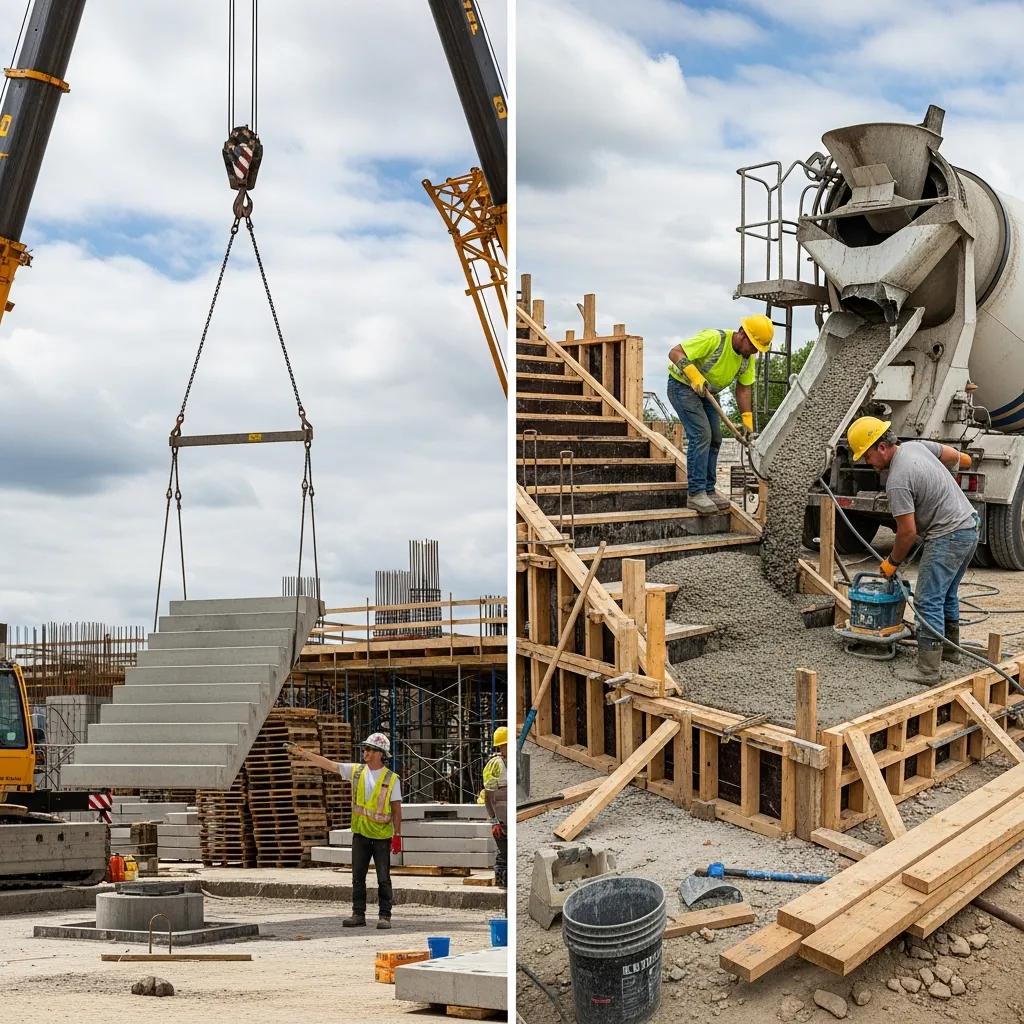
Precast and poured-in-place concrete steps differ in manufacturing, on-site workflow, and flexibility, which impacts selection for residential porches versus longer commercial stair runs. Precast steps are produced under controlled factory conditions—ensuring consistent mix quality and curing—then transported to the site and anchored to prepared footings, which reduces onsite labor and weather-related delays. Poured-in-place steps require forming, rebar placement, concrete placement, finishing (broom, stamped, or exposed aggregate), and curing onsite, allowing precise fit for irregular site grades and custom landings. Precast is cost-effective for simple geometries and quick turnaround, while poured-in-place best suits integrated entryways, curved stairs, or decorative finishes that must align with adjacent concrete patios or ramps. Knowing these practical differences helps property owners choose the right hyponym for their project needs and sets expectations for timelines and finish options.
What Decorative Concrete Step Options Are Popular in Guilford College Area?
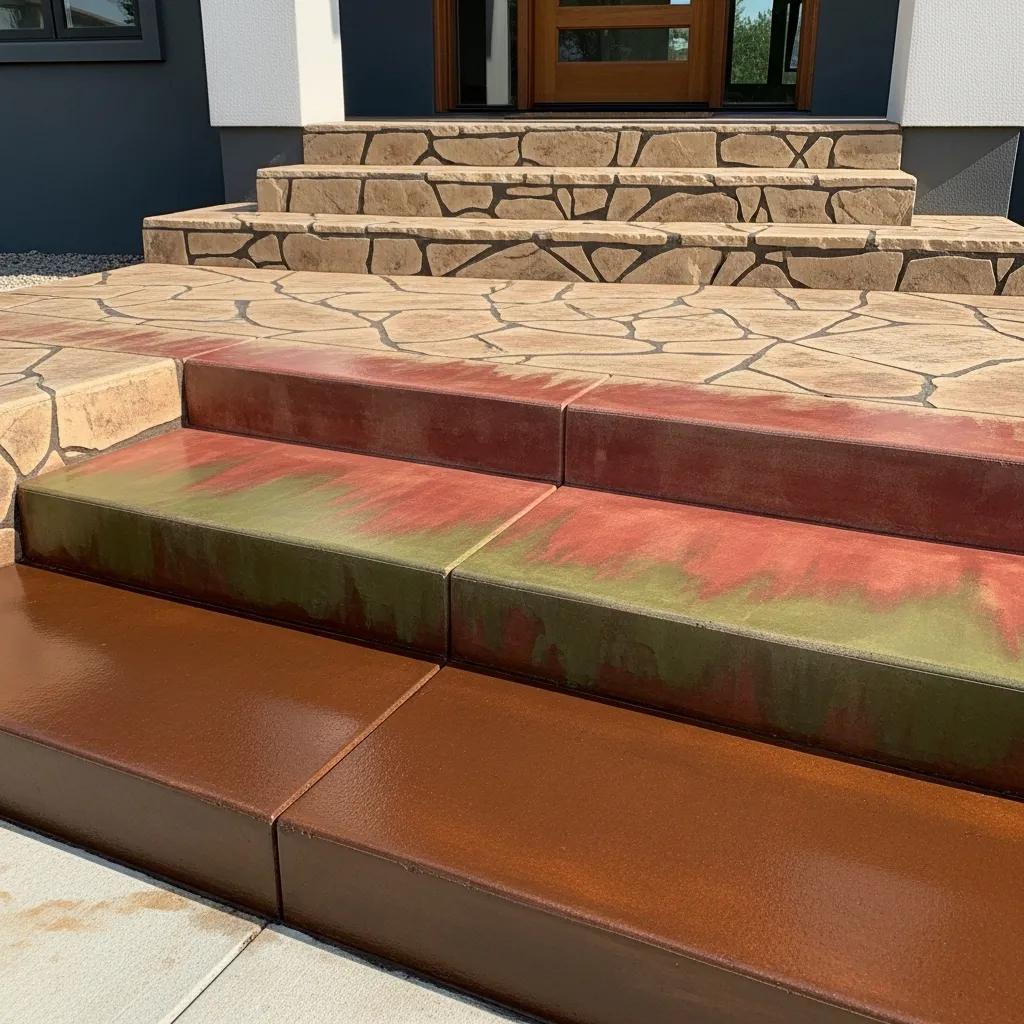
Decorative finishes are widely used around Guilford College to blend steps with historic or contemporary property styles while improving slip resistance and curb appeal. Stamped concrete can mimic brick, slate, or tile patterns and is popular for entryways that seek a masonry look without the cost of quarried stone; stamping is applied during finishing before curing. Stained concrete introduces translucent or acid-based color that penetrates the surface for durable, variegated tones; sealing afterward preserves color and eases maintenance. Exposed aggregate and broom finishes emphasize texture for traction and often serve in climates where winter traction and drainage matter; aggregate size and exposure depth directly influence slip resistance. Selecting a finish involves balancing aesthetics, maintenance frequency, and longevity—sealed stained concrete offers color stability but requires resealing, while exposed aggregate may need less frequent cosmetic upkeep but careful initial installation for drainage and wear.
How Is Concrete Step Installation Performed in Greensboro, NC?
Concrete step installation in Greensboro typically follows a predictable workflow from site assessment and permits to final curing and inspection, ensuring safety and compliance with local codes. Installation begins with a detailed site assessment—measuring grade, verifying utilities, and checking setbacks—to determine footing depth and drainage needs; local building permits or ADA considerations may be required depending on public access and rise/run specifications. After excavation and subgrade preparation, contractors install reinforced footings and formwork, place rebar or dowels for reinforcement, pour concrete, and apply the chosen finish; curing times and weather impact when steps can be opened to foot traffic. Understanding this sequence lets homeowners evaluate bids and verify contractors’ proposed timelines, materials, and inspection steps. The following H3 provides a concise, numbered how-to suitable for quick reference or featured-snippet style answers.
- Assess site and obtain permits: verify grade, utilities, and code requirements.
- Excavate and prepare subgrade: compact base and set drainage provisions.
- Build footings and forms: install rebar and formwork to design dimensions.
- Pour concrete and finish: place concrete, apply finish (broom, stamped, stained).
- Cure, seal, and inspect: allow appropriate curing time, apply sealer, perform final inspection.
These numbered steps summarize the core sequence; the next subsection expands each stage with practical timings and common contractor practices.
What Are the Step-by-Step Procedures for Installing Outdoor Concrete Stairs?
A standard installation sequence for outdoor concrete stairs includes site layout, excavation, footing construction, rebar placement, forming, concrete placement, finishing, and curing—each requiring specific durations and quality checks. Begin by verifying measurements and marking the stair layout, then excavate to frost depth and compact a granular base; this stage establishes drainage and prevents future settlement. Footings are poured with embedded rebar or dowels to tie to the stair units, while forms are braced to maintain riser and tread consistency; installers use vibration and consolidation during placement to avoid voids. Finishing adds texture or decorative stamping and must be timed to the concrete’s bleed water; curing spans several days to a week before light use, and sealing follows for decorative options to preserve color and resist staining. Attention to each stage reduces risks such as cracking, uneven treads, or premature surface wear, and the next subsection explains how to identify qualified local contractors for these tasks.
Which Local Contractors Specialize in Concrete Step Installation Near Guilford College?
Identifying contractors who specialize in steps and small stair projects involves checking portfolios, licensing, insurance, and local references; focus on firms with clear before/after photos of entryways and stair details. Ask prospective contractors for recent project photos showing treads, risers, landings, and reinforcement details; request proof of liability insurance and workers’ compensation as well as references for projects completed in Greensboro neighborhoods near Guilford College. Use local directories and public listings—such as GreensboroConcreteInstallers.com, HomeAdvisor or BBB listings, and community bulletin boards—to find candidates, then cross-check reviews and project types to match scope and finish preferences. Prepare a short contractor checklist when contacting firms to request line-item quotes, schedule site visits, and confirm timelines; the following section covers common repair solutions and decision criteria for repair versus replacement, which will help you evaluate whether a contractor recommends patching or full replacement.
What Are Common Concrete Step Repair Solutions in Guilford County?
Concrete step issues in Guilford County typically involve cracking, spalling, settling, and surface wear; repairs range from surface patching to structural replacement depending on extent and cause. Small cracks and surface spalls are often addressed with polymer-modified patching compounds or overlays, while deeper structural cracks may require epoxy injection, stitching, or partial removal and re-pouring to restore integrity. Settling or uneven steps can be corrected by leveling techniques such as mud jacking or installing supplemental footings and engineered underpinning in more severe cases. Deciding between repair and replacement depends on recurrence, extent of undermining, code compliance, and long-term cost-effectiveness; the next subsection outlines professional repair workflows and expected lifespans after repair to guide homeowner decisions.
- Epoxy injection for structural crack bonding to restore load paths.
- Polymer overlays and resurfacing for cosmetic and wear-layer restoration.
- Mud jacking or grout lifting for correcting minor settlement and restoring level treads.
- Partial demolition and re-pouring when reinforcement or footings are compromised.
These repair approaches help homeowners weigh immediate fixes against longer-term solutions; the following subsection explains professional repair steps in detail.
How Are Cracked or Uneven Concrete Steps Repaired Professionally?
Professional repair begins with a diagnostic assessment to determine whether damage is surface-level or structural, including checking subgrade stability and reinforcement exposure. For surface cracks and spalling, contractors grind or chip damaged areas, clean and bond the surface, then apply polymer-modified patching compounds or micro-concrete to restore the tread and riser profiles. Structural cracks often require epoxy injection or stitching with rebar; if settlement is present, contractors may use mud jacking or grout injection to lift treads, followed by re-profiling and sealing. After repairs, finishing and sealing restore texture and color, and the finished lifespan depends on causes addressed—repairs that rectify drainage or subgrade issues typically last longer than surface-only patches. Knowing these methods helps you evaluate contractor recommendations and understand expected timelines and warranties.
When Is Concrete Step Replacement Recommended Over Repair?
Replacement becomes the recommended option when damage is widespread, recurring, or affects structural elements such as undermined footings, severely corroded reinforcement, or compromised load-bearing components. If multiple steps show progressive settlement, wide horizontal or vertical movement, or the riser/tread geometry no longer meets code or safety standards, replacement restores uniformity and long-term performance. Additionally, when aesthetic goals include full redesign—adding decorative finishes or reconfiguring landings—complete replacement often proves more cost-effective over time than repeated repairs. Compare replacement costs to projected repair cycles: replacement usually offers a longer service life and fewer downstream expenses when structural integrity or ongoing recurrence is present. The next H2 examines typical cost drivers and provides an EAV-style cost table to support realistic budgeting.
How Much Does Concrete Step Installation and Repair Cost in Greensboro, NC?
Costs for concrete steps in the Guilford College area vary with step complexity, finish, site conditions, and labor; typical project ranges reflect these main drivers and help homeowners budget accurately. Primary cost factors include materials and concrete mix, reinforcement (rebar), labor hours for forming and finishing, site prep or demolition, permit fees, and finish choices like stamping or staining that add craft labor and sealing. Small residential porch steps generally fall at the lower end of the scale, while multi-step staircases with landings, ramps, or decorative finishes increase labor and material costs proportionally. Below is an EAV-style table that breaks down service types, cost factors, and typical ranges to clarify budget planning for local projects.
This breakdown shows how finish choices and site complexity can significantly affect final pricing. The next subsection lists specific cost factors to consider when evaluating quotes and how to prepare to receive accurate, line-item estimates.
What Factors Influence the Cost of Concrete Steps in Guilford College Area?
Several interrelated factors influence final cost: stair size and complexity, chosen finish, site access and preparation, demolition needs, reinforcement requirements, permit fees, and seasonal weather impacts that affect scheduling. Larger staircases or those with multiple landings need more formwork, rebar, and labor, driving up hourly work and material totals; decorative stamping or staining adds skilled finishing time and sealer costs, often increasing the price by a noticeable percentage. Restricted site access or the need for heavy demolition or underlying drainage correction raises labor and equipment charges, while permit processing or inspections represent additional fixed costs. Understanding these drivers helps you interpret contractor line items and prioritize budget allocations between structure, finish, and long-term maintenance.
How Can Homeowners Request Accurate Quotes from Local Concrete Contractors?
Preparing clear documentation and a concise checklist helps homeowners receive reliable, comparable quotes from local contractors and supports an apples-to-apples cost evaluation. Provide scaled measurements or sketches, photos of the existing entryway, desired finish (broom, stamped, stained), any known underground utility locations, and target completion windows; request line-item bids that separate labor, materials, permit fees, and finish costs. Ask contractors specific questions such as their proposed reinforcement plan, curing time, warranty on workmanship, and whether they will handle permits and inspections; request proof of license and insurance and at least two local references for similar projects. Use local directories or listing aggregators—examples include GreensboroConcreteInstallers.com and community-sourced listings like HomeAdvisor or BBB—to compile prospects, then compare quotes side-by-side focusing on scope clarity and included items rather than lowest price alone.
For homeowners needing assistance preparing a quote packet, here are key items to submit and questions to ask:
- Provide: Photos, measurements, desired finish, access notes, and utility markers.
- Request: Line-item estimate, timeline, warranty terms, and permit handling confirmation.
- Ask: What reinforcement (rebar) and concrete mix will be used, and how will drainage be addressed?
Supplying this information upfront reduces scope ambiguity, which leads to more accurate and comparable estimates from contractors. The next H2 explains benefits of choosing durable, customized concrete steps and how finishes impact property value.
Why Choose Durable and Customized Concrete Steps for Your Property in Guilford College Area?
Durable concrete steps deliver longevity, low maintenance, and the load capacity required for both residential and light commercial entryways while allowing customization to match architectural character. A well-designed concrete stair system resists weathering and, when combined with appropriate drainage and reinforcement, minimizes long-term maintenance compared with timber or some masonry alternatives. Custom finishes such as stamped or stained concrete enhance curb appeal and perceived value—stamped patterns can mimic stone or brick to complement historic neighborhoods near Guilford College, while stained palettes suit modern designs. Safety is another benefit: textured broom finishes or exposed aggregate provide superior traction, and properly configured riser/tread geometry supports code compliance and accessibility. The following subsection lists tangible benefits for residential and commercial applications to clarify return-on-investment considerations.
- Longevity: Concrete resists rot and insect damage and can last decades with proper maintenance.
- Low Maintenance: Occasional sealing and cleaning maintain appearance and performance.
- Safety: Texture options improve slip resistance and reduce fall risk.
- Value: Customized concrete steps can elevate curb appeal and resale value.
These benefits make concrete a practical long-term investment; the next subsection reviews how stamped and stained finishes specifically influence aesthetics and maintenance.
What Are the Benefits of Durable Concrete Steps for Residential and Commercial Use?
Durable concrete steps offer a combination of structural reliability and design flexibility suited to both homes and small commercial properties, delivering consistent performance under repeated foot traffic. For residential use, concrete supports tailored porch integration, resists freeze-thaw cycles common in the region, and reduces frequent repair cycles associated with wood. Commercial applications benefit from concrete’s load capacity and ease of forming compliant landings and ramp transitions where needed. Low life-cycle maintenance—periodic sealing, joint care, and drainage upkeep—translates into predictable ownership costs and fewer emergency repairs. Knowing these advantages helps owners choose materials and finishes aligned with expected use, maintenance capacity, and aesthetic goals.
How Do Stamped and Stained Concrete Steps Enhance Outdoor Aesthetics?
Stamped and stained finishes allow concrete to emulate premium materials and introduce color depth, enabling cohesive landscape and architectural design without the higher cost of natural stone. Stamped patterns can reproduce textures like slate or cobblestone, creating a visual match with historic or high-design façades, while stains introduce translucent color that accentuates surface variations and adds warmth. Both approaches require appropriate sealing to protect pigments and surface detail: stamped surfaces often need joint control and resealing every few years, while stained surfaces benefit from UV-stable sealers to minimize fading. Complementary landscaping—planting beds, lighting, and handrail selection—further elevates the perceived value and integrates steps into a unified entry experience.
Where Can You Find Trusted Concrete Step Services Near Guilford College, Greensboro?
Finding trusted local contractors requires a combination of targeted searches, verification of licensing and insurance, and evaluation of past work and reviews to ensure capabilities match project needs and finish expectations. Start with local-pack searches and directories, consult community forums, and review public listings such as GreensboroConcreteInstallers.com, Carolina Concrete Medic, and consumer platforms like HomeAdvisor and BBB to compile candidates. During vetting, request license numbers, insurance certificates, a copy of their standard contract, and photographic evidence of recent projects similar in scope; use state or city licensing lookup tools to confirm credentials. The next subsection gives step-by-step verification actions to confirm contractors are licensed and insured for work in Greensboro.
- Request license number and insurance certificates and verify with state/city resources.
- Ask for recent project photos and local references with contactable details.
- Confirm whether the contractor carries workers’ compensation and general liability insurance.
- Review line-item proposals and ensure permits are included if required.
This checklist reduces risk and narrows choices to contractors who demonstrate transparency; the following H3 explains how to interpret reviews and testimonials effectively.
Which Concrete Contractors Are Licensed and Insured in Greensboro, NC?
Verifying a contractor’s license and insurance starts by requesting documentation and independently confirming details with municipal or state licensing portals; licensed contractors will provide a license number and insurance binder upon request. Ask contractors for their general liability coverage limits and workers’ compensation confirmation, then follow up via the appropriate regulatory lookup tools to ensure records are current; this step protects you from liability for onsite incidents. Additionally, request proof that the contractor can obtain local permits or has experience working with Greensboro inspectors for step and stair projects—contractors who handle permitting typically understand local code nuances. Confirming these items shortlists firms that are legally prepared to perform work and reduces the chance of uninsured claims or permit-related stoppages.
How to Verify Reviews and Testimonials for Concrete Step Services Locally?
Evaluating reviews effectively means looking for detailed, project-specific feedback, photo evidence, consistent timelines, and verifiable reviewer identities rather than generic praise. Seek reviews that include before/after photos, project type, materials used, and timeframe; follow up with provided references to ask about communication, adherence to schedules, and post-installation performance. Red flags include repeatedly negative comments about cleanup, missed deadlines, or lack of warranty documentation—these warrant deeper inquiry. Asking contractors for a short list of recent clients near Guilford College and contacting those references directly provides the most reliable insight into workmanship and professionalism. Use these verification steps to choose a contractor whose documented performance aligns with your expectations for quality, finish, and timeline.


0 Comments