Sidewalk Installation and Repair: Your New Garden Guide
Concrete sidewalks in New Garden and greater Greensboro provide pedestrian access, curb appeal, and safety for homes and businesses while responding to local climate and regulatory expectations. This guide explains what durable concrete sidewalks are, how new installations are performed, common repair and maintenance approaches, cost ranges to expect in Greensboro, and how to choose a qualified contractor for residential or commercial walkway work. Readers will learn step-by-step installation stages, practical repair techniques like patching and leveling, seasonal maintenance tailored to North Carolina’s humidity and freeze–thaw patterns, and cost drivers that influence per-square-foot pricing. The article also previews design options — from broom-finish to stamped decorative concrete — and explains when full replacement is preferable to repeated repairs. Throughout, keywords such as New Garden sidewalks, concrete sidewalk installation Greensboro, and sidewalk repair Greensboro NC are integrated to help local property owners find relevant guidance and prepare for conversations with local contractors.
What Are the Benefits of Durable Concrete Sidewalks in New Garden?
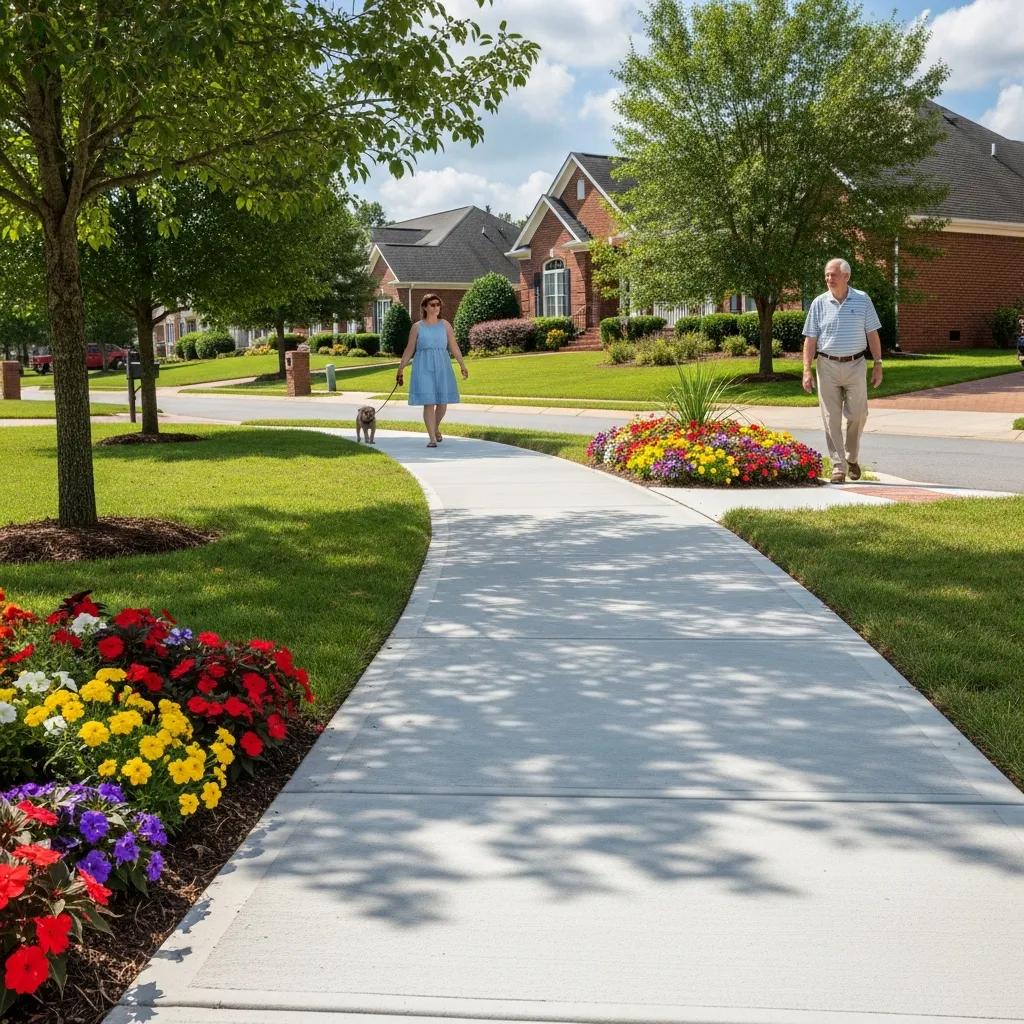
Durable concrete sidewalks are long-lasting pedestrian surfaces made from reinforced concrete slabs designed to resist weathering, traffic, and freeze–thaw cycles. Concrete provides a stable walking surface that reduces trip hazards and improves neighborhood walkability, and the material’s compressive strength delivers longevity compared with loose pavers or compacted gravel. Durable sidewalks also resist rutting and deformation, which lowers long-term maintenance costs and supports property value through improved curb appeal. These practical benefits feed directly into safety, accessibility, and life-cycle cost advantages that matter in New Garden’s mix of residential streets and commercial walkways.
Concrete’s slip-resistance options help preserve safety in wet conditions and support ADA compliance, so property owners see both immediate and long-term value. For local readers considering a project, qualified New Garden and Greensboro contractors can evaluate site conditions and offer quotes, but the core decision should weigh durability, maintenance needs, and aesthetic preferences. Understanding these benefits prepares you to prioritize safety and value when planning installation or replacement work.
How Does Slip-Resistance Enhance Sidewalk Safety in Greensboro?
Slip-resistance on concrete sidewalks refers to surface textures and finishes that increase friction between shoes and the pavement, reducing fall risk in rainy or dewy conditions. Common slip-resistant finishes include broomed surfaces, exposed aggregate, and textured stamps; each finish changes the microtexture of the concrete and thus the surface coefficient of friction. Choosing an appropriate finish matters because Greensboro’s humid summers and occasional winter wetness can create slick conditions that increase liability and pedestrian injury risk. Routine maintenance, such as pressure washing, re-sealing, and timely crack repair, preserves microtexture and prolongs slip-resistance performance.
Selecting the right finish balances safety and aesthetics: broom finish provides consistent traction with low cost, while exposed aggregate offers greater texture and decorative appeal. Maintaining slip-resistance requires periodic cleaning and sealing, which both preserve surface friction and extend the sidewalk’s functional life, and these practices set up the next consideration: why professional installation matters for long-term performance.
Why Choose Professional and Reliable Concrete Contractors in New Garden?
Hiring professional, reliable concrete contractors ensures correct subbase preparation, appropriate slab thickness, proper reinforcement, and correct curing—each critical to sidewalk longevity and structural performance. Professionals understand local grading, drainage, and City of Greensboro permitting considerations and can place control joints and expansion joints to manage cracking under thermal and soil movement. Contractors also bring proper equipment and quality control measures that reduce the likelihood of premature settlement or uneven surfaces that cause trip hazards. Homeowners who attempt DIY sidewalk pours risk improper mix design, poor compaction, and inadequate curing, which commonly lead to early failure.
A vetted contractor will document insurance, warranties, and permit responsibilities, and will recommend finishes that meet both slip-resistance and aesthetic goals. Verifying these professional safeguards reduces homeowner risk and supports durable sidewalks that require less frequent repairs, which naturally leads into how installations are actually performed in the field.
How Is New Concrete Sidewalk Installation Performed in Greensboro, NC?
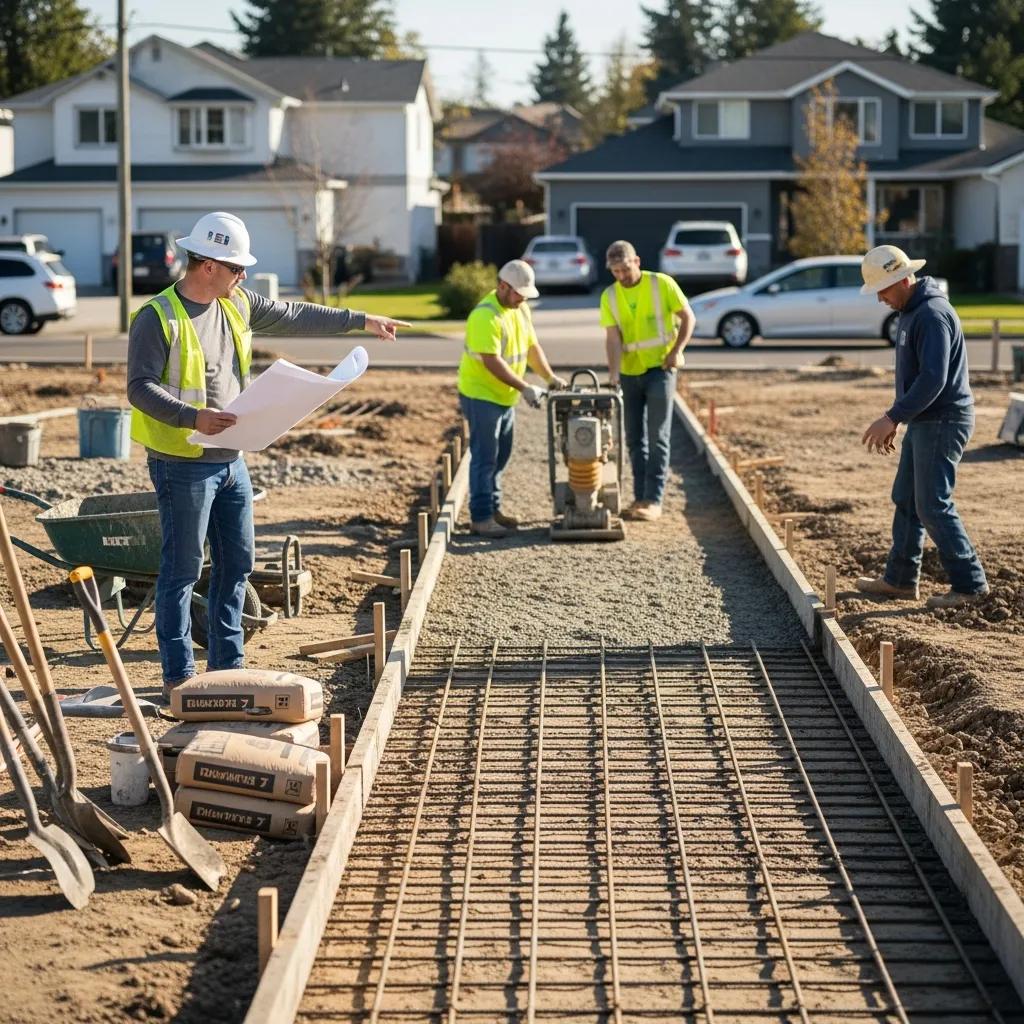
New concrete sidewalk installation follows a sequence of evaluation, preparation, forming, reinforcement, pouring, finishing, curing, and clean-up that ensures a stable, code-compliant walking surface. Site evaluation identifies grading, drainage, and underground utilities, and informs decisions about slab thickness, reinforcement (wire mesh or rebar), and whether a compacted gravel subbase is required. Proper excavation and subbase preparation create a uniform load-bearing layer that prevents settlement; forming and reinforcement control slab geometry and tensile performance. Finishing techniques select a surface texture for slip resistance and look, and curing plus sealers protect the concrete during its early strength gain.
A clear, stepwise understanding of these phases helps property owners plan timelines and expectations for residential versus commercial requirements, and it also frames what to expect from contractor site visits and estimates. The table below gives a concise view of typical installation steps and homeowner expectations.
Intro to installation steps and homeowner expectations:
This stepwise process clarifies each phase and sets realistic expectations for scheduling, and understanding these steps makes it easier to review contractor proposals and timelines during estimate requests.
What Are the Steps for Residential and Commercial Walkway Installation?
Residential and commercial walkway installations share core steps—site evaluation, excavation, subbase, forming, pouring, finishing, and curing—but they differ in thickness, reinforcement, and load-bearing design. Residential sidewalks commonly use 4-inch slabs with wire mesh for pedestrian loads, while commercial sidewalks or curb cuts often require 6 inches or more and heavier reinforcement to resist vehicle or maintenance equipment loads. Timeframes vary: a typical residential sidewalk section can be completed in a day or two for the pour, though curing and final use may take up to a week; commercial projects may need longer for heavier subbase work and inspections.
Property owners can prepare by clearing vegetation, marking utilities, and documenting desired finishes to help contractors produce accurate bids. Preparing the site and understanding these differences helps homeowners choose the right build specifications, which in turn influences material and finish choices explained next.
Which Concrete Materials and Finishes Are Available for Sidewalks?
Concrete mixes for sidewalks typically include normal-weight Portland cement mixes with air entrainment for freeze–thaw durability and may include fiber reinforcement for crack resistance. Additives such as air-entraining agents improve resistance to freezing cycles, while admixtures can accelerate or retard setting depending on weather. Common finishes include broom-finish for traction, exposed aggregate for decorative texture, stamped or colored concrete for enhanced curb appeal, and smooth trowel finishes where accessibility transitions require lower thresholds.
Each finish affects slip-resistance, maintenance, and cost: broom finish is economical and safe, exposed aggregate is more decorative but slightly higher maintenance, and stamped colored surfaces increase upfront cost while offering design flexibility. Understanding material choices helps balance durability, safety, and appearance in project planning.
How Can You Repair and Maintain Concrete Sidewalks in New Garden?
Repair and maintenance extend sidewalk life by addressing cracks, spalling, settlement, and drainage issues before they worsen into hazards requiring full replacement. Regular inspections catch hairline cracks, surface wear, and trip hazards early; prioritized repairs—such as crack sealing, patching, leveling, or grinding—restore safety and delay replacement. Preventative steps like sealing surfaces, managing nearby tree roots, and correcting drainage keep water away from the subbase and reduce freeze–thaw and erosion damage. Proactive care reduces cumulative repair costs and preserves curb appeal.
Knowing when to perform quick fixes versus full replacement helps homeowners budget and schedule work proactively rather than reactively, and the next subsection details common repair techniques used locally.
What Are Common Concrete Sidewalk Repair Techniques in Greensboro?
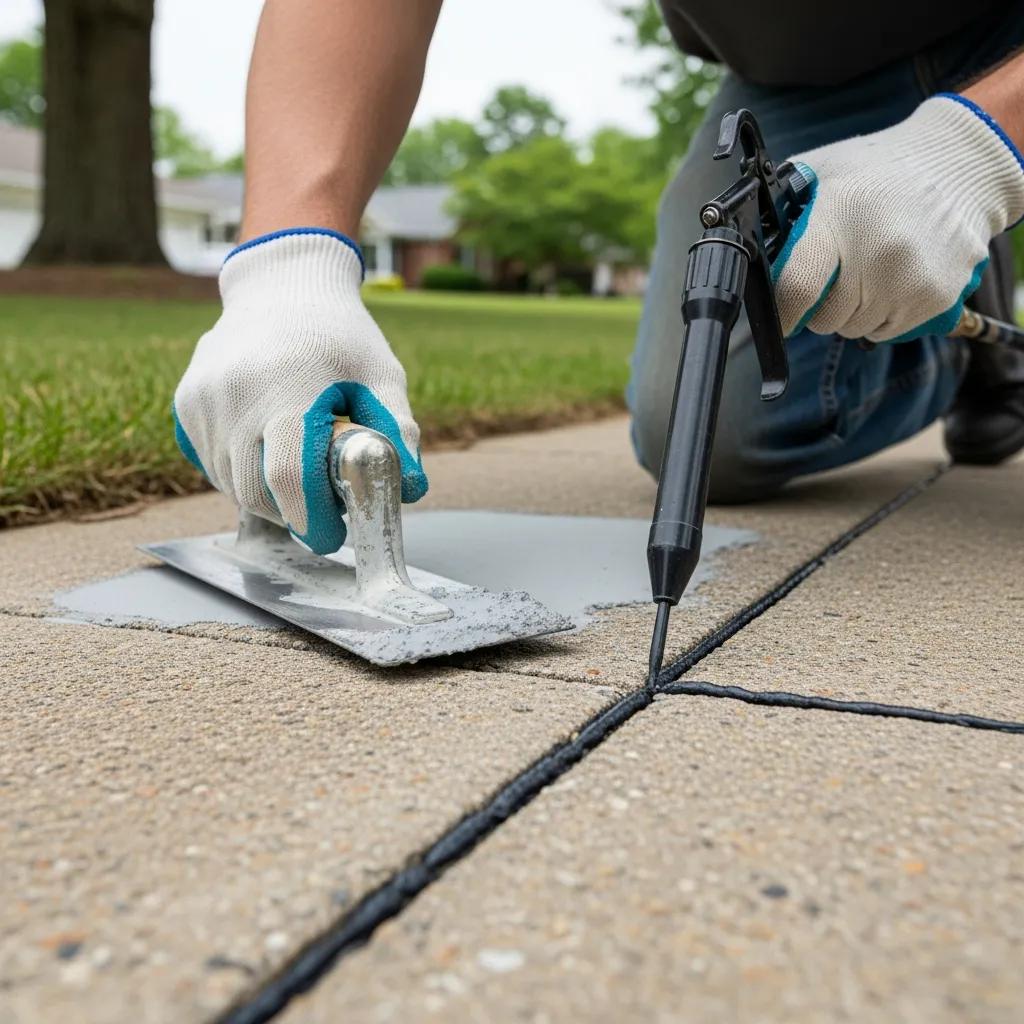
Common repair techniques include crack routing and sealing, surface patching with polymer-modified mortars, slab grinding for trip hazard reduction, mudjacking or slab leveling to correct settlement, and targeted replacement when structural failure exists. Crack sealing prevents water infiltration that causes freeze–thaw damage and subbase erosion, while patching restores surface integrity and slip resistance in spalled areas. Mudjacking lifts settled slabs back to grade when subbase voids are small; when subbase collapse or extensive cracking occurs, full panel replacement is the more durable option.
Choosing the right technique depends on the extent of damage, underlying cause, and desired service life; accurate diagnosis avoids wasted repairs and leads into seasonal maintenance practices that prolong results.
How to Maintain Sidewalks for Longevity in North Carolina’s Climate?
Seasonal maintenance in North Carolina focuses on drainage control, sealing, vegetation management, and timely cleaning to remove debris and organic staining that retain moisture. Annual inspection cycles identify early cracks, joint deterioration, and root intrusion from adjacent trees; sealing every 2–4 years helps block moisture and chemical ingress that accelerate deterioration. Addressing grading problems and re-directing runoff away from slabs preserves subbase integrity, while trimming roots and installing root barriers prevents upheaval. Winter de-icing should avoid harsh salts; instead use safer alternatives and prompt rinsing to minimize concrete surface damage.
A consistent maintenance schedule reduces the frequency of major repairs and supports safe, ADA-compatible sidewalks that retain value and usability for years to come.
What Are the Typical Costs for Concrete Sidewalk Services in Greensboro, NC?
Concrete sidewalk costs in Greensboro vary by scope, access, material choices, and site preparation needs; homeowners should expect different per-square-foot ranges for installation, repair, and full replacement. Typical ballpark per-square-foot ranges reflect basic broom-finish installations, decorative finishes, and the complexity of grading or retaining walls. Major cost drivers include demolition, subbase work, reinforcement, finish selection, permit requirements, and ADA accommodations. Below is a clear comparison of common service types and typical price ranges to help property owners budget and plan.
Intro to cost comparisons and influencing factors:
These ranges clarify what to expect, but precise pricing requires on-site evaluation because site access, drainage correction, and finish choices materially affect labor and material costs. Preparing for estimates reduces uncertainty and guides the contractor selection and comparison process, as outlined next.
Which Factors Influence Concrete Sidewalk Installation and Repair Pricing?
Key factors that influence pricing include site accessibility, existing grade and drainage needs, extent of demolition, slab thickness and reinforcement requirements, chosen finish, permit and ADA compliance costs, and seasonal scheduling. Hard-to-access areas increase labor and equipment needs, while poor grading or the need for retaining structures raises excavation and subbase costs. Decorative finishes, colored concrete, or stamped textures add material and labor premiums compared with basic broom finish. Understanding these drivers helps property owners evaluate quotes and decide where to spend for durability, safety, or appearance.
Knowing these variables also prepares owners to gather the right documentation and photos when requesting detailed, comparable estimates from local contractors.
How to Get Accurate Estimates from New Garden Concrete Contractors?
To get accurate estimates, provide contractors with site photos, approximate measurements, notes on drainage or utility locations, and a description of desired finishes and ADA needs. Ask for itemized quotes that separate excavation, subbase work, concrete, reinforcement, finishing, sealing, permits, and disposal so you can compare apples-to-apples proposals. Request timelines, warranty terms, and confirmation of insurance and permit responsibility in writing. Use a simple checklist when soliciting bids to ensure consistency across contractors and to make informed decisions based on scope and price rather than low-ball estimates.
For homeowners ready to move forward, contacting local New Garden or Greensboro concrete contractors for on-site assessments will yield the most accurate quotes—bring photos and questions to speed the process and ensure clear comparisons.
How to Choose the Best Concrete Sidewalk Contractor in New Garden?
Choosing the right contractor hinges on verifying credentials, reviewing relevant project experience, and confirming clear written estimates and warranties that protect the homeowner. A qualified contractor should demonstrate understanding of local permitting and ADA requirements, provide references for similar residential or commercial sidewalk projects, and be able to explain subbase, reinforcement, and curing methods. Insurance and licensing verification reduce liability risk, and a transparent communication style about timelines and change orders indicates reliable project management. Evaluating these criteria helps separate experienced providers from those with insufficient quality controls.
A concise checklist below helps homeowners vet contractors efficiently and prepares them for informed hiring decisions.
- Verify license and insurance: Confirm contractor carries appropriate liability and worker coverage.
- Review relevant portfolio and references: Ask for examples of similar New Garden or Greensboro sidewalk projects.
- Request itemized, written estimates: Ensure quotes separate materials, labor, permits, and disposal.
- Ask about warranties and cure protocols: Understand how the contractor addresses cracking or settlement post-install.
- Confirm permit and ADA experience: Ensure the contractor handles required local compliance and ramp details.
This checklist streamlines vetting and prepares homeowners to evaluate bids on equal footing, while the next subsection details the specific credentials and checks to perform.
What Credentials and Experience Should You Look For?
Look for contractors who can provide proof of appropriate licenses, liability and worker insurance, and who have verifiable references for sidewalk or hardscape work in the Greensboro area. Relevant experience includes demonstrated projects with similar scope (residential walkways vs. commercial sidewalks), documented knowledge of subbase preparation and reinforcement techniques, and familiarity with local permitting processes. Ask candidates how they handle unforeseen conditions, what warranties they provide on workmanship, and how they document quality control during pours and curing.
Verifying these credentials reduces risk and signals professionalism, and knowing which regulatory and ADA considerations apply helps ensure completed sidewalks meet local standards.
How Do Local Regulations and ADA Compliance Affect Sidewalk Projects?
Local regulations and ADA compliance influence sidewalk slope, ramp placement, detectable warning surfaces, and transitions at driveways and crosswalks; these factors can affect design, permitting, and cost. Property owners should verify whether the City of Greensboro requires permits for sidewalks and who is responsible for public-right-of-way improvements. ADA considerations include maximum running slope, cross slope limits, landing dimensions on ramps, and tactile warning surfaces at street crossings, so projects that affect public access typically require engineered details or inspector sign-off. Involving an experienced contractor or consulting a local authority early avoids costly rework and ensures accessible, code-compliant sidewalks.
Understanding regulation and ADA requirements protects property owners from non-compliant builds and underpins safer, longer-lasting sidewalks.
What Are Popular Concrete Sidewalk Design Ideas and Replacement Options in Greensboro?
Popular sidewalk design options in Greensboro mix functionality with curb appeal: broom-finish concrete for a practical, low-cost surface; stamped and colored concrete for decorative walkways; exposed aggregate for textured elegance; and paver accents or banding for contrast. Design choice affects upfront cost, maintenance, and slip-resistance, so balancing aesthetic goals with safety and lifecycle cost is critical. Replacement strategies vary from targeted panel replacement to full-path replacement, and design retrofits can incorporate drainage fixes and ADA upgrades during replacement work.
Intro to design comparison:
Comparing these options helps owners decide whether to prioritize budget, aesthetics, or maximum slip-resistance, and the final subsection helps determine when replacement is the right choice over repair.
How Do Stamped and Decorative Concrete Walkways Enhance Property Appeal?
Stamped and decorative concrete replicate the look of stone, brick, or tile at a fraction of the installation complexity while providing a continuous, monolithic surface that resists weed growth and shifting. These finishes elevate curb appeal and can increase perceived property value when executed with consistent jointing and color selection. Decorative surfaces require more careful installation and finishing to avoid visible flaws, and they may need periodic resealing to maintain color and slip-resistance. For owners focused on appearance, decorative concrete offers durable design flexibility if balanced with proper maintenance planning.
When Is Sidewalk Replacement Recommended Over Repair?
Replacement is usually recommended when widespread cracking, chronic settlement, subbase failure, or repeated short-term repairs indicate that the underlying structure is compromised. If numerous panels show heaving from tree roots, or if mudjacking and patching only provide temporary fixes, full replacement with proper subbase correction is more cost-effective over the lifecycle. Replacement also makes sense when upgrading to ADA-compliant ramps or when a design refresh with decorative finishes is desired. Evaluating remaining useful life, frequency of past repairs, and total cost over a 10–20-year horizon helps determine whether replacement provides better long-term value than continuous repairs.
Making an informed replacement decision avoids recurring repairs and results in a safer, more attractive sidewalk that meets functional and regulatory needs.


0 Comments