
Decorative & Durable Concrete Flatwork in Sedgefield & Greensboro
Concrete flatwork refers to horizontal concrete elements such as patios, driveways, sidewalks, and slabs that provide functional surfaces and aesthetic value for residential properties in Sedgefield and Greensboro. This article explains the full spectrum of Sedgefield concrete flatwork and concrete flatwork Greensboro services, including decorative options like stained concrete Sedgefield and colored concrete driveways Greensboro, plus repair, leveling, resurfacing, and maintenance strategies to maximize lifespan. Many homeowners face issues such as surface cracking, uneven slabs, or dated finishes that reduce curb appeal and usability; understanding service types, installation steps, repair thresholds, and cost drivers helps choose the right approach. The guide maps available services, outlines concrete patio installation Sedgefield step-by-step, presents concrete driveway repair Greensboro and concrete leveling Greensboro solutions, and provides transparent cost guidance with local ranges and maintenance schedules. Throughout, the focus remains on practical decisions—how each decorative or remedial option performs in local soils and weather, and what actions preserve stained and stamped concrete finishes. Read on to compare service benefits, learn installation best practices, estimate concrete driveway cost Greensboro, and apply a seasonal maintenance routine that extends the life of your flatwork.
What Concrete Flatwork Services Are Available in Sedgefield and Greensboro?
Concrete flatwork services cover installation, decorative finishes, repair, leveling, and resurfacing to address both aesthetic and structural needs for residential properties. In Sedgefield and Greensboro, contractors commonly provide new slab pours for patios and driveways, stained concrete patios for visual appeal, colored concrete driveways for curb enhancement, stamped concrete sidewalks, and repair services such as crack injection, patching, and resurfacing. These services work by tailoring mix designs, subbase preparation, and finishing methods to local soil conditions and climate, delivering durable surfaces that resist settlement and freeze-thaw damage while meeting homeowners’ design goals. Below is a concise service list that highlights typical applications and the key benefits each delivers to local properties, helping homeowners select the right solution for performance and appearance.
Common flatwork services and where they fit in residential settings:
- New concrete patios and slabs: Durable outdoor living surfaces that support furniture and foot traffic.
- Stained concrete patios: Decorative finishes that add color and texture while requiring low maintenance.
- Colored concrete driveways: Integral or surface-applied color for enhanced curb appeal and longevity.
- Stamped concrete sidewalks and patios: Textured patterns that mimic stone or pavers at lower cost.
- Concrete repair and leveling (polyjacking/mudjacking): Restores grade and eliminates trip hazards.
- Resurfacing and overlays: Refreshes worn surfaces without full replacement.
How Do Stained Concrete Patios Enhance Sedgefield Homes?
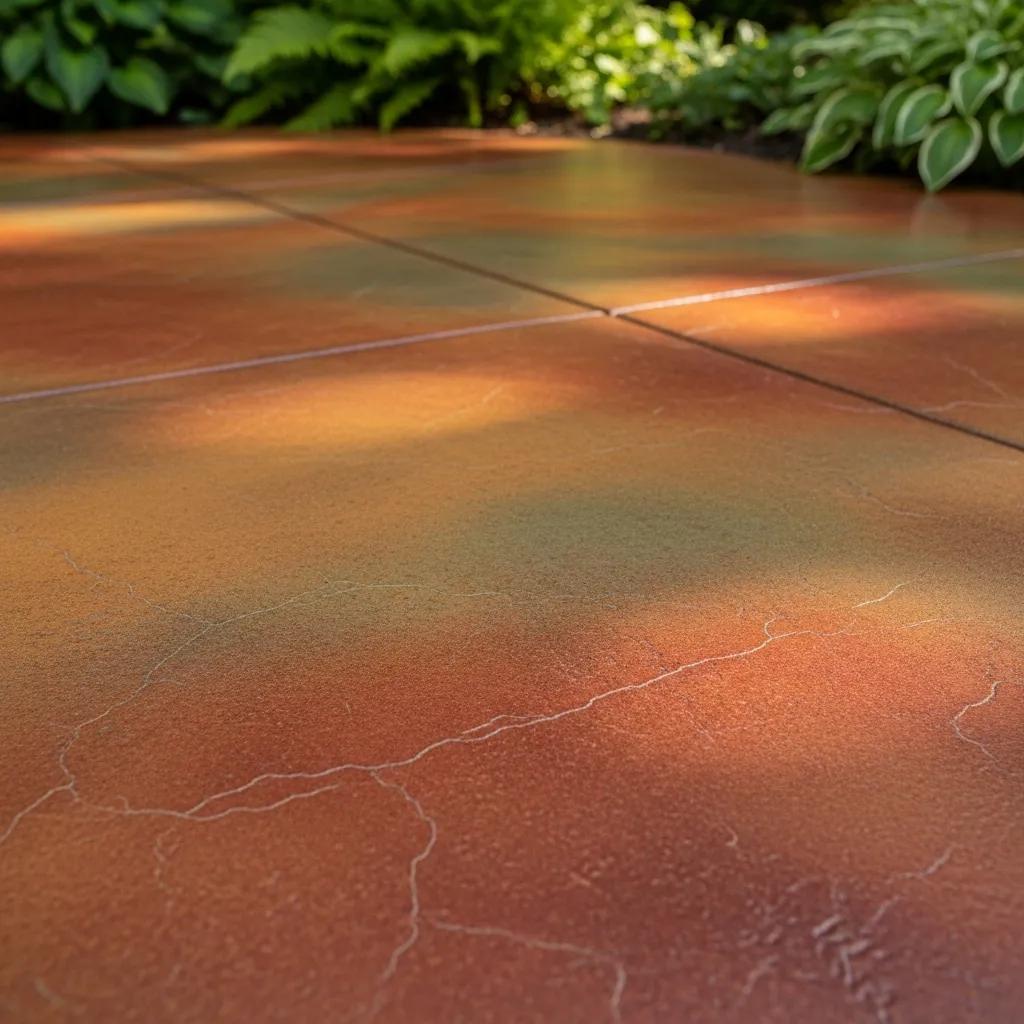
Stained concrete patios enhance Sedgefield homes by combining durable slab performance with customizable color and subtle variations that suit local architectural styles. A stain penetrates the concrete surface and chemically or physically bonds to the matrix, producing long-lasting color that resists peeling; this mechanism reduces the need for frequent repainting while delivering color stability appropriate for local UV exposure. Typical stain palettes for the region favor earth tones and warm amber hues that complement brick and siding, and homeowners often pair stains with sealers to improve resistance to staining from outdoor elements. Because stained patios require only periodic resealing and routine cleaning, they deliver both visual value and practical longevity. Understanding stain application and maintenance leads naturally to choices about colored and colored-integral driveways used around Greensboro.
What Are the Benefits of Colored Concrete Driveways in Greensboro?
Colored concrete driveways in Greensboro offer improved curb appeal and the practicality of an integrated finish that reduces surface maintenance over time. Color can be introduced as integral pigments mixed into the concrete for full-depth hue retention, or as surface-applied dyes and stains for more nuanced finishes; integral color tends to retain cosmetic appearance even with light surface wear, while dyes allow complex marbling effects. Benefits include resistance to UV fading when quality pigments are used, potential for reduced heat absorption with lighter tones, and an overall increase in property value due to enhanced aesthetics. Proper sealing and joint treatment manage salt and chemical exposure, and careful subbase preparation ensures color finishes remain intact as the slab performs structurally. These considerations point toward best practices for patio installation and finishing in Sedgefield that follow.
How Is Concrete Patio Installation Performed in Sedgefield?
Concrete patio installation in Sedgefield follows a deliberate sequence of site preparation, forming, subbase preparation, concrete placement, finishing, and curing to ensure a durable, attractive surface. The process begins with site assessment and grading to establish proper drainage away from structures, then forms are set and a compacted aggregate subbase is installed to support load and minimize settlement; reinforcement such as rebar or fiber may be specified depending on slab size and anticipated loads. After mixing and pouring, finishing techniques—troweling, broom finish, or texturing—are applied while the concrete reaches final set, and curing compounds or wet curing methods are used to control hydration and strength gain. Proper sealing after curing protects stains and pigments and improves resistance to moisture and detergents, with scheduling timed to local weather to avoid rapid drying or freeze exposure. Below is a numbered step-by-step checklist that summarizes the typical installation workflow for homeowners to reference.
A stepwise patio installation checklist homeowners should expect:
- Site assessment and grading to set slope and drainage away from the house.
- Forming, compacted aggregate subbase, and reinforcement installation.
- Concrete placement, consolidation, and finishing to desired texture and edge profile.
- Controlled curing, joint cutting, and application of sealers or protective coatings.
These steps ensure the patio performs structurally and visually; the following subsection reviews common decorative options used during finishing and how to evaluate them.
What Are Popular Decorative Concrete Options for Patios?
Popular decorative concrete options for patios include stains (acid and water-based), integral color, dyes, stamping, overlays, and exposed aggregate, each offering distinct visual textures and durability profiles. Acid stains react chemically with concrete to create variegated, translucent color that performs well for natural, mottled looks, while water-based stains and dyes provide a broader palette and sharper color control; integral color yields uniform coloration through the slab for long-term color retention. Stamping creates textures that replicate stone, brick, or tile and pairs well with stains to mimic natural materials at lower cost. Selection depends on desired appearance, expected maintenance, and lifespan—stains and integral color are low-maintenance, stamping adds texture but may require resealing, and overlays offer a resurfacing option when substrate is sound. Understanding these finishes helps compare stamped concrete to pavers and overlays in the next section.
How Does Stamped Concrete Compare to Other Patio Finishes?
Stamped concrete compares favorably to other patio finishes by offering textured, patterned surfaces that emulate stone or pavers with fewer joints and at lower material cost, though realistic replication depends on skillful stamping and coloring. Stamped concrete’s advantages include faster installation and a continuous slab that reduces weed growth between joints, while its downsides can include more noticeable wear on high-traffic areas and the need for resealing to preserve color and texture. Compared to pavers, stamped concrete is generally less expensive initially but can be harder to repair locally; compared to overlays, stamping typically integrates with the primary slab and is more resistant to delamination when installed correctly. Lifespan and maintenance tradeoffs hinge on base preparation, sealant schedules, and exposure—factors that are addressed when evaluating repair versus replacement options for driveways and slabs.
What Are Effective Concrete Driveway Repair and Leveling Solutions in Greensboro?
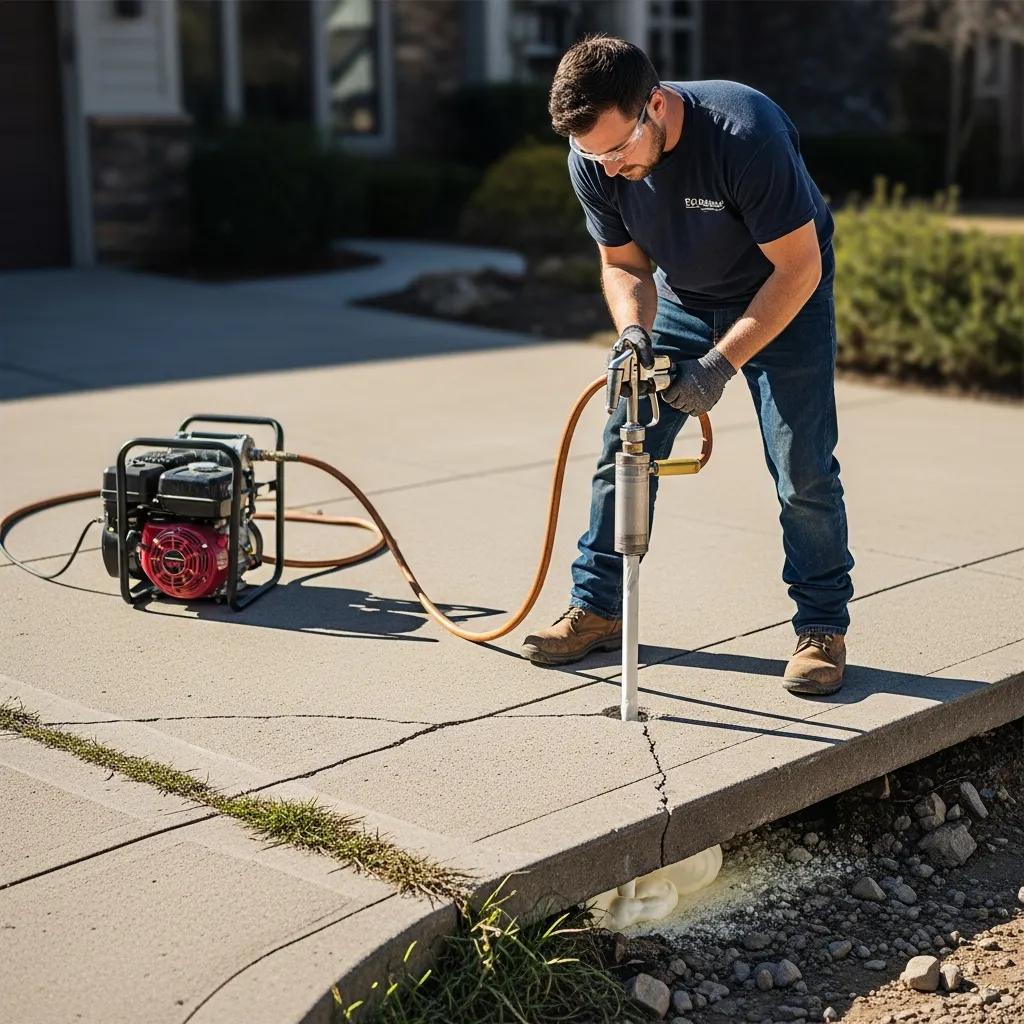
Effective concrete driveway repair and leveling solutions in Greensboro encompass crack repair, patching, resurfacing, and leveling techniques like polyjacking to address settlement and spalling without unnecessary full replacement. Repair strategies begin with assessing the type of damage—hairline cracks may accept filler and sealant, while structural cracks or widespread spalling might require partial replacement or resurfacing with overlays; polyjacking injects expanding polyurethane beneath sunken slabs to lift and stabilize with minimal excavation. These repair methods work by restoring grade, re-establishing load paths, and protecting the slab from moisture intrusion that accelerates freeze-thaw deterioration in the local climate. Deciding between repair and replacement depends on the extent of damage, underlying soil conditions, and long-term value; the next list outlines common repair options and ideal use cases to guide homeowners in Greensboro.
Common repair and leveling options with concise use-cases:
- Crack injection and sealing: Best for non-structural hairline and medium cracks to prevent water entry.
- Patching and partial slab replacement: Appropriate when localized spalling or edge failure affects usability.
- Resurfacing/overlay: Ideal when the slab is structurally sound but surface appearance is poor.
- Polyjacking (polyurethane leveling): Effective for sunken slabs due to voids or minor soil compaction.
- Mudjacking (cement slurry lifting): Traditional lifting method suitable for larger volume lifts where poly is not specified.
When Should You Choose Concrete Repair Versus Replacement?
Choosing repair versus replacement depends on damage extent, underlying causes, and remaining useful life: repair is cost-effective when issues are surface-level or limited to discrete panels, while replacement is warranted for widespread structural failure or ongoing soil instability. Key indicators favoring repair include localized cracks without undermining, minimal settlement confined to individual panels, and a solid subbase; indicators favoring replacement include active soil movement, multiple adjacent failed panels, and extensive reinforcement corrosion. A decision checklist helps prioritize options: if the slab can be leveled and resealed to regain function and appearance, repair is preferred; if repeated repairs would not restore safe use for more than a few years, replacement is the better investment. Considering these criteria leads into how concrete leveling methods specifically improve driveway durability and extend service life.
How Does Concrete Leveling Improve Driveway Durability?
Concrete leveling, particularly polyjacking, improves driveway durability by restoring proper grade and eliminating low spots that trap water, reducing freeze-thaw cycling and undermining that cause progressive cracking. Polyjacking injects a high-density polyurethane foam beneath the slab that expands to fill voids and lift the concrete to its original elevation with minimal surface disruption; this material also stabilizes the subgrade and repels water, preventing future erosion. Compared to mudjacking, polyurethane is lighter and less invasive, cures quickly, and allows earlier use of the surface, extending functional life and lowering long-term maintenance. Leveling typically yields several more years of usable life and can delay or avoid full replacement when underlying soils are stable, which is a key cost-saving consideration discussed in the next cost section.
How Much Does Concrete Flatwork Cost in Sedgefield and Greensboro?
Transparent local cost guidance for concrete flatwork covers ranges by service type and highlights the primary drivers—material choices, site prep, slab size, finish complexity, and access—which together determine final estimates for stained, colored, stamped, repair, and leveling projects. Homeowners considering concrete driveway cost Greensboro or a stained patio should expect variation based on square footage, whether integral color or surface treatments are used, the need for reinforcement or complex forming, and local labor conditions; finishing choices such as stamping and multiple color applications add to labor and material costs. The table below summarizes typical local ranges and cost drivers to help homeowners plan budgets and compare options; after the table, the section explains practical ways to get accurate quotes and what line items to verify in an estimate.
What Factors Influence the Price of Stained and Colored Concrete?
The price of stained and colored concrete depends on the type of coloring (acid stain vs water-based dye vs integral pigment), surface preparation required, sealer type, and complexity of color effects, plus labor and local conditions such as access and soil remediation. Acid stains produce subtle, variegated tones but may require less labor than multi-step dye effects, whereas integral color involves precise batching during mixing and can increase material costs. Surface repairs, patching, and grinding to create a uniform substrate add prep costs, and premium sealers that improve UV resistance and chemical protection increase the overall price. Local permitting or difficult site access can also raise labor hours, so discussing these factors with a contractor helps homeowners understand line items on concrete driveway cost Greensboro estimates.
Are There Cost Differences Between Decorative Concrete Types?
Decorative concrete types differ in upfront cost and long-term value: stamped concrete and high-detail overlays typically sit at the higher end of the range due to molds and skilled labor, while stains and integral color often cost less per square foot but still provide strong aesthetic value. Cost-per-square-foot ranking generally places plain stained/integral color at the lower-middle, stamped and multi-color effects higher, and overlays or specialty exposed aggregate varying by finish complexity. Value considerations include maintenance demands and lifespan: a higher upfront investment in a durable stamped finish or quality sealer may reduce resealing frequency and prolong curb appeal, making higher costs worthwhile over the installation lifecycle.
How Can You Maintain and Extend the Life of Concrete Flatwork in Sedgefield?
Maintaining concrete flatwork in Sedgefield focuses on routine cleaning, timely sealing, crack monitoring, and addressing drainage to mitigate freeze-thaw and moisture-related damage—actions that significantly extend lifespan and preserve decorative finishes like stamped and stained surfaces. Regular sweeping and pressure washing remove abrasive grit and contaminants, while resealing every few years (depending on sealer type and traffic) protects pigments and reduces water ingress; prompt repair of small cracks prevents them from widening or undermining the slab. The following maintenance table gives a practical schedule homeowners can follow to keep surfaces performing well, and the subsequent section details best practices for caring specifically for stamped and stained concrete.
Introductory note before the maintenance table: this schedule balances frequency and result to optimize upkeep without excessive effort.
What Are Best Practices for Caring for Stamped and Stained Concrete?
Best practices for caring for stamped and stained concrete include using pH-neutral cleaners, avoiding harsh deicers that damage sealers, and reapplying compatible sealers at recommended intervals to protect color and texture. Cleaning should begin with sweeping and a gentle wash; for stubborn stains, specific cleaners that do not strip the sealer are preferred. When resealing, choose products rated for UV stability to limit pigment fading for concrete stain colors Greensboro, and ensure surfaces are fully cured and free of moisture before sealer application. Avoid abrasive cleaning tools and heavy chemical use that can etch or dull the finish; consistent, gentle maintenance preserves both aesthetic and functional qualities and reduces the need for costly resurfacing.
How Does Weather Affect Concrete Maintenance in Greensboro?
Weather in Greensboro affects maintenance through seasonal freeze-thaw cycles, humidity, and UV exposure, which together influence sealing schedules, drainage needs, and color longevity for decorative finishes. Freeze-thaw cycles can force water into hairline cracks and expand them over time, so ensuring joints are properly sealed and water is directed away from slabs is critical before winter. High humidity can extend drying times for sealers and coatings, so plan resealing for drier months, and UV exposure can gradually fade surface-applied pigments—prompt resealing with UV-stable products mitigates fading. Evaluating weather patterns when scheduling maintenance prevents seal failure and preserves surfaces, which makes selecting local contractors with region-specific experience valuable.
Why Choose Local Concrete Contractors for Flatwork Projects in Sedgefield and Greensboro?
Choosing local concrete contractors offers advantages in knowledge of Sedgefield soils, local codes, permitting processes, and Greensboro climate impacts, leading to better long-term outcomes for concrete flatwork projects. Local professionals understand typical subgrade conditions, recommended reinforcement practices, and the timing windows for pours that avoid extreme heat or cold, and they can provide timely follow-ups and warranty coordination when issues arise. When vetting contractors, homeowners should look for clear written scopes, documented quality control steps, and local references that demonstrate familiarity with decorative finishes, leveling techniques, and resurfacing—this checklist helps select a contractor who will prioritize durability and finish quality. The next subsection outlines core contractor skills and suggested interview questions to confirm expertise.
What Expertise Do Sedgefield Concrete Contractors Offer?
Sedgefield concrete contractors commonly offer specialized skills including decorative finishing (staining, stamping), concrete resurfacing, polyjacking, and traditional slab replacement—capabilities shaped by local demand and material availability. Their practical experience with local site prep, drainage solutions, and joint detailing ensures installations resist settlement and water damage typical of the area; they also advise on appropriate finish choices for expected foot and vehicle traffic. When interviewing contractors, ask about methods for subbase compaction, curing practices, sample portfolios of stamped/stained projects, and their approach to minimizing disruption during leveling or repair. This line of inquiry helps homeowners verify that the contractor’s expertise aligns with project goals and local performance expectations.
How Do Local Contractors Ensure Quality and Customer Satisfaction?
Local contractors ensure quality through standardized site-prep protocols, proper reinforcement and curing practices, detailed cleanup, and clear warranties or follow-up procedures that protect homeowner investments in flatwork. Quality indicators include documented joint spacing, evidence of subbase compaction, photographs of stages, transparent estimates that list materials and sealer types, and agreed schedules for inspections and punch-list items. Contractors who communicate timelines, explain maintenance needs, and offer post-installation guidance help preserve surfaces and maintain customer satisfaction. Asking for specifics about warranty coverage, sealer recommendations, and expected maintenance intervals provides homeowners with confidence that the finished work will perform as promised.

0 Comments