Concrete Patios: Installation, Design & Cost Guide in Friendly Center
Concrete patios are durable, versatile outdoor living surfaces poured as a continuous concrete slab that can be finished in many decorative styles; in Friendly Center, Greensboro, NC they offer a combination of longevity, design flexibility, and cost transparency that homeowners value. This guide explains what concrete patios are, why they fit Friendly Center’s climate and neighborhoods, plus practical steps for choosing designs, understanding installation, estimating costs, and maintaining surfaces for decades. Many homeowners face uncertainty about material choices, long-term maintenance, and how local conditions affect performance; this article provides clear, actionable answers and a roadmap for moving from concept to installed patio. You will learn about durability in Greensboro’s freeze-thaw cycles, popular decorative options like stamped and stained concrete, the typical installation phases to expect, cost drivers and example ranges, and straightforward maintenance and repair strategies. After reading, you’ll have a checklist for vetting local contractors and the next steps to request an estimate or consultation. Throughout, keywords like concrete patio Greensboro NC, stamped concrete patios Greensboro, and concrete patio maintenance Greensboro are used naturally to help match local search intent and practical homeowner needs.
Why Choose Concrete Patios for Your Friendly Center Home?
Concrete patios provide a long-lasting, low-maintenance outdoor living surface by forming a continuous, reinforced slab that resists heavy use and weathering, making them especially suitable for Friendly Center properties. The material’s mechanism—properly compacted base, reinforcement, controlled joints, and appropriate finishing—delivers a stable surface that reduces trip hazards and supports multiple functional uses, from dining to grills and fire features. Homeowners benefit from design versatility because concrete accepts stamps, stains, colors, and textured finishes that mimic stone or brick without the weight or high material cost, offering strong value-add to a home. Below is a concise list of practical benefits to consider before comparing alternatives.
- Durable in variable climates and resistive to freeze-thaw cycles with correct installation.
- Low maintenance compared with wood decks or loose pavers, requiring only periodic cleaning and sealing.
- Design versatility through stamping, staining, color, and texture options to match outdoor living goals.
These advantages set up a closer look at durability in Greensboro’s climate and the maintenance profile that makes concrete an economical long-term choice.
What Are the Durability Benefits of Concrete Patios in Greensboro?
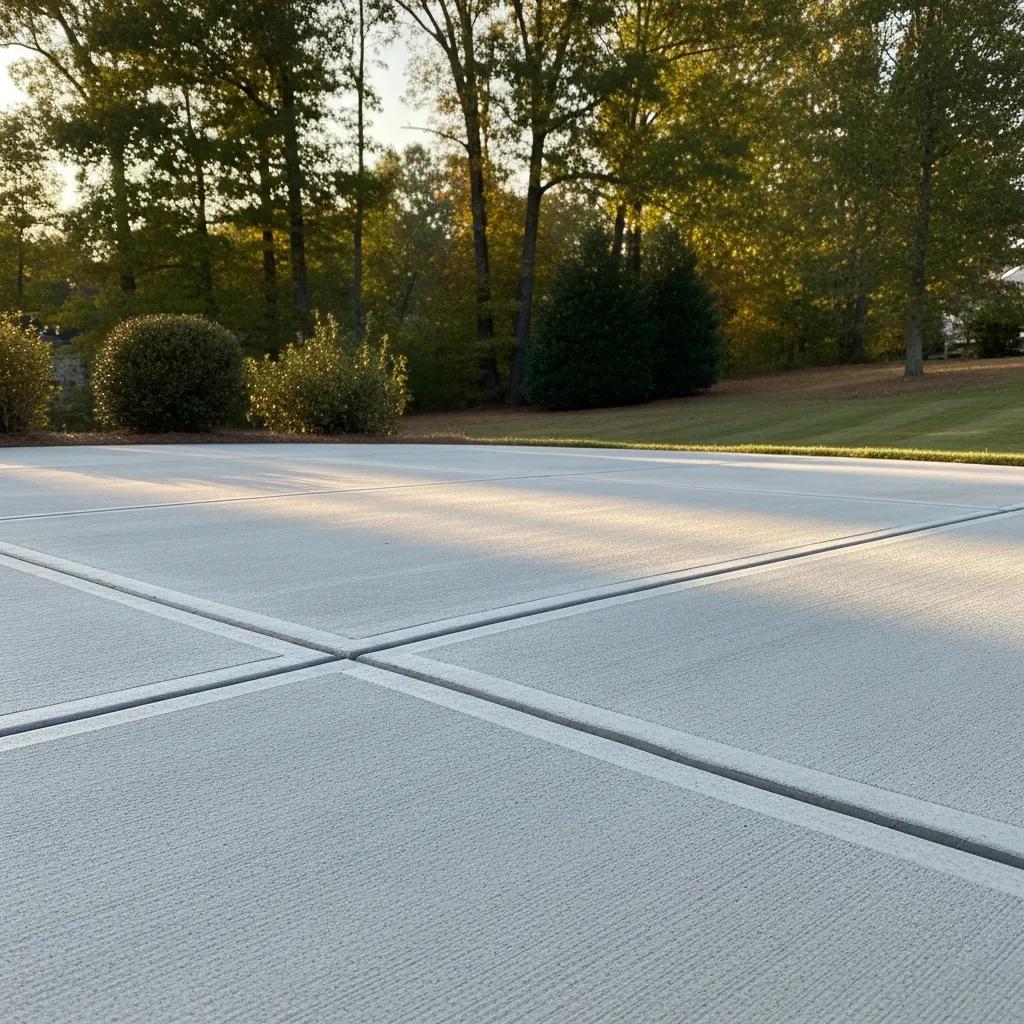
Concrete’s durability comes from its monolithic slab structure and the ability to include reinforcement such as rebar or wire mesh; this creates a load-bearing surface that resists settlement and heavy use. In Greensboro’s seasonal climate, a correctly engineered concrete patio with proper base drainage and control joints minimizes the impacts of freeze-thaw cycles and surface spalling, which increases expected service life compared with many organic materials. Typical examples show that when installed with proper compaction and reinforcement, concrete slabs can function well for decades with routine sealing and minor repairs, delivering predictable lifecycle performance. Understanding these durability mechanics highlights the importance of correct installation details, which we will examine next when discussing maintenance practices and repair thresholds.
How Does Concrete Offer Low Maintenance Compared to Other Patio Materials?
Concrete requires fewer ongoing tasks than wood and significantly fewer weed- and shifting-related repairs than paver installations, because the continuous slab removes gaps where vegetation and settling can occur. Routine care primarily consists of seasonal cleaning—sweeping, occasional power rinsing at moderate pressure—and resealing every few years depending on finish type and exposure, which preserves appearance and protects against water ingress. Compared with wood decks that need annual staining and pavers that need joint maintenance, concrete’s lifetime maintenance costs tend to be lower, especially when factoring in longevity and fewer component replacements. This maintenance profile naturally leads into design options that can further minimize upkeep while maximizing aesthetics, described in the next section.
What Are Popular Concrete Patio Design Options in Friendly Center?
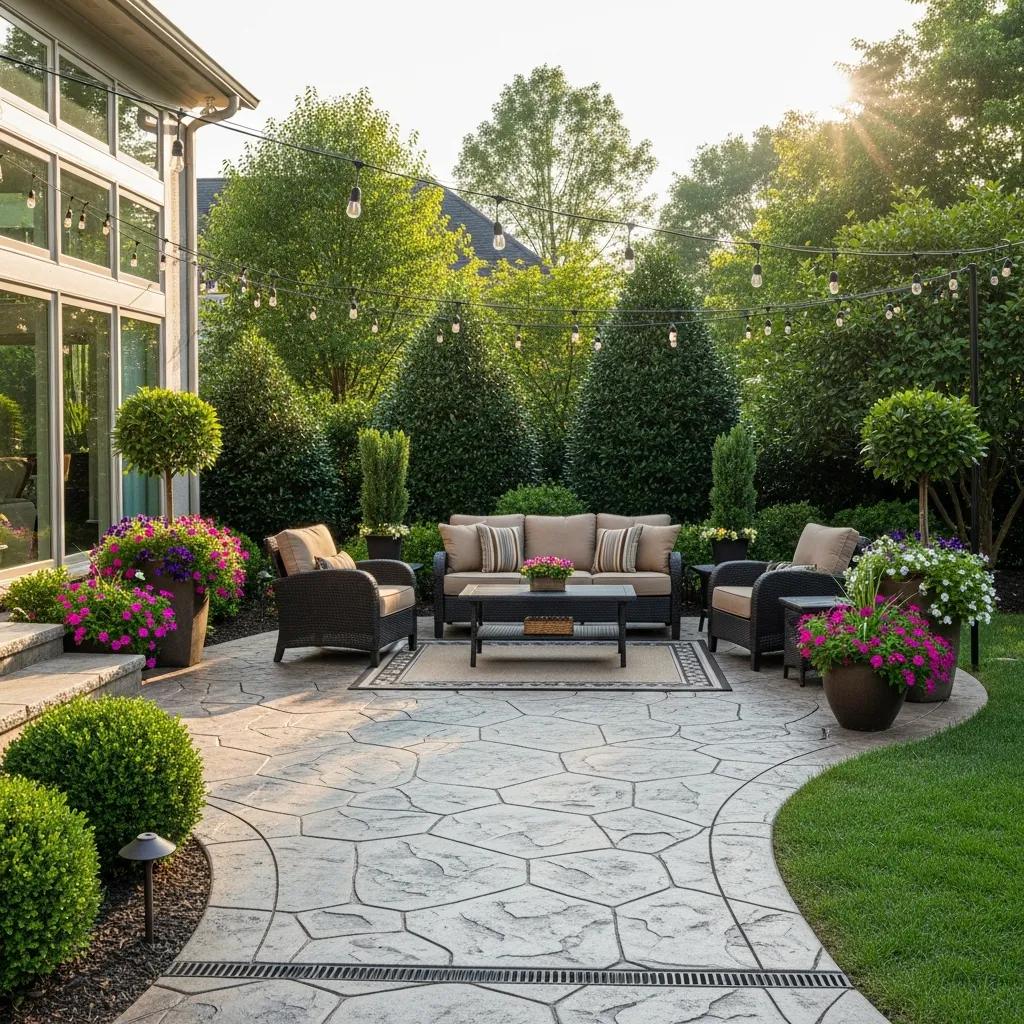
Concrete patios can be customized visually and functionally to match Friendly Center homes, using stamped patterns, colored or stained finishes, exposed aggregate, or multi-level layouts that integrate seating and landscape elements. The underlying principle is that the finished surface—whether stamped to resemble stone or stained for subtle color—sits on a structural concrete slab that delivers stability and allows for many aesthetic overlays. Homeowners often pair decorative finishes with functional elements like integrated steps, retaining walls, and built-in fire features to create cohesive outdoor living zones that flow from the house. Below is a list of common design directions homeowners choose when planning a decorative concrete patio.
- Stamped concrete patterns that imitate flagstone, slate, or brick for a natural look.
- Stained or colored finishes for uniform hues or variegated tones tailored to landscaping.
- Exposed aggregate finishes that reveal decorative stone for texture and slip resistance.
How Do Stamped Concrete Patios Mimic Natural Stone and Brick?
Stamped concrete works by impressing flexible rubber or polyurethane stamps into freshly poured concrete and combining this with color hardeners and release agents to create depth and realistic hues that resemble stone, slate, or brick. The technique uses pattern plates that transfer texture while color is applied either integrally or via surface staining and antiquing to accent joints and irregularities, producing the visual complexity of natural materials with fewer joints and lower installation time. While real stone offers unique variation and longevity, stamped concrete delivers a cost-effective substitute with lighter weight, simpler foundations, and faster installation—making it ideal for homeowners who want the look of stone without the full material or labor cost. Understanding these trade-offs helps when selecting custom features to increase use and enjoyment, described next.
What Custom Features Can Enhance Your Concrete Patio Design?
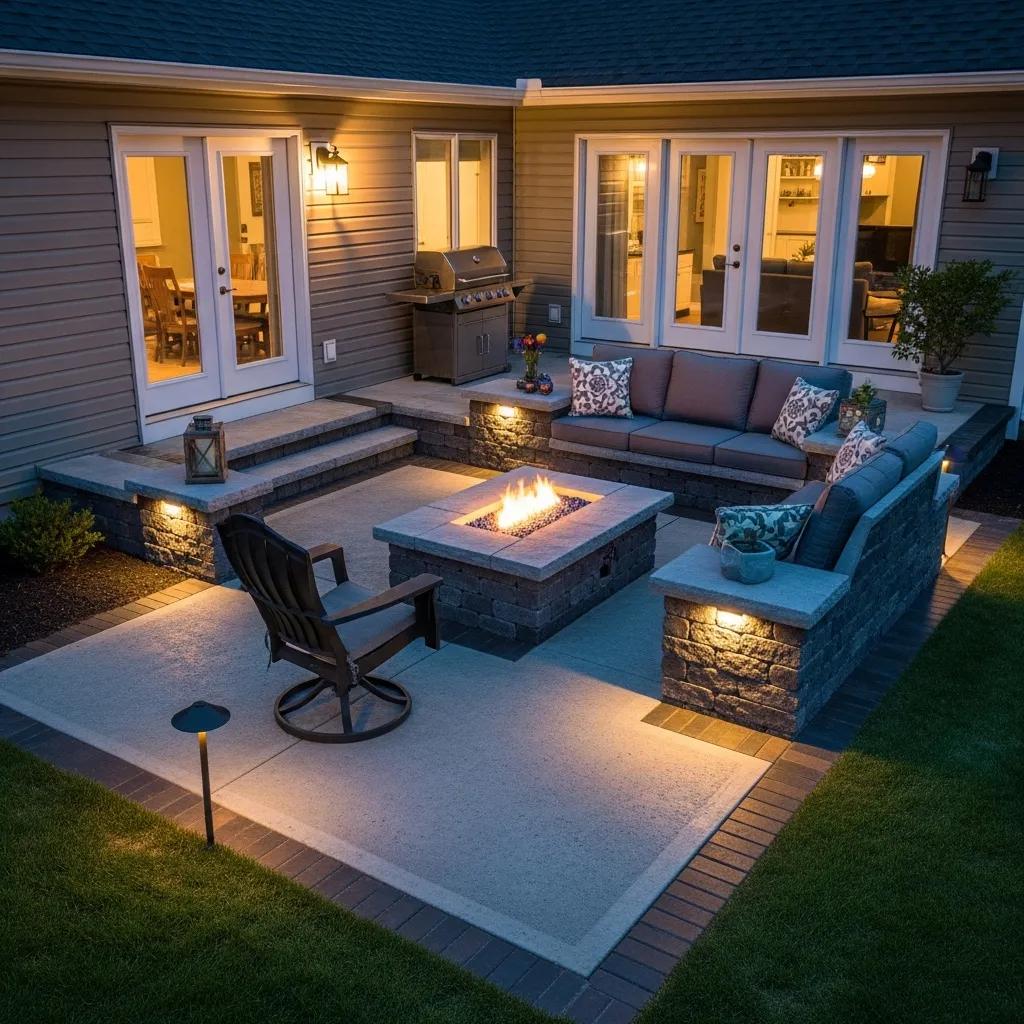
Custom features extend the functionality of a concrete patio and include built-in seating, integrated fire pits, outdoor kitchen bases, perimeter lighting channels, and multi-level patios that adapt to sloped yards and create distinct zones. Each add-on influences design complexity and typically requires additional structural considerations—such as footings for heavy masonry or reinforced concrete for fire pit surrounds—that should be planned during the design phase to avoid later retrofit costs. Lighting and drainage planning are often underappreciated but crucial: recessed lighting and channel drains maintain safety and usability while preventing water pooling that accelerates surface deterioration. Selecting custom features in tandem with finish choices ensures the final patio supports both aesthetic goals and durable, low-maintenance performance.
How Is a Concrete Patio Installed in Friendly Center, Greensboro?
A properly installed concrete patio follows engineered sequence: site prep and grading for positive drainage, sub-base compaction, formwork and reinforcement placement, controlled pouring and finishing, then curing and sealing to meet performance expectations in Greensboro’s climate. This process works because each phase addresses a specific failure mode—poor drainage, weak subgrade, inadequate reinforcement, or rushed curing—and together they form a robust assembly that resists cracking and surface issues. Homeowners should understand what to expect during each phase so they can plan scheduling, access, and temporary disruptions. The numbered steps below summarize the standard installation workflow to set expectations for time and on-site coordination.
- Excavate area, confirm subgrade and slope for drainage, and compact base material to specification.
- Install forms and place reinforcement (rebar or wire mesh), ensuring proper cover and spacing.
- Pour concrete uniformly, screed to grade, and apply chosen finish—smooth, broom, stamped, or exposed aggregate.
- Create control joints at recommended intervals, finish edges, and allow initial set before wet curing.
- Cure the slab per specification (moist cure or curing compound), then apply sealers after recommended wait time.
These steps describe the technical flow and lead to a brief note about hiring local professionals who handle permitting, inspections, and provide accurate estimates.
Local Greensboro contractors typically handle the full installation sequence—site prep, pouring, finishing, and post-pour curing—and can coordinate permits, grading adjustments, and drainage solutions tailored to Friendly Center lots. Choosing a local professional brings knowledge of area soil conditions and climate-driven best practices, ensuring the design intent is matched by construction quality and a realistic timeline. When evaluating contractors, ask for a clear scope that lists each installation phase and proposed materials so you can compare bids on an apples-to-apples basis. With expectations aligned, the next important homeowner question is how cost drivers influence pricing for different finishes and features.
Why Choose Local Greensboro Concrete Contractors for Installation?
Local contractors offer direct knowledge of Greensboro permitting, typical soil and drainage issues, and established relationships with material suppliers, which streamlines project delivery and minimizes surprise costs. They provide local references and portfolios that demonstrate performance in area conditions, and they understand how to sequence work to avoid weather-related delays common in the local climate. Homeowners should verify insurance, ask about reinforcement and curing methods, and request a written timeline and warranty details to reduce risk. Confirming these points during contractor selection helps prevent common installation mistakes and prepares homeowners for the cost implications discussed next.
What Factors Influence Concrete Patio Cost in Greensboro, NC?
Short answer: cost is driven primarily by patio size, finish choice (standard vs stamped/decorative), site preparation needs, and added features such as retaining walls or fire pits. These factors interact—complex shapes and elevation changes increase labor hours and formwork needs, while decorative finishes add material and skilled labor for stamping, staining, or exposed aggregate. Below is a concise list of the most influential cost drivers to help homeowners prioritize budget decisions.
- Size and square footage, which scale materials and labor directly.
- Finish type, with stamped and decorative finishes commanding higher per-square-foot prices.
- Site conditions, such as slope, access, and soil stability that require extra grading or foundation work.
- Additional features like built-in seating, fire pits, and drainage adjustments.
To make comparisons clearer, the table below outlines typical finish types and illustrative price ranges used by contractors in educational examples.
This cost comparison shows how decorative choices add both material and labor premiums, which helps homeowners weigh value vs. budget and move toward accurate estimates from local providers.
How Do Size and Design Complexity Affect Installation Prices?
Square footage sets the baseline material and labor quantities, so larger patios reduce per-unit mobilization costs but increase total project spend proportionally; more importantly, irregular shapes, cutouts, and multiple levels create labor multipliers because of extra formwork, edge finishing, and fitting. For instance, curved edges and intricate stamp patterns slow crews and require more skilled labor, which raises the hourly cost portion of a bid by a measurable percentage. Site access and existing landscaping removal also change price—tight access can increase time and equipment expense—so accurate site assessment is essential before final estimates. Understanding these complexity drivers directs homeowners to simplify shapes or prioritize features to control costs as they prepare to request quotes.
What Is the Price Range for Standard vs. Stamped Concrete Patios?
Standard concrete patios typically occupy the lower end of the per-square-foot scale because finishing is straightforward—basic screed, broom, and edge work—while stamped and colored finishes add steps like color hardener application, stamping, and antiquing that raise rates. Example educational ranges show standard slabs commonly priced in the lower per-square-foot band, with stamped decorative installations often 25–60% higher depending on pattern complexity and color processes. Add-ons such as sealing, integrated steps, and fire pits each add line-item costs that should be listed on estimates to avoid unexpected totals. When comparing bids, ask contractors to break out finish, base work, and feature pricing so you can evaluate where savings are possible and when decorative investment is justified.
How Can You Maintain and Repair Your Concrete Patio for Longevity?
Routine maintenance and timely repairs preserve appearance and structural integrity, extending a patio’s useful life through a combination of cleaning, sealing, crack management, and occasional resurfacing depending on wear patterns. The maintenance mechanism is straightforward: prevent water penetration with sealers, remove stains and biological growth promptly, and address hairline cracks before they grow into structural issues. Homeowners can perform many tasks themselves, while larger cracks, spalling, or drainage-related failures are best handled by professionals. The following checklist outlines essential maintenance items to keep a concrete patio serviceable and attractive year after year.
- Clean surface seasonally with mild detergent and moderate pressure washing to remove dirt and organic stains.
- Inspect control joints and cracks annually and fill small cracks promptly with elastomeric sealants.
- Reseal decorative finishes every 2–4 years depending on exposure to sun and traffic.
Before the table below, note that common tasks vary by season and finish, and the table provides recommended frequencies and approximate cost estimates for homeowner planning.
This maintenance table clarifies that modest, routine investment keeps surfaces protected and reduces the need for costly repairs over time.
What Are Effective Cleaning and Sealing Practices for Concrete Patios?
Effective cleaning begins with removing debris and using a pH-neutral cleaner or mild detergent for stains; pressure washing is acceptable at low to medium settings but avoid high pressure that can damage sealers or finish layers.
Sealing should occur after the concrete has fully cured—typically 28 days post-installation—and for decorative patios a quality film-forming sealer refreshes color and provides surface protection every 2–4 years depending on sun exposure and traffic. Seasonal considerations matter: plan sealing in dry, temperate weather to ensure proper cure, and avoid sealing immediately before predicted heavy rain or freezing cycles. These practical care steps reduce long-term degradation and lead naturally into common repair approaches for cracks and spalling.
How Do You Address Common Concrete Patio Repairs Like Cracks?
Small cracks under about 1/4 inch can often be repaired with flexible fillers or latex-modified mortars that bond to the slab and move with the concrete, whereas larger cracks, settlement, or heaving usually require professional evaluation for stabilization and possible partial replacement. DIY patching is appropriate for hairline and surface spalling when materials and surface preparation match the existing finish, but repeated cracking or structural distress signals subgrade or drainage problems that must be resolved to prevent recurrence. Resurfacing overlays are a practical option to refresh appearance and add thin decorative finishes, but overlays require a stable substrate and professional application to prevent delamination. Recognizing repair limits helps homeowners decide when to call a professional rather than attempt fixes that mask underlying issues.
How to Get Started with Concrete Patio Installation in Friendly Center?
Getting started requires collecting measurements, defining preferred finishes and features, establishing a budget range, and preparing key questions to ask contractors during consultations so bids are comparable and informed. A prepared homeowner who provides photos, approximate square footage, desired finish types, and notes on access and existing grading receives more accurate estimates and reduces the number of on-site visits required for quotes. Below is a simple action checklist to guide the initial outreach and comparison process before scheduling formal site estimates.
- Measure or estimate patio dimensions and take photos of the area and nearby elevations.
- Note desired finishes (standard, stamped, stained) and list any features like fire pits or integrated seating.
- Contact multiple local contractors for written estimates and ensure each bid includes scope, materials, and timeline.
After collecting quotes, compare scope, warranty terms, and timelines carefully and prioritize contractors who explain subgrade preparation, reinforcement, and curing processes clearly. As a final step, if you’re ready to move forward, request a site visit and written estimate to lock in details and scheduling.
What Should You Look for When Choosing a Greensboro Concrete Contractor?
When selecting a contractor, verify they demonstrate familiarity with local codes, provide proof of insurance, show a portfolio of similar Friendly Center projects, and furnish clear, itemized written estimates that include reinforcement, joint layout, and curing protocols. Ask targeted questions about how they will manage drainage, whether they use rebar or wire mesh, and what sealer and finishing products they recommend for the specific decorative finish you select. Red flags include vague scopes, no portfolio, or refusal to provide references and written terms. Choosing a contractor who communicates technical details clearly reduces risk and increases the chance of a quality installation.
How Can You Request a Free Quote and Consultation?
Prepare a short information packet for contractors that includes photos, approximate measurements, desired finish and feature list, and notes on site access or elevation changes to enable accurate initial quotes and productive consultations. During the consultation, ask for a written estimate that breaks down base work, finish, and optional features, and request an estimated timeline that accounts for curing and seasonal weather considerations. Follow up by comparing three bids on equal scope and prioritize contractors who provide clear explanations of reinforcement, joint layout, and post-installation care. Once you have a preferred contractor, schedule a site visit to confirm final price and timeline and to set expectations for project start and completion.
For homeowners ready to move from planning to action, local service providers in Greensboro offer design, installation, decorative/stamped concrete, maintenance, and repair services and can provide a no-obligation consultation and written estimate based on the details you gather. The next step is to prepare your project packet and request an on-site estimate so a contractor can assess grading, access, and finish preferences in person and produce an accurate bid.


0 Comments