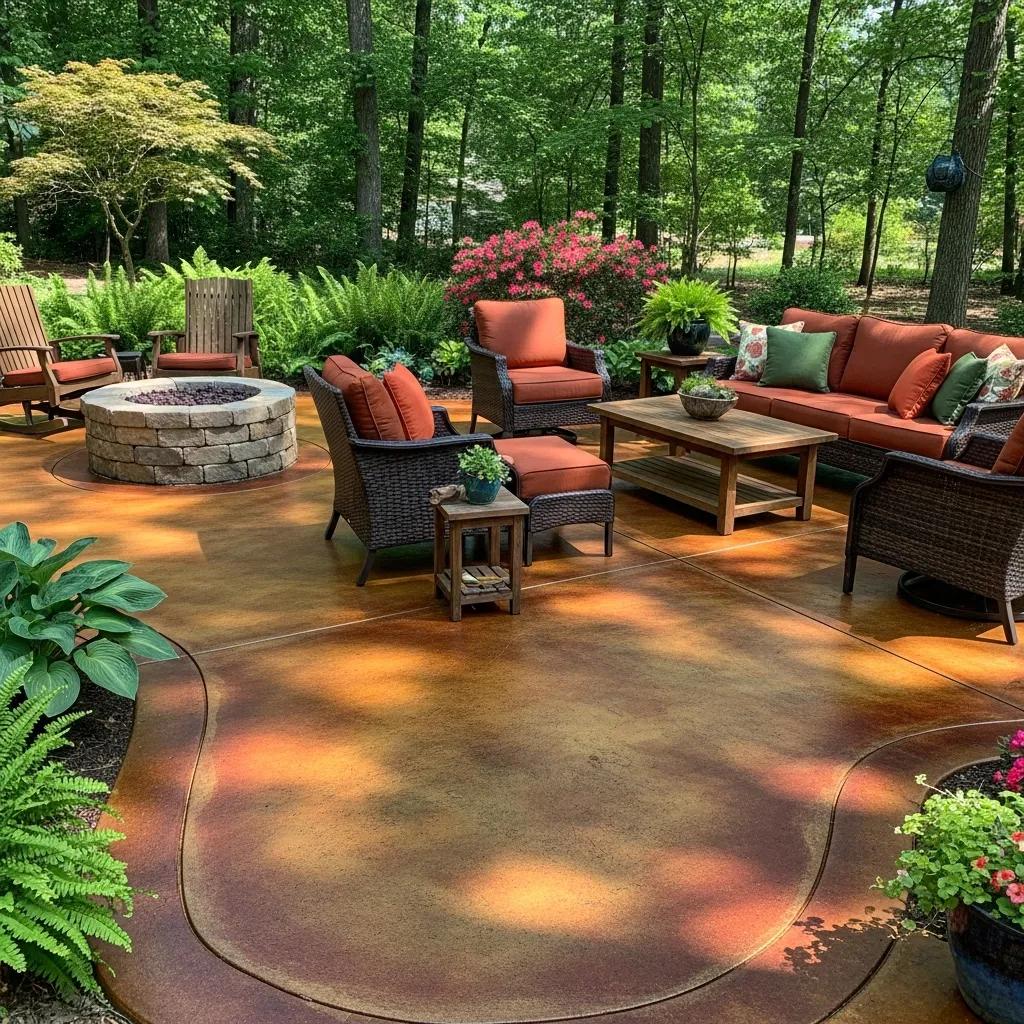
Concrete Staining in Greensboro, NC: Custom Colors & Finishes for Durable and Aesthetic Surfaces
Concrete staining in Greensboro, NC transforms plain slabs into durable, visually rich surfaces by applying colorants that penetrate or bond with the concrete to create long-lasting finishes. This guide explains how staining combines aesthetic customization with performance—providing options from reactive acid staining to precise water-based pigments—and why those choices matter for local conditions like seasonal humidity and UV exposure. You will learn the main stain types, trending color palettes and finishes for 2024, common residential and commercial applications, cost drivers and budgeting tips, and how to choose a qualified Greensboro contractor. Along the way we’ll show practical maintenance advice, design pairings, and comparison tables to clarify trade-offs between stain systems. For Greensboro property owners seeking decorative concrete solutions—floors, patios, and driveways—request a free estimate or view local project galleries to see custom colors and finishes in context.
What Are the Types of Concrete Stains Available in Greensboro?
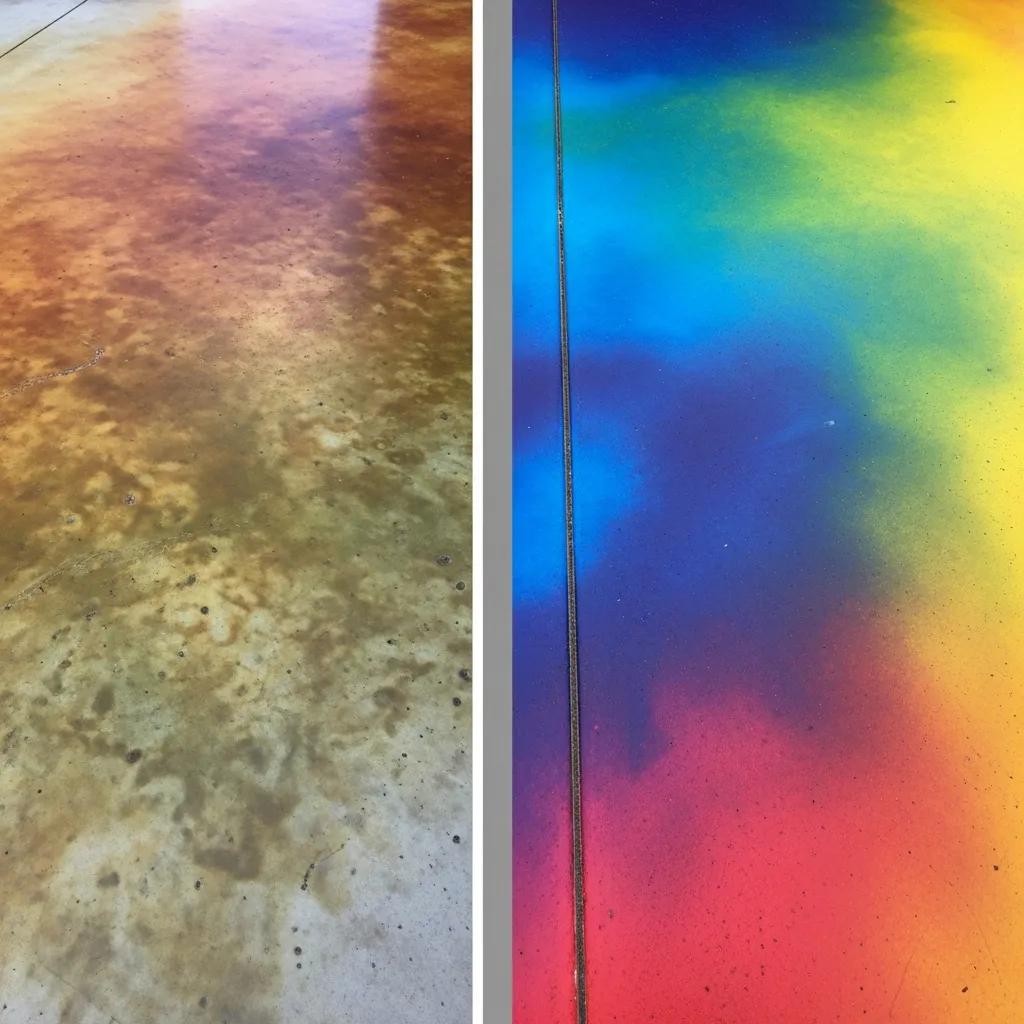
Concrete stains in Greensboro fall into two primary categories: acid-based reactive stains that chemically alter the slab and water-based (pigment) stains that deposit color for precise hues. Acid staining works by reacting with minerals in the concrete to produce variegated, translucent tones, while water-based stains use pigment and binders to deliver predictable, saturated color including metallic effects. Each system offers distinct advantages for durability, color control, and environmental impact, and the right choice depends on design goals, substrate condition, and whether the surface is interior or exterior. Understanding these basic mechanisms helps property owners select a finish that balances appearance and longevity for local climate concerns.
Different stain systems compare across mechanism, color behavior, durability, eco-friendliness, and typical uses. The table below summarizes those differences to help homeowners and specifiers decide which approach aligns with a project’s goals.
Introductory comparison of stain categories and where each performs best.
This comparison highlights that acid stain favors naturalistic, variegated aesthetics while water-based stains offer precise color matching and metallic options, guiding selection for interior floors versus exterior patios.
How Does Acid Stain Concrete Work and What Are Its Benefits?
Acid stain transforms concrete by a chemical reaction between acidic compounds and minerals in the cement matrix, producing warm, variegated patterns that often resemble natural stone. The mechanism generates translucent colors that penetrate and become integral to the slab, which reduces peeling and surface flaking when properly sealed. Benefits include a unique, non-uniform appearance that hides minor surface flaws and ages gracefully, making acid stains popular for rustic interiors, exposed aggregate finishes, and outdoor patios that pair with natural landscaping. Because results are somewhat unpredictable, designers who choose acid stain often embrace the organic variations as a design feature rather than a flaw.
Acid staining’s characteristic mottling requires experienced application and testing on-site; understanding this variability naturally leads to considering water-based alternatives when color predictability is a priority.
What Are the Features and Eco-Friendly Benefits of Water-Based Concrete Stains?
Water-based concrete stains rely on pigment dispersion and modern binders to create consistent, repeatable color across a slab, including metallic and opaque finishes not achievable with reactive stains. This mechanism allows designers to specify exact hues, use digital color visualizers for mockups, and achieve vibrant outcomes for interior feature floors or commercial retail spaces. Many formulations are low-VOC and more eco-friendly than older solvent-based products, reducing odor and permitting safer indoor application. For Greensboro interiors and controlled exterior installations, water-based options deliver design flexibility with reduced environmental and occupant impact compared with some reactive chemistries.
Given the predictable color control and eco advantages of water-based stains, many projects balance aesthetic goals and sustainability by pairing pigments with appropriate sealers for long-term performance.
Greensboro Concrete Staining: Custom Colors & Durable Finishes
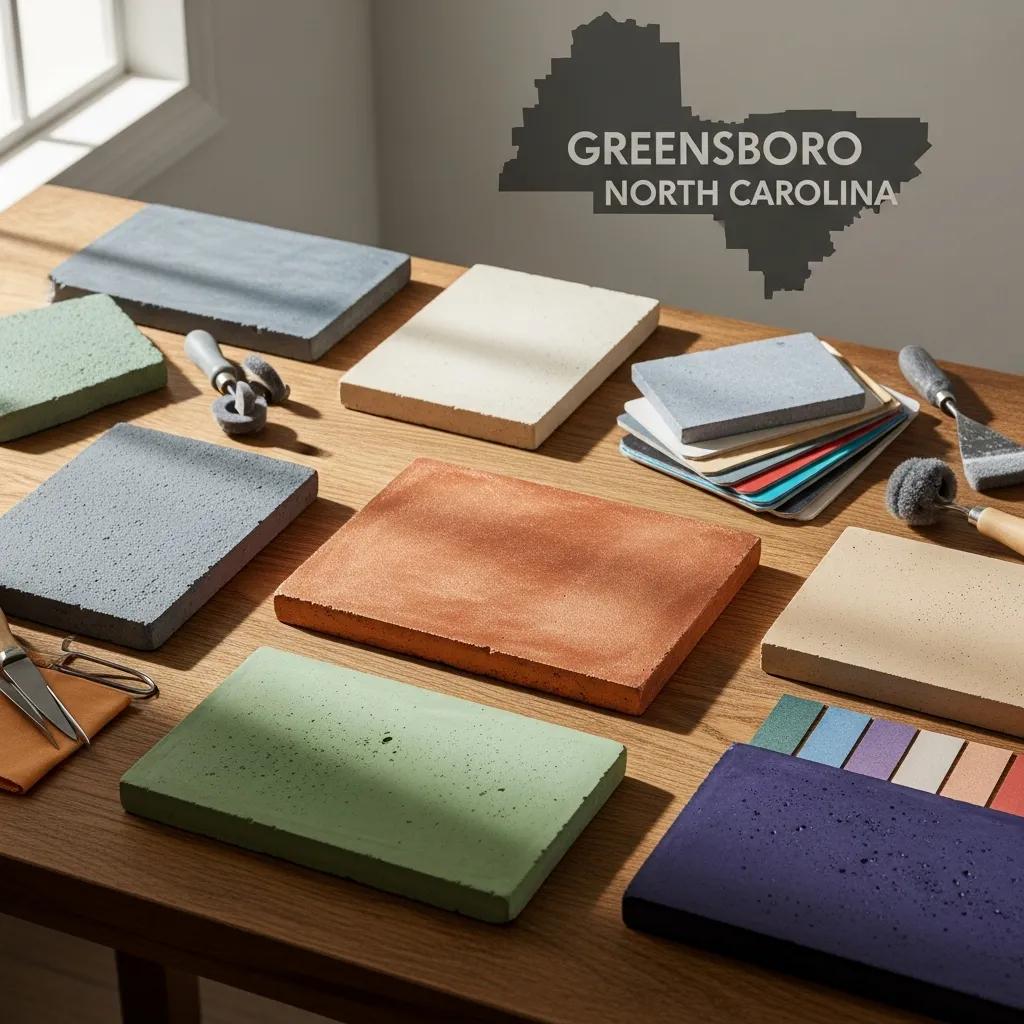
Custom colors and finishes turn functional concrete surfaces into design statements that reinforce architectural style and improve perceived property value. By mapping color palettes to room function and exterior materials, owners can create cohesion—using warm earth tones for traditional homes or metallics and pebble grays for modern interiors and mixed-use commercial spaces. Finish type—matte, satin, gloss, or polished—affects light reflection, slip resistance, and perceived depth of color, so pairing pigment choice with a finish and sealer is essential to meet both aesthetic and functional requirements. Thoughtful color and finish selection also streamline maintenance and touch-up expectations, which is particularly valuable in Greensboro’s variable seasonal conditions.
Introductory explanation: the table links palette choices to recommended uses and finish types.
- Custom colors create continuity across interior and exterior spaces.
- Finishes control sheen and maintenance requirements for daily use.
- Palette choices affect perceived warmth, scale, and compatibility with furnishings.
These considerations set up practical examples of trending palettes for 2024 and finish choices in the following subsections.
What Are the Trending Color Palettes Including Metallic and Earth Tones for 2024?
Current design trends for 2024 favor a mix of metallic accents and grounded earth tones that suit Greensboro’s mix of historic and contemporary architecture. Metallic finishes—bronze, copper, and subtle pewter—add depth and a boutique feel for interiors and hospitality settings, while terracotta, moss green, and muted ochres connect outdoor patios to landscape elements. Pairings with natural materials like wood and stone emphasize warmth, whereas pebble grays and slate hues provide a neutral backdrop for modern furnishings. When selecting a palette, consider sample swatches on the actual slab and how sealers will intensify or mute the color under natural and artificial light.
- Test swatches in multiple lighting conditions before final selection.
- Use a digital color visualizer or on-site mockup for accurate expectations.
- Balance bold metallics with neutral adjacent surfaces to avoid visual overload.
Which Decorative Finishes Like Matte, Glossy, and Polished Are Popular in Greensboro?
Decorative finishes influence appearance, maintenance, and slip resistance: matte offers understated sophistication and hides imperfections; satin provides moderate sheen with easy cleaning; glossy or high-gloss yields high reflectivity and depth but can highlight scratches; polished concrete produces a dense, high-sheen surface with excellent durability. Finish choice should match the application—matte or satin for patios where traction and low glare matter, polished or glossy for interior showrooms and lobbies where visual impact is a priority. Sealers differ by finish and exposure: penetrating sealers maintain breathability for exterior slabs, while film-forming topcoats enhance gloss and stain resistance for interiors.
- Matte finishes reduce glare and mask wear.
- Satin finishes balance appearance and cleanability.
- Polished finishes deliver long-term durability and high visual impact.
What Are the Common Applications of Stained Concrete in Greensboro?
Stained concrete is versatile and finds regular use in residential interiors (basements, kitchens), exterior living spaces (patios, pool decks), and commercial settings (retail floors, restaurants) because it combines design flexibility with robust performance. For interior floors, staining turns existing slabs into feature surfaces that withstand foot traffic and simplify cleaning; for patios and driveways, stains paired with appropriate sealers resist weathering and UV fade when properly specified. Commercial spaces often use water-based pigments for brand-matched colors and durable topcoats for heavy traffic. Considering Greensboro’s climate, attention to sealing, drainage, and freeze-thaw resilience ensures stained surfaces retain appearance and function over time.
- Interior floors: kitchens, basements, retail showrooms.
- Exterior surfaces: patios, walkways, driveways.
- Commercial spaces: restaurants, offices, lobbies.
These typical uses bring forward how interior floors are specifically transformed and what outdoor installations require in terms of design and durability.
How Are Concrete Floors Transformed with Staining in Residential and Commercial Spaces?
Staining converts concrete floors by prepping the slab, applying the chosen stain system, and sealing to lock in color and durability; preparation typically includes cleaning, repairing cracks, and light grinding or etching for adhesion. For interiors, water-based stains allow precise color matching and metallic effects, while sealers determine sheen and ease of maintenance—film-forming sealers yield high gloss and stain resistance, penetrating sealers retain a more natural look. The visual transformation often includes integrating borders, inlays, or stencils to create bespoke patterns for residential or commercial branding. Proper sealing and maintenance schedules extend the floor’s life and preserve the intended aesthetic under daily wear.
This application-focused approach highlights the importance of surface prep and sealer selection, leading naturally into outdoor-specific considerations for patios and driveways.
What Design and Durability Benefits Do Stained Concrete Patios and Driveways Offer?
Stained patios and driveways provide design flexibility—borders, stencils, and textured finishes enhance curb appeal—while appropriate stain/sealer pairings improve slip resistance and resist UV fade. Durability measures include thorough surface preparation, selecting stain systems compatible with exterior exposure, and using penetrating or UV-stable topcoats to protect against moisture and sun. For freeze-thaw considerations, ensuring proper drainage and joint design prevents water intrusion and surface scaling in seasonal cycles. Decorative treatments on driveways also allow for coordinated color schemes that integrate with landscaping and hardscape elements for a unified exterior aesthetic.
- Use textured finishes or additives to enhance traction.
- Select UV-stable sealers for prolonged color retention.
- Design borders and joints to control cracking and drainage.
Implementing these measures supports long-term performance and visual consistency for exterior concrete installations.
What Is the Cost of Concrete Staining in Greensboro, NC?
Estimating the cost of concrete staining in Greensboro depends largely on surface condition, stain type, sealer choice, and design complexity rather than a one-size-fits-all price. Primary cost drivers include surface preparation (cleaning, grinding, patching), the chosen stain system (acid vs. water-based or metallic pigments), quality and type of sealer, labor intensity, and any additional decorative work such as borders or stencils. Because local labor rates, slab condition, and project accessibility vary, the most reliable next step is a site visit and a tailored quote from a local provider who can assess repairs, moisture levels, and finish expectations. Requesting a free estimate after an on-site evaluation ensures the quote reflects actual preparation and materials required.
Introductory note: this table identifies cost elements and whether they tend to be low, medium, or high impact on total project cost.
This breakdown clarifies that preparing the slab and labor complexity typically have the largest influence on final cost, while product selection and decorative details add predictable incremental expense.
Which Factors Affect the Price of Stained Concrete Floors and Surfaces?
Several factors influence price: slab condition (cracks, contamination), required repairs, type of stain and sealer, finish complexity, square footage, and site access for equipment. Damaged or contaminated slabs need more prep—shot-blasting or grinding and patching—which increases labor and time. Stain selection affects material cost and application time; metallic or multi-tone systems typically require more coats and specialized application. Design complexity—stenciling, inlays, and decorative borders—adds layout and masking time, while difficult access or scheduled downtime in commercial spaces can further raise labor costs. Understanding these factors helps set realistic expectations and prioritizes investments for appearance versus budget.
Recognizing how these variables interact makes it clear why on-site assessment and tailored proposals are essential for accurate budgeting and scheduling.
What Is the Average Cost Per Square Foot for Concrete Staining in Greensboro?
Average cost per square foot varies widely because of the factors listed above; rather than a single universal figure, projects are commonly categorized into basic, mid-range, and premium scopes based on preparation needs and decorative detail. Basic refresh projects with minimal prep and a single coat of pigment are the most economical, mid-range projects include more extensive prep and higher-grade sealers, and premium jobs feature complex designs, metallic pigments, or multiple topcoats for maximum longevity. For precise pricing, obtain multiple site-evaluated estimates; a local contractor can show comparable project scopes and sample budgets to align design ambition with expected investment.
As a practical next step, request an on-site estimate so the provider can evaluate slab condition, recommend stain/sealer combinations, and present a scoped quote reflecting actual needs.
Why Choose Stained Concrete for Your Greensboro Property? Benefits and Durability Explained
Stained concrete offers several compelling benefits for Greensboro property owners: long-lasting aesthetics, low maintenance, cost-effectiveness over the lifecycle, and sustainability by reusing existing slabs instead of full replacement. Stained surfaces resist daily wear when sealed correctly, require simple cleaning routines, and can be refreshed with resealing rather than replacement, reducing long-term costs and material waste. Low-VOC water-based stains provide eco-friendly options for indoor projects, while the ability to customize colors and finishes allows stained concrete to match virtually any design intent. These advantages make stained concrete an attractive choice for both homeowners and commercial property managers seeking durable, attractive, and sustainable surfaces.
- Cost-effectiveness: Lower lifecycle costs compared to full replacement.
- Low maintenance: Simple cleaning and periodic resealing preserve appearance.
- Longevity: Properly prepared and sealed slabs can perform for many years.
- Sustainability: Reusing existing concrete reduces material waste and embodied energy.
These benefits naturally lead into specifics on maintenance routines and longevity expectations for stained concrete.
How Does Stained Concrete Offer Cost-Effectiveness and Low Maintenance?
Stained concrete reduces lifecycle costs by eliminating the need for frequent replacement, while routine maintenance—regular sweeping, mop-cleaning with neutral cleaners, and resealing at recommended intervals—keeps surfaces performing well. Compared with flooring that requires periodic replacement (carpet, vinyl, or hardwood in some settings), stained concrete’s durability and simple maintenance yield lower cumulative costs. Resealing frequency depends on traffic and exposure but is typically manageable with scheduled maintenance, and spot repairs or localized reapplication can refresh the surface without full replacement. These factors make stained concrete economical over the long run for both residential and commercial properties.
Understanding these maintenance patterns helps owners plan budgets and preservation activities that extend the life of the stained finish.
What Is the Expected Longevity and Sustainability of Stained Concrete Surfaces?
With proper preparation, stain selection, and sealing, stained concrete surfaces often remain serviceable for many years—decades in interior settings—with periodic resealing to renew protection and sheen. Longevity depends on traffic levels, exposure to UV and moisture, and adherence to maintenance protocols; interior polished floors typically last longer with lower maintenance needs compared with exterior surfaces exposed to weather extremes. Sustainability benefits include minimizing waste by using existing slabs, choosing low-VOC stains, and reducing the need for frequent material replacement, which lowers embodied carbon over the building lifecycle. Selecting eco-friendly products and planning maintenance schedules enhances both durability and environmental performance.
These longevity and sustainability considerations support the case for stained concrete as a long-term, lower-impact finish option for Greensboro properties.
How to Select the Best Greensboro Concrete Staining Contractors?
Selecting the right contractor hinges on credentials, local experience, a verified portfolio, clear warranty or maintenance terms, and strong communication about process and materials. Local expertise matters because Greensboro’s seasonal humidity and UV exposure influence sealer choices and maintenance schedules; contractors familiar with regional substrates can anticipate moisture or adhesion challenges. When evaluating providers, request on-site references, job-site photos of completed Greensboro projects, and a written scope that details prep, products, timelines, and cure/seal recommendations. A clear proposal and transparent warranty terms indicate professionalism and reduce the risk of costly surprises.
- Portfolio & Local References: Ask for finished projects in Greensboro with before/after photos.
- Process & Prep Details: Verify surface preparation methods (grinding/shot-blasting, repairs).
- Materials & Sealers: Confirm stain types and sealer recommendations for local climate.
- Timeline & Warranty: Get a written schedule and warranty terms for workmanship.
- Insurance & Safety Practices: Ensure liability coverage and site safety protocols.
These checklist items help homeowners and property managers compare proposals and choose a contractor whose approach aligns with project goals.
What Questions Should You Ask When Hiring a Concrete Staining Professional?
When interviewing contractors, ask about their surface-preparation approach, experience with both acid and water-based systems, recommended sealer types for your climate, and examples of similar Greensboro projects. Specific questions should include how they handle repairs and moisture mitigation, the number of coats and cure times for the systems they propose, expected maintenance and reseal intervals, and whether they provide a written warranty or maintenance plan. A satisfactory answer will reference on-site testing, sample panels, and clear documentation of materials and steps. Requesting local references and viewing a contractor’s project gallery gives practical insight into finish quality and durability.
Asking these targeted questions ensures you understand both the technical plan and the contractor’s quality controls before work begins.
Why Is Local Expertise Important for Concrete Staining Projects in Greensboro?
Local expertise matters because regional climate, typical slab mixes, and common site conditions influence stain behavior, sealer performance, and maintenance needs. Contractors experienced in Greensboro know how humidity affects drying and curing, which sealers resist local UV exposure, and how to design drainage and joint details to minimize freeze-thaw and water intrusion risks. Verifying local experience through references and site-specific samples ensures that the chosen contractor can anticipate and mitigate conditions that would otherwise shorten the lifespan of the finish. Prioritizing providers with local project history reduces risk and improves long-term outcomes.
Understanding these localized factors completes the selection process and positions owners to request tailored proposals and site-evaluated quotes.
For Greensboro projects, request a site visit and free estimate to get an accurate, locally informed quote and to review project galleries of similar work; this helps align design goals with realistic budgets and timelines.


0 Comments