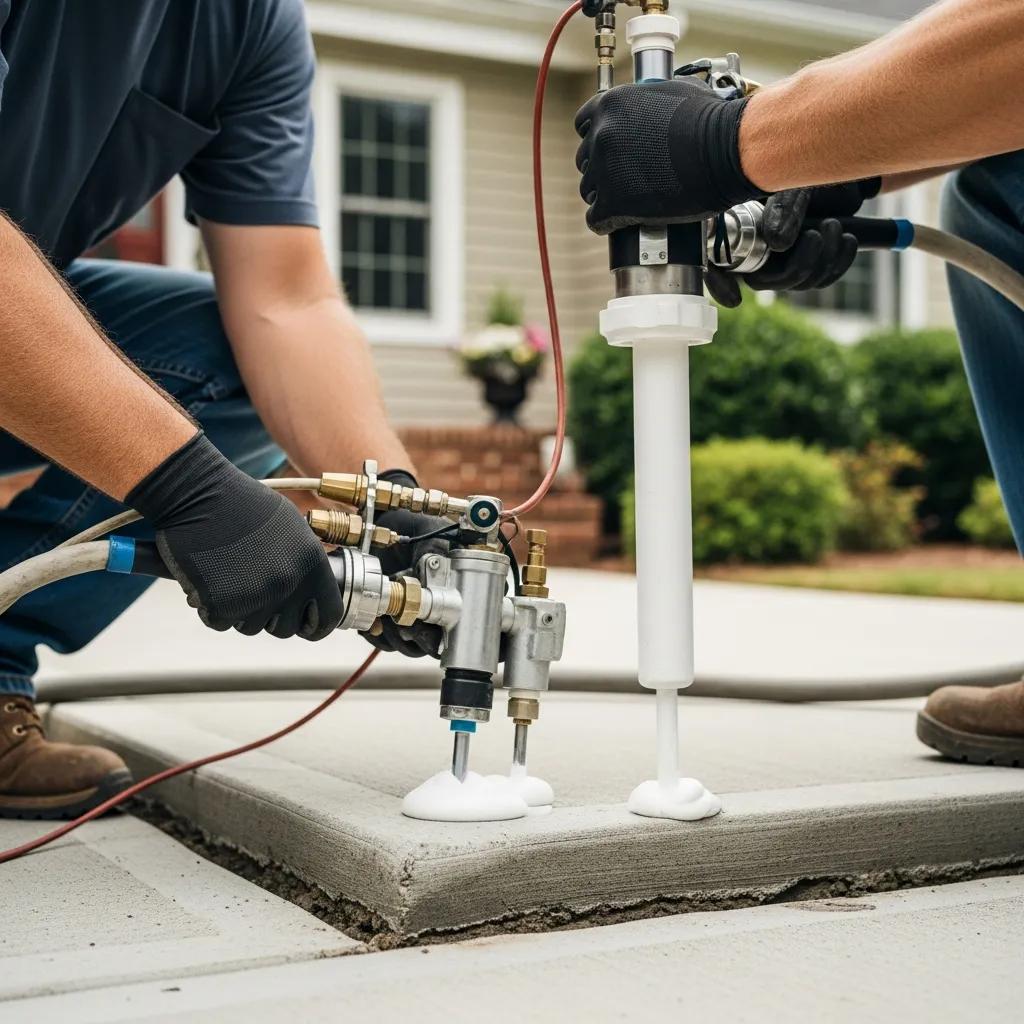
Concrete Leveling in Greensboro: Expert Slab Jacking Solutions
Concrete leveling in Greensboro, NC refers to techniques used to lift and stabilize sunken or uneven concrete slabs so surfaces become safe, functional, and durable. This article explains how slab jacking, mudjacking, and modern polyurethane foam injection work in local soils, why homeowners choose leveling over full replacement, and what to expect from inspection through completion. Readers will learn which surfaces—driveways, sidewalks, patios, and pool decks—benefit most from concrete lifting, how local clay soils and freeze-thaw cycles drive settlement, and the primary cost factors affecting concrete repair in Greensboro. The guide also compares traditional mudjacking to polyurethane systems such as PolyLevel, outlines a practical step-by-step repair timeline, and answers common questions about durability and method selection. Throughout, the focus remains on actionable guidance for property owners in Greensboro considering concrete repair or concrete leveling services.
What Is Concrete Leveling and How Does It Improve Greensboro Properties?
Concrete leveling is the process of raising, stabilizing, and re-supporting slab surfaces to correct settlement, eliminate trip hazards, and restore proper drainage. It works by filling voids beneath slabs and lifting the concrete to its intended elevation, which reduces immediate safety risks and often costs significantly less than full slab replacement. For Greensboro properties affected by seasonal moisture changes and expansive clay soils, leveling provides a fast, less invasive option that preserves existing finishes while addressing the root cause of uneven slabs. Understanding these mechanisms helps property owners choose between traditional slab jacking, mudjacking, or newer polyurethane concrete leveling methods based on site conditions and desired downtime.
Concrete leveling delivers three core benefits for local properties:
- Improved Safety: Eliminates trip hazards and uneven walking surfaces common on sidewalks and patios.
- Cost Savings: Often costs substantially less than full slab replacement and reduces material waste.
- Fast Return to Service: Many lifting methods allow quick cure times so driveways and walkways return to use rapidly.
These benefits make concrete leveling a pragmatic repair strategy for both homeowners and property managers weighing repair options against replacement.
Different concrete lifting approaches have distinct attributes and trade-offs, summarized below for quick comparison before drilling into how each method works in Greensboro conditions.
This table highlights how material choice links directly to downtime and expected performance. The next sections explain how each technique functions and why polyurethane systems have become common in modern Greensboro concrete repair.
How Does Slab Jacking and Mudjacking Work to Lift Sunken Concrete?
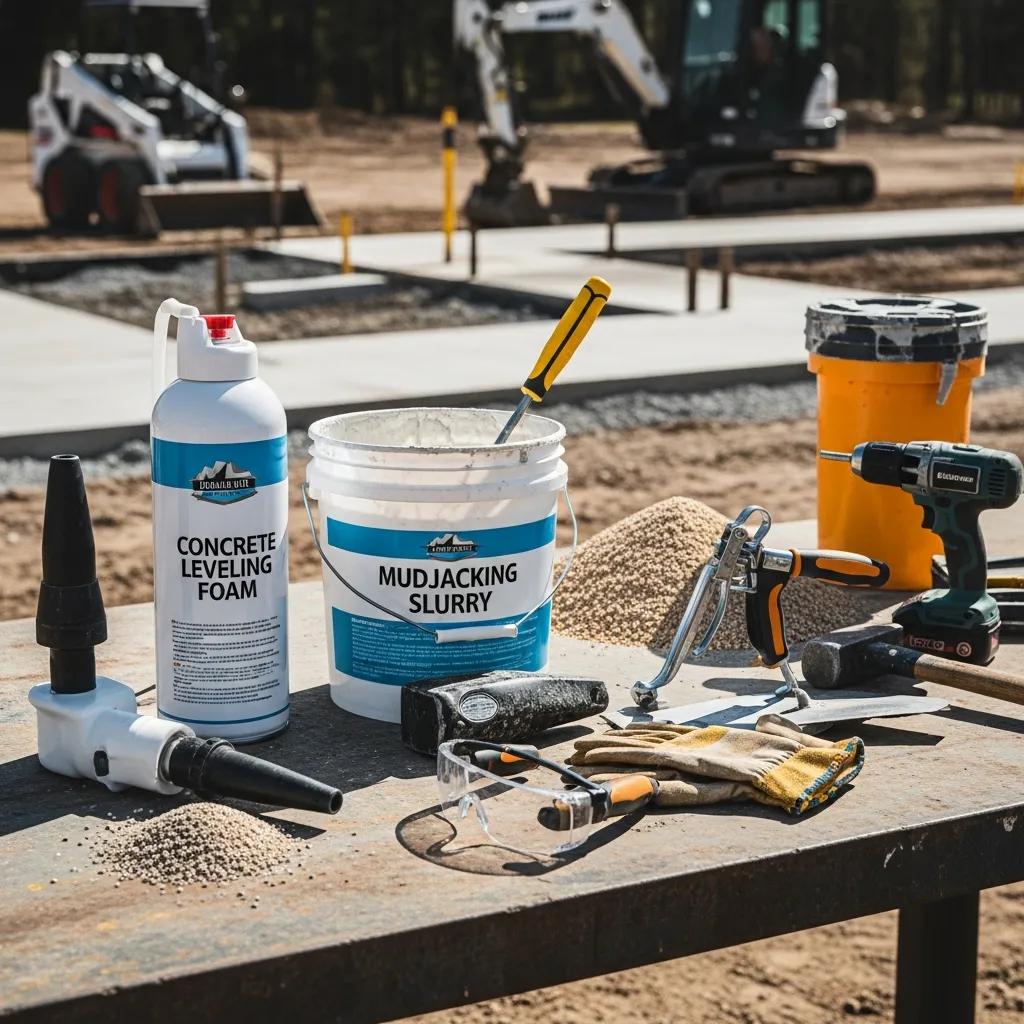
Mudjacking, also called traditional slab jacking, raises sunken concrete by pumping a cement-based slurry under the slab through drilled ports, filling voids and forcing the slab upward. Technicians inspect slab edges and measure elevations, then drill 1.5–2 inch holes at strategic points; a slurry of cement, sand, and water is pressurized and injected to lift the slab back to grade. Because the material is heavy, mudjacking adds significant weight to voids and may require additional stabilization or compaction in underlying soils. Limitations include larger drill holes, longer cure times, and potential for future settling if underlying drainage or compaction issues are not corrected; these constraints guide decisions about when mudjacking Greensboro slabs is appropriate versus polyurethane foam lifting.
Mudjacking remains practical where cost sensitivity and material familiarity matter, but modern alternatives address many of its drawbacks and warrant comparison.
What Are the Advantages of Polyurethane Concrete Leveling Over Traditional Methods?
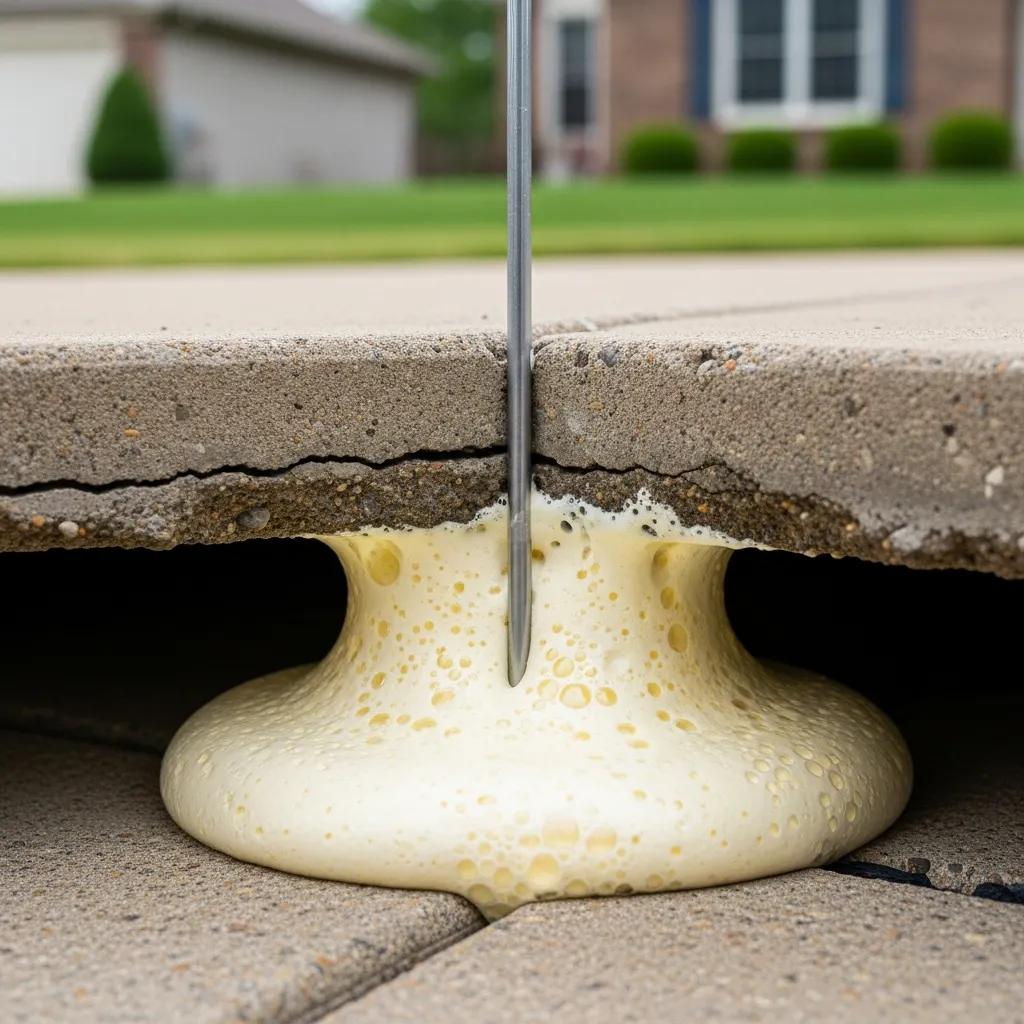
Polyurethane concrete leveling uses a low-volume, high-density expanding foam injected through small ports that fills voids and lifts slabs while adding minimal weight to the base soils. The foam expands to conform to void geometry, stabilizes loose soils through compaction-like action, and cures quickly—often allowing pedestrian traffic within minutes and vehicle load within a few hours depending on formulation. Compared with mudjacking, polyurethane requires smaller injection ports, resists water infiltration better, and typically produces longer-lasting results with reduced chance of re-settlement when drainage is improved. Brand systems like PolyLevel and PolyRenewal represent common polyurethane-based approaches used in concrete lifting, and they are often selected for driveway leveling Greensboro projects where rapid turnaround and minimal disruption are priorities.
Because foam injection both lifts and stabilizes, it is often preferable when void filling and waterproofing are priorities; choosing the best method depends on slab use, soil conditions, and long-term maintenance planning.
Which Concrete Surfaces in Greensboro Benefit Most from Leveling and Repair?
Many exterior concrete elements around Greensboro homes and commercial properties can be effectively leveled rather than replaced, including driveways, sidewalks, patios, pool decks, and garage floors. Leveling is particularly advantageous for surfaces with localized settlement or trip hazards where the slab otherwise remains structurally sound. Proper method selection considers load-bearing requirements, finish or aesthetic needs, and drainage patterns to ensure a durable result. Recognizing which surface you have and how it will be used helps match the repair technique to functional and budgetary goals.
Typical target surfaces and the signs that indicate they need leveling include the following:
- Driveways: Cracking, separated joints, or depressions under vehicle loads.
- Sidewalks: Uneven walking elevations that present trip hazards or municipal concerns.
- Patios and pool decks: Surface heaving, ponding water, or uneven tile/finish issues.
After level-setting repairs, aesthetic finishing and sealing may be necessary to preserve the surface and extend lifespan, and maintenance of drainage controls future movement.
This table clarifies which surfaces receive the greatest benefit from leveling and sets expectations for performance. The next section details practical approaches for specific surface types and finishing recommendations.
How Are Driveways, Sidewalks, and Patios Effectively Leveled and Repaired?
Driveways often require methods that account for vehicle loads and edge support; polyurethane foam is commonly used to lift wheel-track depressions while minimizing added weight, whereas mudjacking can be cost-effective for large, thick slabs if drainage is addressed. Sidewalks and pedestrian areas prioritize rapid return-to-use and trip-hazard removal, making small-port polyurethane injection attractive for sidewalk leveling Greensboro projects. Patios and pool decks require both precise leveling and attention to finish and slip-resistance; after lifting, patching and re-sealing joints or applying surface treatments restore appearance and function. Preparation steps—clearing debris, marking fracture lines, and confirming drainage—improve repair outcomes and reduce the chance of repeat settlement.
Each surface type has tailored return-to-service timelines and finishing needs, so coordinating the repair method with intended use avoids premature loading and preserves aesthetics.
What Local Soil and Climate Factors Affect Concrete Settlement in Greensboro?
Greensboro’s soil profile commonly includes expansive clay and loam layers that change volume with moisture content, causing slabs to heave or settle seasonally; this cyclical movement drives many local concrete leveling needs. The area’s freeze-thaw cycles and roughly seasonal rainfall patterns can erode subgrade support beneath slabs, creating voids that lead to uneven surfaces. Poor initial compaction, gutter and downspout discharge near slab edges, and concentrated irrigation are frequent contributors to soil erosion and undermining. Preventative measures such as improving site drainage, redirecting downspouts, and ensuring proper compaction during repairs reduce the risk of recurrent settlement.
Understanding these local mechanisms informs the selection of stabilization methods and when to involve geotechnical evaluation for persistent movement problems.
What Are the Typical Costs and Factors Influencing Concrete Repair Pricing in Greensboro?
Costs to level concrete in Greensboro vary based on method (polyurethane vs mudjacking vs replacement), slab area and thickness, access constraints, and ancillary work such as drainage correction or re-grading. Service type and project scale are the primary cost drivers; small sidewalk sections cost far less than large driveways or commercial slabs, and full replacement costs exceed lifting in both labor and materials. Site access, the need for reinstatement of landscaping, and whether sealing or aesthetic patching is required also influence final bids. Homeowners benefit from understanding these drivers to interpret estimates and choose solutions that balance upfront cost with long-term performance.
Below are the common cost factors to consider when planning concrete repair:
- Method Selected: Polyurethane injection typically costs more per lift point than mudjacking but often offers longer-term stability.
- Slab Size and Thickness: Larger or thicker slabs require more material and time.
- Access and Site Prep: Difficult access increases labor and equipment costs.
- Additional Work: Drainage correction or re-grading adds to the scope and price.
These factors collectively determine the cost to level concrete Greensboro homeowners can expect when comparing proposals and deciding between leveling and replacement.
This cost table helps homeowners see which aspects most influence pricing and why free estimates are helpful for accurate budgeting. The following subsections explain how specific variables affect bids and what to expect from a free estimate.
How Do Service Type, Material, and Project Size Affect Greensboro Concrete Repair Costs?
Service type dictates both materials and crew expertise: polyurethane lifting uses specialized foam and injection equipment that raises per-unit costs but lowers downtime, while mudjacking relies on heavier cement slurry with larger drill holes and longer cure times. Project size scales costs non-linearly; mobilizing crews and equipment has fixed overhead that makes small jobs proportionally more expensive per square foot. Materials, site prep, and any required drainage or landscaping reinstatement add to bids, and urgency or scheduling windows (e.g., needing rapid completion) can increase labor premiums. Understanding these relationships helps owners compare quotes on an apples-to-apples basis and select the most cost-effective solution for expected slab performance.
Comparing examples—small sidewalk, single-car driveway, commercial slab—clarifies how scale affects pricing and which method best balances cost versus longevity.
How Can Free Estimates Help Greensboro Homeowners Plan Concrete Leveling Projects?
A free estimate typically includes an on-site inspection, elevation measurements, an explanation of the recommended method (mudjacking or polyurethane), and an itemized scope with price ranges and expected timelines. Inspectors look for indicators such as slab cracks, edge support conditions, drainage patterns, and subgrade voids; documenting these items helps homeowners compare proposals and understand trade-offs between immediate cost and long-term performance. Preparing photos, marking problematic slabs, and noting recent drainage changes prior to the appointment makes estimates more accurate. Requesting written scope, cure-time expectations, and references to warranties or performance assurances enables informed decision-making.
A well-prepared estimate reduces surprises during repair and clarifies responsibilities for site prep or follow-up drainage work, which in turn supports durable outcomes.
Why Choose Professional Slab Jacking Contractors in Greensboro for Concrete Leveling?
Hiring professional slab jacking contractors ensures correct diagnosis, appropriate method selection, and safe, code-compliant execution—advantages that DIY attempts or inexperienced providers cannot reliably deliver. Professionals bring calibrated equipment, material knowledge (e.g., polyurethane formulations vs cement slurry), and experience with local soil behavior that informs lift patterns and anchor points. Proper insurance, quality control, and post-job recommendations (sealing or drainage fixes) are part of professional workflows that protect homeowners from liability and premature rework. Selecting a qualified contractor preserves property value and reduces the chance of recurring settlement when paired with appropriate site corrections.
This professional approach builds on local expertise and a structured process that leads directly into operational steps contractors follow from inspection to completion.
What Expertise Do Local Contractors Have Regarding Greensboro’s Soil and Weather Conditions?
Local contractors understand that Greensboro’s expansive clays and seasonal moisture swings require attention to drainage, grading, and the timing of repairs to avoid repeat movement. They commonly evaluate downspout locations, irrigation practices, and soil compaction when preparing recommendations, and they sequence repairs to minimize work during high-moisture periods. For complex or persistent movement, contractors can recommend geotechnical consultation or soil stabilization prior to lifting to ensure a durable solution. This local expertise guides whether mudjacking or polyurethane lifting better suits a given slab and informs the long-term maintenance plan homeowners should follow.
Contractor judgment about timing and drainage often determines the long-term success of the leveling intervention and should be part of any estimate discussion.
How Does Professional Concrete Leveling Enhance Safety and Property Value?
Professional concrete leveling eliminates trip hazards and restores safe walking and driving surfaces, immediately reducing injury risk and potential liability for property owners. Beyond safety, uniform, well-leveled exterior concrete improves curb appeal, which can positively influence appraisals and resale impressions compared with visibly uneven or patched slabs. High-quality repairs that include drainage correction and proper sealing demonstrate to potential buyers that the property has been maintained, which can preserve value. Therefore, investing in professional concrete leveling can be both a safety measure and a preventive investment in property condition and marketability.
These combined safety and aesthetic benefits explain why many owners choose professional repairs over temporary or DIY fixes that may hide underlying problems.
How Does the Concrete Leveling Process Work from Inspection to Completion in Greensboro?
Concrete leveling follows a logical process: inspection and measurement, drilling injection ports, injecting material to lift and stabilize slabs, allowing appropriate curing time, and finishing with patching and sealing as needed. Each step has a clear purpose—diagnosis, access, void-filling and lift, strength development, and surface restoration—and professionals document elevations and expected outcomes. Polyurethane foam injection typically shortens the injection and cure stages, while mudjacking requires larger volumes and longer set times; both require post-job cleanup and sometimes drainage fixes. A transparent timeline and clear homeowner expectations during scheduling enhance satisfaction and reduce surprises during the work.
Below is a concise timeline of the typical process with durations and outcomes for snippet-friendly reference.
This timeline clarifies expected durations and helps homeowners plan for access and temporary restrictions. The next subsections break down each step and compare typical durations for foam versus mudjacking.
What Are the Key Steps: Inspection, Drilling, Injection, Curing, and Sealing?
Inspection begins with documenting elevations, cracks, and drainage, followed by mapping injection points to ensure even lift and avoidance of utilities. Drilling establishes small ports for foam or larger access for slurry and should be done to minimize surface disruption. Injection fills voids and raises slabs; technicians monitor elevations and adjust injection locations to achieve grade while minimizing over-lift. Curing allows the chosen material to harden to design strength—polyurethane generally cures rapidly while mudjacking slurry needs more time; sealing and patching close ports and restore surface appearance. Homeowners should expect cleanup and a walkthrough to confirm elevations and receive post-job care recommendations.
These steps form a standard workflow that balances speed, durability, and minimal disruption for Greensboro concrete repair projects.
How Long Does Polyurethane Foam Injection Take Compared to Mudjacking?
Polyurethane foam injection is typically faster: injection per port can take minutes and cured strength allowing pedestrian traffic within an hour and vehicle weight in a few hours, depending on formulation. Mudjacking injection takes longer to pump larger slurry volumes and usually requires 24–72 hours before full return to vehicle loads due to the water content and curing of the cementitious mix. Project size and site prep influence total job duration for both methods—small sidewalk sections may be completed in a single morning with foam, while larger driveways using slurry can span one to multiple days. Choosing foam for quick turnaround is common when minimal downtime is required, while mudjacking remains an option when materials or budget favor that route.
Understanding these timing differences helps property owners schedule repairs with minimal disruption to daily use.
What Are Common Questions About Concrete Leveling in Greensboro?
Property owners frequently ask whether modern polyurethane systems outperform traditional mudjacking, how long foam lifts last in local conditions, and whether DIY approaches are advisable. Short, direct answers help homeowners decide whether to request professional estimates or consider replacement. Clear criteria—based on longevity, invasiveness, cost, and waterproofing—should guide the decision more than a singular claim of one method being universally “better.” Professional inspection is recommended for ambiguous cases so the chosen technique addresses both surface symptoms and subgrade causes.
The next pair of Q&A subsections provides concise, actionable guidance on the two most common comparisons and durability expectations.
Is PolyLevel Better Than Mudjacking for Concrete Lifting in Greensboro?
PolyLevel and similar polyurethane systems often outperform mudjacking in invasiveness, cure time, and resistance to water because the foam uses small ports, cures quickly, and adds minimal weight, making it advantageous for many driveway leveling Greensboro scenarios. Mudjacking may still be appropriate when cost constraints or large slab volumes favor cementitious slurry, but it tends to require larger holes and longer cure times. Decision criteria should include slab load, void geometry, drainage concerns, and budget; therefore, a professional assessment is the best way to determine which method is “better” for a specific slab. Homeowners should weigh trade-offs and request documented recommendations as part of any estimate.
Providing a balanced comparison helps homeowners select a method aligned with long-term performance goals rather than short-term savings alone.
How Long Does Foam Concrete Lifting Last in Local Conditions?
Polyurethane foam lifts commonly provide 10–25+ years of service when installed correctly and paired with proper drainage and site maintenance; longevity depends on installation quality, soil movement, and surface load patterns. Factors that reduce lifespan include repeated saturation from poor drainage, heavy continuous loads beyond design expectations, or unresolved underlying soil instability. Routine maintenance—ensuring gutters and downspouts direct water away, maintaining proper grading, and inspecting for new movement—extends lift life. If repeat movement occurs, targeted re-leveling is often less expensive than full replacement and preserves most of the original slab.
Understanding these longevity drivers helps property owners plan maintenance and choose interventions that reduce the need for future corrective work.
1. Inspect drainage: Ensure water flows away from slabs to prevent subgrade erosion.2. Document changes: Photograph and record new cracks or differential movement for future reference.3. Schedule professional re-evaluation: If movement recurs, obtain another assessment rather than applying surface patches.
These practical steps support the durability of concrete leveling solutions and reduce the chance of premature failure.

0 Comments