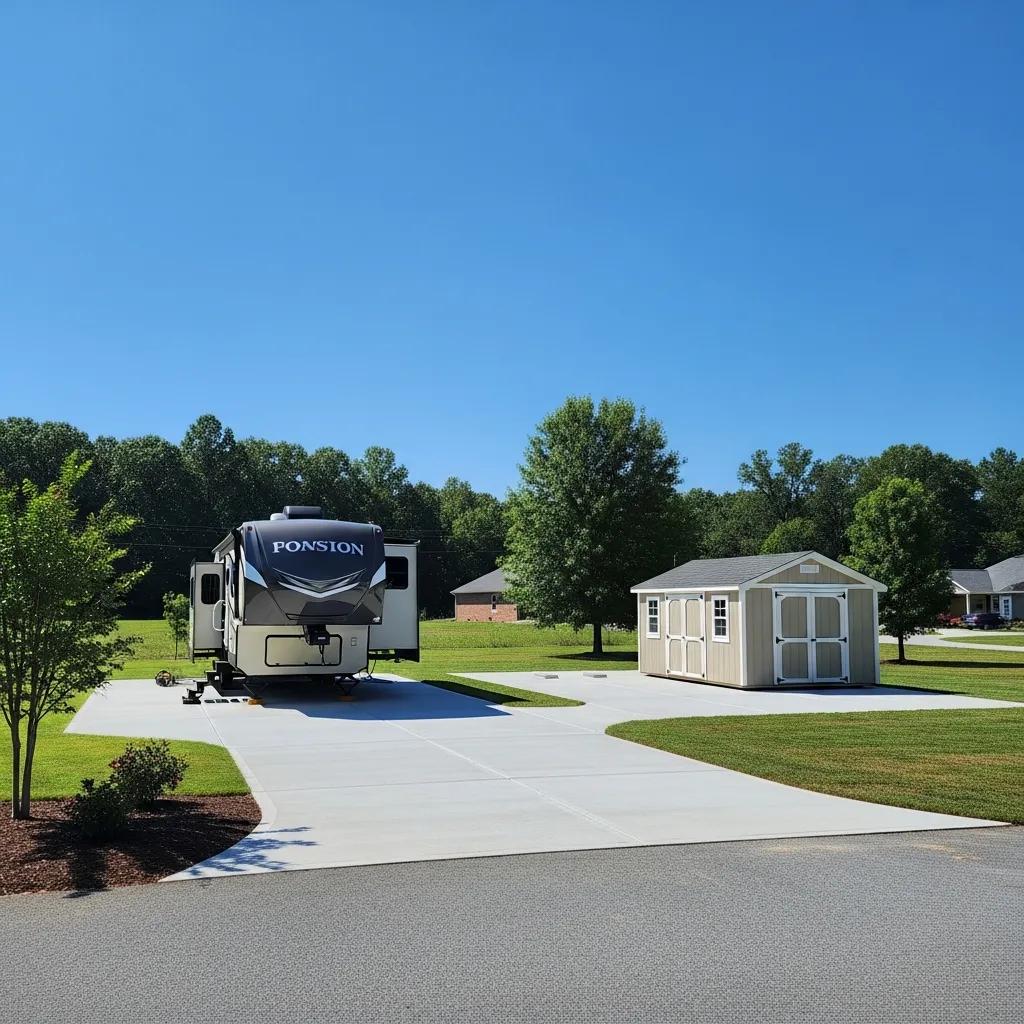
Concrete Additions in Greensboro, NC: Expert RV Pads, Shed Slabs, and More Installation and Cost Guide
Concrete additions for residential properties in Greensboro, NC, encompass a wide range of site-built concrete elements designed to provide durable, level, and load-bearing surfaces for various outdoor needs. Beyond traditional RV pads and shed slabs, these versatile installations include robust equipment pads for generators or HVAC units, hygienic dog runs, recreational basketball courts, practical trash enclosures, elegant outdoor kitchen pads, and safe fire pit areas. Each of these residential concrete solutions addresses specific functional and aesthetic requirements, enhancing property utility and value.
In Greensboro, NC, properly designed concrete additions must account for local soil conditions, seasonal rainfall, and frost-line considerations to reduce settling and maintenance while increasing usable outdoor space. This comprehensive guide explains the benefits, cost expectations, design options, permitting considerations, site preparation steps, and maintenance practices that matter for homeowners evaluating any concrete addition. Read on to learn typical price ranges, reinforcement choices, how to compare contractor bids, and practical steps you can take before excavation so your concrete addition performs for decades. The sections below cover benefits, costs with example breakdowns, types and sizes with reinforcement guidance, local permits and code compliance, site preparation and drainage strategies, and maintenance plus expected lifespans for concrete installations in Greensboro, NC. For other concrete flatwork needs, explore our full range of services.
Ready to Enhance Your Greensboro Property?
Whether you need a sturdy RV pad, a custom outdoor kitchen base, or a durable equipment pad, our experts are here to help. Get a precise estimate tailored to your project’s unique needs.
What Are the Benefits of Concrete Additions in Greensboro?
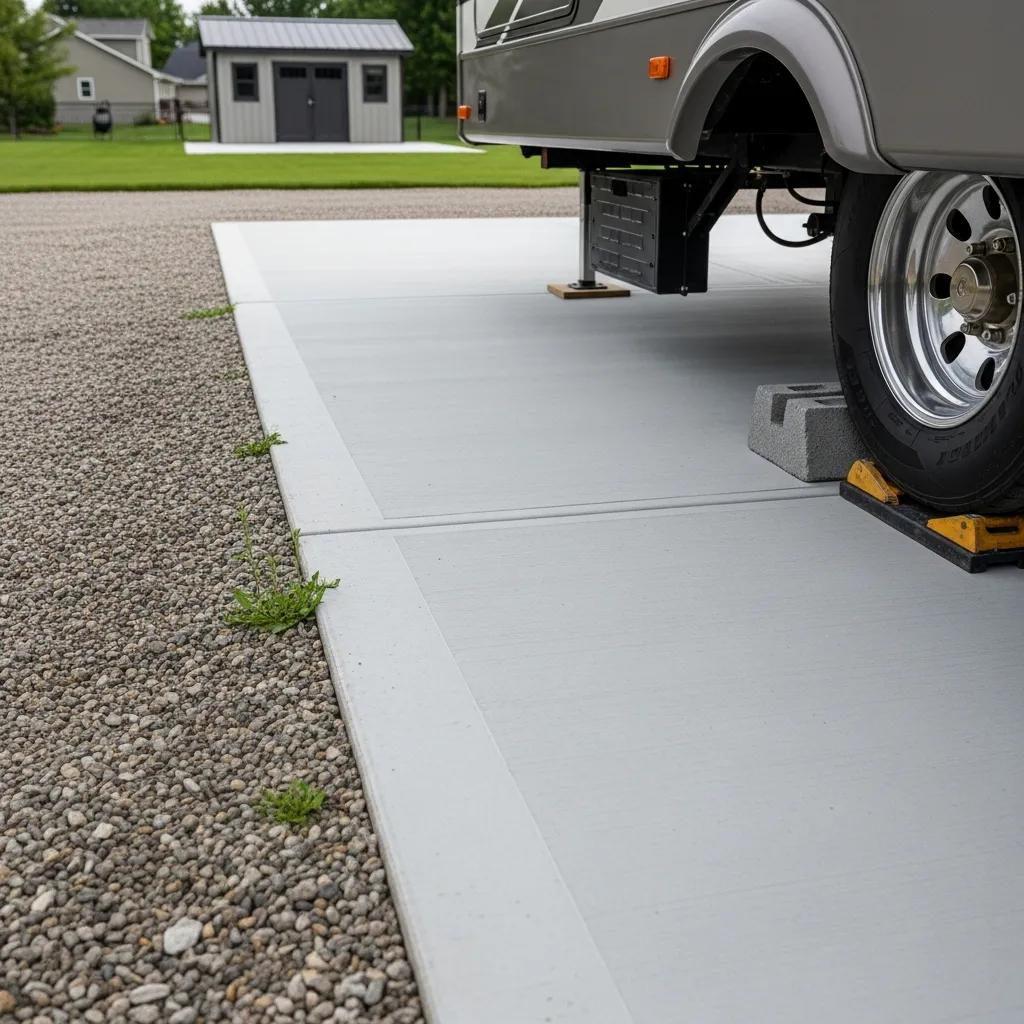
Concrete additions are engineered flat surfaces poured on a prepared base to support heavy loads and resist movement, performing exceptionally well in Greensboro’s variable soils and rainy seasons. The mechanism that makes concrete effective is its compressive strength combined with proper base compaction and reinforcement, which together reduce rutting and settling compared with loose aggregate surfaces. Homeowners choose concrete for predictable performance under vehicle loads, minimal routine maintenance, and the ability to integrate drainage and anchoring for various structures. Below is a concise list of primary benefits and brief local examples that illustrate their value for Greensboro properties, including how they compare to other patio or surface options.
Concrete additions deliver several advantages for residential use in Greensboro:
- Durable Load-Bearing Surface: Resists rutting and settling under RV weights, heavy equipment, or constant foot traffic.
- Low Maintenance: Significantly less upkeep compared with gravel or dirt; no regrading, fewer dust or mud issues after rain.
- Improved Drainage and Erosion Control: When slabs are properly sloped and integrated with site grading, they prevent water pooling and protect surrounding landscapes.
- Enhanced Curb Appeal and Property Utility: Converts underutilized yard space into functional, attractive areas, supporting resale value and practical storage or recreational needs.
- Pest and Weed Control: A solid concrete surface deters weeds and provides a barrier against burrowing pests, especially beneficial for shed foundations and trash enclosures.
- Safety and Stability: Provides a firm, level, non-slip surface for walking, parking, or playing, reducing trip hazards and ensuring stability for structures like outdoor kitchens or fire pits.
- Hygiene: Easy to clean and sanitize, making it ideal for dog runs and trash enclosure pads.
These benefits are especially relevant where heavy seasonal rains and variable subgrade conditions can otherwise cause gravel or compacted-earth surfaces to fail. Understanding these performance differences leads naturally to how concrete additions can boost property value and what reinforcement choices make the most sense, whether for a new concrete driveway or a specialized pad.
How Do Concrete Additions Enhance Residential Property Value in Greensboro?
Concrete additions enhance residential property value by converting underutilized yard area into functional, marketable square footage that prospective buyers often value for vehicle storage, stable shed placement, hobby spaces, or dedicated recreational zones. The mechanism is straightforward: a concrete slab provides usable, low-maintenance space that buyers interpret as permanent and reliable, unlike temporary gravel or dirt pads. Recent local trends show increased demand for properties with organized exterior storage, off-street RV accommodation, and dedicated outdoor living areas. A modest, well-built RV pad, shed slab, or even a decorative stamped concrete patio can significantly improve curb appeal and perceived lot utility. A practical example: replacing a muddy storage area with a reinforced 12×30 RV pad reduces maintenance and demonstrates long-term usability, which can influence buyer preference and shorten time-on-market. Similarly, a dedicated concrete basketball court adds a distinct recreational amenity that appeals to families.
Buyers prioritize low-upkeep exterior features and safe, level parking or recreational spaces; this preference directly translates into measurable listing advantages. Understanding why durable concrete is the right structural choice leads to a closer look at the material and reinforcement options that ensure long-term performance for any residential concrete project.
Why Choose Durable Concrete for RV Pads, Shed Foundations, and Equipment Pads?
Durable concrete is selected for RV pads, shed foundations, and equipment pads because compressive strength, proper mix design, and embedded reinforcement resist cracking, settlement, and freeze/thaw cycles when combined with correct curing and drainage. Reinforcement options like wire mesh or rebar and the inclusion of a compacted gravel base and vapor barrier create a composite system that controls tensile stresses and prevents differential settlement. Compared with gravel, a reinforced concrete pad distributes wheel loads across a wider area and eliminates frequent regrading, reducing life-cycle costs. For critical structures like building foundations or heavy equipment pads, concrete provides the unwavering stability necessary to protect investments. Considering long-term cost-of-ownership, the upfront investment in a reinforced slab often pays back through reduced maintenance, lower repair frequency, and better protection of vehicles, stored items, or machinery from water and ground movement.
Choosing the right reinforcement and placement is critical; the next section explains expected installation costs so you can weigh these performance benefits against budget realities.
Professional Concrete Additions: RV Pads, Shed Slabs, and More
Concrete addition installation in Greensboro typically ranges from about $7 to $12 per square foot for reinforced concrete when standard conditions apply, producing example totals that vary with size, thickness, and site prep. Pricing reflects materials (concrete mix, reinforcement, gravel base), labor for excavation and compaction, finishing, and local permit or inspection fees that may apply. Specialized finishes for basketball courts or decorative patios, or complex utility integration for outdoor kitchen pads, can increase these costs. Below is a detailed cost breakdown table to help homeowners estimate price by common pad dimensions, thicknesses, and reinforcement levels; use these ranges as planning figures when requesting contractor quotes for your concrete project.
This table clarifies typical ranges but individual projects differ; the next subsection lists primary drivers that alter these estimates and how they affect final pricing, including considerations for larger commercial concrete projects.
What Factors Influence the Price of Concrete Additions?
Several site and design factors influence final concrete addition cost: the amount of grading and excavation required, soil conditions that demand additional base depth or stabilization, slab thickness and reinforcement choice, access limitations for equipment, and finish or drainage features such as broom finish, stamped edges, or integrated swales. Each factor increases labor or material needs — for example, unstable soils that require deeper gravel bases and geotextile separation add both materials and machine time. For specialized additions like basketball courts, specific color treatments, court lines, or post-tensioning can significantly impact cost. Utility locates, permit costs, and any demolition or tree-root removal will also increase budgets, while simpler flat, accessible sites reduce cost. Understanding these factors helps homeowners prioritize upgrades and discuss alternatives with contractors to keep the project aligned with budget and performance goals, whether for a small dog run or a large concrete driveway.
A practical next step is preparing the information contractors need to produce accurate quotes, which the following subsection outlines.
How to Get an Accurate Quote from Greensboro Concrete Contractors?
To get an accurate and comparable quote for any concrete flatwork project, prepare clear site photos, precise dimensions or a scaled drawing, the intended use (full-time RV parking, occasional use, shed foundation, recreational court, etc.), and note access constraints for equipment and material delivery. Ask contractors to specify slab thickness, reinforcement type (wire mesh vs. rebar), gravel base depth, compaction standards, finishing, drainage provisions, removal of spoils, and whether permits are included or handled separately. Request itemized bids that separate materials, labor, and permit fees so you can compare apples-to-apples, and inquire about typical cure times and warranty or post-pour inspection practices. With this information in hand, you can evaluate value propositions rather than just lowest price, making it easier to choose a contractor who documents workmanship and code compliance. Don’t hesitate to request a detailed quote.
What Are the Types and Design Options for Shed Slabs, RV Pads, and Other Concrete Additions?
Design options for concrete additions range from simple monolithic slabs to floating slabs and perimeter-footing systems; choice depends on load, frost considerations, and the intended permanence of the structure. Surface finishes vary — broom finish for traction, colored or stamped finishes for aesthetics — while functional add-ons include wheel stops, anchor points for sheds, utility conduits for outdoor kitchens, and expansion joints to control cracking. The selection process should balance cost, longevity, and site-specific conditions like slope and drainage, and consider local frost and soil behavior to choose thickness and reinforcement that meet intended loads. The following comparison and specification table helps clarify common types and reinforcement recommendations for typical RV pad scenarios, and we’ll explore other addition types below.
How concrete shed slabs compare by type:
- Monolithic slab: A single pour with integrated edge beams, economical for sheds and light RV use. This design is often preferred for its simplicity and strength for smaller structures.
- Floating slab: Isolated from perimeter footings, useful where frost heave is minimal and loads are moderate. This type is suitable for many patios and light-duty sheds.
- Perimeter footing slab: Features a beam around the edge with a lighter slab pour in the center, preferred for heavier structures or where soil movement is a concern. Ideal for larger building foundations or substantial equipment pads.
These design choices naturally lead to a practical comparison with gravel foundations for smaller sheds and to specific recommended sizes and reinforcement for RV pads, which are covered next, along with other specialized concrete additions.
How Do Concrete Shed Slabs Compare to Gravel Foundations?
Concrete shed slabs offer greater long-term stability and lower maintenance than gravel foundations because concrete forms a continuous bearing surface that resists displacement and keeps moisture out of the shed base. Gravel foundations are less expensive initially and simpler to install, but they require periodic releveling and can allow settling or water pooling that undermines shed floors and stored items. In climates with frequent rain, like Greensboro, concrete better maintains a dry, stable base and supports heavier loads without rutting. Gravel is appropriate for temporary or very small sheds where cost is the overriding concern, but for permanence and resale value, a concrete slab is usually the better long-term investment.
Recognizing these trade-offs leads to sizing and reinforcement guidance tailored for common RV types and uses, as well as other specific concrete additions.
What Are Common Sizes and Reinforcement Specifications for RV Pads?
Common RV pad dimensions are driven by RV length and whether you need maneuvering space: single-axle RVs often sit on pads 10–12 feet wide by 20–30 feet long, while double-axle or larger RVs typically require 12–16 feet width and 30–50 feet length with additional turning room. Recommended slab thickness commonly ranges 4 inches for light-duty uses up to 6 inches or more for frequent heavy loads; reinforcement might be welded wire mesh for lighter pads and rebar grids or dowels for higher loads or where ongoing lateral loads occur. Proper base preparation typically includes 4–8 inches of compacted crushed stone, a vapor barrier where frost or moisture is a concern, and expansion joints placed to control cracking. The EAV-style table below summarizes typical pad types and reinforcement specs for quick reference.
Design Considerations for Other Concrete Additions
Beyond RV pads and shed slabs, other concrete additions require specific design considerations:
- Equipment Pads: For HVAC units, generators, or pool equipment, equipment pads need to be perfectly level and often thicker (6-8 inches) to support concentrated weight and minimize vibration. Reinforcement with rebar is common, and proper drainage is crucial to prevent water accumulation around sensitive machinery.
- Dog Runs: Concrete dog runs prioritize hygiene and durability. They typically feature a slight slope for easy wash-down drainage, a broom finish for traction, and often integrate a perimeter curb to contain waste and water. Smooth, non-porous concrete prevents odors and makes cleaning simple.
- Basketball Courts: A concrete basketball court requires a perfectly level, smooth surface for optimal play. Thickness is usually 4-6 inches with wire mesh or rebar to prevent cracking. Specialized acrylic coatings can be applied for better grip, color, and UV protection. Proper expansion joints are critical to manage thermal expansion and contraction.
- Trash Enclosures: Concrete pads for trash enclosures provide a clean, stable, and pest-resistant base. They are typically 4-6 inches thick, often with a slight slope for drainage and a broom finish for traction. Durability is key to withstand heavy bins and frequent use.
- Outdoor Kitchen Pads: Outdoor kitchen pads serve as the foundation for grills, countertops, and appliances. Design often includes conduits for gas, water, and electrical lines, requiring careful planning. Aesthetic finishes like stamped concrete or decorative borders are popular to integrate with the overall outdoor living space.
- Fire Pit Areas: Concrete fire pit areas provide a safe, non-combustible surface. They can be simple circular pads or integrated into larger patio designs. Thickness is typically 4-6 inches, and decorative finishes are often chosen to enhance the ambiance.
These specification choices balance load distribution, cracking control, and long-term performance; preparing the site properly is the next crucial step to achieve these outcomes.
What Are the Local Permits and Regulations for Concrete Additions in Greensboro?
Permits for concrete pads and shed slabs, as well as other concrete additions, depend on size, proximity to property lines, and whether the slab supports a structure with utilities; many small slabs under a specific square footage can be permit-exempt, but thresholds vary and local rules change over time. The primary mechanism for compliance is to verify requirements with Greensboro and Guilford County building departments before starting work, as a permit may be needed when the slab serves a habitable structure, attaches to utilities, or exceeds local unpermitted-slab dimensions. For example, a large basketball court or an outdoor kitchen pad with plumbing and electrical will almost certainly require permits. HOAs may impose additional restrictions for visible exterior features or accessory structures, so homeowners should check covenants in parallel with municipal permitting. The next subsection outlines common permit triggers and a basic compliance checklist to prepare for official review for any concrete foundation or pad.
When a permit is required, typical triggers include slab area exceeding municipal thresholds, attachment of electrical or plumbing, or construction that changes drainage patterns affecting neighboring properties. Confirming permit needs early avoids costly rework and ensures your residential concrete project adheres to local standards.
When Is a Permit Required for Concrete Addition Installation?
Permits are often required when the slab supports a structure with utilities (e.g., an outdoor kitchen or a shed with power), exceeds local area thresholds for accessory construction (e.g., a very large RV pad or basketball court), or when site work involves significant grading or drainage changes that can affect neighboring lots. Many municipalities allow small, non-structural pads under a certain square footage without a permit, but requirements differ and enforcement depends on local codes and inspection practices. Homeowners should contact Greensboro or Guilford County building officials to verify current thresholds and clarify whether slab anchoring, electrical outlets, or retaining walls change the project’s permit status. Checking permit needs before work begins prevents delays and ensures inspections will document code compliance for your concrete flatwork.
Need Expert Guidance on Permits?
Navigating local regulations can be complex. Our team is experienced with Greensboro and Guilford County building codes and can assist you in understanding the permit requirements for your specific concrete addition project.
How to Comply with Greensboro and Guilford County Building Codes?
Complying with local codes typically requires submitting a site plan or sketch that shows pad location, dimensions, setbacks, and any drainage changes, followed by scheduled inspections at footing/base preparation and after the pour where applicable. Contractors should provide compaction test results or documentation of base preparation, reinforcement layout diagrams, and concrete mix notes that meet assumed local standards and ACI recommendations; homeowners should request these as part of the quote. Expect inspector checkpoints for utility locates, form placement, reinforcement position, and slab thickness; retaining clear records and photos simplifies final sign-off. Following these steps reduces risk of noncompliance and ensures the slab meets structural and safety expectations, whether it’s a new driveway or a specialized equipment pad.
With permitting addressed, proper site preparation is the next practical focus to secure long-term slab performance.
How to Prepare Your Site for Concrete RV Pads, Shed Slabs, and Other Additions in Greensboro?
Site preparation converts a concept into a durable foundation by removing unsuitable material, establishing proper grade, and installing a compacted base that supports the concrete and ensures drainage away from structures. Effective preparation begins with utility locates and neighbor-aware grading, then proceeds to cut/fill operations to achieve the designed slope and elevation. Key elements include achieving required base compaction, placing geotextile where soft soils exist, and providing a gravel base depth suited to expected loads; these steps reduce future settlement and prolong slab life for any concrete flatwork. The following best-practice checklist highlights numeric guidance and decisions that impact longevity and performance, from patios to RV pads.
Best practices for grading, compaction, and drainage include:
- Establish slope: Aim for 1/8″–1/4″ per foot away from structures to encourage runoff. This is crucial for preventing water damage and ensuring the longevity of your concrete addition.
- Compact subgrade: Achieve 95% Modified Proctor where specified to prevent settlement. Proper compaction is the bedrock of a stable concrete slab.
- Gravel base depth: Provide 4″–8″ of crushed stone, deeper where soils are soft. This base provides crucial support and drainage.
- Utility Locates: Before any excavation, always call 811 to locate underground utilities. This prevents costly damage and ensures safety.
- Formwork: Install sturdy formwork that accurately defines the dimensions and elevation of the slab.
Following these preparation steps mitigates common failure modes and readies the site for an efficient pour and reliable slab performance.
What Are Best Practices for Site Grading and Drainage?
Best practices for grading and drainage require establishing a positive grade away from buildings and slabs and integrating swales or French drains if natural flow concentrates water on the pad area. Numeric slope guidance of 1/8″–1/4″ per foot prevents ponding and directs water to appropriate collection points; failing to provide this slope invites water intrusion and undermines base compaction over time. For low-lying or wet areas, consider engineered solutions like subsurface drains or expanded gravel thickness to prevent saturation beneath the slab. Proper grading and drainage reduce the chance of frost heave and lateral movement, which links directly to how inadequate preparation causes slab failure addressed in the next subsection. This is particularly important for dog runs where hygiene and quick drying are essential, and for outdoor kitchen pads to protect appliances.
Why Is Proper Site Preparation Critical for Long-Lasting Concrete Additions?
Improper site preparation leads to common failure modes such as differential settlement, cracking due to unsupported edges, and water-related undermining of the base, and these failures are often costlier than the original preventative work. Correct preparation distributes loads evenly, maintains designed slab thickness, and prevents water saturation that accelerates deterioration, so the upfront investment in compaction, base materials, and adequate drainage pays off in reduced repair needs. Case examples commonly involve shallow gravel bases or poor compaction that allowed rutting under RV wheels or uneven surfaces on basketball courts; correcting these problems requires slab patching or full replacement. Investing in thorough preparation reduces life-cycle costs and keeps the slab serving its intended function for decades, whether it’s a simple shed slab or a complex concrete driveway.
What Maintenance and Longevity Tips Ensure Durable Concrete Additions?
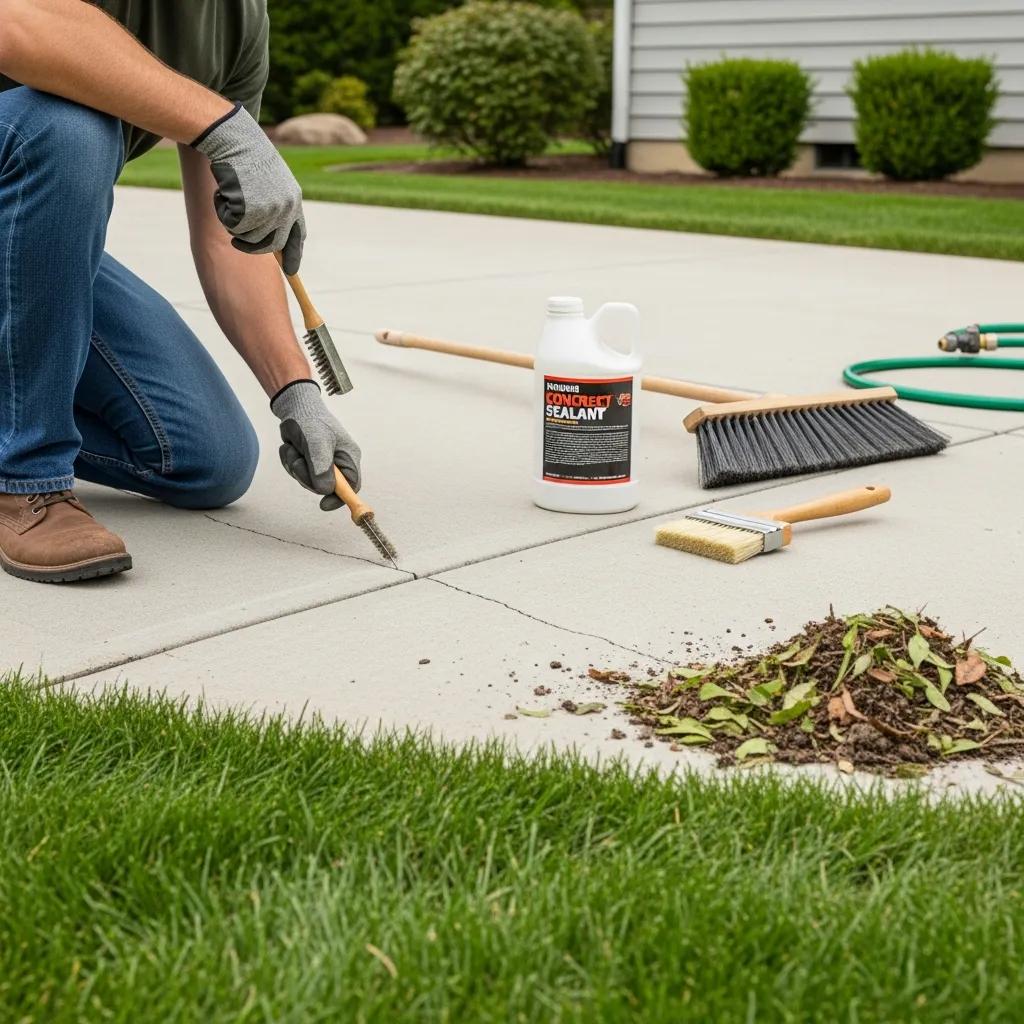
Routine maintenance and timely small repairs keep concrete RV pads, shed slabs, and other concrete additions functional: seasonal checks for cracks, cleaning to remove corrosive deposits, and resealing surfaces every few years as appropriate all extend service life. The mechanism of maintenance is simple prevention — sealing reduces water penetration, crack monitoring catches issues before they widen, and addressing drainage problems prevents base saturation that accelerates deterioration. For patios and stamped concrete, regular cleaning and resealing also preserve aesthetic appeal. Below is a practical maintenance checklist and an expected-lifespan table to set realistic expectations for homeowners in Greensboro’s climate, emphasizing that well-built, well-maintained slabs can last many decades.
Maintenance checklist for concrete slabs:
- Inspect slab and joints seasonally for hairline cracks and water pooling.
- Clean surface and remove vegetation or debris that traps moisture near edges. For dog runs, regular washing is essential for hygiene.
- Reseal or apply surface treatment every 3–7 years depending on exposure and traffic. This is especially important for basketball courts to maintain playability and for outdoor kitchen pads to protect against spills.
- Repair small cracks with proper concrete patch materials before they widen.
- Ensure proper drainage is maintained; clear any clogged swales or drains.
Understanding these lifespan ranges helps plan budgets and maintenance schedules; the next subsection gives practical repair guidance and thresholds for when professional intervention is warranted for your residential concrete investment.
How to Maintain and Repair Concrete RV Pads and Shed Slabs?
Perform seasonal inspections: check joints, edges, and surfaces for cracking or spalling, and monitor for any areas of standing water that indicate drainage problems. For small hairline cracks, use a crack sealant or polymer-modified patching material to stop moisture intrusion; for wider cracks or spalling, professional repair or section replacement may be necessary to restore structural performance. Keep records of repairs and note when resealing or topical treatments were applied to inform future maintenance cycles and warranty discussions with contractors. When repairs recur frequently or large sections show settlement, consult a professional who can assess subgrade failure and recommend corrective measures such as base replacement or slab leveling. This proactive approach applies to all concrete flatwork, from driveways to equipment pads.
What Are the Expected Lifespans of Concrete Additions in Greensboro?
Expected lifespans vary: a well-designed, properly reinforced and drained concrete pad can last 30–50 years or more, while minimally reinforced slabs in marginal soils may show failure signs in 15–25 years without consistent maintenance. Lifespan depends on design thickness, reinforcement type, base compaction, drainage quality, and ongoing maintenance; each of these variables is a control point for extending service life. Implementing periodic resealing, addressing drainage issues promptly, and avoiding concentrated overloads will push performance toward the upper end of the lifespan ranges. Planning maintenance over the expected lifecycle ensures the slab remains a functional, value-adding element of the Greensboro property.
Frequently Asked Questions About Concrete Additions in Greensboro, NC
Here are some common questions homeowners ask about installing concrete additions like RV pads, shed slabs, and other specialized pads in the Greensboro area.
- What is the typical curing time for a new concrete RV pad?Most concrete reaches about 70% of its full strength within 7 days, but it continues to cure for 28 days. It’s generally safe for light foot traffic after 24-48 hours, but heavy vehicle loads (like an RV) should wait at least 7-10 days, preferably 28 days for full strength.
- Can I pour a concrete slab directly on dirt?While technically possible, it’s highly discouraged. Proper site preparation, including excavation, compaction of the subgrade, and a compacted gravel base, is crucial for preventing settlement, cracking, and ensuring the longevity of the slab.
- Do I need a vapor barrier under my shed slab?For shed slabs, especially if you plan to store moisture-sensitive items or if the shed will be climate-controlled, a vapor barrier (typically a 6-mil polyethylene sheet) is highly recommended. It prevents ground moisture from wicking up through the concrete.
- What kind of finish is best for a concrete dog run?A broom finish is generally recommended for concrete dog runs. It provides excellent traction for pets, reducing slips, while still being easy to clean and maintain.
- How do I prevent cracks in my concrete additions?Cracking can be minimized by proper site preparation, adequate reinforcement (wire mesh or rebar), correct concrete mix design, proper curing, and strategically placed expansion and control joints. While some hairline cracks are normal, these measures help prevent significant structural cracking.
- What’s the difference between wire mesh and rebar for reinforcement?Wire mesh (welded wire fabric) is typically used for lighter loads and to control shrinkage cracking in thinner slabs. Rebar (reinforcing bar) provides stronger structural support for heavier loads, thicker slabs, and areas prone to significant stress, like RV pads or equipment pads.
- Can I add color or texture to my concrete addition?Yes, many concrete additions can be enhanced with color and texture. Stamped concrete can mimic natural stone, brick, or wood, while integral colors or topical stains can provide a custom look for patios, outdoor kitchen pads, or even decorative driveways.
- How often should I reseal my concrete pad?The frequency of resealing depends on the type of sealer, exposure to elements, and traffic. Generally, concrete pads should be resealed every 2-5 years. Regular resealing protects the surface from moisture, stains, and wear.
- What should I do if I see standing water on my concrete pad?Standing water indicates a drainage issue, either due to improper grading during installation or subsequent settlement. It’s crucial to address this promptly to prevent water damage, erosion, and potential undermining of the slab. Consult a professional to assess and correct the drainage.
- Are concrete additions a good DIY project?While small, non-structural concrete pads might be attempted by experienced DIYers, larger projects like RV pads, basketball courts, or outdoor kitchen pads require significant expertise in site preparation, formwork, concrete mixing, pouring, finishing, and curing. Professional installation ensures structural integrity, longevity, and compliance with local codes.
- How do I get a precise quote for my specific project?To get an accurate quote, provide detailed information about your project, including dimensions, intended use, desired finishes, and any site-specific challenges. Clear photos and a site visit from a reputable contractor are essential. You can request a free quote from our team.
- What other concrete services do you offer in Greensboro?Beyond specialized pads, we offer a full range of residential concrete services, including driveways, patios, stamped concrete, general flatwork, and foundations. We also handle commercial concrete projects.
Get Your Free Project Estimate Today!
Ready to Transform Your Outdoor Space?
From durable RV pads to elegant outdoor kitchen foundations, our expert team in Greensboro, NC, is committed to delivering high-quality concrete additions that stand the test of time. We combine precision, craftsmanship, and local expertise to bring your vision to life.
Don’t settle for less. Choose the trusted professionals for your next concrete project.
Visit our homepage to learn more about our comprehensive concrete services.


0 Comments